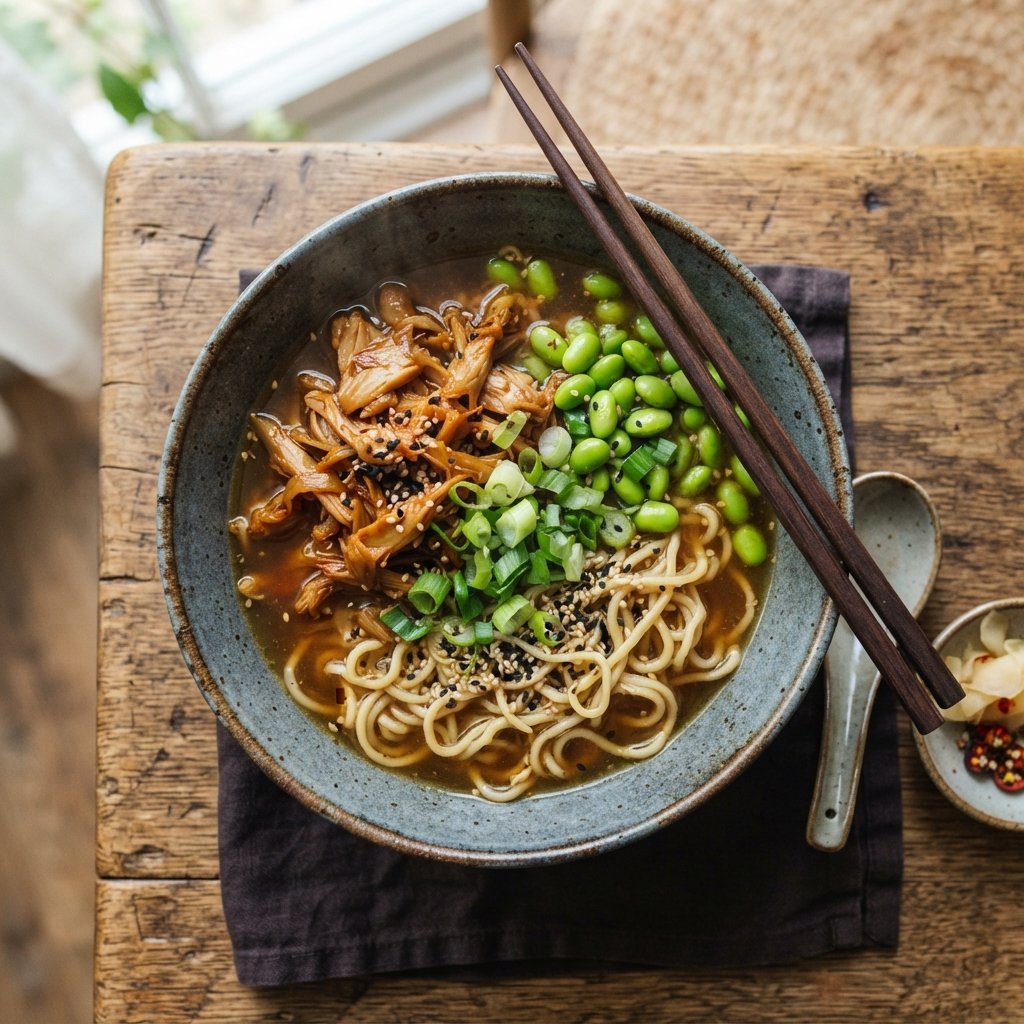
Pull two forks through roasted young jackfruit and it comes apart in long, stringy shreds, almost exactly like pulled pork tearing along its own natural grain. That texture isn’t an accident or a trick of seasoning; it’s simply what the fruit’s fibrous flesh does once it’s tender, and it’s the whole reason jackfruit works as a meat stand-in at all. Edamame and Jackfruit Ramen with Balsamic leans directly into that shredded texture, roasting the jackfruit with a balsamic glaze until it caramelizes at the edges, then piling it into a warm bowl alongside bright green edamame.
Neither element here is invented for the occasion. Roasted jackfruit served over ramen noodles is a real, well-documented dish across plant-based cooking, and edamame as a ramen topping is just as common, showing up in bowls built around protein, texture, and color. Balsamic vinegar glazing roasted jackfruit specifically isn’t unheard of either, since the vinegar’s natural sugars behave the same way maple syrup or soy-based glazes already do in existing jackfruit recipes, caramelizing under heat into a sticky, savory-sweet coating that clings to every shred.
Why Edamame and Jackfruit Ramen with Balsamic Works
This dish takes about 40 minutes, and most of that is the jackfruit roasting hands-off in the oven. The broth and noodles come together in the last 15 minutes, so timing the jackfruit’s finish with everything else is really the only coordination this recipe asks for.
Young, unripe jackfruit holds very little natural sweetness or fat on its own, which is exactly why it takes a glaze so well without turning cloying. Balsamic vinegar reduces as it roasts alongside the jackfruit, concentrating into something thick and glossy that clings to every shred rather than pooling at the bottom of the pan. The broth underneath stays simple by comparison, built on aromatics and a short simmer, since its job is to support the roasted jackfruit and edamame rather than compete with them for attention, letting the roasted flavor stay front and center in the bowl.
Ingredients
This serves 4.
For the Balsamic Jackfruit
- 2 cans (14 oz each) young green jackfruit in water or brine, drained and rinsed
- 3 tablespoons balsamic vinegar
- 2 tablespoons soy sauce
- 1 tablespoon olive oil
- 1 teaspoon maple syrup
- 1/2 teaspoon garlic powder
- 1/2 teaspoon smoked paprika
For the Ramen
- 6 cups vegetable broth
- 1 tablespoon soy sauce
- 1 teaspoon fresh ginger, grated
- 4 portions ramen noodles
- 1.5 cups shelled edamame, cooked
- 2 scallions, sliced
- Toasted sesame seeds, for serving
How to Make Balsamic Roasted Jackfruit for Ramen
- Preheat the oven to 400°F (200°C). Line a large baking sheet with parchment paper.
- Using two clean forks, shred the well-drained jackfruit into rough, bite-sized pieces, discarding any hard core sections you come across.
- In a bowl, toss the shredded jackfruit thoroughly and evenly with the balsamic vinegar, soy sauce, olive oil, maple syrup, garlic powder, and smoked paprika.
- Spread the marinated jackfruit out in a single, even layer on the baking sheet.
- Roast for 25 to 30 minutes total, tossing once halfway through, until the edges are caramelized and slightly crisp.
- While the jackfruit roasts, bring the vegetable broth to a gentle simmer in a large pot. Add the soy sauce and grated ginger, and simmer for 10 minutes.
- Cook the ramen noodles separately according to the package directions and divide evenly among bowls.
- Ladle the hot broth over the noodles, then top with the roasted jackfruit, edamame, scallions, and sesame seeds.
Good vs. Excellent: The Details That Matter
A good version of this bowl is already satisfying. An excellent one comes down to a few specific calls.
- Shred the jackfruit before roasting, not after. Pre-shredded pieces glaze more evenly and caramelize at more edges than large chunks tossed once and left mostly whole.
- Give the jackfruit real space on the pan. Crowding it steams the pieces instead of roasting them, and that steamy texture never quite recovers into something crisp.
- Cook the noodles separately from the broth. Cooking them directly in the broth clouds it with starch and changes its texture in a way most people don’t actually want.
- Toss the jackfruit once halfway through roasting. This helps every piece pick up some caramelization rather than leaving one side glazed and the other pale and dry.
Common Mistakes and How to Fix Them
Jackfruit stayed soft instead of caramelizing: this almost always means the pan was overcrowded, or the oven wasn’t fully preheated before the jackfruit went in. Spread the pieces out with real space between them, and confirm your oven has actually reached 400°F before starting the timer, since an underheated oven steams food rather than roasting it properly.
Jackfruit tasted bland instead of savory: it likely didn’t marinate long enough in the balsamic mixture, or the seasoning was too light to begin with. Toss it thoroughly and let it sit for a few minutes before roasting, and don’t be shy with the soy sauce, since jackfruit itself carries very little flavor on its own and depends entirely on what it’s marinated in.
Broth tasted thin instead of rounded: the ginger and soy sauce likely didn’t get enough simmering time to infuse. Give the broth the full ten minutes, and taste before serving to see if it needs a touch more soy sauce for depth, adjusting gradually rather than adding too much all at once.
Variations and Substitutions
Jackfruit in brine can substitute for jackfruit in water if that’s what’s available, though it may need a quick rinse to remove excess salt before marinating and roasting. Baby bok choy or spinach stirred into the hot broth at the end adds color and freshness without much extra effort or additional cooking time.
For a spicier bowl of balsamic jackfruit ramen, add a drizzle of chili oil or a pinch of red pepper flakes to the marinade before roasting. Firm tofu, pressed thoroughly and cubed, works as an additional protein alongside the jackfruit if a heartier, more filling bowl is the goal.
Serving and Pairing
This ramen is a complete meal on its own, though a simple cucumber salad on the side adds a cool, crunchy contrast to the warm bowl. Extra chili oil and soy sauce set out at the table let everyone adjust the seasoning to their own taste and spice preference. A soft-boiled egg on top, if the meal doesn’t need to stay strictly plant-based, adds richness that pairs well with the jackfruit. This jackfruit and edamame ramen also makes a great next-day lunch when the components are stored separately.
Storage and Reheating
Store the broth, jackfruit, and noodles separately in airtight containers in the refrigerator for up to 3 days after cooking. Reheat the broth on the stovetop until simmering, and warm the jackfruit in a hot, dry skillet to re-crisp its edges rather than the microwave, which softens it further and unevenly. Cook fresh noodles for leftovers rather than storing them soaking in broth, since they absorb liquid and turn mushy quickly.
Nutritional Information
Values below are estimates per serving and will vary depending on exact brands and quantities used.
| Calories | 380 kcal |
| Protein | 15 g |
| Carbohydrates | 62 g |
| Fat | 9 g |
| Fiber | 7 g |
What Stays With You
This recipe was tested and refined in the bebup.org kitchen, with particular attention paid to how much space the jackfruit actually needs on the pan to caramelize properly rather than steam before publishing this recipe here.
What lingers after Edamame and Jackfruit Ramen with Balsamic isn’t just the flavor, but that first tug of two forks pulling roasted jackfruit apart into long, meat-like shreds — a texture that still feels a little unlikely no matter how many times you’ve seen it happen. It’s a reminder that plant-based cooking doesn’t need to imitate anything directly to feel substantial; sometimes the fruit just does the work entirely on its own, given the right amount of heat and time to caramelize properly.