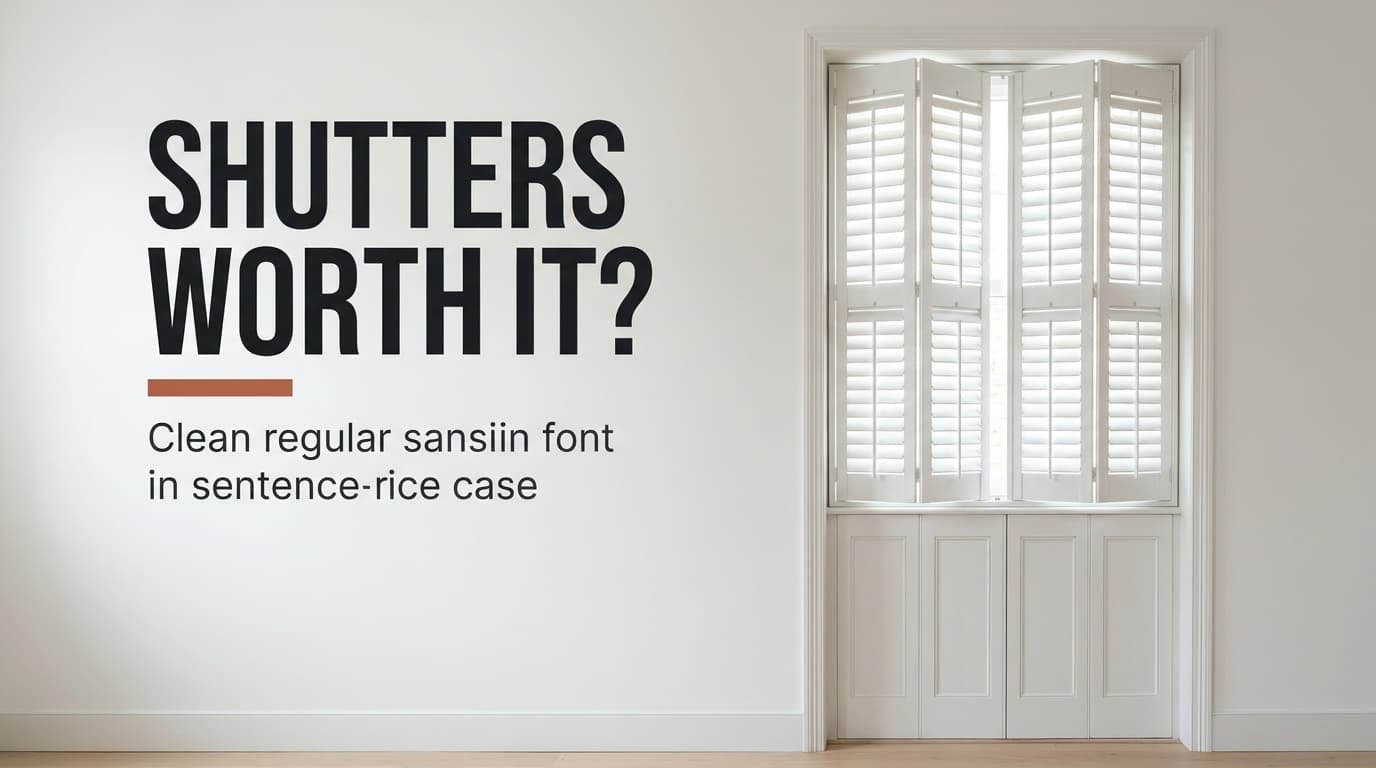
Interior shutters on a rented Dutch window swap a curtain for panels of tilting wooden blades. Our sample window measures 1.2 m by 1.5 m, which gives 1.8 m² of glass. Four hinged panels cover it, and each carries about 27 blades. The look is turning up in more rented flats, yet this article has no sales figures to measure the trend, and what matters is whether it suits a tenant. It works from geometry alone. Neither brands nor showrooms are named, and no forecast is made. Every number is a rounded assumption. Measure your own window before ordering anything.
Where Interior Shutters on a Rented Dutch Window Came From
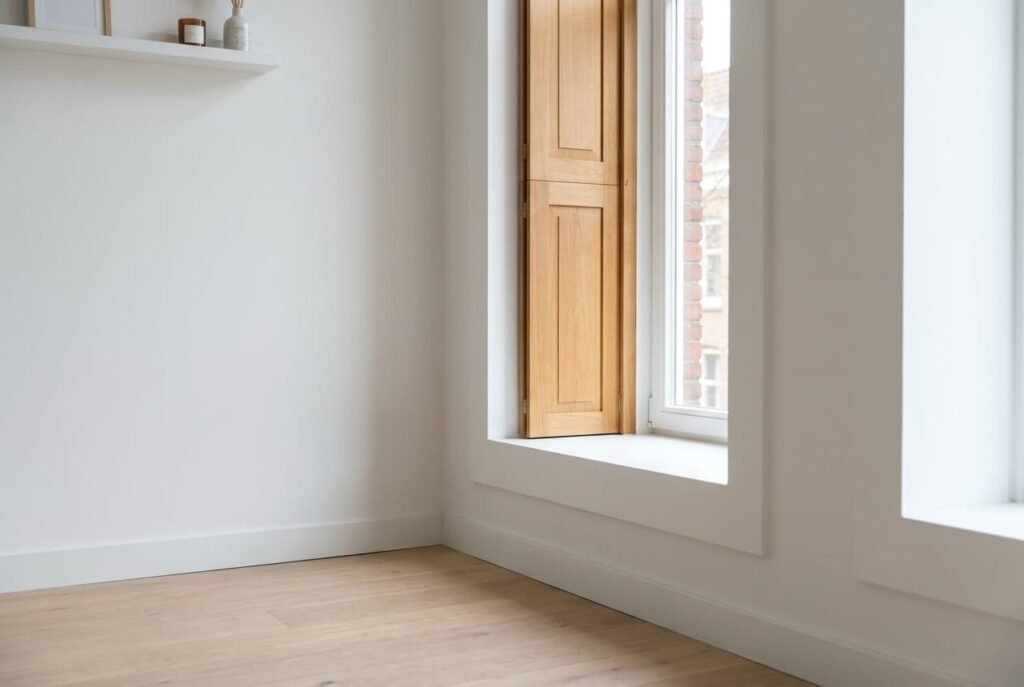
Wooden shutters began outdoors as boards that closed against sun and weather. Indoors they survived in houses with deep walls, where a pair of panels could fold into the thickness of the reveal and disappear.
Modern flats lost that depth. A reveal of 12 cm still swallows a folded pair, but many are shallower. The idea came back for practical reasons. Many modern windows are taller and wider. Street-level rooms needed privacy without giving up daylight. Curtains asked for a rail, and a rail means drilling into walls that landlords like to keep intact.
A shutter settles the first two worries at once. It brings a fixing job of its own.
The blade is where the cleverness lives.
One panel can act as a wall or as an open window, with a screen between the two, by changing nothing except an angle. That single control is why the style has crossed from old houses into small rentals, and it explains most of the interest around it today.
Three Measurable Changes on a 120 cm Window
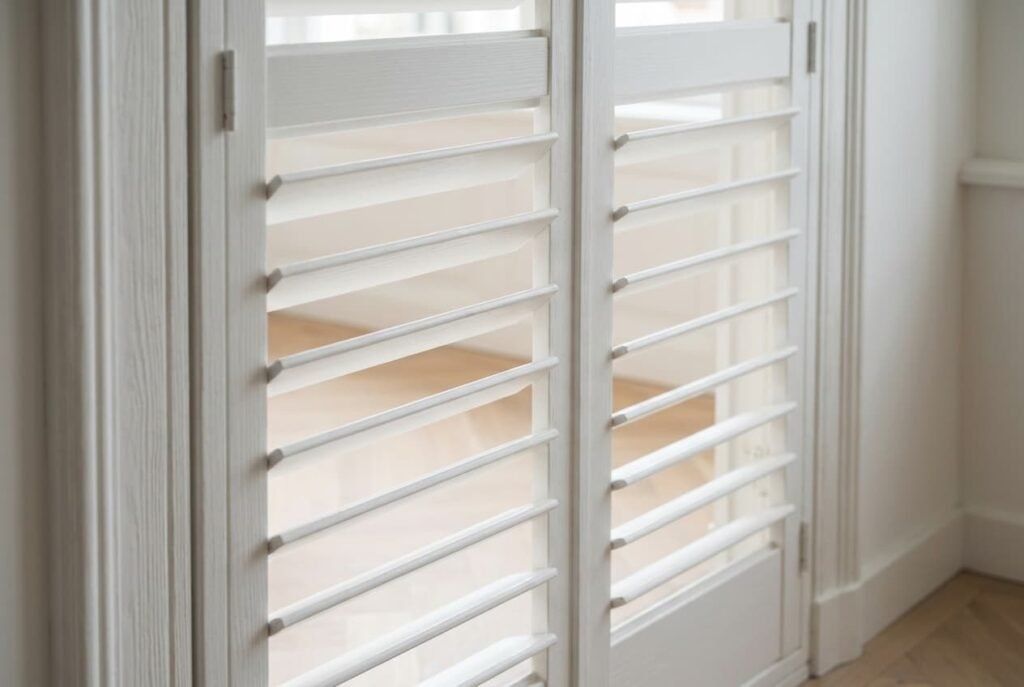
Fitted to a window of that size, interior shutters on a rented Dutch window move three numbers. The view through the glass becomes adjustable in steps. Our blades are 6.4 cm wide and sit 5.6 cm apart. Tilted to 30°, they leave 43% of a straight sight line open. At 45° only 19% remains, and from 61° upward the blades overlap and shut the line completely. A bare window stays at 100% from morning to night. The tilt works as a dial between privacy and light, and 19% and 43% are two useful stops on it. Even fully closed, the three outer edges leave a gap near 4 mm, which lets through under 1% of the opening as a thin line of light.
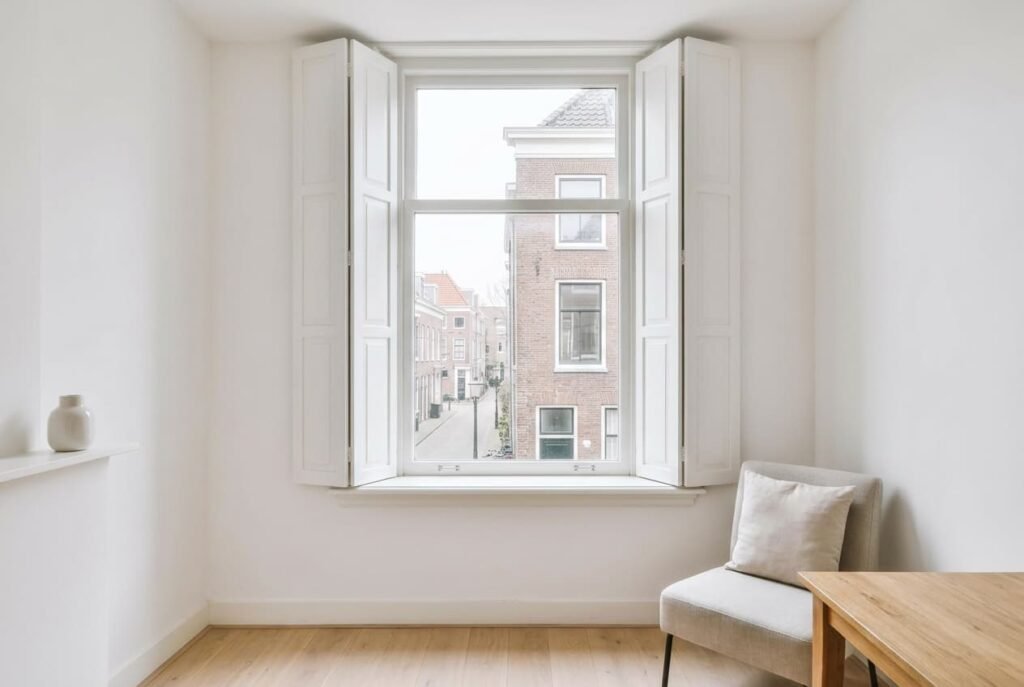
The second change concerns open panels. Four panels of 30 cm fold into two stacks, one at each side. The stacks rest against the glass. Each is 7 cm thick and 150 cm high. Together they cover 60 cm of the width. Half the glass, 0.9 m², stays clear with every panel folded back, against all 1.8 m² on a bare window.
Fixings come third. A frame like this needs six screw points through the reveal, each about 6 mm wide. At an assumed 8 kg per square metre the set weighs 14.4 kg. Each point then carries about 2.4 kg. A bare window has no holes at all. In a brick reveal the six holes run about 4 cm deep, and each will need filler when the tenancy ends.
Which Households Suit Them
The look suits a ground-floor or first-floor room that faces a street. The lower panels stay shut at eye level while the upper blades tilt to let daylight in. Anyone who needs a dark room by day gains too, since closed blades seal far better than thin curtains. Rooms facing a courtyard gain less. Nobody looks in, and a plain blind does the job with less effort.
Interior shutters on a rented Dutch window suit long tenancies best, and those households gain most. Six holes are a small job to fill once, and the panels repay that effort across years of everyday use. Households with children or pets come next, because a panel wipes clean and has no cords to hang from.
Short tenancies gain little. A 14.4 kg set is awkward to carry out, and it was cut for one window. It won’t fit the next. Reveals under 8 cm rule shutters out, since a folded pair needs 7 cm plus 1 cm for the hinge. Radiators beneath the sill cause trouble too, because panels in front of them hold the heat on the wrong side.
Two cases call for patience. A window out of square by more than 3 mm across its height will show gaps along the frame. A lease that bans fixings turns the whole plan into a talk with the landlord.
Interior Shutters on a Dutch Window: Is It Worth It?
Interior shutters on a rented Dutch window pay off where the lease allows fixings and the reveal is at least 8 cm deep. You gain a window that screens the street at eye level and still admits light above it. With the lower panels shut and the upper blades at 30°, the street-level view is blocked while you keep a view of the sky. The cost is the open window itself, because half the glass stays behind wood. Where the reveal is shallow or the stay short, they remain a handsome extra that adds one more job to your move-out list.
Upkeep is light. Painted wood needs a dry soft cloth, and a white finish hides dust best, which doesn’t take long on 108 blades.
A tilt you use daily is the safest place to start.
The Extreme Version Nobody Needs
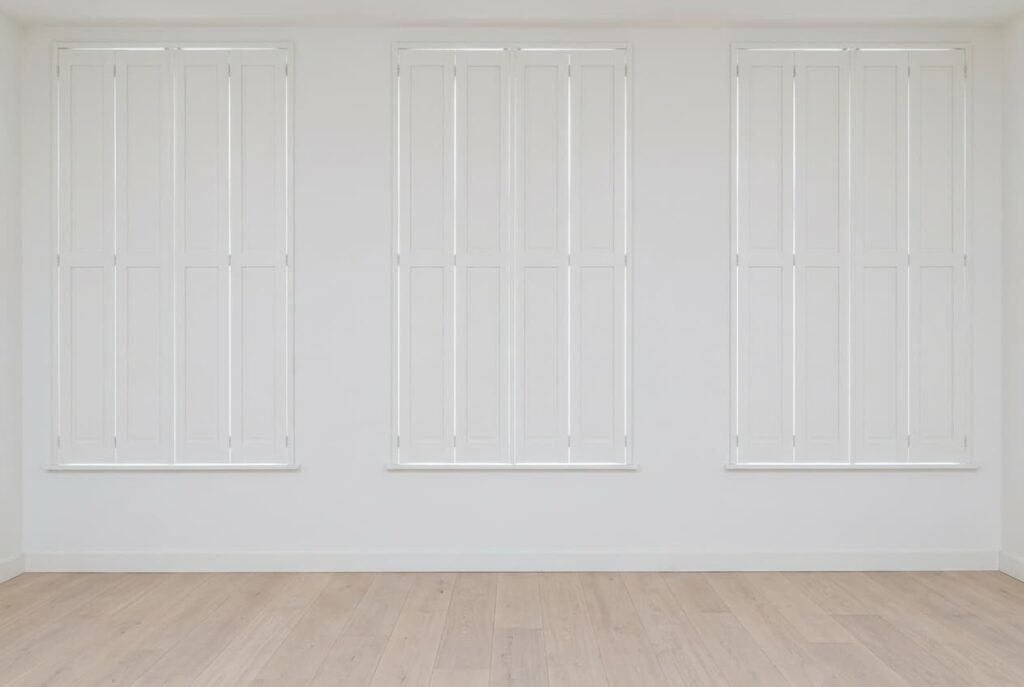
Some flats stretch the idea far beyond a sensible point and fit full-height shutters to every window, eight in all. At 14.4 kg each that hangs 115 kg from the reveals, with 48 screw holes waiting to be filled when the tenancy ends. At about two minutes a hole, that is 96 minutes of filler and sanding before any paint goes on. Whenever the panels are folded back, half of every window stays hidden behind wood, which is 7.2 m² of lost glass. Eight windows also carry 864 blades, each of which collects dust.
We don’t recommend full-height shutters on every window of a flat. The weight sits in walls that were never designed to hold it, and the rooms give up half their daylight for a look. The sensible version fits one or two panels on the window facing the street, and it leaves the other windows alone.
A Card Test Before You Order Anything
Cut 27 strips of card 6.4 cm wide and tape them across a window at a spacing of 5.6 cm. Tilt them to 45°, then look through in full daylight and again once the lamps are on, since lamp light changes how closed the room feels. Measure the reveal at three heights and note any difference above 3 mm.
Should the room still feel bright and private, raise the question of fixings with your landlord. The card test takes an afternoon and comes down in seconds. Note the reveal width and depth on the same card while you’re there, because a supplier will ask for both.
Shutters are easy to trial and awkward to reverse once six holes are drilled. Let the strips decide before you order. File the card with your lease papers and write on it the fitting date and the date you plan to leave. If a landlord later asks what changed, you’ll know the hole count and the load, and the filler will already be in the cupboard.
Questions Readers Keep Asking
Should I keep my curtains or change to shutters?
Keep your curtains if you expect to move soon. Six holes and a cut-to-size set don’t travel. Change where the lease allows fixings and you’ll stay longer. Run the card test before deciding, because a week with taped strips beats any picture as evidence and costs almost nothing.
Who gets the most from this look?
Long-term tenants in street-facing rooms get the most, because they keep privacy at eye level and still admit light above it. Anyone who wants a dark room by day gains as well. Short leases and reveals under 8 cm gain little, since the panels either won’t fit or can’t be taken along.
How long will a painted shutter last?
Solid wood panels with a hard finish usually outlast a tenancy by years, provided the hinges are tightened now and then. The paint is the part that chips, usually where hands grip the blades. Dab chips with a fine brush as they appear, and plan to fill the screw holes when you leave.