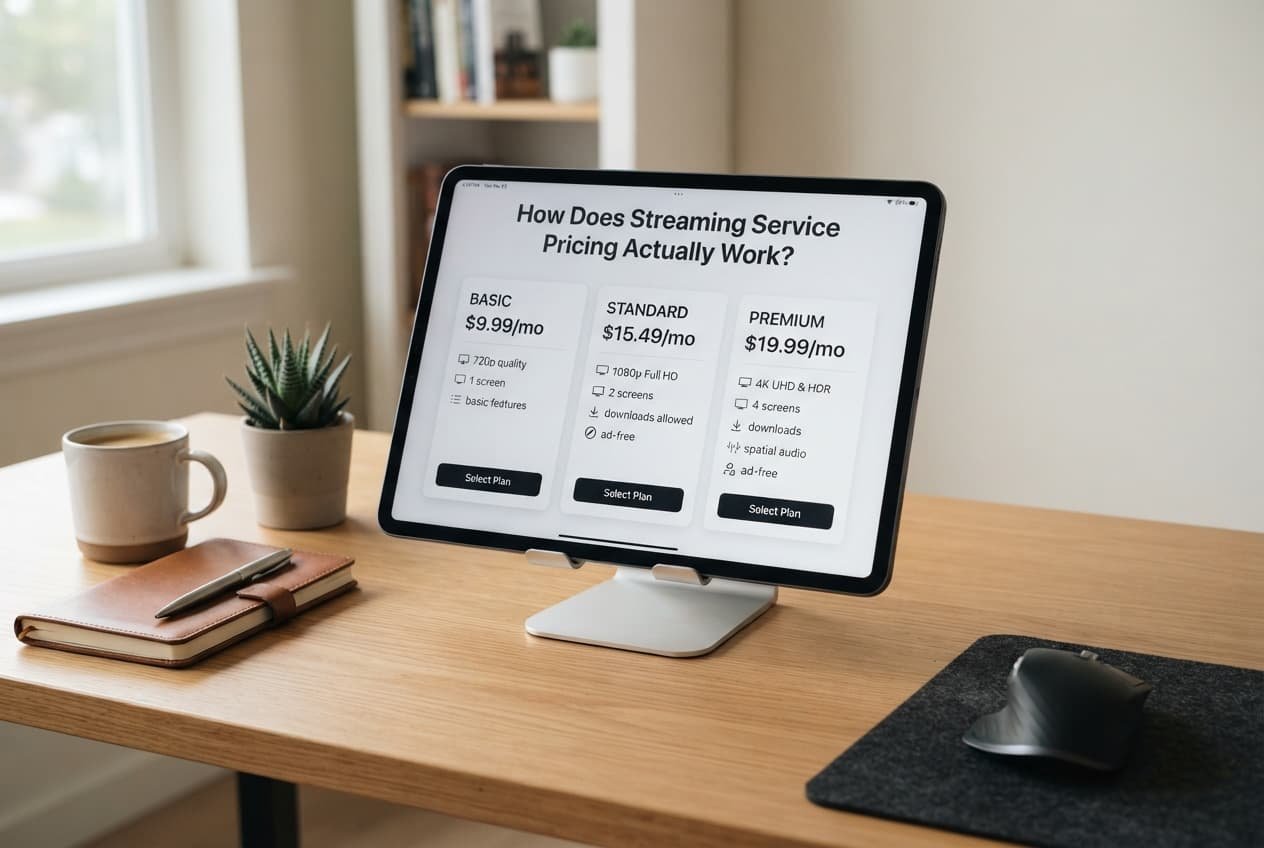
Streaming service pricing isn’t simply a flat cost for accessing content – it’s a structure built around distinct pricing tiers, each unlocking specific features like video quality, simultaneous device access, and advertising presence, which is why two people paying different amounts for the same service can have genuinely different experiences. Understanding this tiered structure explains both why prices vary so much between plans, and what you’re actually paying extra for at each level.
The short answer, and what it leaves out
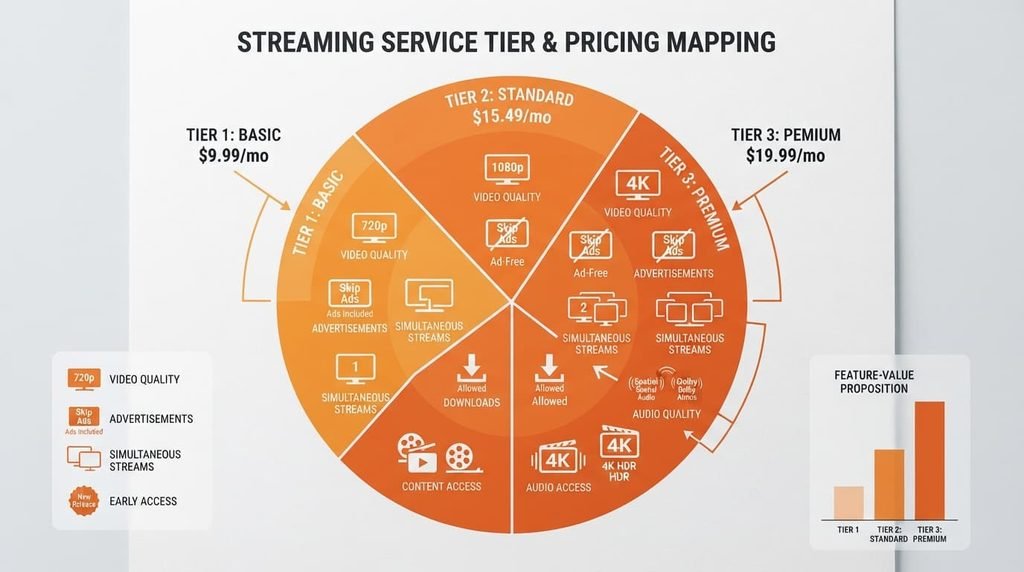
Streaming pricing works by offering multiple tiers of the same core service, each priced according to specific features it unlocks – typically video resolution, the number of simultaneous streams allowed, and whether advertisements interrupt your viewing.
What that leaves out is why these specific features are the ones tied to pricing tiers rather than others – each of these features has a direct, measurable cost to the service provider that scales with usage, meaning higher resolution streaming and more simultaneous connections genuinely consume more of the provider’s actual infrastructure resources, which is reflected in the tier pricing structure.
How it actually works, step by step
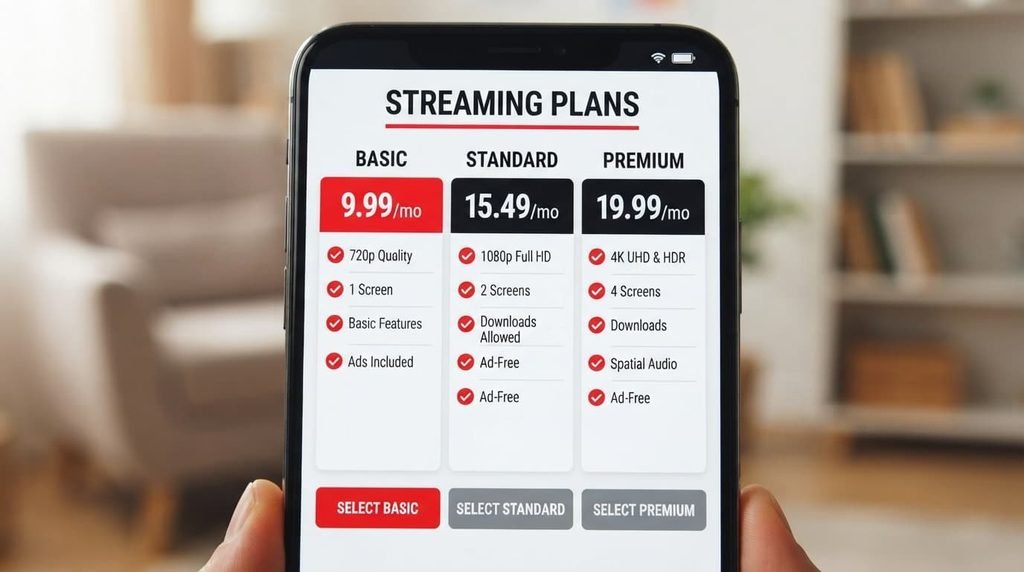
When a service sets its pricing tiers, it typically starts by defining a baseline tier with the most limited features – lower resolution, single-device streaming, often including advertisements – priced to be broadly accessible while still covering the service’s basic costs for that specific level of usage.
Higher tiers then add specific features incrementally, with each added feature – higher resolution, additional simultaneous streams, ad-free viewing – contributing to that tier’s higher price, since each of these features increases the actual technical and licensing cost of delivering the service to that specific subscriber.
Advertising-supported tiers specifically work differently from ad-free ones in a way that affects pricing beyond just viewer preference – advertising revenue partially offsets the service’s costs for that tier, which is part of why ad-supported tiers can be priced lower than equivalent ad-free options without the service losing money on that specific tier.

Why content licensing specifically affects pricing beyond tiers
Content licensing costs represent a genuinely significant and often underappreciated factor in streaming pricing, separate entirely from the tier structure covered above. A service must pay to license the content it offers, and these licensing costs can vary considerably based on content popularity, exclusivity arrangements, and licensing agreement renewal terms, all of which affect a service’s overall pricing baseline independently of which specific tier a subscriber chooses.
This is part of why identical tier structures across different streaming services can still result in different overall prices – two services offering comparable resolution, device, and advertising tiers can still charge different baseline amounts specifically because their underlying content licensing costs differ, a factor entirely separate from the feature-tier mechanism itself.
The analogy, and where it breaks
Streaming pricing tiers are sometimes compared to airline seating classes – everyone reaches the same basic destination, but paying more unlocks additional comfort and features along the way.
The analogy holds for the basic tiered-access principle – both structures offer the same core service or destination with additional features unlocked at higher price points. It breaks because airline seating differences are primarily about physical comfort during a fixed-duration journey, while streaming tier differences are about ongoing, repeated technical resource consumption – every simultaneous stream and every high-resolution playback session draws on the provider’s infrastructure repeatedly, not just once during a single trip.

What this does not explain
The tiered-pricing explanation clarifies why plans cost different amounts based on features, but it doesn’t explain or address every pricing change you might notice – a service’s baseline pricing across all tiers can still increase over time due to factors entirely separate from the tier structure itself, such as rising content licensing costs or broader business strategy shifts.
It also doesn’t explain regional pricing differences, since the same service often prices identically-featured tiers differently across different countries or regions, based on factors like local market conditions and purchasing power that exist independently of the tier-feature structure covered here.
What people get wrong about it
The belief that a higher-priced tier always represents proportionally better value for money. This forms because higher tiers do offer more features, but “more features” doesn’t automatically mean “worth the additional cost for your specific household” – a household that only ever streams on one device at a time isn’t genuinely benefiting from a tier’s multi-stream capability, regardless of how that feature affects the tier’s overall pricing.
The belief that ad-supported tiers are simply a lesser version with no genuine trade-off benefit. While ad-supported tiers do include advertising, they’re specifically priced lower to reflect that advertising revenue, meaning they can represent genuinely reasonable value for viewers who don’t mind occasional ads in exchange for meaningfully lower cost.
Where the popular explanation oversimplifies
Advice describing streaming pricing as simply “paying more for a better experience” glosses over the meaningful difference between features that matter for your specific household’s actual viewing habits and features that don’t, treating all tier upgrades as universally valuable rather than accurately reflecting that a given feature’s value depends entirely on whether you actually use it.
This distinction matters practically: understanding that each tier’s price reflects specific, identifiable features – not a vague general “quality” upgrade – helps explain why choosing the tier that matches your household’s actual viewing habits often provides better genuine value than defaulting to either the cheapest or the most expensive option without considering which specific features you’d actually use.
Streaming pricing reflects specific features tied to actual technical and licensing costs, not a vague overall quality difference between tiers – which is why the tier genuinely worth choosing depends on which specific features your household actually uses, not simply on spending more for a presumed universal improvement. Understanding it as a structure of individually priced features, rather than a single quality spectrum, is the detail most explanations skip, and it’s the one that actually explains how to choose a tier that fits your specific situation.
Questions readers keep asking
Why do streaming prices sometimes increase even within the same tier I’ve always had?
This typically reflects broader cost increases separate from the tier-feature structure itself, such as rising content licensing costs, which affect a service’s overall pricing baseline independently of which specific tier you’re subscribed to.
Is the highest tier always the best value if I can afford it?
Not necessarily – value depends specifically on whether you actually use that tier’s additional features, so a household that doesn’t need multiple simultaneous streams or the highest resolution may find a lower tier provides equivalent practical value for meaningfully less cost.
Does the number of simultaneous streams a tier allows actually cost the provider more to deliver?
Yes, meaningfully – each simultaneous stream represents additional bandwidth and server resource usage the provider must support at the same time, so tiers allowing more simultaneous streams genuinely reflect higher actual delivery costs, not simply an arbitrary feature added to justify a higher price point.
Does choosing an ad-supported tier genuinely save a meaningful amount compared to ad-free options?
Generally yes, and the specific savings vary by service, so comparing the actual price difference between ad-supported and ad-free tiers for a specific service you’re considering is worth doing directly, rather than assuming the savings are uniformly small or large across all services.