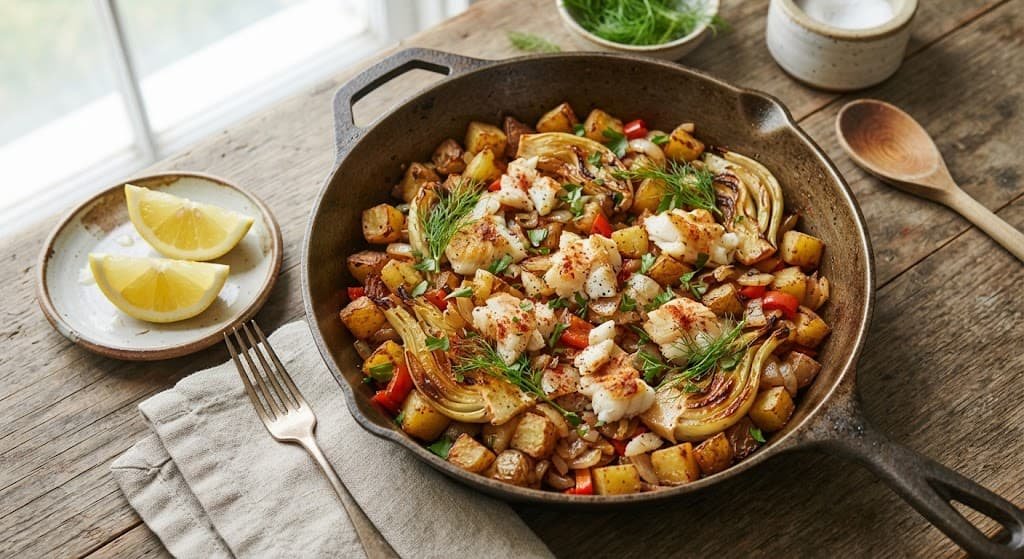
There’s a specific sound a cast-iron pan makes when diced potatoes hit hot fat — a sharp, continuous crackle that’s different from the softer hiss of a sauté, more insistent, almost impatient. It’s the sound that tells you the pan is doing its job, browning instead of steaming. Pan-Seared Catfish Hash with Fennel builds on that sound in layers: potatoes crackling first, then fennel joining in with its own quieter rhythm as it softens and turns faintly sweet, and finally the catfish laid in last, its edges catching that same sharp crackle for just long enough to turn golden before it goes tender. By the time the pan goes quiet, what’s left is a plate where a Southern kitchen staple meets an ingredient it doesn’t often share company with.
Why Fennel Earns Its Place Next to Catfish
Catfish has a mild, faintly sweet flavor that gets lost easily under heavy seasoning, which is why most hash recipes lean on corn, peppers, and bacon to carry the dish. Fennel does something different: its anise-like sharpness mellows dramatically once it hits a hot pan, turning into something closer to caramelized onion with a whisper of licorice left behind. That mellowed sweetness doesn’t compete with the catfish — it makes the fish’s own mild flavor more noticeable instead of covering it up, the way a quiet room makes a soft voice easier to hear.
The technique that makes this work is sequencing: potatoes need the longest cook time and the most patience to develop a real crust, fennel needs just enough heat to soften without turning bitter, and catfish needs the shortest, gentlest touch of all three, since overcooked catfish turns dry and chalky fast. Cook everything at once and you’ll end up with soggy fennel, undercooked potatoes, or fish that’s been sitting in a hot pan three minutes too long.
What You’ll Need
For the Hash
- 1 pound Yukon gold potatoes, diced into 1/2-inch cubes
- 1 medium fennel bulb, cored and diced, fronds reserved
- 1 small yellow onion, diced
- 3 tablespoons olive oil, divided
- 2 garlic cloves, minced
- 1/2 teaspoon smoked paprika
- Salt and black pepper
For the Catfish
- 1 pound catfish fillets, cut into 2-inch pieces
- 2 tablespoons unsalted butter
- 1/2 teaspoon Cajun seasoning
- 1 lemon, cut into wedges
Yukon golds hold their shape well in a hash and are worth seeking out, but russets work in a pinch — just expect a slightly starchier, less waxy bite. If catfish isn’t available, tilapia or another mild whitefish fillet can stand in without changing the timing much.
How to Make Pan-Seared Catfish Hash with Fennel Layer by Layer
Pan-Seared Catfish Hash with Fennel takes about 35 minutes from the first potato hitting the pan to the last piece of fish coming off it. The potatoes alone need roughly 12 minutes to develop a real crust; rushing that step is the single most common reason this dish turns out soft instead of crisp.
- Heat 2 tablespoons of olive oil in a large cast-iron or heavy skillet over medium-high heat. Add the potatoes in a single layer and let them cook undisturbed for 4 minutes before stirring, then continue cooking, stirring occasionally, for 8 more minutes, until deeply golden and fork-tender.
- Push the potatoes to one side of the pan. Add the remaining oil, then the fennel and onion. Cook for 5 to 6 minutes, until the fennel softens and turns translucent at the edges.
- Stir the garlic, smoked paprika, salt, and pepper into the vegetables and cook for 1 minute, until fragrant. Combine everything in the pan and push it all to the edges, leaving a space in the center.
- Pat the catfish pieces dry and season with the Cajun seasoning. Add the butter to the cleared center of the pan, then lay the catfish in. Sear for 2 to 3 minutes per side, until golden and just opaque in the center.
- Gently fold the catfish into the hash, being careful not to break the pieces apart too much. Remove from heat, scatter the reserved fennel fronds over the top, and serve with lemon wedges.
The Details That Separate a Good Hash From a Great One
Dice the potatoes evenly, no larger than a half inch, so they cook at the same rate — a few oversized pieces will still be raw in the center when the rest are done. Resist the urge to stir the potatoes too often in those first four minutes; constant stirring is the fastest way to end up with soft, steamed potatoes instead of a crisp, browned crust. If you’re wondering how to make catfish hash with fennel crispy instead of soggy, the potato step is where that answer lives, not the fish. When the catfish goes into the pan, give it real space — crowding the pieces traps steam underneath them and keeps that surface from ever browning, no matter how hot the pan is.
Common Mistakes and How to Fix Them
The potatoes never crisp up: This almost always comes down to overcrowding the pan or stirring too soon. Use a wide skillet so the potatoes sit in one layer, and leave them alone for the first few minutes.
The catfish falls apart when you fold it in: The fish was likely overcooked, which makes it fragile, or it was stirred too roughly. Fold gently with a wide spatula, lifting from underneath rather than dragging the pieces across the pan.
The fennel tastes bitter instead of sweet: Fennel that’s cooked too fast over too-high heat can turn bitter rather than caramelized. Keep the heat at medium once the fennel goes in, and give it the full five to six minutes to soften properly.
Variations and Swaps
A couple strips of cooked, crumbled bacon folded in with the potatoes adds a smokier backbone if you want it. Sweet potatoes can replace half the Yukon golds for a slightly sweeter, softer hash. For a fennel and catfish hash with a little more heat, add a pinch of cayenne to the Cajun seasoning, or finish the dish with a few dashes of hot sauce at the table rather than cooking the heat in, which keeps the option open for anyone at the table who’d rather skip it.
Serving and Pairing
This works equally well as a hearty breakfast alongside a fried or poached egg set right on top, or as a light dinner with a simple green salad dressed sharply enough to cut through the richness of the potatoes. A soft-cooked egg spooned over a catfish and fennel hash like this one adds a runny yolk that acts almost like a sauce, pooling into the crevices between the potatoes and fish.
Storing and Reheating
Store leftovers in an airtight container in the refrigerator for up to 2 days. Reheat in a hot, dry skillet rather than the microwave, which will soften the crispy edges of the potatoes and make the catfish rubbery. This dish doesn’t hold up well to freezing, since both the potatoes and the fish change texture noticeably once thawed.
Nutrition (Approximate, Per Serving)
Note: These are estimated values per serving and will vary depending on exact fillet size, potato variety, and brands used.
| Calories | 380 kcal |
| Protein | 24 g |
| Carbohydrates | 28 g |
| Fat | 20 g |
| Fiber | 4 g |
What Stays With You
This recipe was tested and refined by bebup.org’s kitchen before publishing, with the fennel cook time adjusted after an early batch turned slightly bitter over too-high heat.
What stays with you after the plate is empty is that quiet sound the pan makes once everything has gone still — no more crackling, no more hissing, just the faint smell of browned butter and fennel fronds. It’s a reminder that a dish doesn’t need an unusual ingredient list to feel new; sometimes it just needs one ingredient in a place it’s rarely invited, and enough patience to let each part of the pan do its own job before asking it to share space with the next.
Pan-Seared Catfish Hash with Fennel
Ingredients
Method
- Heat 2 tablespoons oil in a large skillet over medium-high heat. Cook potatoes undisturbed 4 minutes, then stir and cook 8 more minutes until golden and fork-tender.
- Push potatoes aside, add remaining oil, fennel, and onion. Cook 5 to 6 minutes until softened.
- Stir in garlic, smoked paprika, salt, and pepper; cook 1 minute. Combine and push to the edges of the pan.
- Pat catfish dry, season with Cajun seasoning. Add butter to the cleared center and sear catfish 2 to 3 minutes per side until golden and opaque.
- Gently fold the catfish into the hash. Remove from heat, top with fennel fronds, and serve with lemon wedges.