For a stay of six months or less, a mobile broadband router usually wins, because it works the day you arrive and leaves in your bag. The wait settles it. A cable can take three weeks to arrive, and that is 12% of a 26-week tenancy spent offline. Three weeks is time enough to run up a phone bill and lose a few working days to patchy hotspots. A fixed line for a short tenancy still wins when the signal at your window is weak. These figures describe an invented flat, so read each speed as an example. Test your own signal and ask the provider for a real installation date before you order anything.
Why a fixed line for a short tenancy comes down to a single wait
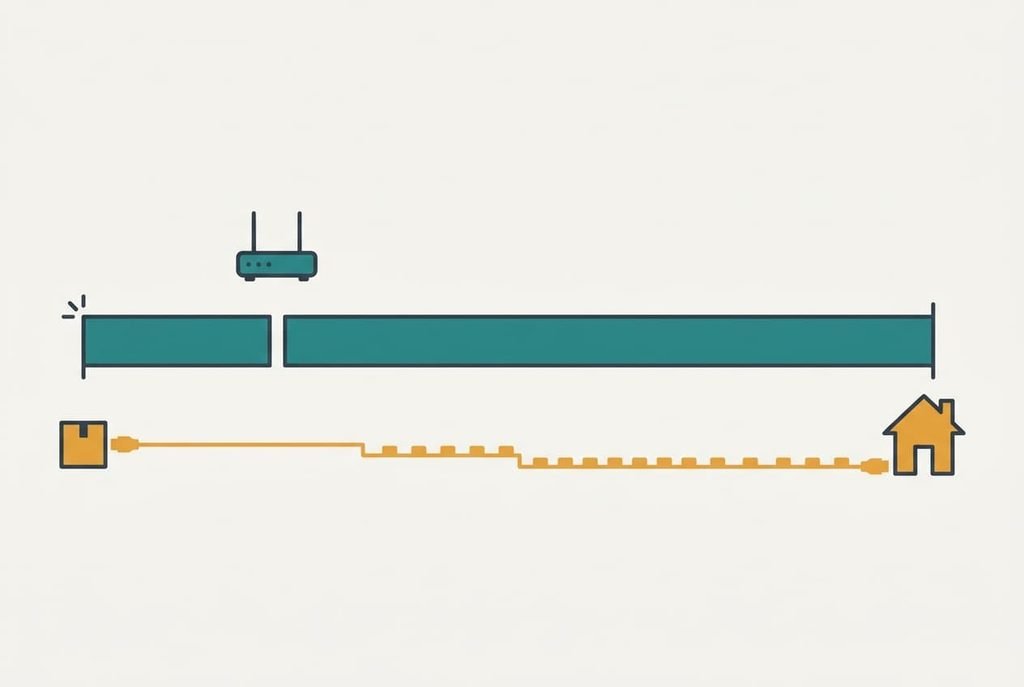
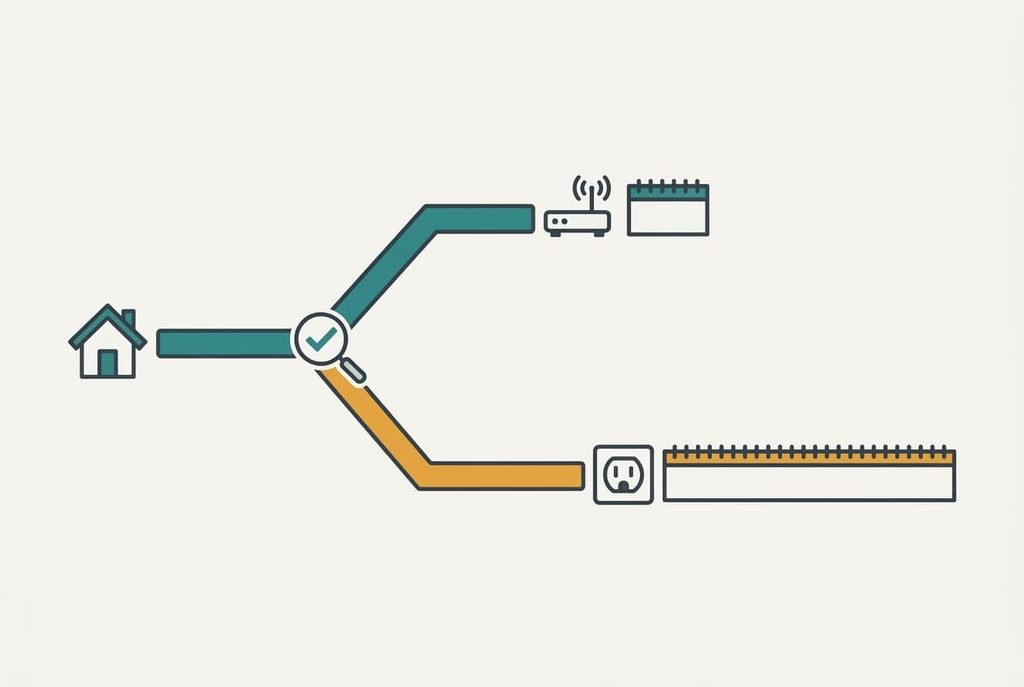
What settles the choice is the wait before you’re online, set against the weeks you’ll stay. Nothing else on the page carries as much weight. A short tenancy rewards whichever connection starts first, since every week without a line means a week of working and banking on a phone. The fixed line comes as a cable on an engineer’s schedule. The mobile router is a radio link that starts when you plug it in. Your first evening in a new flat can already include a video call and a bank transfer.
Put numbers on it. A tenancy of 26 weeks with a three-week wait means 3 ÷ 26, or 11.5%, of the stay without a home connection. A mobile router cuts that to roughly zero. Stretch the stay to 104 weeks and the same wait shrinks to 2.9%. That is why the verdict flips with the length of the tenancy.
Other properties matter, yet they sit behind that wait. A landlord who asks about the property’s wiring won’t change that order. Speed and steadiness change the experience, as do data limits, but none of them changes how many weeks you wait for a connection. They decide how good the connection is once it exists. A connection that doesn’t exist yet can’t be good at anything, however fast the plan sounds in the advert.
How the two options compare, row by row
The table lists six properties that hold whatever the provider or the plan. Price and speed are left out, because both vary too much to compare fairly across plans and flats. Read it as a checklist of what changes when a tenancy is short, not as a scorecard. Mark the rows that matter to the way you live in the flat.
| Property | Mobile broadband router | Fixed line |
|---|---|---|
| Time to first connection | same day | days to weeks |
| Steadiness through the day | varies with the local crowd | the same at any hour |
| Effect of where it stands | large, a metre can change it | none once installed |
| Moving to the next flat | takes the router along | needs a new order |
| Data allowance | may be capped or slowed | usually unlimited |
| Work needed on the walls | none | a socket or a drilled hole |
Only one row surprises people: where the router stands. Moving the router by a single metre can shift a mobile signal by a visible margin, so the first week is partly spent finding the best window ledge and testing the speed at each spot. Once installed, a fixed line shows no such sensitivity. A long tenancy can ignore the row entirely, while a short one should treat it as the main risk.
When the mobile router wins
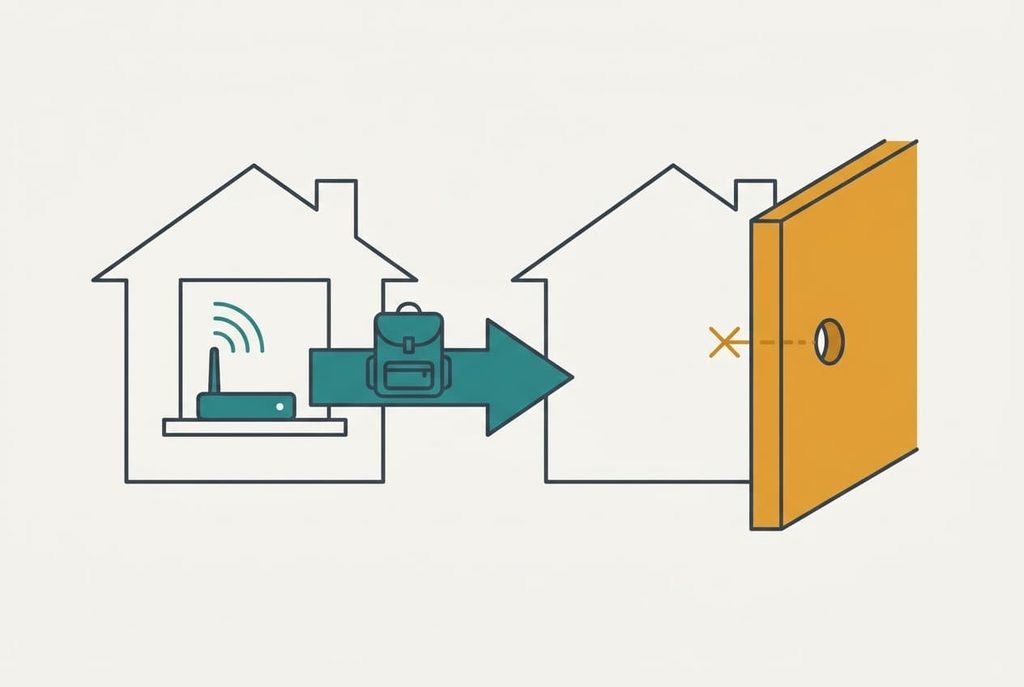
Speed of arrival and an easy exit are where a mobile router wins. It starts the day you plug it in, so the 26-week tenancy loses no weeks. When you leave, there’s no engineer to book and no equipment to return from a flat you no longer live in.
The router simply leaves with you.
It also wins when you can’t alter the building. A fixed line may need a new socket or a hole through a wall, and the owner can refuse both. The router needs a mains plug and a window ledge, nothing more. For a student house with four tenants on a short lease, that’s a decisive advantage.
Choosing a fixed line for a short tenancy only pays when you’ll stay long enough to recover the wait. At 11.5% offline for a half-year stay, the cable is a weak bet unless the signal is poor.
Data limits are the catch. A household of two that streams three hours of video each a day uses about 540 GB a month, assuming 3 GB per hour. Check that the plan covers that figure before you rely on the router.
When a fixed line for a long tenancy wins
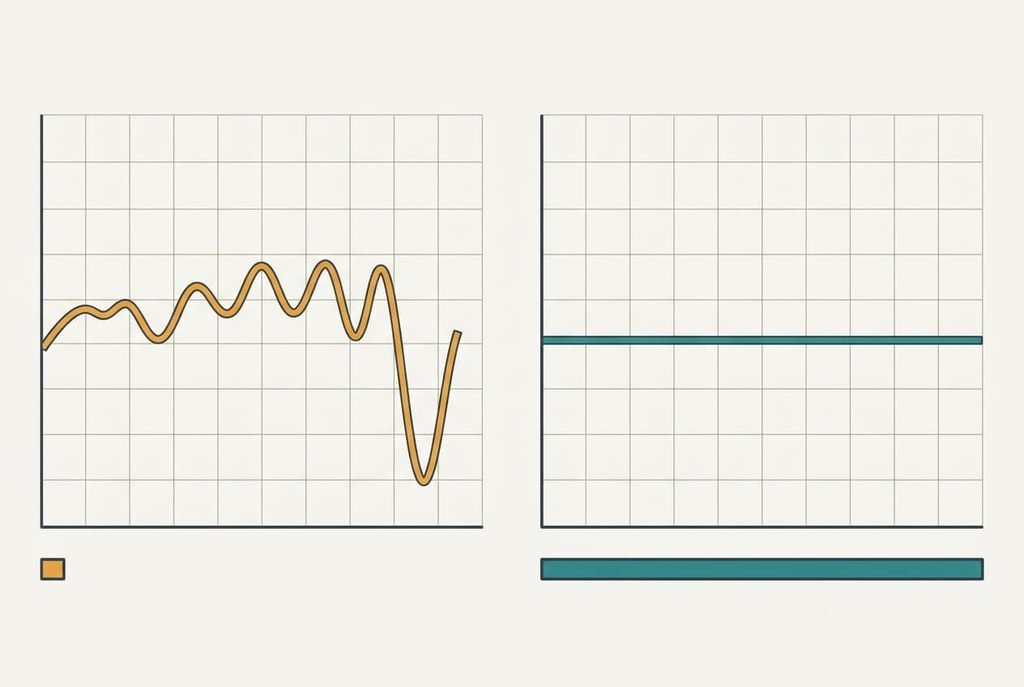
Steadiness is where a fixed line wins. A cable gives the same speed at 20:00 as at 10:00, while a mobile link shares its cell with every neighbour. In the invented flat, the router’s median of 45 Mbit/s drops to about 25 Mbit/s on weekday evenings. That is just when you want to join a video call.
Allowance goes to the cable as well. Fixed plans are usually unlimited, so a household of four can stream and work without watching a meter. That 540 GB a month would trip a cap on many mobile plans. The slowdown after the cap arrives without warning.
Latency favours the cable too. A call over a wired line responds more evenly. A game or a remote desktop notices the difference. Past about eight months, the three-week wait falls below 9% of the stay, and the steadier line starts to repay it.
Position matters less as well. Once the cable is in, nobody has to search for the best ledge, so the setup stays where it was put.
When neither is worth ordering
Take over the line already in the flat when the previous tenant left one active. Ask the landlord or the agent whether a working line and a router remain, and whether the account can transfer to your name. A transfer can be quicker than a new order, and it avoids both the engineer’s visit and the radio lottery.
Ask before you order anything at all.
Another route is the building’s shared connection. Some blocks include broadband in the rent, so read the lease first. Ask the managing agent which services the rent already covers. If one is included, a fixed line for a short tenancy would only add a wait and a bill for something you already have.
For a visit of a few weeks, your phone’s hotspot may be enough on its own. It costs nothing extra and needs no equipment. Battery life and data set the limit. Email and light browsing work, but a full day of video calls will strain it.
How to choose for your tenancy
Choose the mobile router when you’ll stay under about six months and the signal at your window tests well, which you can check by standing at the window and at the desk with a speed test running and taking the lower result. If it clears the figure your work needs, the router fits the stay.
Choose the fixed line when you’ll stay longer than eight months or work on video calls all day, since the steadiness repays the wait and you won’t be watching a data meter. Book the installation visit the day you sign the lease, so the three weeks start early.
Between six and eight months, order the line only if the signal is poor. To settle a fixed line for a short tenancy against a router, count the weeks you’ll stay and test the signal at three spots. Let the lower number decide. That takes ten minutes, and it’s quicker than reading another review. It also uses your own flat as the evidence, so the answer fits the walls you’ll live between.
Questions readers keep asking
Is a mobile router cheaper than a fixed line?
Often it’s cheaper in the short run, because there’s no installation visit and no equipment to return. Over a long stay a fixed line with an unlimited allowance can cost less per month. Compare the total for your tenancy length, not the monthly figure alone.
Will a mobile router drop out more often?
It can slow down more than it drops. Speed falls in the evening when neighbours share the cell. It also changes with the weather and the position of the router. A fixed line holds its speed more steadily, so choose it for work that can’t tolerate a slow patch.
Which suits a flat I share with others?
Evening speed holds up under several users on a fixed line, which is why a busy shared flat suits it. When the lease is short, the router suits the house better, provided the plan covers the combined data. Agree who owns the equipment before the first bill arrives.