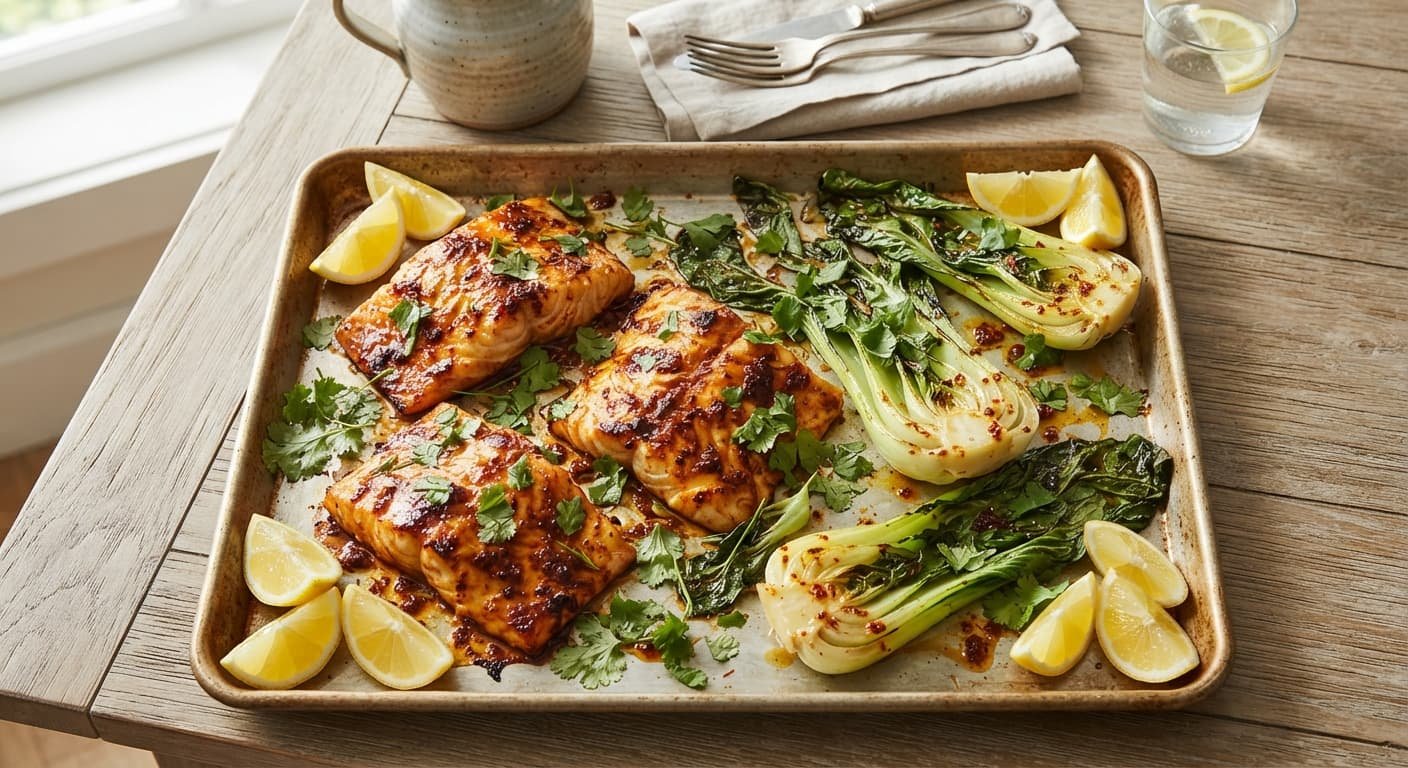
Open the oven door too early and you hear it before you see anything, a thin hiss of steam escaping from around the bok choy leaves, curling up past a pan of white fish gone rust-red where the harissa has settled into a glaze. Wait the extra few minutes it actually needs and that sound has quieted into something closer to a sizzle, fat rendering at the edges of the vegetables while the fish underneath goes from translucent to matte white in the time it takes to set the table. Almost nothing about this dinner asks for real effort. What it asks for is timing.
Halibut and Bok Choy, Timed to Land Together
Sheet pan halibut with bok choy and harissa comes together in about 35 minutes, most of it unattended oven time. The one thing that actually requires attention is staggering when each ingredient hits the pan, since bok choy and halibut don’t cook at quite the same speed.
Halibut is lean and delicate, the kind of fish that goes from perfectly cooked to dry within a couple of minutes of crossing the line, since it has almost no fat to buy back lost time the way a fattier fish like salmon does. Bok choy, meanwhile, holds up fine with a slightly longer stretch in a hot oven, especially at the thicker white base of each stalk, which needs real heat to soften while the leafy green tops stay tender. Giving the bok choy a short head start on the sheet pan before the fish goes in is what lets both finish at roughly the same moment, rather than pulling one out overdone while waiting on the other.
The harissa glaze does more than season the surface of the fish. Brushed on before roasting, its oil content forms a thin barrier over the halibut that slows moisture loss slightly during the short time in the oven, while the honey in the glaze helps it caramelize at the edges rather than just sitting flat and pale on top. That caramelized edge is a genuine visual cue worth watching for: once the glaze has darkened slightly and the surface looks glossy rather than wet, the fish underneath is almost always close to done.
Ingredients
For the Halibut
- 4 halibut fillets, about 6 oz each
- 3 tbsp harissa paste
- 1 tbsp olive oil
- 1 tbsp honey
- 1 tbsp fresh lemon juice
- Salt, to taste
For the Bok Choy
- 4 baby bok choy, halved lengthwise
- 1 tbsp olive oil
- 1 tbsp soy sauce
- 1 clove garlic, minced
- Salt and black pepper, to taste
To Finish
- Fresh cilantro or sliced scallions
- Lemon wedges, for serving
Building the Pan
- Preheat the oven to 425°F and line a sheet pan with parchment.
- Whisk together the harissa, olive oil, honey, lemon juice, and a pinch of salt in a small bowl to make the glaze for the fish.
- Toss the halved bok choy with the olive oil, soy sauce, minced garlic, salt, and pepper.
- Arrange the bok choy cut-side up on the sheet pan and roast for 5 minutes to give it a head start.
- Push the bok choy to one side of the pan. Pat the halibut fillets dry, place them on the empty side, and brush generously with the harissa glaze.
- Return the pan to the oven and roast for another 10 to 12 minutes, until the halibut is just opaque and flakes easily with a fork, and the bok choy is tender with slightly charred edges.
- Scatter with cilantro or scallions and serve directly from the pan with lemon wedges on the side.
What Separates Good From Great Sheet Pan Halibut with Bok Choy and Harissa
A good version has fish that’s cooked through and vegetables that are edible. A great one has halibut that’s still faintly translucent at the very center when it comes out, since it keeps cooking a little from residual heat once it’s off the pan, and bok choy with real char at the base rather than just a uniform, steamed softness. That char depends on the head start; skip it, and the bok choy simply doesn’t have enough time in the oven to develop any real color before the fish is already done.
Where This Sheet Pan Usually Goes Wrong
Adding the fish and bok choy to the oven at the same time is the most common mistake, and it usually means one of two outcomes: either the fish overcooks while waiting on the vegetables, or the bok choy comes out barely softened while the fish is already perfect and cooling on the counter. Pulling the halibut too late is a close second, since a minute or two past done is the difference between tender, flaky fish and something noticeably dry; check it a minute early rather than a minute late. The third habit worth watching is skipping the pat-dry step on the fish before glazing, which leaves the harissa sliding off instead of clinging and caramelizing properly. A fourth, smaller mistake: using bok choy heads that are significantly different sizes without adjusting for it, since the largest stalks will still be underdone by the time the smallest ones are perfectly tender.
Other Directions to Take It
Cod or sea bass both work as substitutes for halibut, following the same rough timing, though thinner fillets will need a few minutes less in the oven. Broccolini stands in well for the bok choy if that’s more available, roasting on a similar timeline. For more heat, an extra spoonful of harissa in the glaze pushes the spice further without throwing off the balance of honey and lemon. A drizzle of tahini thinned with water over the finished dish adds a cooling, nutty contrast if the harissa’s heat needs tempering at the table. However the ingredients shift, sheet pan halibut with bok choy and harissa holds together as long as the staggered timing between the vegetable and the fish stays roughly the same.
What to Put Beside It
Steamed rice underneath soaks up the harissa and soy sauce left on the pan, turning this into a complete meal without much extra effort. A simple cucumber salad with rice vinegar on the side adds some cold crunch against the warmth of the roasted fish and vegetables.
The Next-Day Version
Leftovers keep in an airtight container in the fridge for up to 2 days. Reheat gently in a low oven, covered, rather than the microwave, which tends to push already-delicate halibut further toward dry and rubbery on a second round of heat. This dish doesn’t freeze well, since both the fish and the bok choy lose their texture noticeably once thawed. If you know you won’t finish it within a couple of days, it’s better to plan for smaller portions from the start rather than counting on leftovers to hold up.
Nutrition (Per Serving, Serves 4)
These are estimated values per serving. Actual numbers will vary depending on the exact halibut and harissa used.
| Calories | 320 kcal |
| Protein | 35 g |
| Carbohydrates | 12 g |
| Fat | 15 g |
| Fiber | 3 g |
This recipe was tested and refined in bebup.org’s kitchen before publishing, with particular attention paid to the timing gap between the bok choy and the fish described above.
What Stays With You
What lingers after a plate of sheet pan halibut with bok choy and harissa isn’t really the harissa, sharp as it is against the sweetness of the honey, it’s the small satisfaction of two ingredients with different clocks actually arriving at the table done at the same moment. Most sheet pan dinners lean on convenience alone and let something come out a little wrong as the cost of doing business; this one asks for five extra minutes of attention and pays it back in full.
Sheet Pan Halibut with Bok Choy and Harissa
Ingredients
Method
- Preheat oven to 425°F and line a sheet pan with parchment.
- Whisk harissa, olive oil, honey, lemon juice, and salt for the fish glaze.
- Toss bok choy with olive oil, soy sauce, garlic, salt, and pepper.
- Roast bok choy cut-side up for 5 minutes.
- Push bok choy aside, add halibut, and brush with harissa glaze.
- Roast 10 to 12 minutes more until halibut is just opaque and bok choy is tender with charred edges.
- Garnish with cilantro or scallions and serve with lemon wedges.