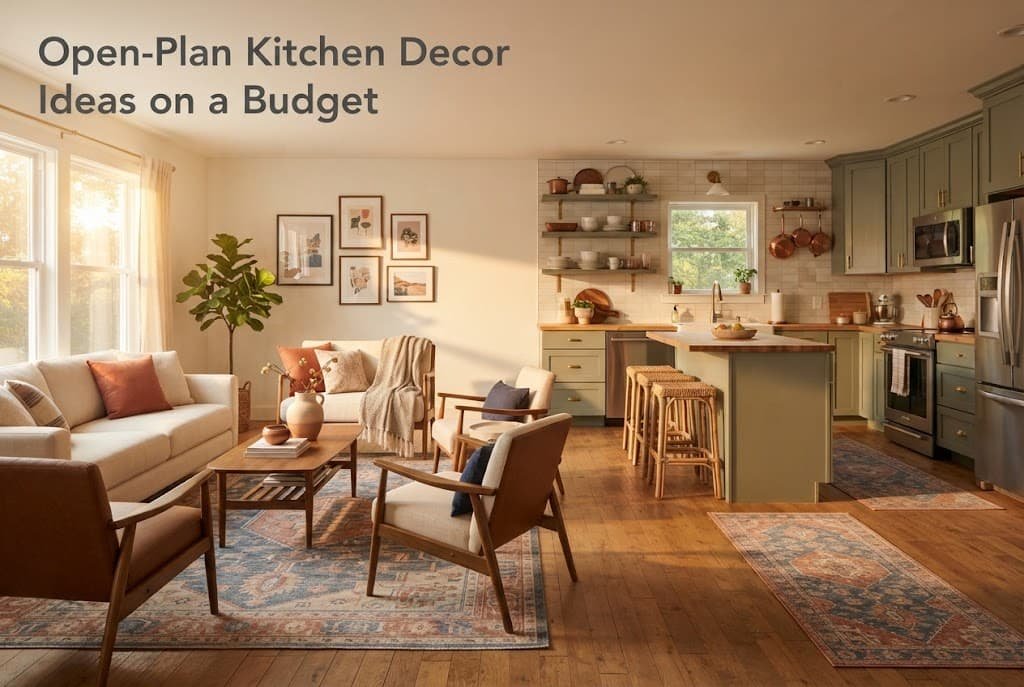
Decorating an open-plan kitchen on a genuinely tight budget isn’t about finding the cheapest version of every single item – it’s about identifying which single connection point genuinely deserves most of your available effort, and which decisions can be genuinely modest without undermining the overall sense of flow between kitchen and living room. Spreading a limited budget evenly across every possible upgrade often produces a weaker result than concentrating it deliberately on what actually matters most.
What actually decides this
The deciding factor is which specific element most strongly signals “connected space” versus “two separate rooms,” not simply how much visible change any given upgrade produces. A single deliberate connection – shared flooring, a coordinated colour note, one repeated material – does more to create genuine flow than several smaller, disconnected updates scattered across both zones without relating to each other.
This single distinction should guide nearly every decorating decision below: concentrate effort where connection actually shows up, and treat everything else as a place to keep genuinely modest without meaningful compromise to the overall sense of flow.
This isn’t the same as simply spending less overall – it’s about redirecting the same modest total budget toward the specific choices where connection actually shows up, and away from choices that improve one zone without addressing the relationship between them. A space decorated with several small, disconnected updates often costs a similar total to one decorated around a few deliberate connection points, but the second approach delivers a noticeably stronger sense of flow for the same overall spend.
What to prioritise, in order
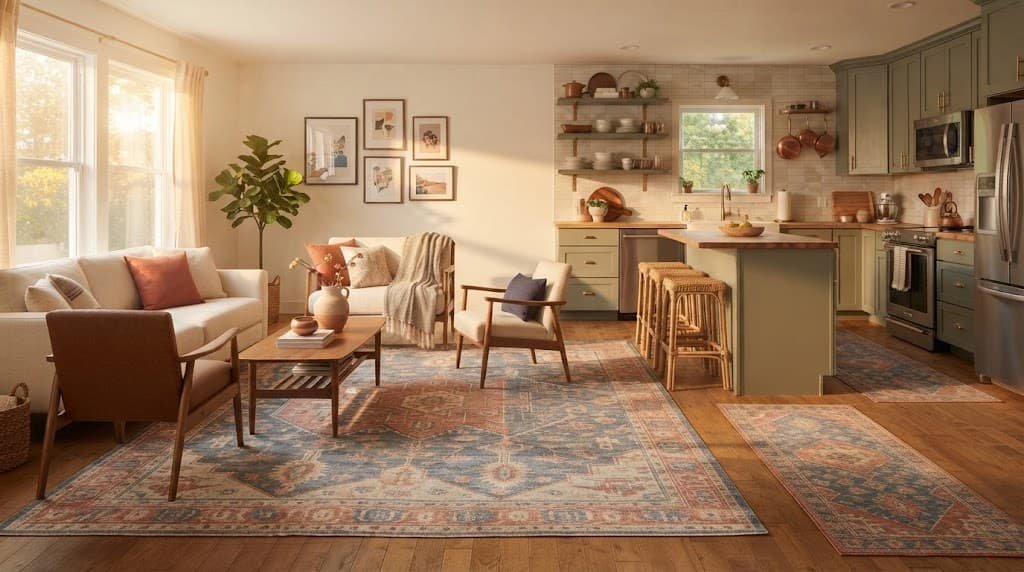
1. A rug that visually bridges the two zones. This deserves the largest share of a limited decorating budget, since a rug spanning or positioned to connect the kitchen and living room flooring creates an immediate, visible sense of continuity without requiring any structural change to the actual floor material underneath. This single addition often does more for perceived flow than several smaller individual updates combined.
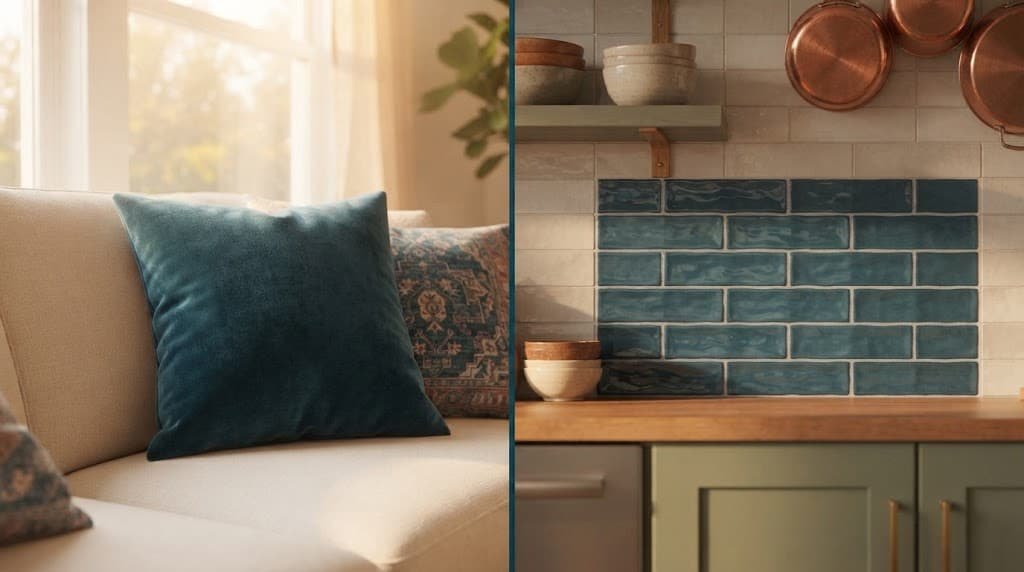
2. Coordinated paint or a shared accent colour between zones. This is the second-largest justified effort, specifically because colour coordination is one of the most cost-effective ways to create connection – a single wall colour or a repeated accent shade appearing in both the kitchen and living room costs relatively little while meaningfully reinforcing the sense of one considered space.
3. One repeated material or finish, kept modest in scale. A small amount of the same wood tone, metal finish, or texture appearing in both zones – a few open shelf brackets matching a living room lamp base, for instance – extends the connection principle without requiring a significant material investment across the whole space.
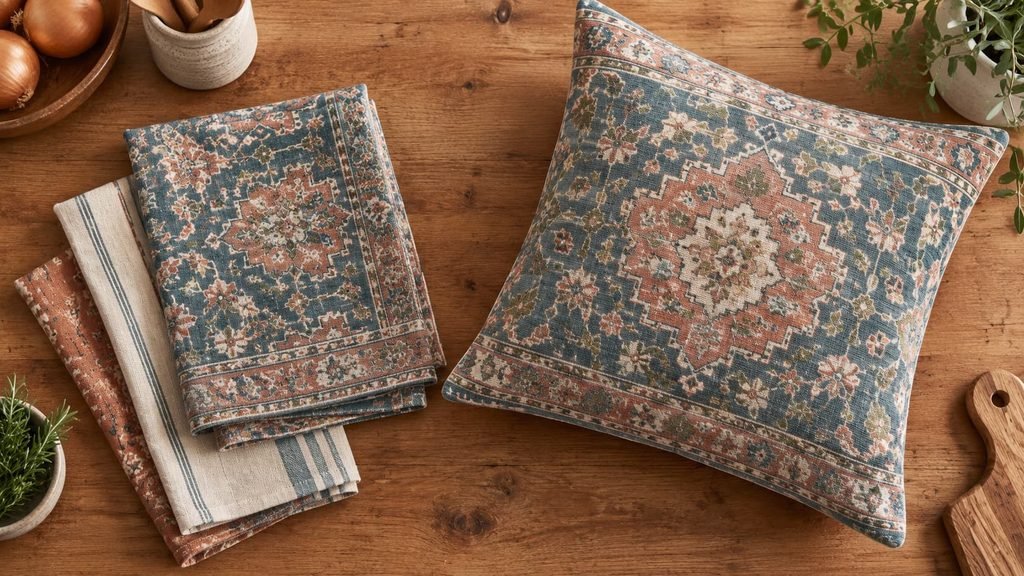
4. Kitchen textiles that echo the living room’s existing palette. Tea towels, a bar stool cushion, or a simple window treatment that picks up a colour or pattern note already present in the living room is a modest addition to the total budget but meaningfully reinforces the connected feeling established by the choices above.
5. Purely decorative objects with no functional role. Vases, standalone art pieces, and small decorative accents belong last specifically because they carry the least weight in establishing genuine flow between zones – a modest option here performs nearly as well as an expensive one for this particular purpose, making this the easiest category to economise on without a real trade-off.
Where secondhand genuinely makes sense
A bridging rug is a genuinely reasonable category to consider secondhand, since a well-maintained rug shows relatively little wear that affects its actual visual function, and rugs in particular tend to be available secondhand at considerably reduced cost compared to buying new. Checking carefully for genuine cleanliness and any embedded odour before actually committing covers most of the genuine risk this specific category presents.
Kitchen textiles and small decorative accents are considerably weaker candidates for buying secondhand specifically, since these particular items are typically quite inexpensive to buy new in the first place, meaning the potential saving from buying used rarely justifies the additional effort of sourcing and inspecting them compared to simply purchasing new modest options directly.
What doesn’t matter as much as it’s made out to
Matching every single kitchen and living room furniture piece to an identical style is oversold, and it’s one of the first things budget decorating guides recommend for open-plan spaces. Forcing complete stylistic uniformity across two zones with genuinely different functions often reads as less considered than a coordinated but not identical approach, while also typically costing more than the connection-focused choices above that achieve a stronger sense of flow for less.
New kitchen hardware and fixtures get far more decorating attention than they deserve relative to the connection points above. Updated cabinet handles look pleasant in isolation, but they do considerably less to address whether the kitchen and living room read as one considered space than a bridging rug or a coordinated colour note does for meaningfully less effort and cost.
Matching the choice to your situation
If you’re decorating a kitchen and living room that already share the same flooring, prioritise the colour-coordination and repeated-material categories first, since the strongest connection point is already structurally present and your remaining budget can focus entirely on reinforcing it further.
If your flooring genuinely differs between the two zones and can’t be changed, prioritise the bridging rug most heavily of all, since this becomes the single most effective tool available for creating visual continuity when the underlying floor material itself can’t provide it.

What to walk away from
Any decorating plan that treats the kitchen and living room as entirely separate projects with entirely separate budgets should be reconsidered immediately, regardless of how organised that separation initially seems.
Splitting a limited budget into two isolated pools – one for “kitchen decor” and one for “living room decor” – without any shared line item for the connection points that actually matter most tends to produce two adequately decorated but visually disconnected zones, which defeats the actual purpose of decorating an open-plan space specifically for flow.
The check before you commit
Before finalising any purchase, stand in the living room’s main seating position and imagine the planned change in place, specifically asking whether it strengthens the visual link to the kitchen or simply improves one zone in isolation.
This one single mental check reveals whether a planned purchase actually serves the open-plan space’s core challenge more reliably than simply browsing for individually attractive items ever does, since an item that looks genuinely appealing on its own can still entirely fail to address the connection this specific type of space genuinely needs.
Questions readers keep asking
What’s the single most impactful budget decorating choice for an open-plan kitchen?
A rug that visually and genuinely bridges the kitchen and living room zones typically delivers the most noticeable sense of connection for the effort actually involved, since it addresses flooring continuity directly without requiring any structural change to the space itself.
Is it worth buying matching furniture for both zones to save money?
Not necessarily at all – forcing identical furniture across two functionally different zones often costs meaningfully more than a coordinated approach while producing a less considered result than deliberate colour and material connections genuinely achieve for meaningfully less.
How can I create flow between zones without changing the flooring?
A bridging rug, coordinated paint or accent colours, and a small repeated material or finish between the two zones together create meaningful visual continuity even when the underlying floor materials genuinely can’t be changed or matched.
Should I prioritise the kitchen side or the living room side of the connection first?
Neither specific side inherently deserves priority over the other – the connection points that matter most, like a bridging rug or a genuinely coordinated colour, work by definition across both zones simultaneously rather than favouring one side over the other. Thinking in terms of “the connection” rather than “the kitchen” or “the living room” separately tends to produce better decorating decisions overall.