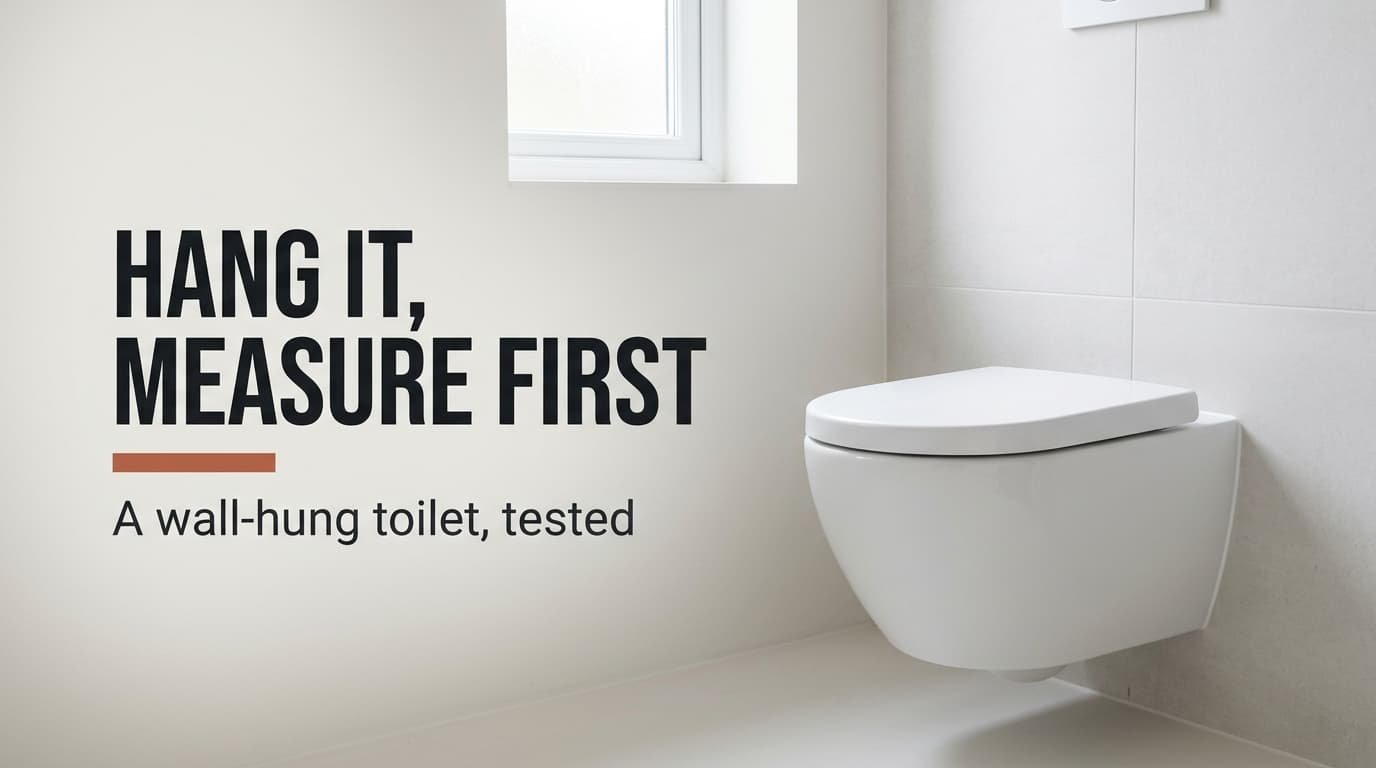
A toilet with nothing under it looks like a luxury, and in a bathroom of 160 × 200 cm it looks like extra room. Toilets that hang on the wall have found their way into many Dutch renovations for that reason. The floor runs unbroken beneath the bowl, and a mop passes straight through. The saving in space turns out smaller than the look suggests, though. This page measures the change in a bathroom of 3.2 m² and asks which households actually gain. Read each figure as a rounded assumption for one room, and test it against the room you have.
Where Toilets That Hang on the Wall Came From
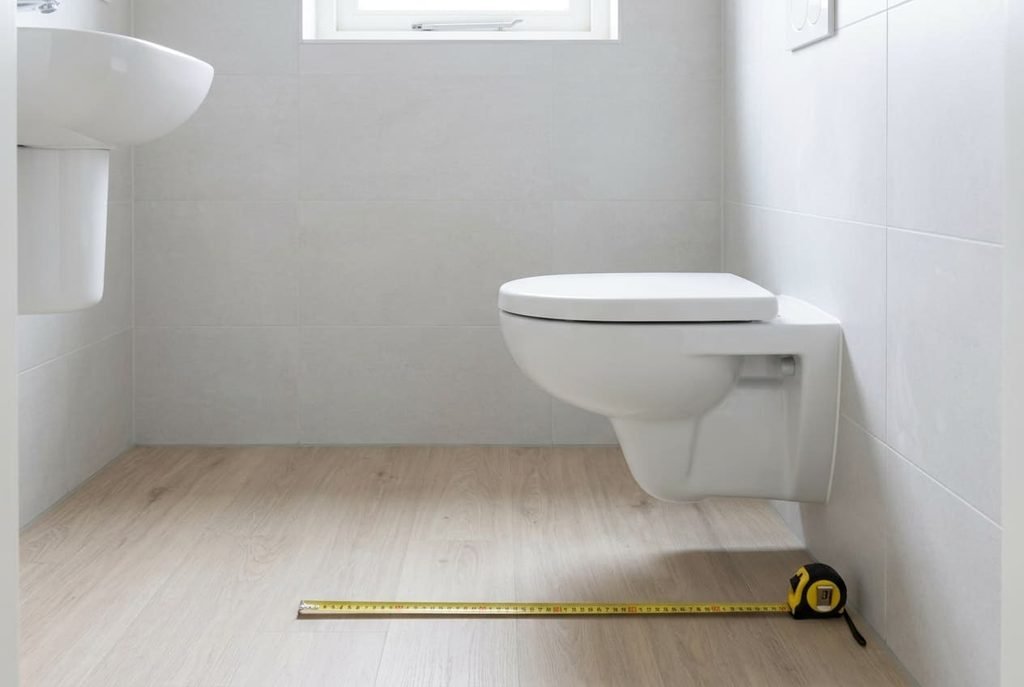
The idea travelled from public buildings into homes. Cleaners there needed bare floors, and a bowl on the wall can’t trap dirt at its base. Renovators noticed the same benefit at home. A bowl bolted to a steel frame inside the wall leaves nothing standing on the tiles. The cistern lives inside that frame, and only a flush plate shows. A floor-standing pan carries its cistern behind the bowl, which pushes the whole fitting about 70 cm out from the wall.
Several things made the hanging type attractive in small flats. Large tiles run to the wall in one sweep, and a pan on a base breaks that line. A floor with no base to work around takes a single pass of the mop. The frame also fixes the bowl wherever the owner chooses, so households of different heights can set the seat at a comfortable level. Plumbers like the frame too, since it carries the weight and the pipe work in one tested unit.
The space argument arrived later, and the next section tests it.
What Toilets Hanging on the Wall Change, in Centimetres
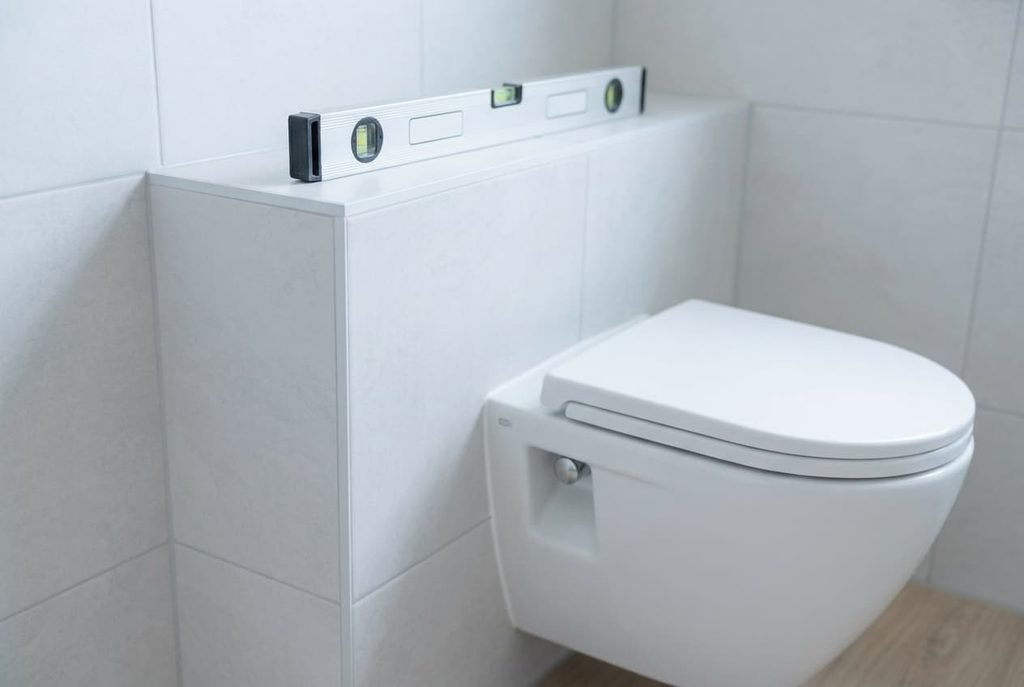
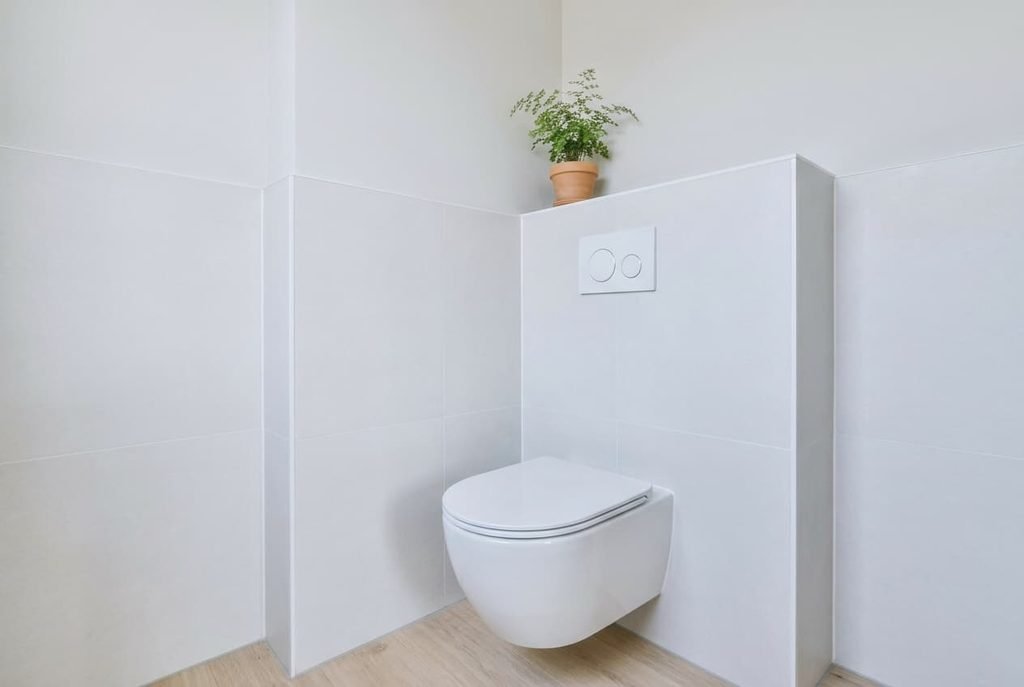
Take a bathroom measuring 160 by 200 cm. The toilet stands against a short side, facing the door. A floor-standing pan with its cistern reaches 70 cm into the room. A hanging bowl projects 54 cm from the wall face it hangs on, which looks like a saving of 16 cm. The frame behind it is 12 cm deep, which becomes 15 cm once the box is boarded and tiled. When the wall must be boxed out, the bowl sits 16 cm closer to the wall, but the box that hides the frame takes 15 cm back, so the net gain is 1 cm.
The picture changes when the frame can go inside a stud wall thick enough to hold it. Then the box adds nothing and the full 16 cm is yours. A masonry wall with the soil pipe fixed behind it usually forces the box.
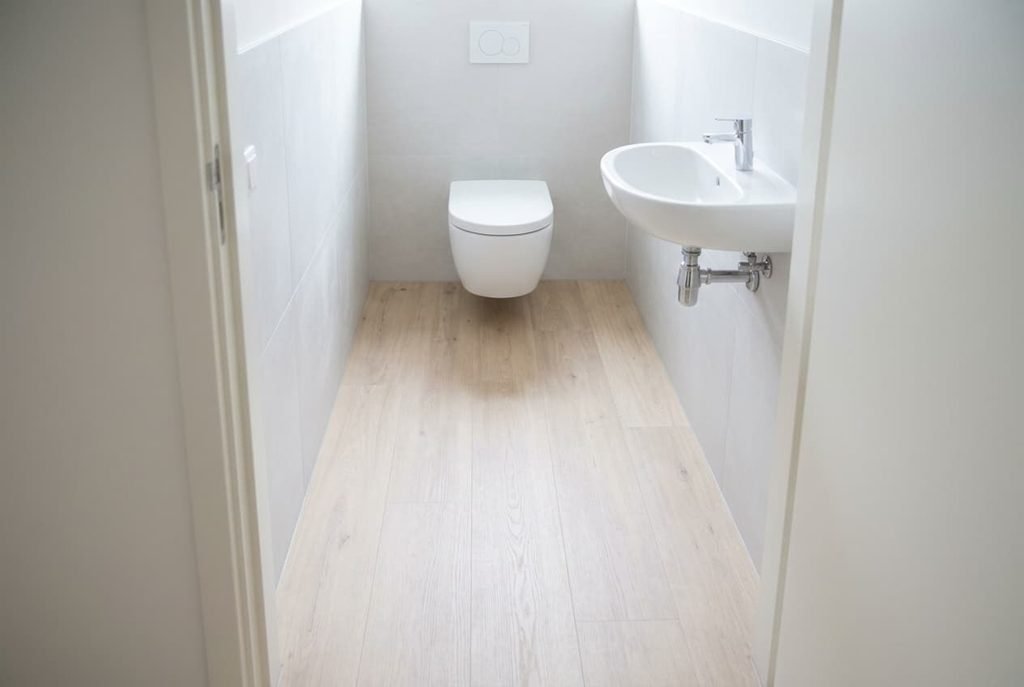
Two other changes hold either way. Floor visible under the bowl grows by the 36 × 70 cm patch the old pan covered, about 0.25 m². The cleaning stroke then runs without a break. The seat can also be set anywhere from about 41 to 48 cm, where many floor pans sit at a fixed 40. In practice toilets that hang on the wall trade a small gain in depth for a large gain in tidiness. The top of the box gives you a ledge about 15 cm wide for a plant.
Which Bathrooms Gain Most From the Change
Toilets that hang on the wall suit households that are replacing the whole bathroom. With the wall already open, the frame adds only a few hours of work. The box can be planned into the layout instead of bolted on afterwards. A family with a wide spread of heights gains most from the adjustable seat, and a shared house gains from the simpler cleaning stroke.
A rented bathroom is a poor match. The frame becomes part of the wall, which a landlord won’t approve. The idea also fits badly where the soil pipe is fixed in a masonry wall, because the box then takes the full 15 cm. A very narrow room of 90 cm across loses more to the box than the bowl returns.
Money matters here in relative terms. The frame and its labour add up to more than a standard pan fitted in an hour. A household that plans to move within two or three years seldom earns that difference back.
Think about who will use the room day to day, too. A tall user gets a real benefit from a seat set a little higher. A guest bathroom that sees one visit a month gains almost nothing.
Is Hanging the Pan Worth It?
The answer comes down to the wall. It earns its keep only when the frame can go inside a wall and the whole bathroom is being redone, because then the 16 cm is real and the extra work is shared alongside the other jobs. In a masonry wall with a fixed pipe, the gain is 1 cm and appearance is the only argument left.
Appearance is a fair argument. A continuous floor lets a small room look wider, and that’s real value to some owners. It should be weighed against a higher bill and against a flush mechanism that now lives behind a plate. Repairs reach it through that opening, which is routine yet less direct than lifting a lid. Do the sums honestly before choosing. A bathroom that gains 1 cm has bought a look and nothing more.
The Extreme Version Nobody Needs
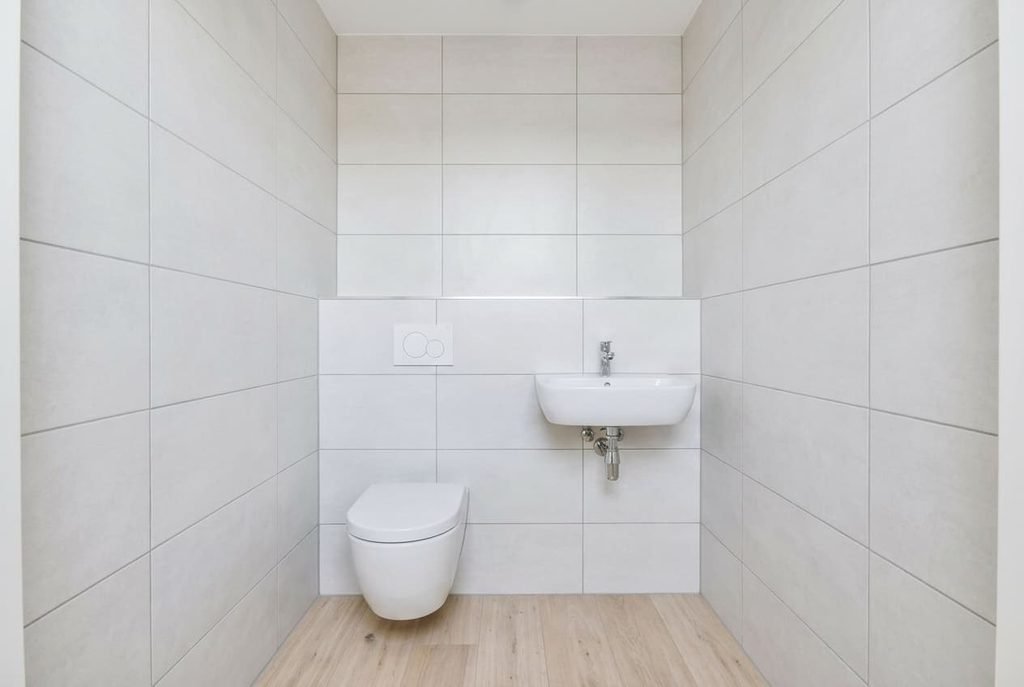
Some renovations push the idea further and wrap every fitting in one tiled bulkhead, 25 cm deep, running the whole 200 cm wall. It hides the pipes and lets the toilet and basin float along one clean line. The bulkhead alone covers 25 by 200 cm, a floor area of 0.5 m², or about 16% of the 3.2 m² room. A full-width bulkhead takes more room than the toilet change could ever return, and a later repair becomes a job for a tiler.
The cost resembles a corridor nobody walks down. Every centimetre of that depth is floor you’d otherwise stand on. Such a block also needs a tiler to cut every edge, and it’s the corners that raise the bill. A single 15 cm box behind the toilet does the useful work, and the remaining wall stays plain and cheap to alter. The long bulkhead belongs in a photograph of a large bathroom, where the lost 0.5 m² is a rounding error.
A Tape Test Before You Commit
Mark the layout on the floor, then judge it standing in the doorway. Stick one strip of tape 54 cm from the wall for the bowl and a second at 69 cm for the box, because you’ll need both numbers. Sit on a chair at 42 cm and see where your knees meet the door or the basin. If the 69 cm line leaves less than 60 cm before the nearest door or basin, the plan is too tight and the floor pan should stay. Leave the tape down for two days.
The whole test costs one roll of tape and gives a better answer than any showroom photo.
Whether toilets that hang on the wall suit your bathroom comes down to what stands behind the pipe and the size of the project, and the strips of tape settle the rest. Measure the 54 and 69 cm lines before you book anything, and leave the old pan in place when the wall is solid brick or the lease is short. A smaller gain honestly counted beats a larger one assumed.
Questions Readers Keep Asking
Should I swap the toilet I already have?
Only if the whole bathroom is being redone and the frame can sit inside a wall. In a rented room, or against a masonry wall with a fixed pipe, the gain is about 1 cm and the extra cost is real, so keeping the floor pan is the sensible choice.
Who is a hanging toilet best for?
Households renovating the whole room get the most, especially when family members differ in height. They gain a continuous floor and a seat set to suit them. It’s far less useful in a bathroom narrower than 100 cm, where the box takes more room than the bowl returns.
How long does a wall-hung toilet last?
The ceramic bowl lasts as long as a floor-standing one, since it’s the same material. Its steel frame is built to carry far more than a person weighs and rarely gives trouble. What wears is the flush mechanism, so keep the access opening clear and you’ll be able to replace it in minutes.