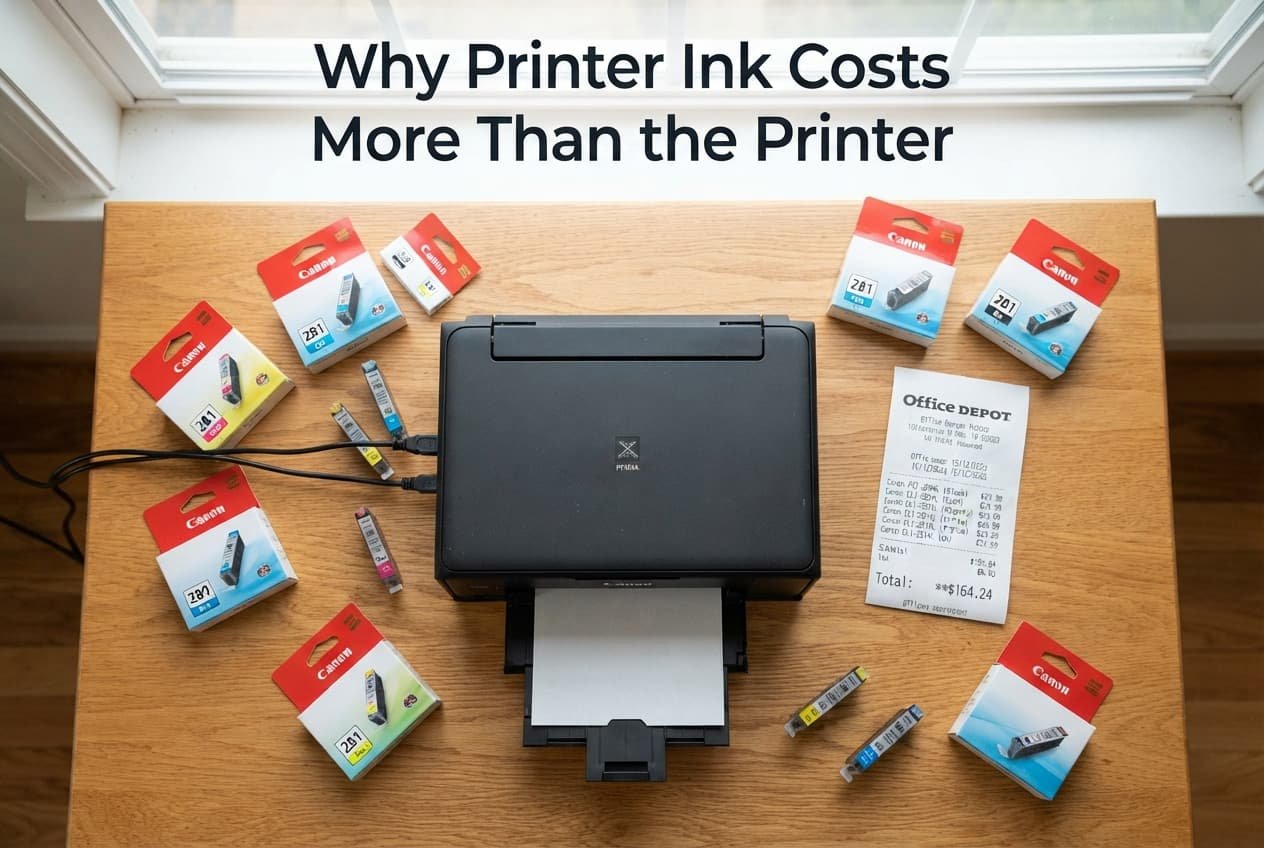
A cheap printer and expensive ink genuinely aren’t a manufacturing mistake at all – they’re a deliberate, calculated business strategy, one where the printer itself is often sold at or genuinely near cost specifically so the ink can generate the actual profit over the device’s entire lifespan. Understanding this strategy explains both why printer prices seem surprisingly low, and why the ink cartridges that follow feel disproportionately expensive by comparison.
The short answer, and what it leaves out
Printer manufacturers typically price the printer itself close to their actual manufacturing and distribution cost, then price ink cartridges considerably above their own production cost, since the ongoing ink purchases over a printer’s lifespan generate meaningfully more total revenue than a one-time printer sale alone would provide.
What that leaves out is why this specific strategy works at all – once you own a particular printer, you’re generally locked into that manufacturer’s specific cartridge design, meaning the initial low printer price creates a captive ongoing customer for ink purchases, a dynamic considerably different from a typical one-time product purchase.
How it actually works, step by step
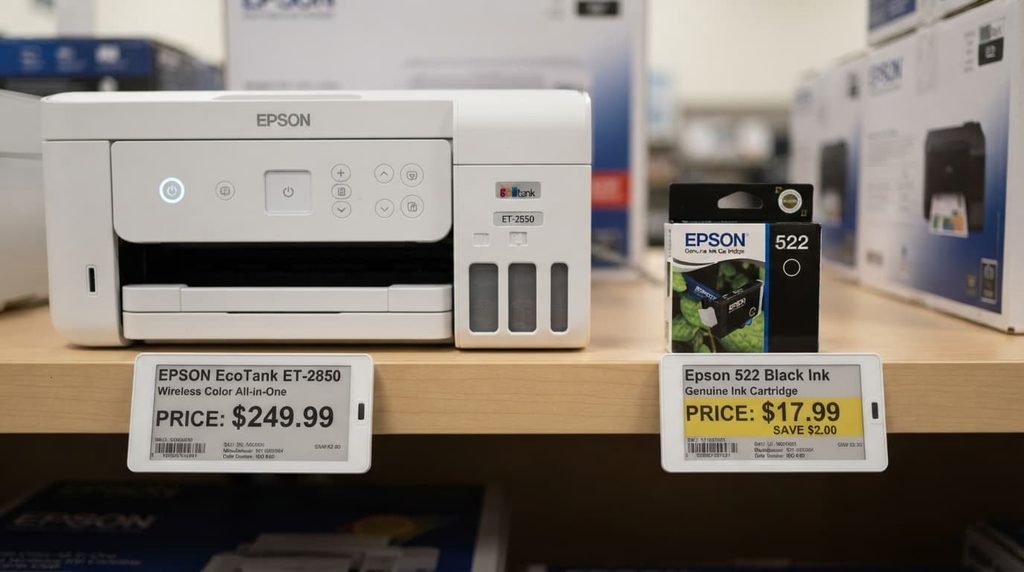
When a manufacturer designs a new printer model, they typically calculate the printer’s retail price to be genuinely competitive, often close to or even below their actual production cost, specifically to make the initial purchase decision easier for a price-conscious buyer comparing several models.
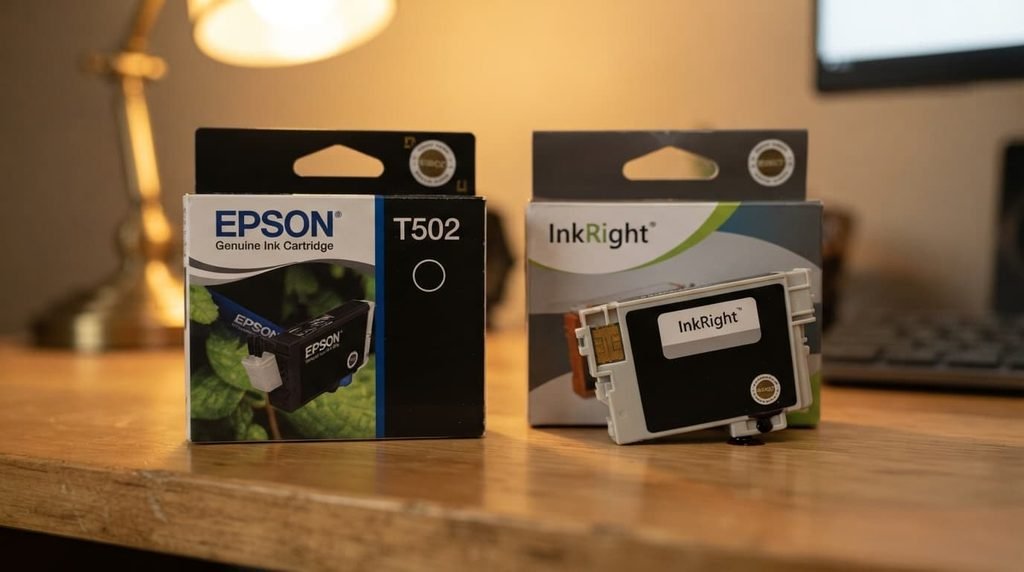
The manufacturer then designs cartridges specific to that printer model, using proprietary chips or designs that prevent easily substituting cheaper generic alternatives, which secures the ongoing ink revenue stream the initial low printer price was specifically designed to set up.
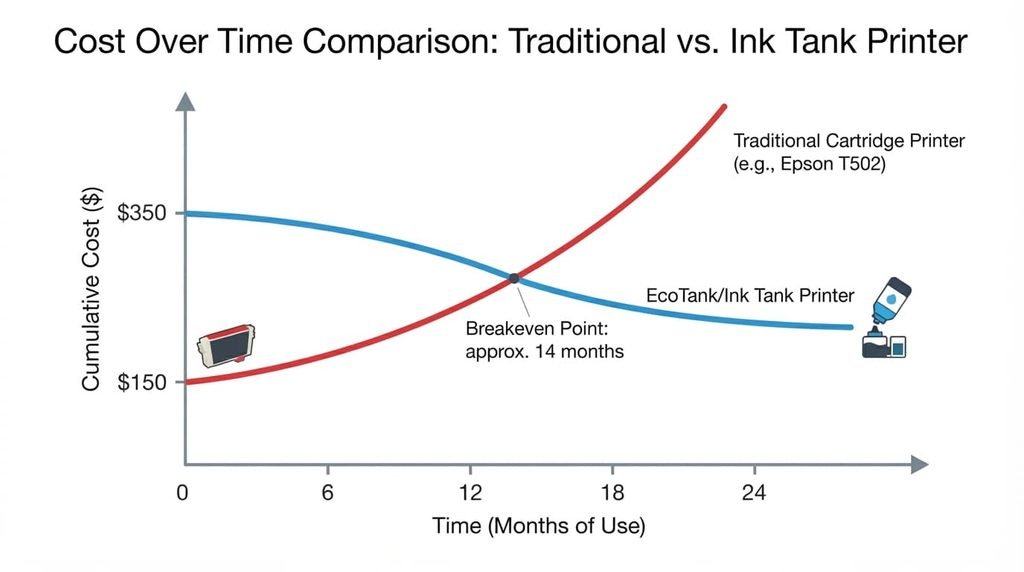
Over the printer’s actual lifespan, the cumulative cost of genuine cartridge replacements typically exceeds the original printer price, sometimes considerably, which is where the manufacturer’s actual profit margin on this specific product category primarily comes from, rather than from the initial printer sale itself.
Why manufacturers can maintain this strategy despite widespread awareness
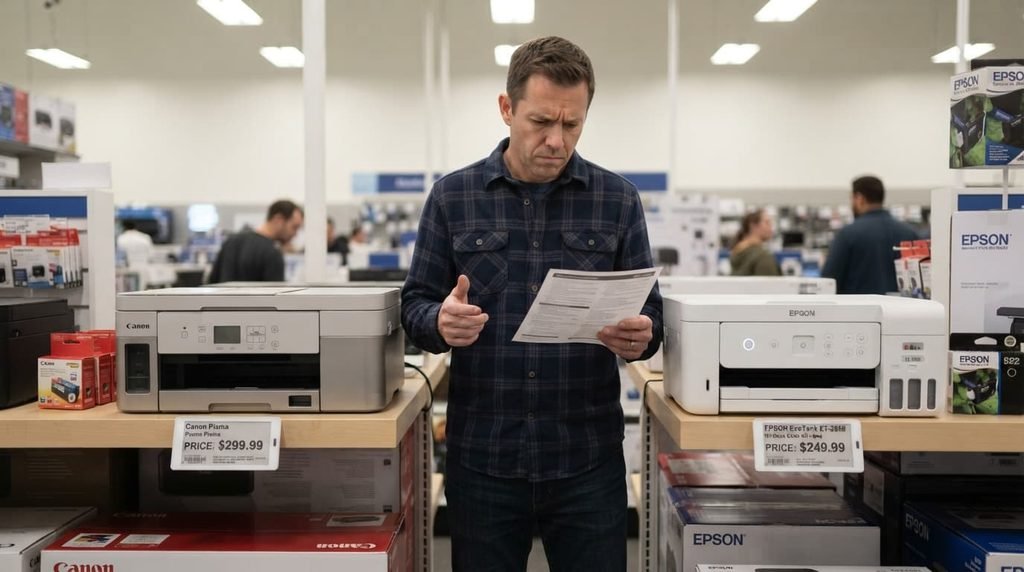
Even though this pricing strategy is genuinely well-known and widely discussed, it persists specifically because switching printer brands entirely, once you already own a specific printer, involves genuine additional cost and inconvenience that often outweighs the awareness of ongoing ink markup alone. This switching friction is part of what sustains the strategy’s effectiveness even among consumers who genuinely understand how it works.
Brand loyalty and genuine satisfaction with a specific printer’s actual print quality or reliability also factor in, since a consumer satisfied with their printer’s actual performance may consciously accept the known ink premium as a reasonable trade-off for continuing to use equipment they’re genuinely happy with, rather than switching purely to escape ink costs alone.
The analogy, and where it breaks
This pricing strategy is sometimes compared to selling razors cheaply while profiting from the ongoing blade replacements – a low upfront cost creates a captive customer for an ongoing, recurring purchase the manufacturer specifically profits from.
The analogy holds well for the core captive-customer mechanism – both involve a low-cost initial purchase creating dependency on a specific ongoing, proprietary consumable. It breaks somewhat because razor blades typically involve less dramatic price disparity between the initial product and the ongoing consumable than printer ink often does, where the ink cost gap tends to be considerably more pronounced than in most other captive-consumable business models.
What this does not explain
The captive-consumable explanation clarifies the overall pricing strategy, but it doesn’t explain or address every specific pricing detail – actual ink formulation costs do genuinely vary by cartridge type and printer technology, meaning not all of the price premium is purely strategic margin, since genuine production cost differences between cartridge types do meaningfully exist.
It also doesn’t explain why some manufacturers now offer subscription-based ink programs specifically, since this represents a genuinely different pricing approach – shifting from per-cartridge purchases to a predictable recurring fee – that changes the underlying economics somewhat from the traditional captive-consumable model described above.
What people get wrong about it
The belief that expensive ink genuinely reflects proportionally higher manufacturing costs compared to the printer itself. This forms because ink cartridges do involve genuine production costs, but the price premium considerably exceeds what those production costs alone would justify, with the difference reflecting strategic margin rather than purely the ink’s actual manufacturing expense.
The belief that generic or third-party ink cartridges are automatically an equally good, risk-free alternative. While generic options can genuinely offer meaningful savings, quality and compatibility vary considerably between different generic manufacturers, meaning this alternative carries genuine trade-offs worth weighing rather than being a universally risk-free substitute for original cartridges.
Where the popular explanation oversimplifies
Advice describing printer pricing as simply “companies being greedy about ink” glosses over the meaningful strategic logic behind the pricing structure, treating it as arbitrary exploitation rather than accurately reflecting a deliberate, calculated business model most printer manufacturers openly employ across the broader industry.
This distinction genuinely matters practically: understanding that the entire pricing structure is deliberately designed around the printer-ink relationship specifically, rather than the printer and ink being priced independently of each other, helps explain why comparing printer prices alone, without genuinely considering long-term ink costs, often leads to a genuinely misleading sense of which option is actually more affordable over time overall.
Printer pricing works as one connected strategy specifically, where a low printer price and high ink price are two parts of the same deliberate business model, not independent pricing decisions – which is why comparing only the upfront printer cost misses the more meaningful long-term cost comparison. Understanding it as one connected pricing strategy, rather than two separate product decisions, is the detail most explanations skip, and it’s the one that actually explains why the cheapest printer often isn’t the cheapest choice over time.
Questions readers keep asking
Does buying a more expensive printer upfront genuinely save money on ink over time?
Sometimes, yes genuinely – some printer models specifically marketed around lower long-term ink costs can genuinely offer better total overall value over the printer’s entire lifespan, making it worth researching a specific model’s actual ongoing ink cost pattern, not just its upfront price, before purchasing.
Are ink subscription programs genuinely a better deal than traditional per-cartridge purchases?
This genuinely depends considerably on your own actual printing volume specifically – subscription programs often work out favourably for regular, predictable printing needs, while infrequent printers may find traditional per-cartridge purchasing more genuinely cost-effective for their particular usage pattern.
Do printer manufacturers ever compete specifically on ink cost rather than printer price?
Yes, and quite increasingly so – some manufacturers have genuinely begun marketing specifically around lower long-term ink costs as a genuine competitive differentiator, recognising that awareness of this pricing strategy has made some consumers genuinely prioritise total cost of ownership over the lowest possible upfront printer price alone.
Is it worth researching a printer’s actual long-term ink costs before purchasing, rather than just comparing upfront prices?
Genuinely, yes – given how significantly ink costs can exceed the printer’s own price over its lifespan, researching a specific model’s actual typical ongoing ink expense provides a considerably more accurate picture of genuine total cost than comparing upfront printer prices alone ever could.