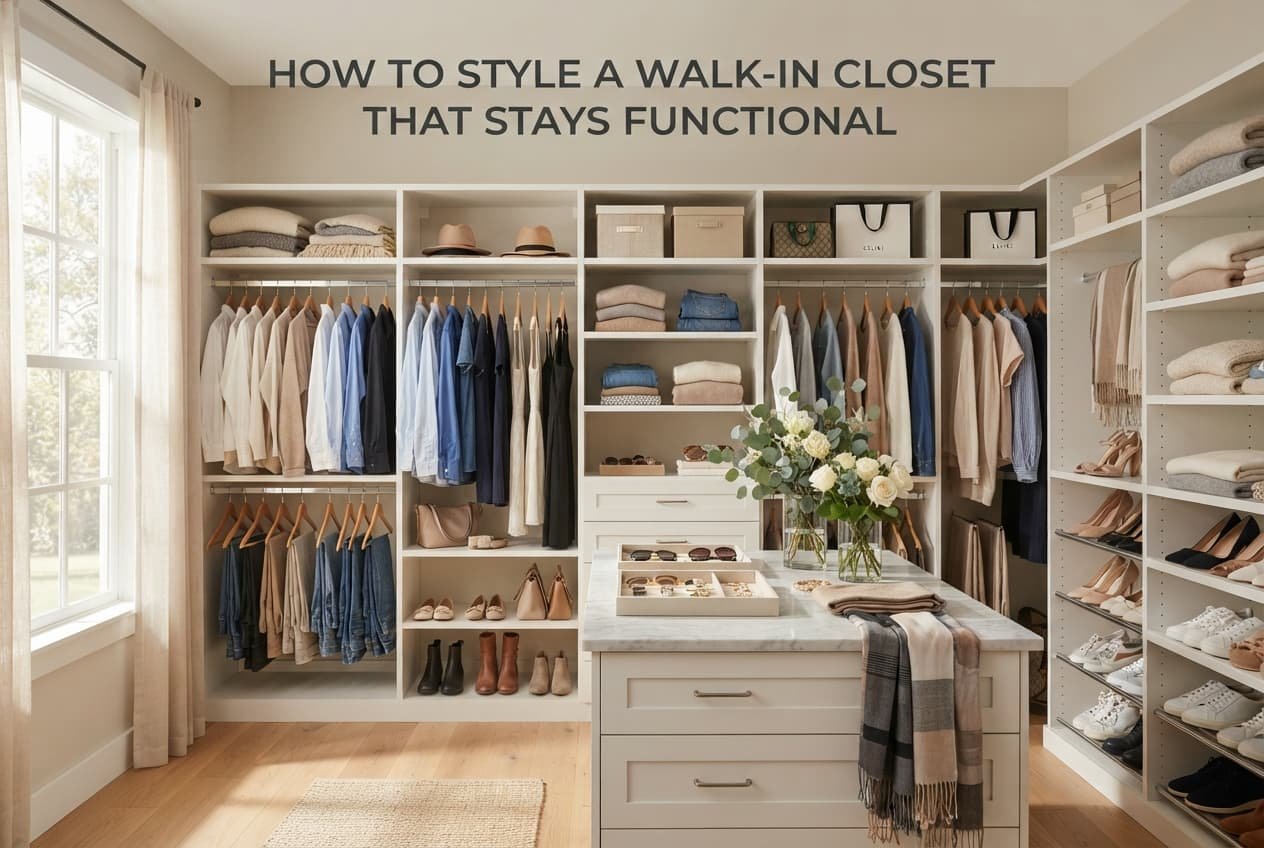
A walk-in closet styled purely around visual appeal often becomes genuinely difficult to actually use within just a few weeks, once daily clothing choices collide with a space arranged for how it photographs rather than how a household actually gets dressed every single day. Styling a walk-in closet to actually stay functional means prioritising the specific elements that support daily habits, with visual appeal following naturally from that functional foundation rather than competing with it.
The one decision that shapes this space
The deciding factor is whether the closet’s layout genuinely matches how you actually select and retrieve clothing daily, not simply whether it looks attractive when freshly organised. A closet with beautiful open shelving but no genuine system for daily rotation will have items migrating out of place regardless of how well everything was initially arranged, since the actual daily habit needs a system that supports it, not just an attractive initial arrangement.
This single core distinction – a layout genuinely matching real daily retrieval habits, not just initial visual arrangement – should genuinely guide nearly every choice made below, more than any specific style trend or organisational convention.
Getting the daily essentials genuinely covered
Position your most frequently worn items at genuinely easy, comfortable eye-level access specifically, since items requiring more effort to reach – high shelves, deep drawers – are naturally used considerably less consistently over time, meaning your actual daily rotation genuinely benefits from easy access matching actual frequency of use closely.
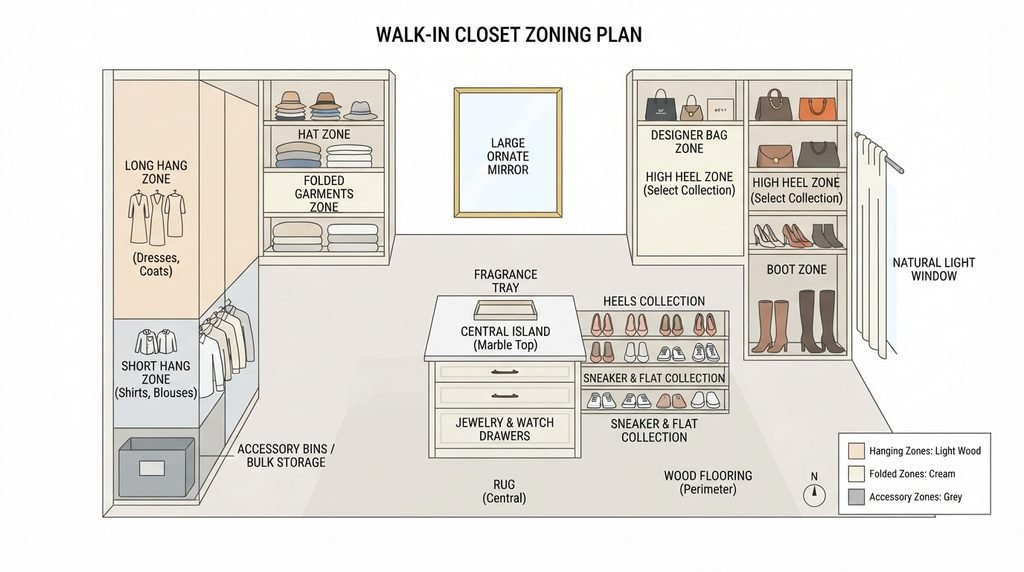
Provide genuinely designated zones by category – tops, bottoms, specific occasion wear – rather than one single undifferentiated hanging area, since a closet without genuine categorisation makes daily selection noticeably slower and makes maintaining organisation over time considerably harder than a system with genuinely clear designated zones throughout.
What the storage is actually doing
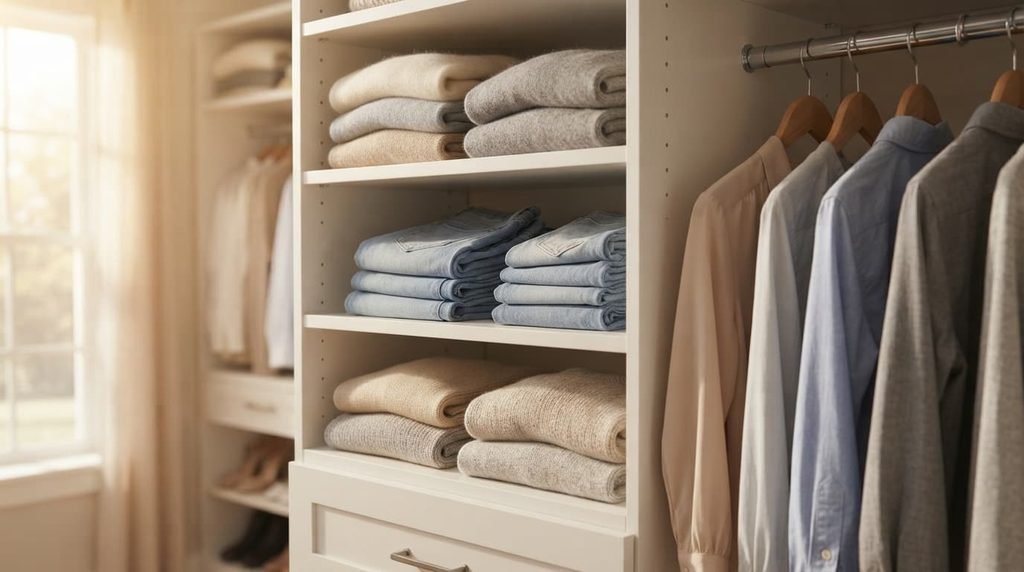
Choose storage solutions genuinely well suited to how you actually fold or hang each specific type of item, rather than one uniform approach applied to everything regardless of the actual item type, since genuinely forcing every item into the same storage method often results in items that don’t fit that method well being handled quite inconsistently or left entirely out of place.
Keep at least some storage genuinely visible and open rather than entirely concealed, since fully hidden storage can result in items being reached for less often simply because they’re not visually present as a reminder, particularly for occasion-specific items you might otherwise forget you own.
Choosing lighting and a mirror that actually work for the space
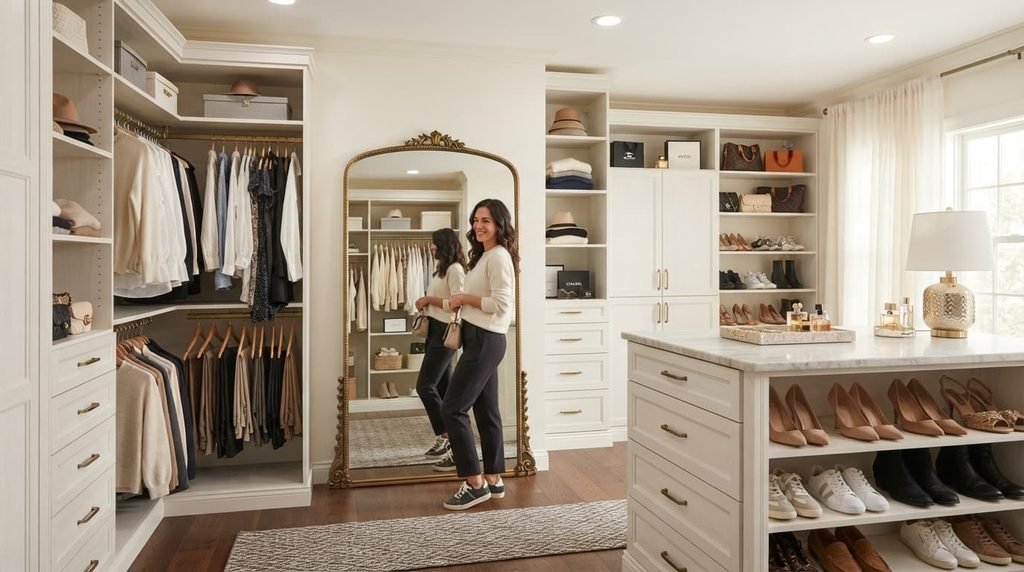
Ensure adequate, genuinely even lighting throughout the closet specifically, since accurately seeing colours and details when selecting an outfit becomes considerably harder in dim or unevenly lit conditions, which can slow down daily routine and make the space feel less genuinely functional regardless of how well it’s organised.
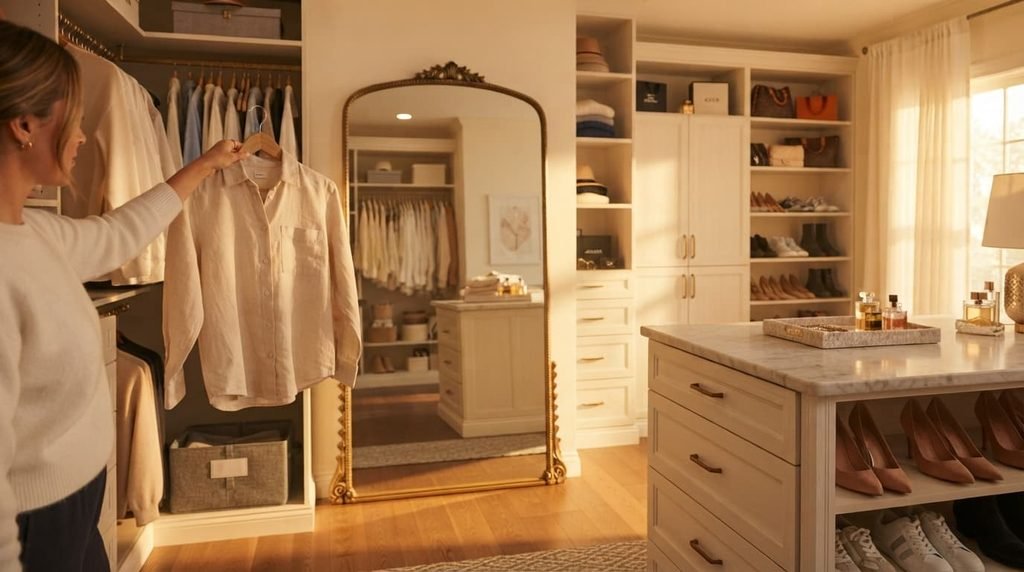
Position a mirror within the closet or immediately nearby specifically for genuine practical use during outfit selection, rather than purely for decorative purposes, since a mirror serving this genuine daily function earns its place more reliably than one chosen primarily for appearance.
Handling seasonal rotation without losing daily function
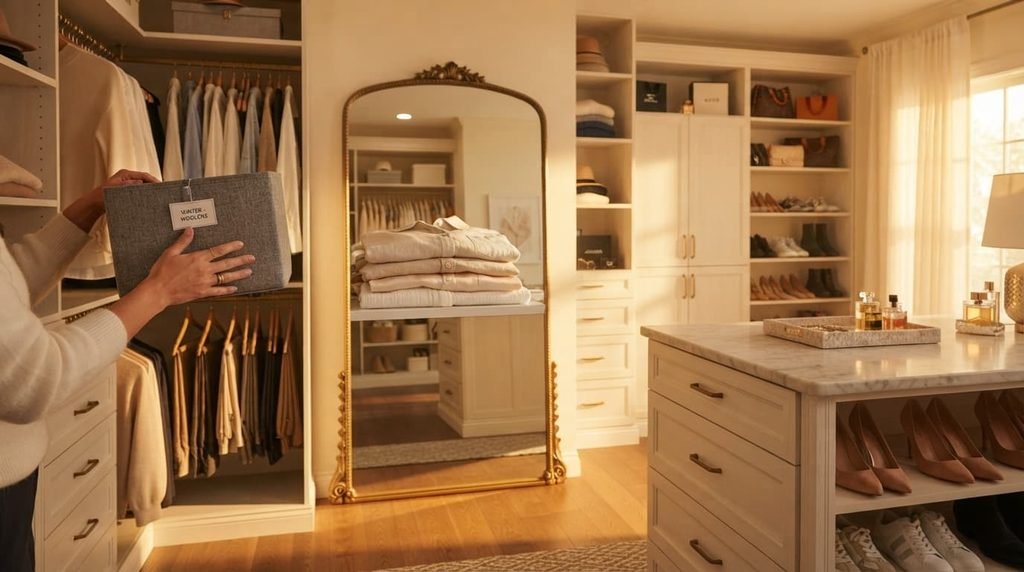
Include a genuine strategy for seasonal items specifically – a designated area for out-of-season clothing, whether within the closet or elsewhere – since without this, seasonal items tend to compete for the same prime, easy-access space as your actual current daily items, gradually crowding out the accessibility that makes the closet functional in the first place.
Revisit your closet’s organisation at genuine seasonal transition points specifically, since this is when the mismatch between current storage and current actual needs becomes most apparent, making it a natural, low-effort opportunity to realign the space with what you’re actually wearing regularly at that time.
What changes if you’re working with a genuinely small walk-in space
If your walk-in closet is genuinely compact, prioritise multi-functional storage solutions that serve more than one category simultaneously – a unit combining hanging space with drawers, for instance – over separate single-purpose pieces, since a small space benefits more from this consolidation than a larger closet would, where dedicating separate areas to separate functions is more comfortably achievable.
What isn’t worth prioritising here
An elaborate, purely decorative display area with no genuine storage function isn’t worth prioritising over the functional foundation above, despite how commonly this gets recommended for walk-in closet styling specifically.
A beautifully styled display area that provides no genuine daily storage function still results in a closet that becomes disorganised once actual daily use begins, since decoration alone doesn’t address the fundamental need this specific space serves for your actual daily routine.
Matching the approach to your situation
If multiple household members share the same walk-in closet, prioritise genuinely dividing the space into individual, clearly designated sections over one shared undivided area, since a shared undivided space tends to become disorganised faster than individually assigned zones each person can consistently maintain.
If your closet is genuinely limited in space, prioritise vertical storage solutions over floor-occupying furniture, since a small closet’s limited floor space benefits more from this approach than a larger closet would, where floor space is less immediately constrained.
Building the habit alongside the physical system
Even a genuinely well-designed closet system benefits from actually building the habit of returning items to their designated zones consistently, since the physical organisation alone doesn’t guarantee the behaviour – a household transitioning from a less organised previous system may need a brief adjustment period before the new pattern becomes genuinely automatic.
Positioning the most-used designated zones at the most immediately convenient locations specifically supports this habit-building process, since a zone that’s slightly less convenient than an old default habit is less likely to genuinely replace that habit, regardless of how logically organised the new system itself actually is.
Questions readers keep asking
How often should a walk-in closet genuinely be reorganised?
This varies by individual habits, but building genuine daily-return habits into the initial system design – so items naturally go back to their designated spot – reduces how often a full reorganisation becomes necessary compared to a system requiring more deliberate ongoing maintenance.
Is it worth investing in a custom closet system over more modular, adjustable storage?
For many households, modular adjustable storage offers more genuine long-term flexibility as needs change, though a custom system can provide a more precisely tailored fit if your specific storage needs are genuinely well-established and unlikely to change significantly.
Is it worth colour-coordinating hanging items for genuine daily function, or is this purely aesthetic?
It can genuinely serve daily function specifically, not just aesthetics – a colour-organised system can meaningfully speed up outfit selection by making it easier to quickly locate a specific item, though this benefit depends on genuinely maintaining the system consistently rather than it becoming purely decorative once the initial arrangement gets disrupted by daily use.
What’s the most common reason a walk-in closet stops staying organised after initial setup?
Storage that looked attractive when arranged but wasn’t actually convenient enough for genuine daily use is one of the most common reasons – the functional-foundation principle above specifically addresses this by prioritising ease of daily use over visual appeal alone from the very start.