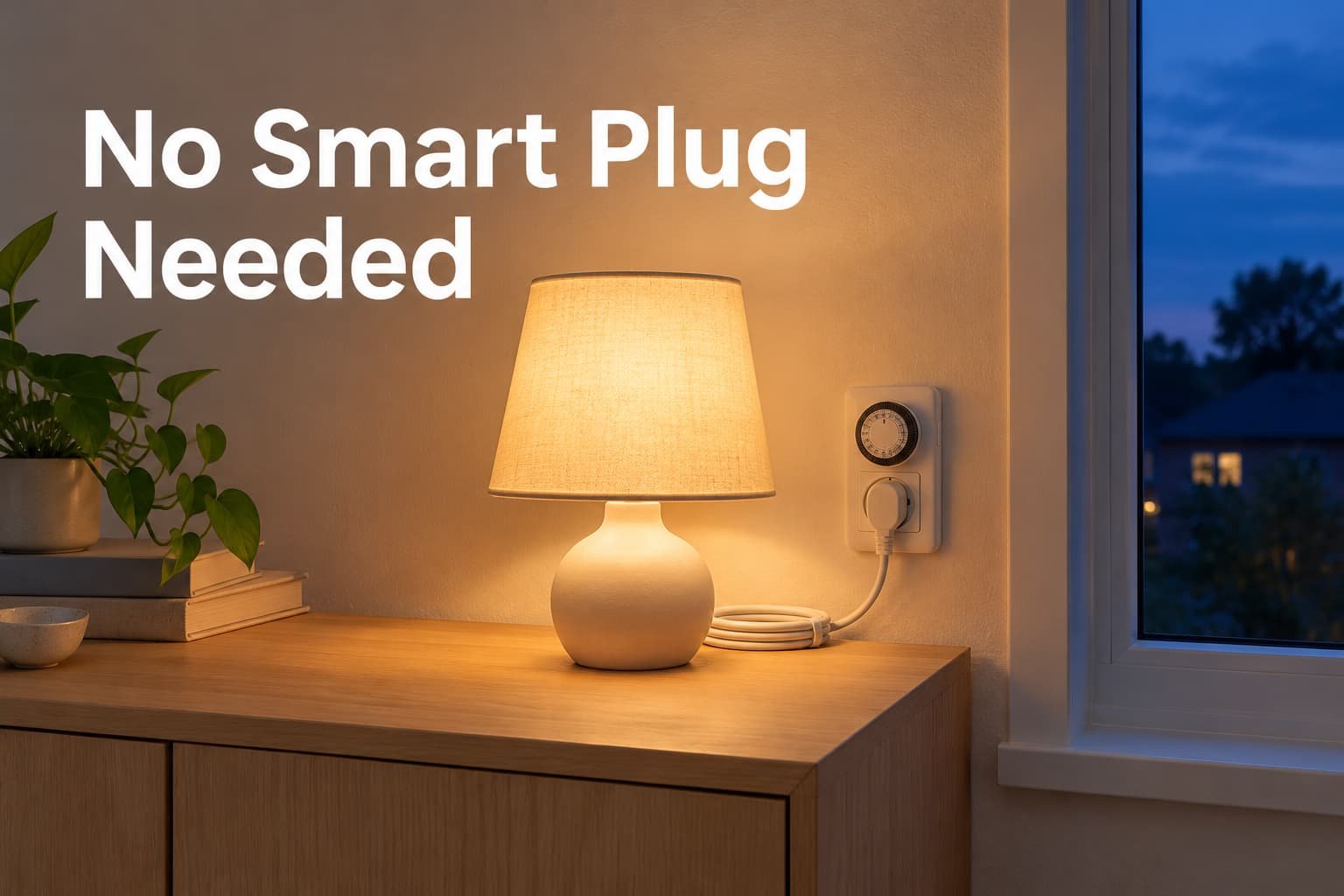
Do you need an account and a Wi-Fi link just to switch a lamp on at dusk? People leave smart plugs when the plug stops obeying after a router swap or an account change, and the likely landing place is a plain timer socket or a timer built into the appliance. Whether leaving pays off depends on one thing: does the schedule have to follow the sun? Alternatives to buying a smart plug hold a clock time well and a sunset badly.
The sums use a UK home and an 8 W lamp, with sunsets taken from London. No make or model appears, because both change inside a year.
What has to survive the move
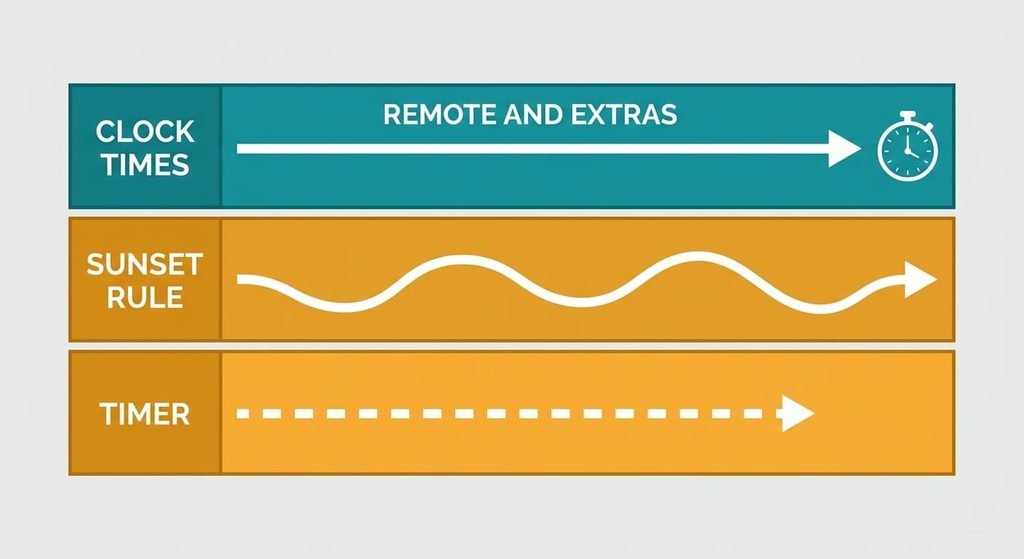
A smart plug carries more than an on-time. What has to survive the move is the schedule itself: the clock times and days, plus what the lamp does after a power cut. Some of it travels well. Clock times and days of the week copy straight across to a digital timer, to the minute.
Some of it travels badly. Say your rule is “on at sunset”. London sunset falls at about 15:55 on 21 December and about 21:20 on 21 June, a swing of 5 hours 25 minutes. Fix it at 17:00 and the lamp comes on 65 minutes after dark in December, then 4 hours 20 minutes before dusk in June. At 8 W, that June stretch burns about 35 Wh a day for no one’s benefit.
Some of it doesn’t travel at all. Switching from the sofa or from abroad stays behind, and so do random away-mode offsets and the energy readout. Voice triggers are left behind too.
Judge every route below on whether it holds those three layers.
Alternatives to buying a smart plug: the kinds, and what each costs you
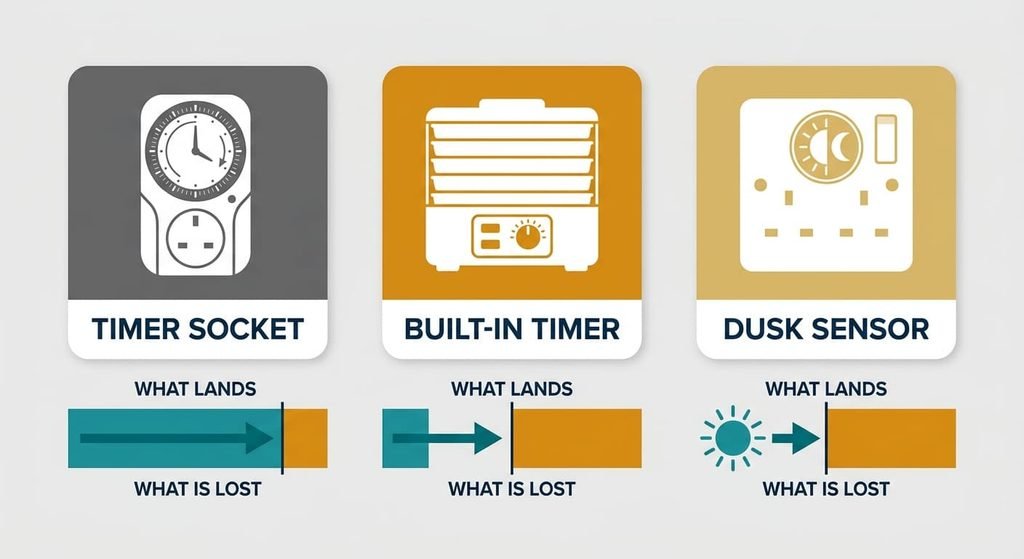
1. A timer socket. That’s the money route: a plug-through unit that sits between the wall and the lamp. It suits one lamp on a steady pattern. A digital one sets times to the minute and keeps a week of days, while a dial one works in 15-minute steps, so a 17:05 lands on 17:00 or 17:15. The trade-off is the clock. It knows nothing about the sun or about clock changes, and a digital unit holds its time on a small internal cell for a limited stretch only. Your times land intact. Your sunset rule doesn’t, and a plain dial unit stops with the mains, so a 2-hour cut leaves it 2 hours late for good. Its failure comes when the hour goes wrong and nobody notices.
2. The appliance’s own timer. That’s the effort route: you set each device once through its own buttons. It suits a radio or a lamp that already has the feature. The trade-off is repetition, since every device speaks a different dialect and many offer only “on for N hours from now” rather than a clock time. A lamp set to “on for four hours” starts counting when you press the button, so someone has to press it at dusk every day. Only the countdown lands, and each schedule has to be entered again by hand. It fails when a power cut wipes the settings and the lamp stays dark.
3. A dusk sensor socket. That’s the feature-loss route: it switches on when daylight fades and off when it returns. It suits a hall or porch lamp that should follow the sun. You give up clock times entirely, so “off at 23:00” is gone. The sunset rule lands perfectly, and everything else is lost. It fails when the sensor sits where a streetlight or its own lamp fools it. A sensor facing the lamp’s beam sees light and switches off. It then sees dark and switches on again, so the lamp flickers through the evening.
The month-three trade-off when buying alternatives to a smart plug
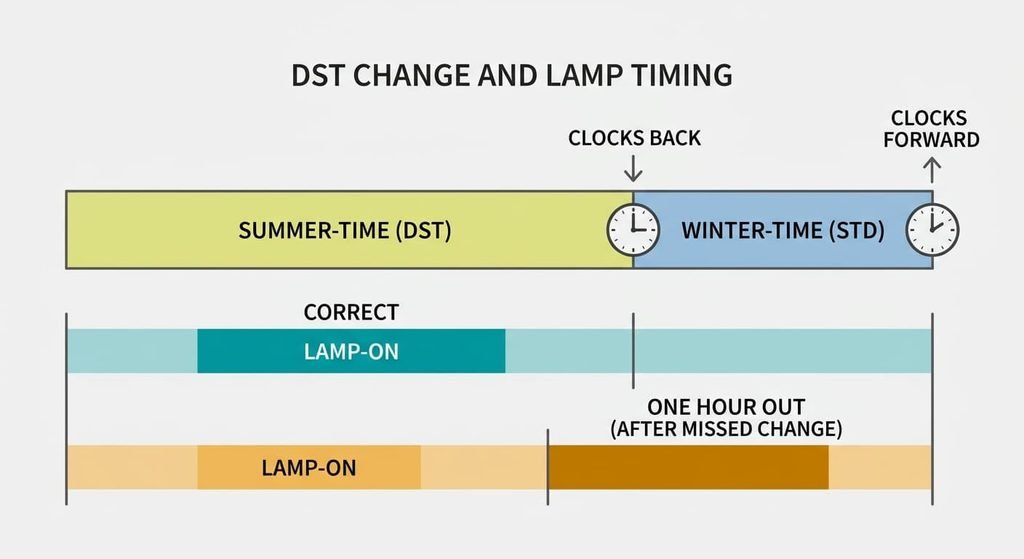
A timer never learns that the clocks have changed. In week one it’s perfect. By month three the clocks have moved, and the lamp is an hour out. Summer time in the UK runs for about 210 days, with winter taking the other 155. Miss the October change and the lamp is wrong for the 155 days to spring. Miss the March change and it’s wrong for 210.
An hour in the wrong direction does harm. A lamp meant to look like someone is home comes on in daylight or after you’ve gone to bed. A smart plug fixed this for you through its network clock, and you may not have noticed it doing so.
Tie the two changes to the days you already reset the car clock. Put them in your calendar the day you buy the timer, because nothing else will remind you.
How to leave without losing anything
Write the schedule down first, then set up one lamp on the new route and leave the others on the smart plug. Run both for a week. Verification means more than watching a lamp light once. Check that it comes on at the right minute on two different days, that the weekend pattern differs from the weekday one if it should, and that it survives midnight. Pull the plug for a minute as well and see whether the time holds. That test catches the weak point of alternatives to buying a smart plug, which is the power cut. Move the next lamp only after the first has passed. Keep the old plug in a drawer for a month before you sell it, so a bad week can be undone in a minute.
When to stay
Stay with the smart plug if the schedule follows the sun or you switch the lamp while you’re away. The 5 hours 25 minutes of swing in sunset time can’t be matched by a fixed clock without frequent resets. The case for staying is strongest when alternatives to buying a smart plug can’t hold the sunset rule. A shared household also counts. If other people use the app, leaving takes their control away, and you’d be the one explaining why the lamp now ignores their phones.
A plug that only drops offline now and then is a fault to test before it’s a reason to go. Move it within one wall of the router for a week and watch.
Away-mode shuffling is the other part that no alternative reproduces. A timer fires at the identical minute every night, which gives a pattern that anyone watching the street can learn in a week.
A plug that already works, on a network that rarely changes, costs you nothing to keep.
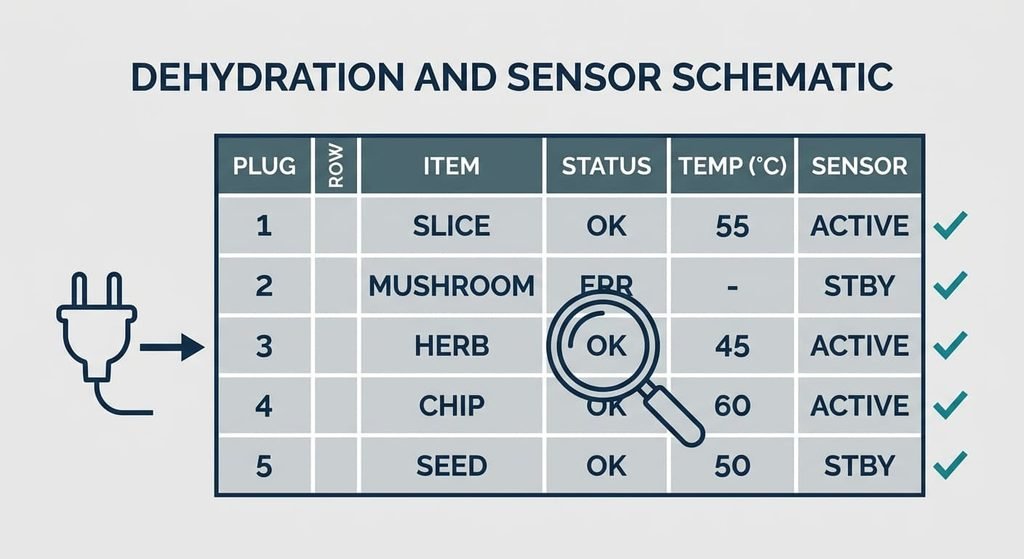
The export to do before you decide anything
Write every schedule down as a table before you unplug anything. Use one row per plug. Give it a column for the room and another pair for the on-time and the off-time. Add the days and any offsets. Then note what the plug does after a power cut. When the table is done, count the rows against the plugs you own and read the times once more. Then compare it with the plug’s own app, because apps often hide a second schedule on another screen. A table like this is what lets you leave later, whichever of the alternatives to buying a smart plug you pick.
You now know the three layers that must survive. A timer socket holds the times, the dusk sensor holds the sun, and nothing holds the remote control. Make the table today, before you decide anything else about the plug. Keep it with the plug’s box. The same table tells a new owner exactly what the plug did.
Questions readers keep asking
Can I move my smart plug schedule to a timer?
The times and days move across by hand, since a plug can’t hand its settings to a timer. A dial timer rounds them to 15 minutes. Sunset rules and random away offsets don’t move, and neither does remote switching. Write the schedule down first and re-enter it.
Is a timer socket cheaper than a smart plug?
Usually, in relative terms, because it has no network part to build or support. The real expense is the attention a timer needs when the clocks change, which the smart plug handled for you. A dial unit costs less than a digital one but gives you coarser steps.
Is it worth swapping out a smart plug that still works?
Often not. If the schedule follows the sun or you switch the lamp from away, keep it. Replace it when the plug keeps dropping off the network or you’ve lost the account. Test one lamp on the new route for a week first.