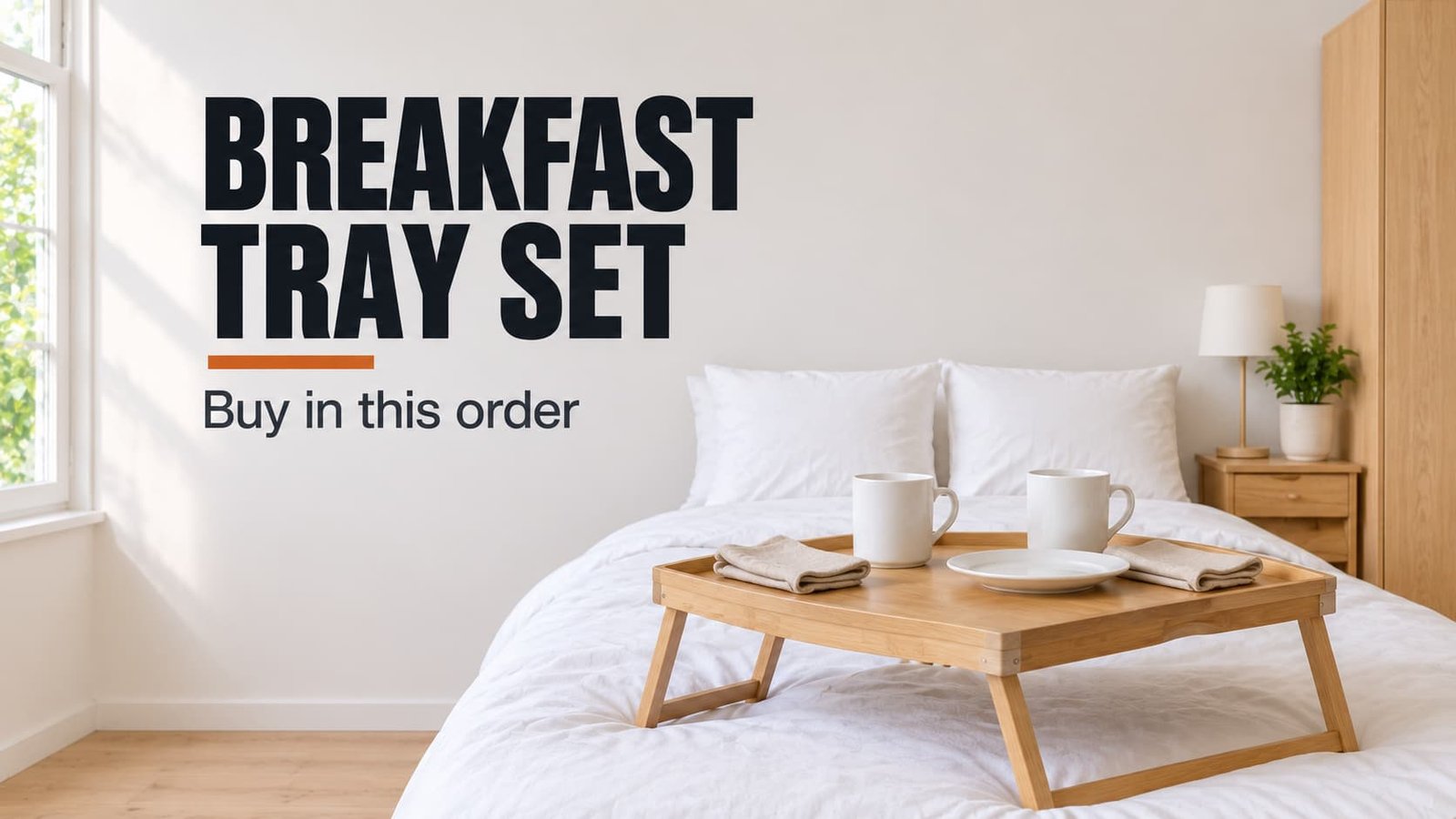
Breakfast in bed goes wrong at one moment: the tray tilts between the kitchen and the mattress. A weekend breakfast tray set avoids that moment. It takes five purchases, bought in a logical sequence. The flat used here is in Rotterdam. Two adults carry a meal six metres, through a doorway measuring 78 cm, to a bed 160 cm across. These figures describe that one flat and nothing more. No brand is named, and no specialist shop is needed. Stop buying once a full trip from the kitchen passes without a wobble, whatever the list still says.
What Decides a Weekend Breakfast Tray Set
Stability decides the list. Two mugs and two plates add up to about 2.2 kg on the tray, and nearly all of it sits high above the bed. Weight held high tips sooner than weight held low. Take a mug whose base is 7 cm across with its centre of mass 5 cm up: it tips at atan(3.5 ÷ 5) = 35°. Widen the base to 9 cm and the angle rises to atan(4.5 ÷ 5) = 42°. A hard table gains seven degrees from that change alone.
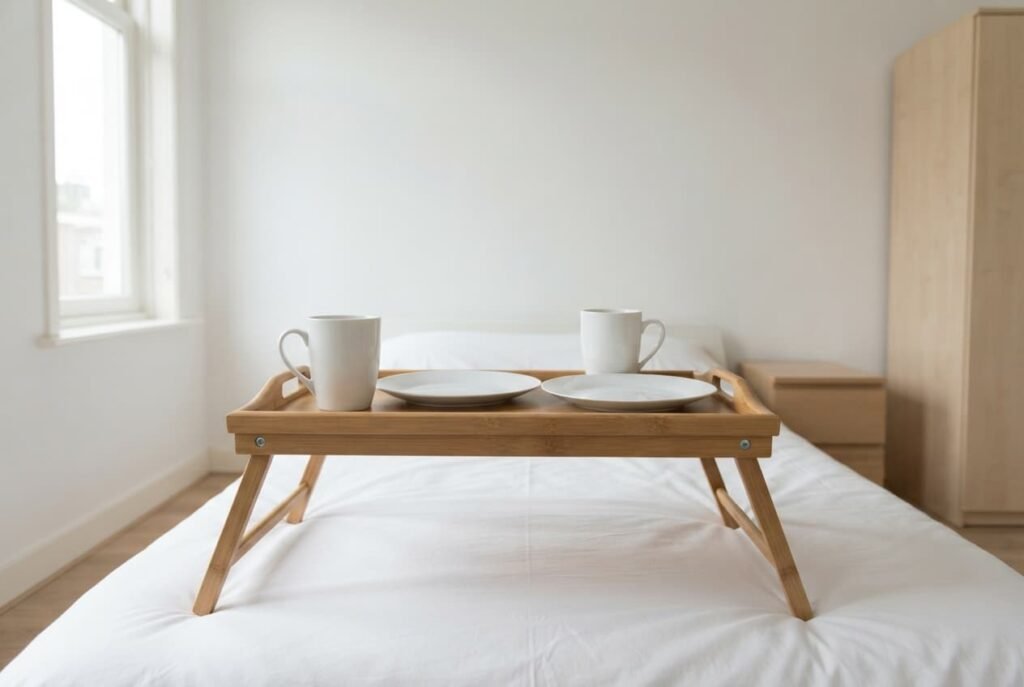
A duvet takes those degrees away. It sinks under the load, and a flat tray tilts before anyone has moved. Legs of 18 cm lift the tray clear of the duvet and rest on the mattress either side of your lap, which keeps it level.
Two features of the route add limits. The doorway measures 78 cm across and leaves a tray 46 cm wide 16 cm to spare each side. Six metres at a careful pace takes about eight seconds, and a rim of 3 cm earns its keep over that distance, because spills begin when a plate slides.
The list therefore starts with the tray, not the crockery, since the tray decides whether anything spills.
Five Purchases for a Breakfast Tray Set, Costliest Mistake First
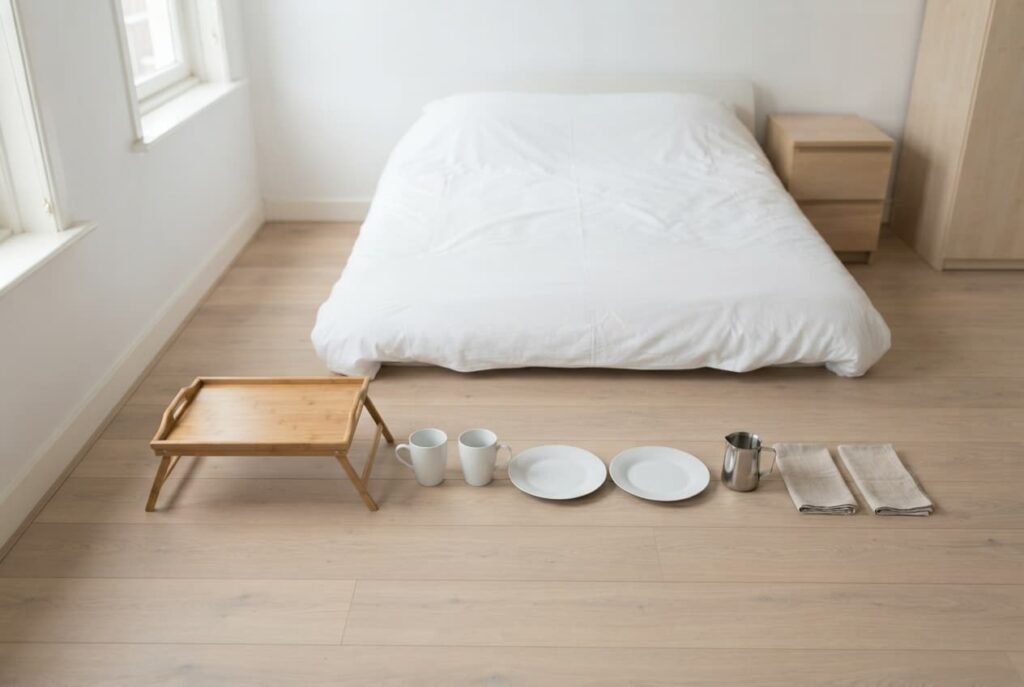
Order the purchases by how badly each mistake would spoil breakfast, and a weekend breakfast tray set falls into this order.
1. A rigid tray of 46 × 30 cm, rim 3 cm high and folding legs 18 cm tall, comes first since nothing else works without a steady base. Tier: BUY ONCE. A rim formed as a single piece with the base, plus hinges held by rivets, keeps its shape for years. Clip-on legs and glued edges give way within a season. Load it with two full mugs and press one corner down 2 cm; a stiff tray springs back flat.
2. Two mugs of 300 ml with a base 9 cm across take second place, and the wide base is the point: 42° of tilt before tipping against 35° for a 7 cm base. Tier: MID. Thicker walls hold warmth longer. The common failure is a handle glued to a flat patch of wall, which snaps, whereas a handle that curves into the wall carries its load. Fill one to 1 cm under the rim and walk six metres. A tall, narrow mug sloshes where a wide one stays calm.
3. Two plates 20 cm across, with an edge raised by 1 cm, come third. Tier: BUY CHEAP. Plain glazed stoneware is a single piece of fired clay with nothing attached to fail, and a chip on the rim is the only fault. Two plates side by side use 40 cm of the tray’s width and leave 3 cm each side. Rest the pair on the tray in the shop and check that nothing rocks.
4. An insulated jug of 600 ml fills fourth place and equals two mugs exactly. Tier: MID. Two steel walls with a sealed gap between them slow heat loss. The stopper is where it fails: a worn seal lets tea creep out when the jug tilts. With the stopper closed, tip the jug over a sink and watch the rim.
5. Last come two cloth napkins of 40 by 40 cm. Tier: BUY CHEAP; a tight weave frays little at the hem. A loose weave pulls out threads when you tug a corner. That’s the failure to check, and folded in quarters each napkin fits a corner of the tray.
Why the Insulated Jug Is the Item to Scale Down
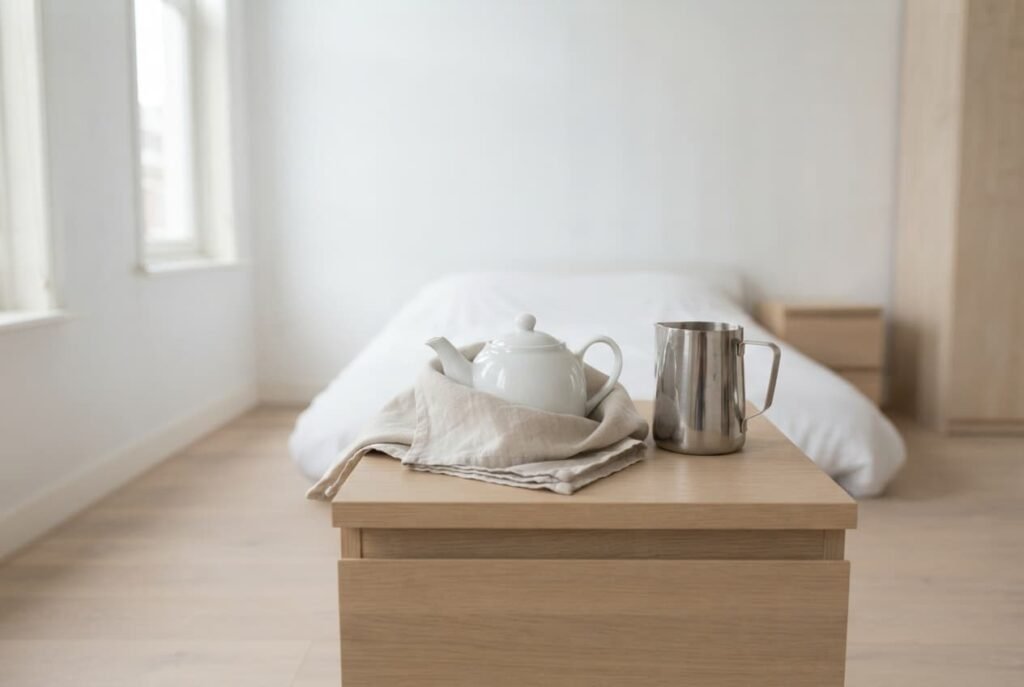
In a weekend breakfast tray set, the jug is the piece most households can drop. Its purpose is to hold 600 ml of tea warm for hours, yet breakfast lasts about 25 minutes. In an invented test, 600 ml in an uncovered ceramic pot fell from 90 °C to 65 °C over that time. Wrapped in a folded tea towel it fell only to 74 °C. A tea towel does the jug’s work, and every kitchen has one.
The jug adds load as well. Filled, it brings 600 g of tea plus its own steel body to a tray that has little margin. The teapot already in your cupboard can be wrapped and carried instead, with nothing to buy. A top-up needs one more walk of eight seconds, which costs less than a tray that tips.
Test it yourself: pour 600 ml of hot water into your own pot and wait 25 minutes. Then touch the side. If the pot still feels warm, the towel has done enough. Revisit the jug later if tea outlasts the meal. Until then, the tray deserves your money. It also deserves the shelf space.
Habits That Keep the Weekend Routine Running
Lay the tray the evening before. Plates and mugs fit inside 46 × 30 cm with the folded napkins beside them, and nothing touches. A weekend breakfast tray set takes about two minutes to arrange. Plates take the centre, and the mugs sit just inside the two outer corners, where the rim guards them.
Carry the tray with both hands at its short ends and keep your steps short. Open every door beforehand. A door pushed with a hip adds a jolt that no rim absorbs.
Rehearse once with water instead of tea. A dry run shows which corner dips earliest. You can correct that before the first real breakfast.
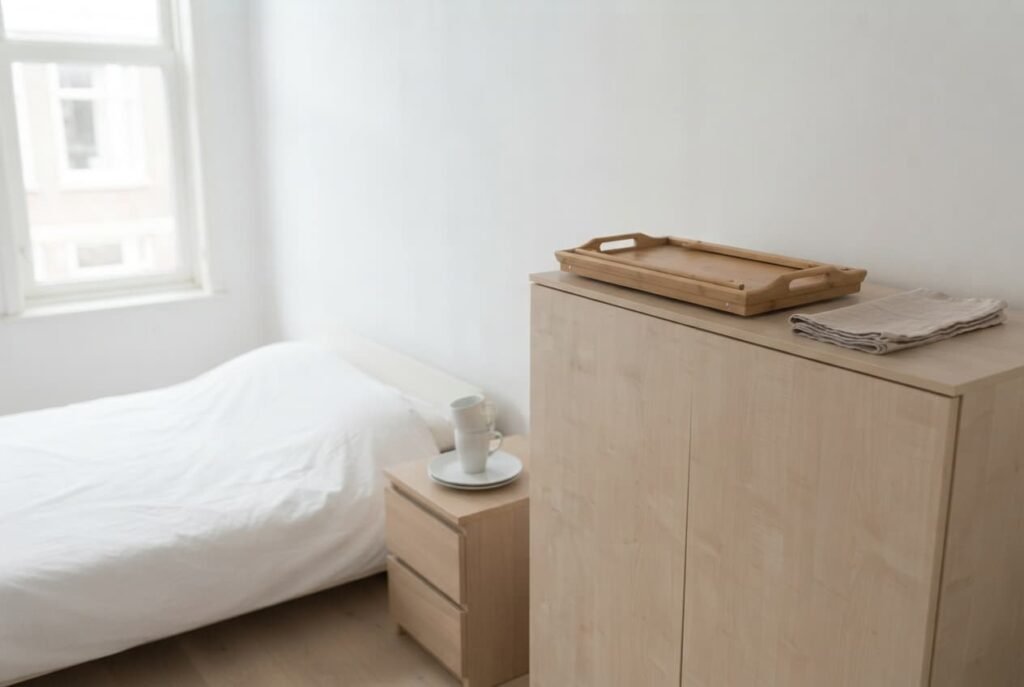
After breakfast fold the legs. Slide the tray on top of the wardrobe, where it’s out of the way and won’t collect crumbs. Wash mugs and plates within the hour. A coffee ring left overnight bonds to the glaze, while the same ring wiped at once leaves nothing behind.
What to Skip
Skip any tray with a tall carrying handle, because it hangs the load below your grip and lets it swing. Glass mugs with thin walls lose warmth quickly and are too hot to hold. Matched sets of twelve are meant for entertaining. Trays with lids hide a spill until you lift them. Folding bed tables with their own feet crowd a bed 160 cm across. Beanbag lap trays belong on the same list: they sag under 2.2 kg and tilt the load towards you. Skip fussy extras such as a vase holder or a folding side pocket, since each adds a part that can loosen. Finally, don’t buy everything in one go. A tray and a pair of wide mugs show within a weekend what else the set needs.
Stop adding pieces the moment one trip from the kitchen goes without a wobble. A rigid tray and two wide mugs carry the routine, and the rest only improves warmth and tidiness. None of it repairs a poor tray. Carry the finished set once with a full load before the first real breakfast, and you’ll learn where its weak point is while finding out costs a few drops of water. Note the one change you’d make.
Questions Readers Keep Asking
How many pieces do I need?
Four purchases cover two people. Buy the tray first. Mugs and plates follow, and napkins come last. The jug is optional. More than that crowds a tray of 46 × 30 cm, and a crowded tray tips sooner. Add a third mug only when a guest stays.
In what order should I buy them?
Rank by the damage a mistake does. A weak tray spoils everything on it, and that’s why it goes first. Mugs follow because a narrow base tips earlier. Plates and napkins are easy to replace later, and the jug waits until tea outlasts the meal.
How do I judge a tray in a shop?
Load it with two filled mugs and press one corner down 2 cm. A good tray springs back flat. Check that the legs lock open and the rim and base are a single piece. Then walk a few steps holding it, and watch for any rocking.