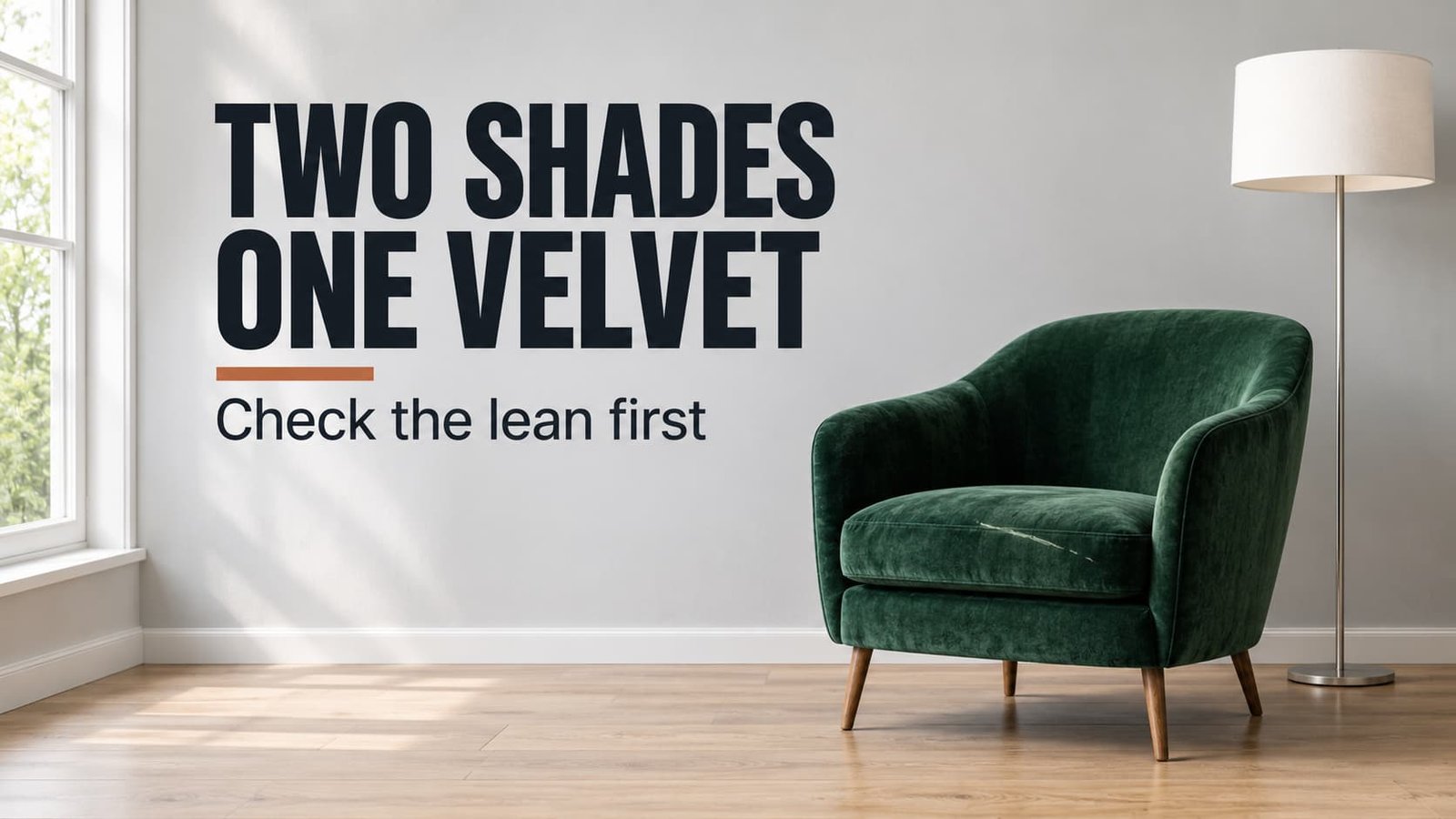
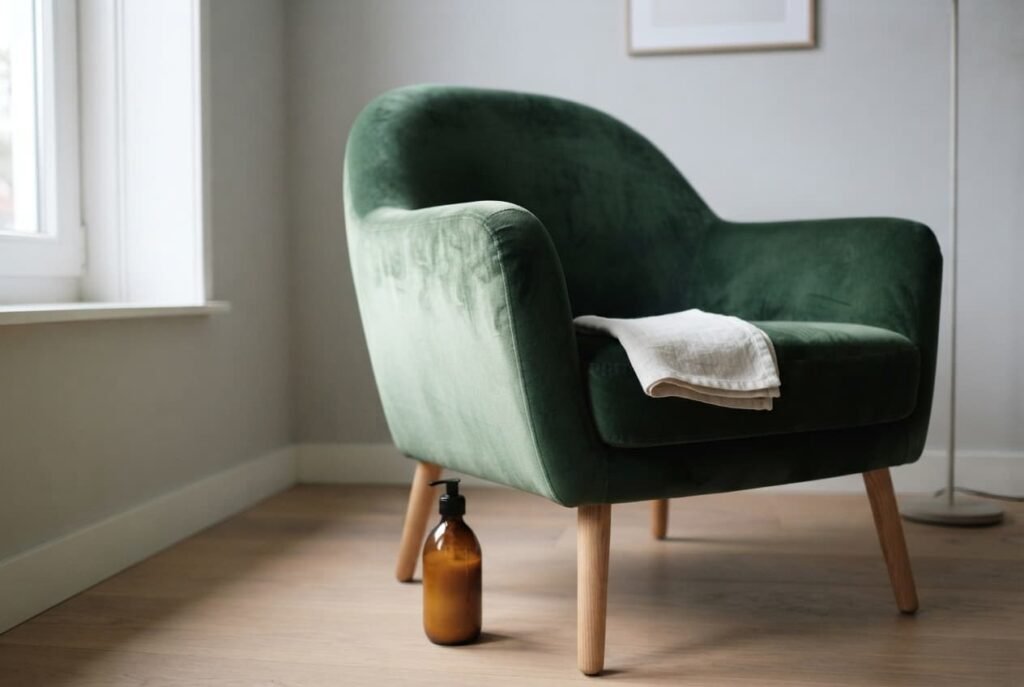
Why does velvet look two different colours on one armchair? Every fibre in the surface leans one way, and a leaning fibre returns more light from one side than from the other. The chair examined here sits in a Zwolle living room that is 360 cm wide and 440 cm long. A hand test and a short photo routine pin down the cause, and three separate faults account for the split. Remedies climb from free fixes to rearranging and end with a small purchase. Nobody needs to call an upholsterer. All numbers are samples from one chair. Treat them as a template for your own measuring.
Why Does Velvet Look Two Different Colours Across One Seat
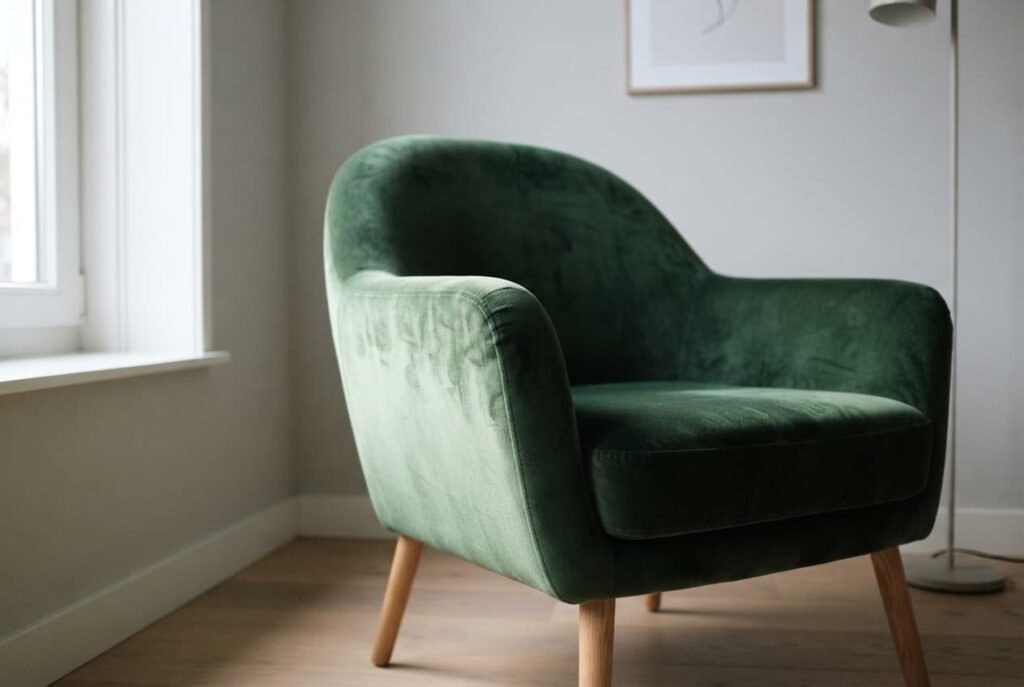
Velvet is a woven backing that carries a dense crop of cut fibres, thousands per square centimetre. On this chair they stand about 2 mm high and lean near 20° off upright, all towards the front, because the finishing process brushes them that way. Each fibre presents two faces. From one side you see its long flank, which reflects a broad, soft sheen. From the opposite side you see ends and gaps, and the fabric absorbs more light and reads deeper. The dye isn’t different either way. Only the angle of view changes.
Two panels with different leans therefore show different shades from one standing point, and a single panel shifts shade as you move. Four panels face the room: a seat of 55 × 55 cm, a backrest 70 cm high and 60 cm across, and two arms that each measure 20 × 60 cm. They add up to 9,625 cm². The arms contribute 2,400 cm², a quarter of the total.
Most owners suspect the dye batch and scrub or cover the paler patches. Scrubbing crushes the fibres and creates a third shade on top of the other two.
Checklist: Can This Velvet Look Two Colours From Where You Stand?
Four readings show what makes velvet look two different colours on your own chair. They also point towards the fault you have.
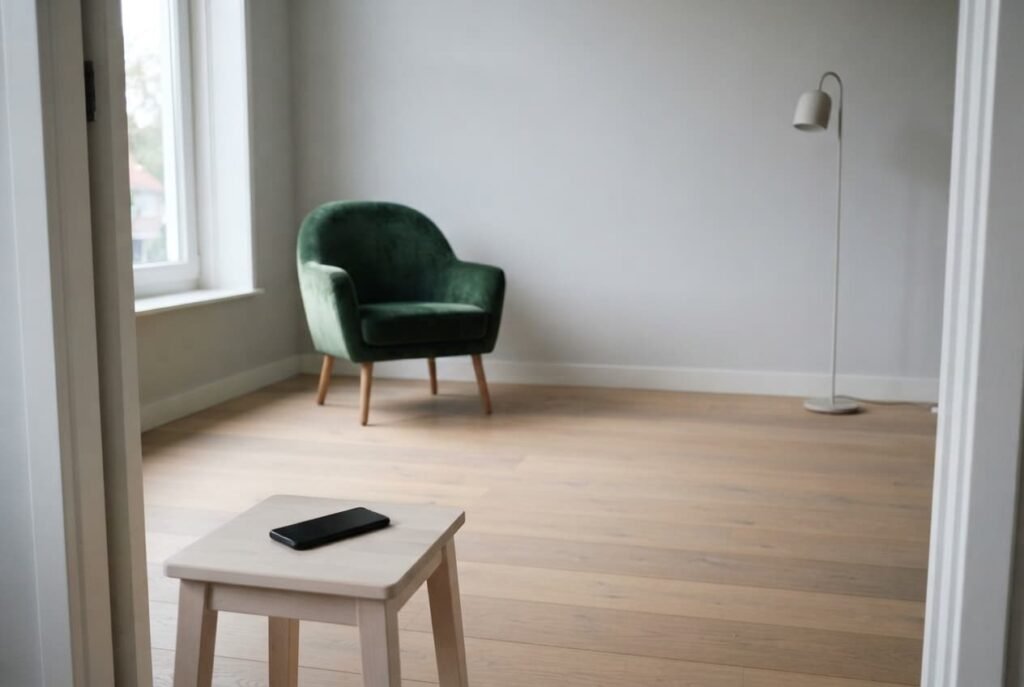
1. Doorway photo: stand 4 m back and photograph the chair. Open the picture in any editor that reports brightness between 0 and 255, then compare the seat with an arm. Ours reads 118 against 82, a gap of 36 points.
2. Palm stroke: slide a flat hand over the seat from back to front, then return from front to back. One direction leaves a pale trail, and on ours that is the forward stroke.
3. Three viewpoints: add a photo from 2.6 m on the sofa and one from 1.5 m beside the window. From the window position the gap shrinks to 16 points.
4. Seam look: study the line where two panels meet. A step in shade right on the seam suggests different cuts. A soft gradient across one panel suggests light or wear. Mark the seam with a sticky label if it’s hard to see.
The whole routine takes ten minutes.
Three Faults Behind the Two Shades
Any one fault can make velvet look two different colours, and most chairs have two working together. Try each remedy separately and photograph the chair again after every change.
The chair shifts shade as you walk past. The cause is the viewing angle against the lean. A window 150 cm to the left sends light raking across the pile. A visitor at the door therefore meets fibre ends on the seat, while a person by the glass meets flanks. Free: sit where the three photos look closest and judge the chair from there. Rearrange: turn the chair through 90°, which closes the doorway gap from 36 points to 21. Purchase: a floor lamp placed opposite the window, which lights the shaded flank and narrows the gap. Don’t judge the chair from a single spot, because that’s how a normal seat gets blamed. Each step is reversible within a minute.
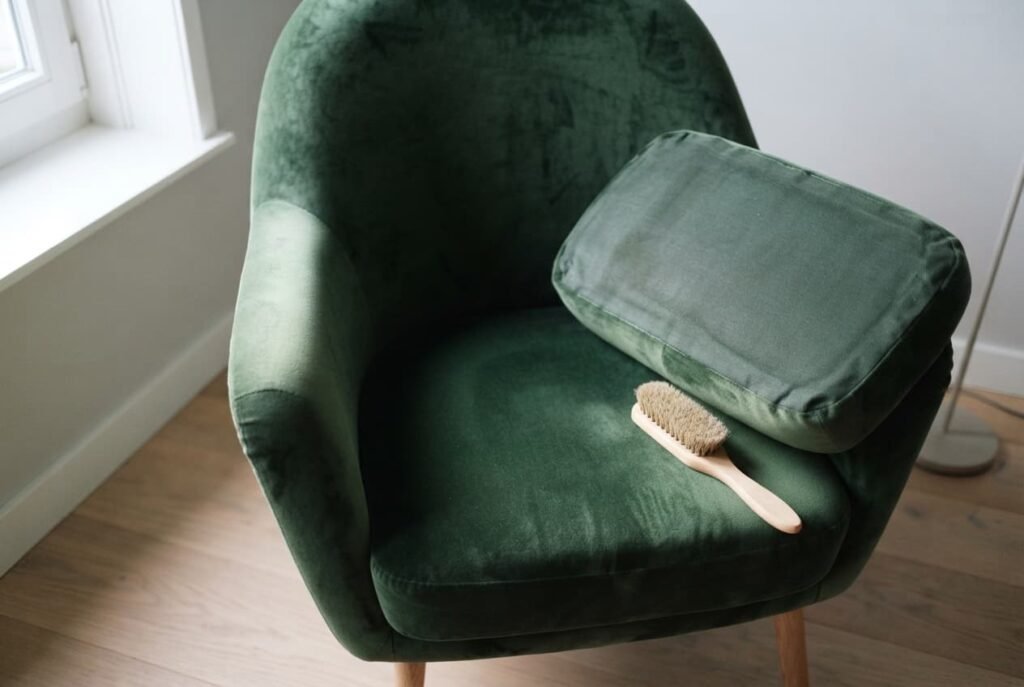
One patch of the seat looks flattened. Weight presses the fibres where people sit, and crushed fibres point every which way and return a different sheen. The central 30 × 30 cm of the seat, 900 cm², covers 30% of its 3,025 cm² and differs from the rim by 14 points. Free: sweep a dry palm over the patch against the lean for a minute and let the fibres rise. It isn’t wear in the usual sense, since the fibres are bent rather than broken, and that’s why a brush brings most of the colour back. Rearrange: flip the loose cushion front to back so the worn zone sits beneath the rim. Purchase: a soft garment brush, drawn across the pile in one direction each week.
The arms stay darker from every angle. When a maker cuts the arm panels from a roll turned 90°, their fibres lean sideways while the back leans downwards, and walking round the chair cures nothing. Free: stroke each panel and mark the direction of lean on a sticky label, which proves whether the leans differ. Rearrange: push the chair into a corner so the arms, a quarter of the surface, face away from the doorway. Purchase: a throw across both arms, or three photos sent to the seller for inspection. Check this one early, because it’s the only fault here that an owner can’t remove alone.
Choosing Velvet That Holds One Shade
Nothing in a showroom will make velvet look two different colours at home if you test it there. Stroke a sample both ways and note which direction pales. Ask whether every panel was cut with the pile running the same way. Walk round a display chair rather than trusting a swatch, and stand where you’d sit, then where a guest would arrive. You’ll spot the lean within seconds once you know to look for it.
A swatch can’t show a lean that a whole chair will.
Once the chair is home, keep the care simple. Brush the pile in one direction weekly. Turn loose cushions monthly, then leave the vacuum nozzle off the seat, because a hard head drags fibres into new leans. It’s light upkeep compared with the work of mending a crushed seat.
A Fix Not Worth Doing
Many owners reach for re-covering the whole chair once the two shades start to irritate. The step looks decisive and isn’t. A quote for the work would buy a chair that leans just as before, and it’s the one item on this page worth refusing. New velvet leans as well, and it behaves exactly like the old fabric, since the problem sits in the cut and the lighting rather than in the colour. The doorway shift and the flattened patch would return within months. Only the arm mismatch would be cured, a quarter of the surface. Colour-restoring sprays disappoint too, because they alter the shade of the fibre ends and leave the lean untouched. Stiff daily brushing against the lean is no better, as it wears the fibres down.
Begin tonight with the doorway photo and the palm stroke, which cost nothing. Let the readings name the fault, then try its free remedy and give it seven days before judging. Rearrange only when the gap stays over 20 points, a rough limit I chose myself and not a standard. Buy a lamp or a brush last. Most chairs settle after one turn and one brushing, because viewing angle is the cause people notice soonest. Don’t hurry the weekly brushing either, since it’s the habit that keeps the seat looking even. Keep the photos, since they let you repeat the comparison after every change and show the seller what the arms look like.
Questions and Answers
Is the velvet faulty or is this normal?
Mostly normal. Every velvet leans. Any chair shows lighter and darker areas as you move. A fault is likely only when a step in shade sits exactly on a seam and stays put from every viewpoint, because that points to panels cut in different directions. Photos from three positions give the seller something concrete to inspect.
What is the quickest thing to try?
Brush a dry palm against the lean for a minute, then turn the chair 90° and photograph it again. Neither step costs anything, and the pair needs about ten minutes. A gap that shrinks from 36 to 21 points shows that viewing angle, not the fabric, did most of the work.
Can this be fixed without replacing the chair?
Usually. A brush, a turned cushion, a new angle to the window and a second lamp deal with the viewing and wear faults. Only mismatched panel cuts need the maker. Re-covering is rarely justified, because new velvet leans too and the same effects would return.