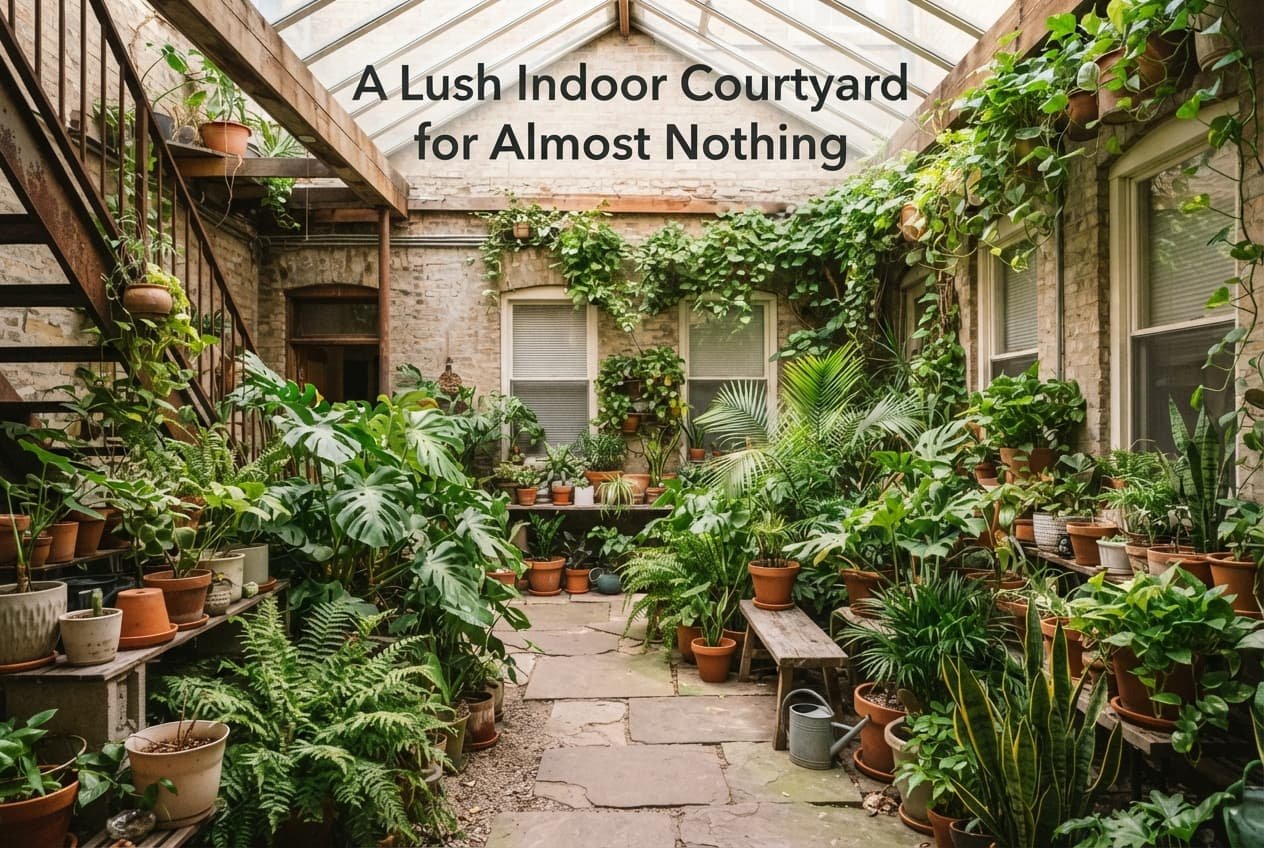
Furnishing a genuinely indoor courtyard on a tight budget isn’t about finding the cheapest version of every single item – it’s about identifying which single element genuinely deserves most of your available spending, and which pieces can be genuinely modest without affecting whether the space actually achieves a genuine garden-like feeling overall. A courtyard with a limited budget spread evenly across every category often produces a weaker result than one built around a single deliberate investment.
What actually decides this
The deciding factor is which specific element most directly affects whether your plants actually thrive and the space genuinely achieves visual density, not simply how much visible change any given purchase produces. Genuinely appropriate plant selection matched to your actual light conditions directly determines whether the space sustains its garden-like feeling in a way elaborate pots or decorative elements simply don’t match for this specific purpose.
This single distinction should guide nearly every purchase decision below: spend where genuine plant health and visual density actually depend on it, and treat everything else as a place to keep modest without meaningful compromise to how the space actually develops over time.
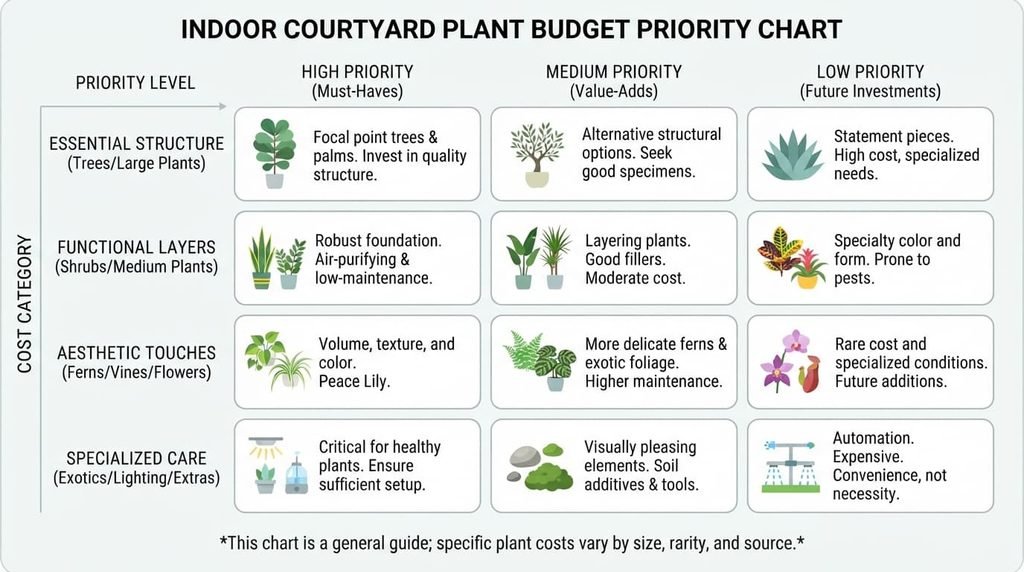
What to prioritise, in order
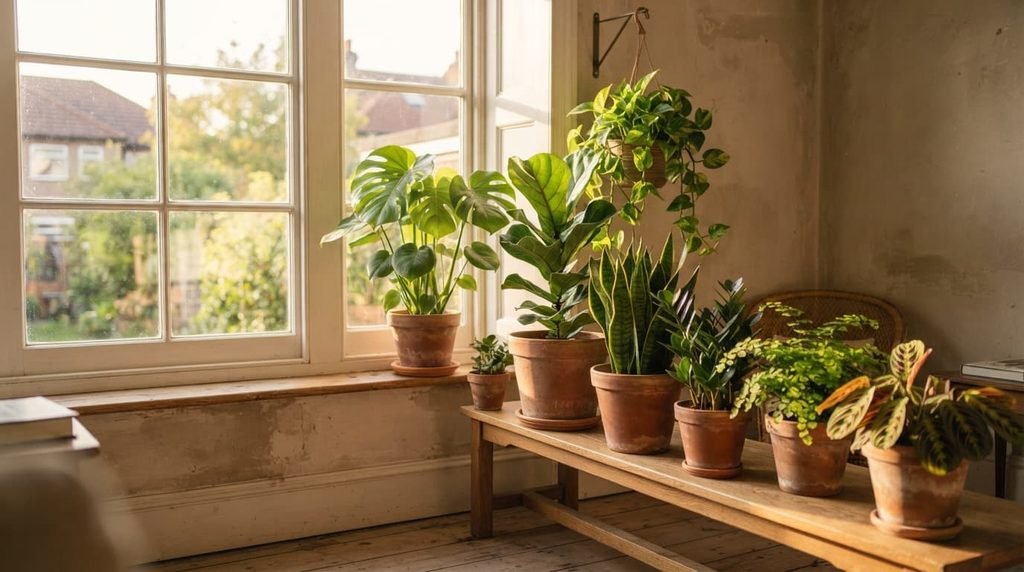
1. Genuinely appropriate plants matched to your actual light conditions. This deserves the largest share of a limited budget, since plants genuinely suited to your space’s actual conditions directly determine long-term success, mattering more than any other single purchase in achieving genuine garden-like sustainability.
2. Basic, functional watering tools and drainage solutions. This is the second-largest justified expense, since proper watering practice directly affects plant health, mattering more for genuine plant survival than decorative planters elsewhere.
3. A modest selection of varied, genuinely appropriate pots. A relatively low-cost addition that supports plant health without requiring elaborate, expensive planters to achieve genuine functional adequacy.
4. Basic supplemental lighting if your natural light is genuinely limited. A worthwhile addition specifically for households wanting a wider plant variety than their natural light alone would support.
5. Purely decorative elements – elaborate garden ornaments, decorative stones with no functional role. These belong last specifically because they carry the least weight in determining whether the space actually achieves genuine garden-like health; a modest option performs nearly as well as an expensive one here, making this the easiest category to genuinely economise on.
What doesn’t matter as much as it’s made out to
An elaborate, fully coordinated planter collection is oversold for budget indoor courtyard furnishing specifically, and it’s one of the first things styling guides recommend. A beautifully coordinated collection that overlooks genuine plant-light matching still results in a space where plants gradually decline, since visual coordination alone doesn’t address what actually determines long-term garden-like sustainability.
Premium, elaborately finished planters get far more budget attention than they deserve relative to the plant-selection priorities above. Beautiful pots holding plants poorly matched to your actual light conditions still result in genuine plant decline, while modest pots holding genuinely well-matched plants support the space’s actual purpose considerably better for comparable overall spending.
Where secondhand genuinely makes sense
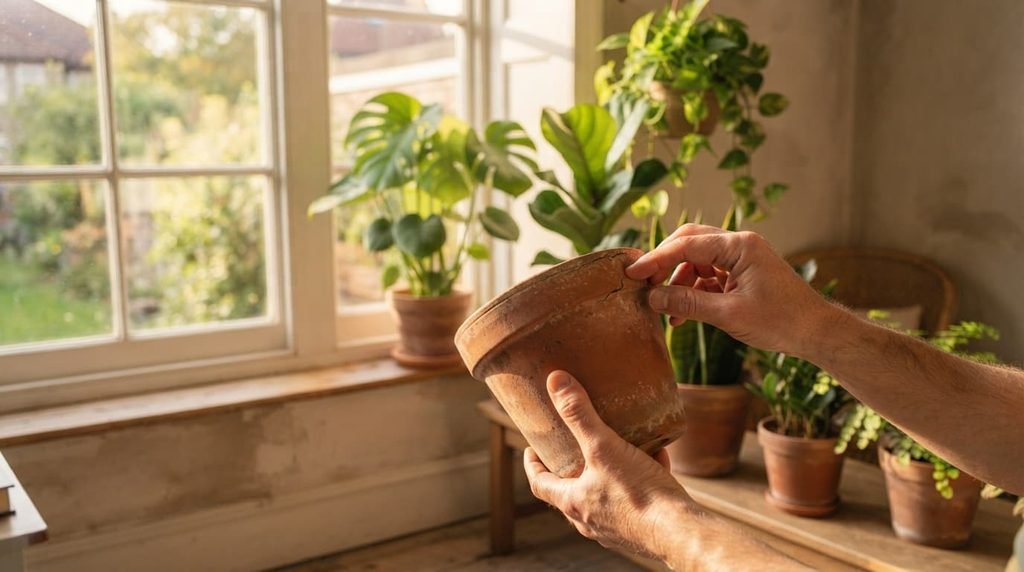
Pots and planters without electrical components are a genuinely reasonable category to consider secondhand, since well-built construction holds up well over time. Checking for structural soundness and any cracks before committing covers most of the genuine risk this category presents.
Plant stands and shelving are also generally reasonable secondhand categories, provided you check for genuine stability and weight capacity before use, since these structural factors matter more than any cosmetic wear a secondhand piece might show.
What people get wrong about budget indoor courtyards
The most common mistake is assuming a limited budget means the space will inevitably feel sparse or unconvincing, when in practice genuine plant-light matching matters more for creating authentic garden-like density than the total amount spent. A modest collection of genuinely thriving plants often achieves more convincing visual density than an expensive but poorly matched, struggling collection.
A second common mistake is purchasing an extensive plant collection all at once, rather than starting with a smaller number and genuinely learning how they respond to your specific conditions before expanding further. This gradual approach prevents the genuine waste of purchasing plants that later prove poorly suited once your actual conditions become better understood.
Matching the choice to your situation
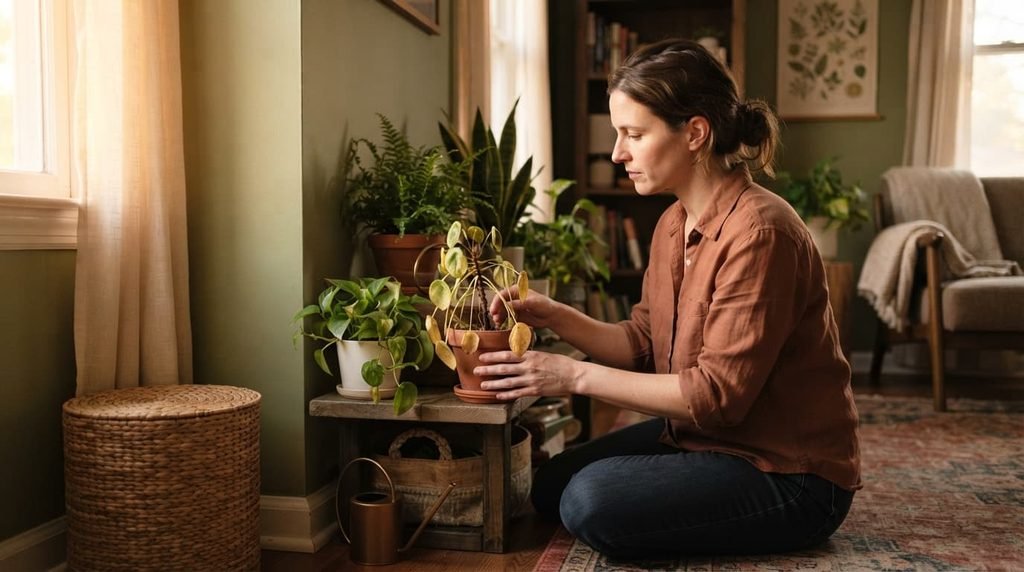
If you’re furnishing entirely from scratch, prioritise genuine plant-light matching and basic watering tools first, treating elaborate pots and decoration as genuinely optional initially, since a bare pot costs you nothing functionally, while poorly matched plants affect the space’s actual success from the very beginning.
If you already have plants but the space still feels unconvincing, prioritise reassessing whether your current plants genuinely suit your actual light conditions before adding more, since this often addresses the actual barrier to genuine garden-like success more directly than additional purchases would.
What to walk away from
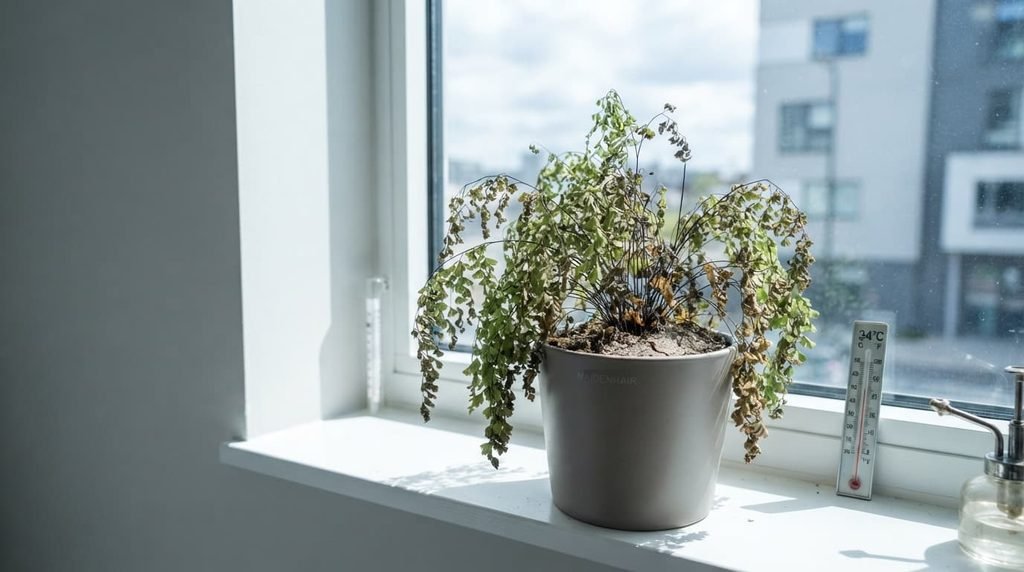
Any plant genuinely mismatched to your actual light conditions, chosen purely because it’s cheaper than a genuinely well-suited alternative, should end your interest immediately regardless of the price difference.
Genuine plant-light matching matters here specifically, and this is a case where the cheaper, poorly matched option isn’t a reasonable budget trade-off at all – it’s worth spending appropriately on genuinely suitable plants, even while economising elsewhere in the space.
The check before you commit
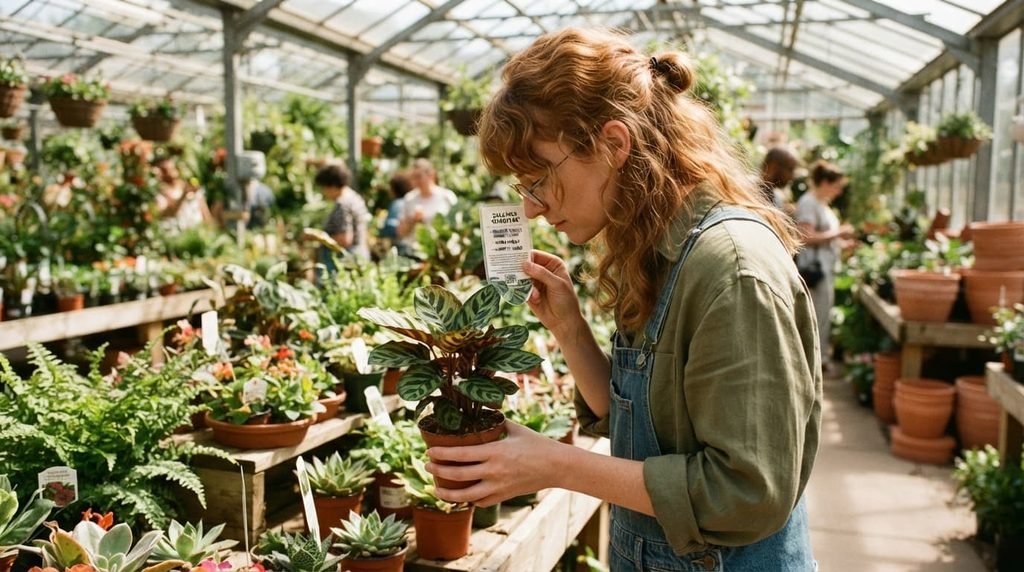
Before finalising any plant purchase, genuinely research its actual light and care requirements directly, rather than assuming any attractive plant will automatically suit your specific space’s actual conditions.
This single check matters more here than in most other budget categories covered above, since plant-light matching involves a genuine biological consideration that other budget courtyard purchases simply don’t carry to the same degree.
What people get wrong about budget indoor gardening specifically
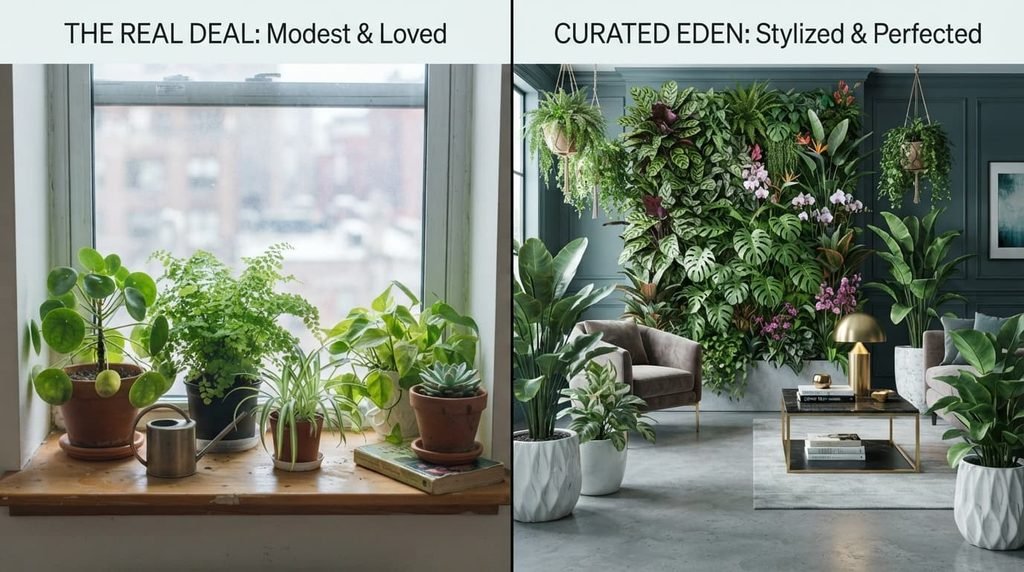
The most common mistake is assuming professional-looking landscaping photography reflects a genuinely achievable budget baseline, when many such spaces involve considerably more investment – mature, established plants, elaborate hardscaping – than a genuinely modest starting budget can realistically achieve. Setting expectations around genuinely achievable growth over time, rather than an immediately elaborate result, produces a more satisfying, sustainable budget approach.
Questions readers keep asking
What’s the single most impactful budget purchase for an indoor courtyard?
Genuinely appropriate, well-matched plants deserve the largest share of your available budget, since this directly determines whether your space actually achieves sustained garden-like health, mattering more than almost anything else for genuine long-term success.
Is it worth buying an elaborate, fully coordinated planter set to save money on future replacements?
Not necessarily – fully coordinated sets often cost more in total than assembling equivalent-quality individual pieces, particularly since a courtyard’s actual visual success depends more on plant health than on every planter matching perfectly.
Should I prioritise plants or watering tools if I can only afford one right now?
Plants themselves, in most cases – even the best watering tools don’t help much without genuinely suitable plants to care for, while genuinely well-matched plants combined with basic manual watering still support meaningful plant health in the short term.
How can I create a garden-like indoor space on a tight budget without expensive supplemental lighting?
Prioritising genuinely shade-tolerant plants specifically suited to your actual available natural light, rather than plants requiring supplemental lighting you haven’t budgeted for, typically achieves more genuine success than attempting a wider variety your actual conditions can’t support.