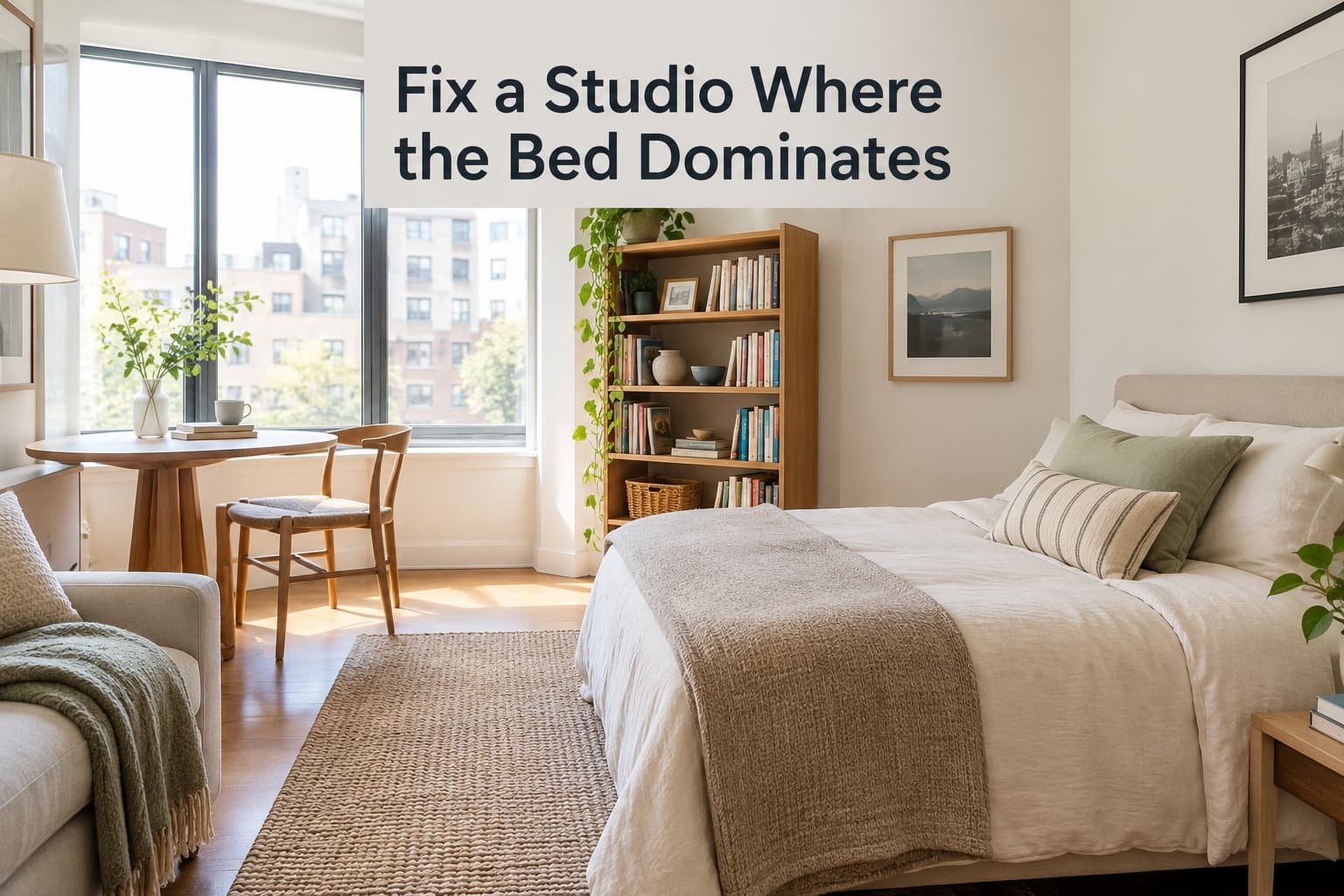
Open the door of some studios and the first thing you see is the bed. It is large, it sits in the middle of the view, and it quietly turns the whole room into a bedroom with a few other things in it. Moving it is rarely possible in a single room, but you do not have to hide it to stop it from dominating. You need to find out why it wins the eye and deal with that reason.
What is going on
A bed dominates for one or more of four reasons. It may be the highest-contrast thing in the room, with bedding that stands out against the walls. It may sit at the end of the longest line of sight from the door. It may be tall, with a big headboard and frame that give it more visual weight than anything else. Or it may be the only large object in the room, so the eye has nowhere else to go.
Each of these has a different cure, which is why moving furniture at random so often fails.
Work out why the bed wins the eye
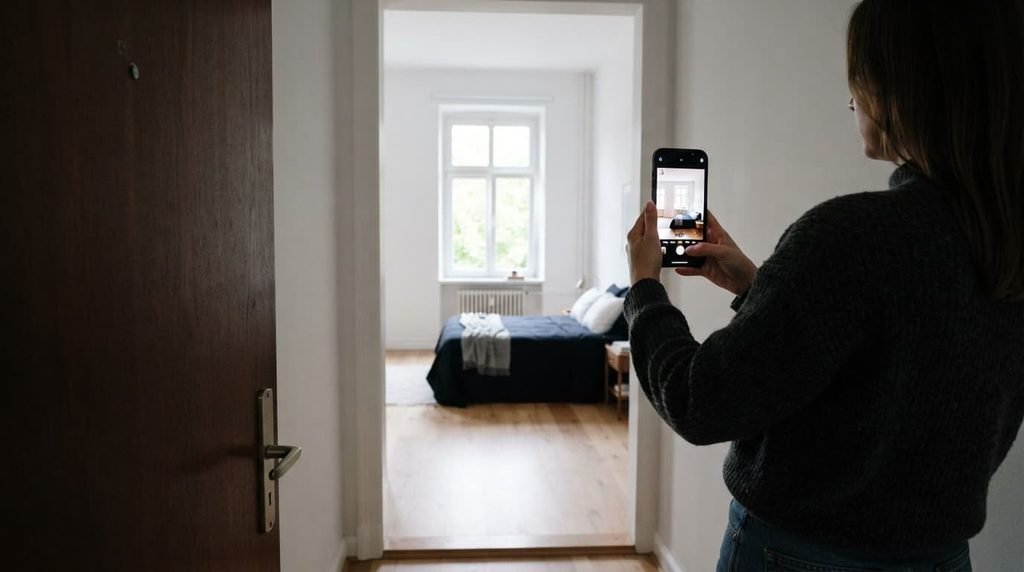
Stand at the door and take a photograph, then do the same from the sofa. Look at the photograph, not at the room, and ask four questions.
Is it the colour? If the bedding is the strongest colour or the darkest or lightest patch in the picture, contrast is the cause.
Is it the position? If the bed sits at the far end of the view, or is the first thing the door reveals, placement is the cause.
Is it the height? If the headboard rises above everything else, mass is the cause.
Is it the lack of competition? If nothing else in the room draws attention, the bed wins by default.
Fixes, from free to fixed
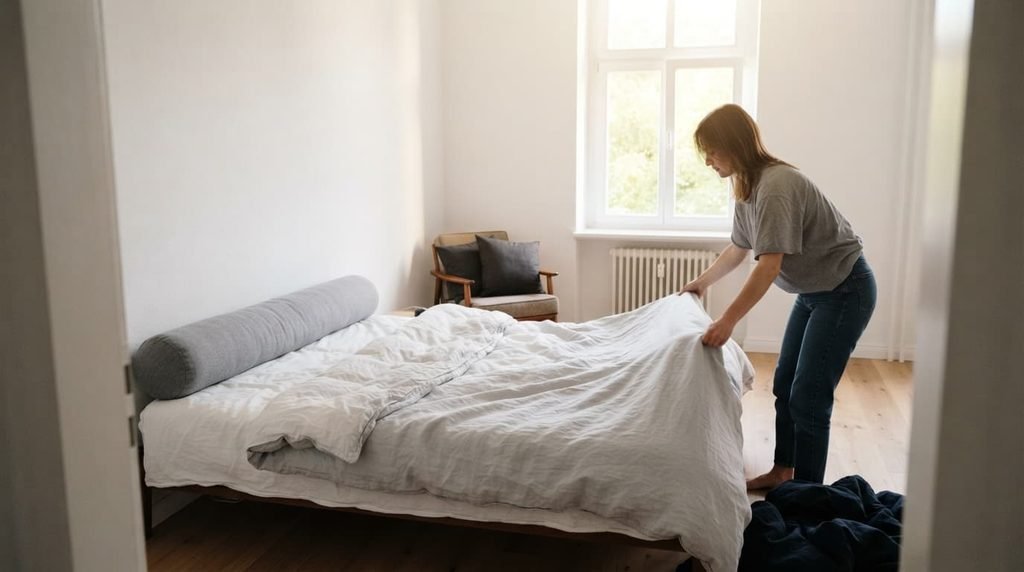
1. Dress the bed to match the room. This costs nothing if you own neutral bedding. A duvet cover close in tone to the walls, fewer contrasting cushions and a plain throw make the bed recede, because the eye is drawn to contrast. Make the bed every day, as an unmade bed is the loudest version of it.
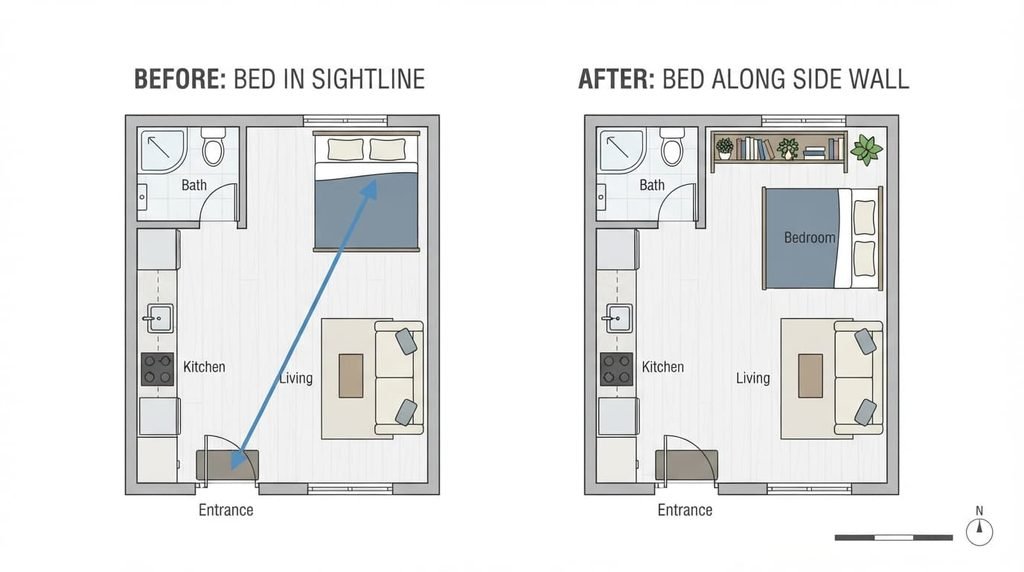
2. Turn it sideways. If the head of the bed faces the door or the room, try placing the long side against a wall, with a bolster along the wall, so that it reads as a daybed. This shows less bulk to the room, and it leaves more floor.
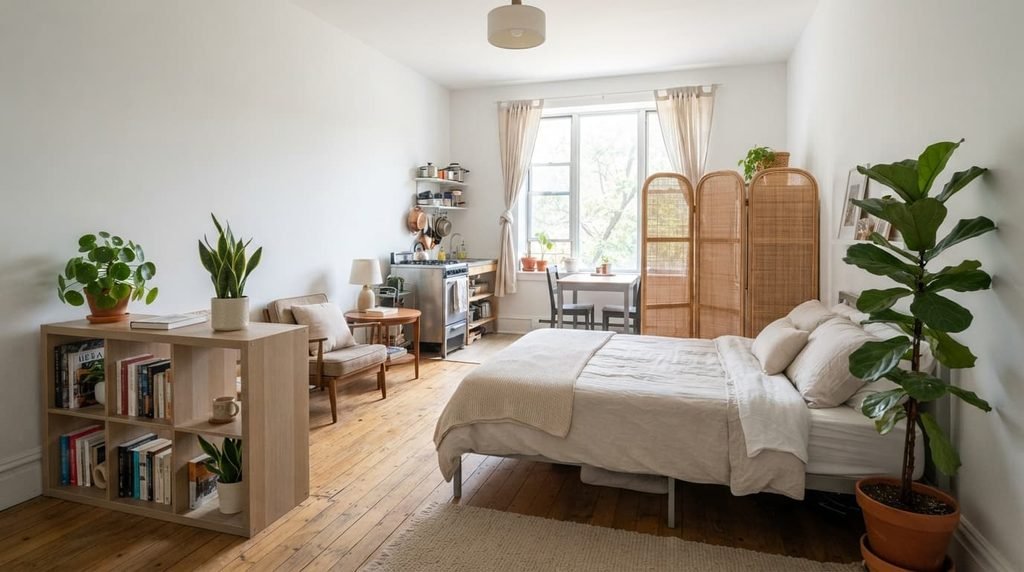
3. Give the eye something else to look at. If the bed wins by default, add a counterweight: a tall plant, a large picture or a bookcase on the far side of the sightline. You are not hiding the bed, you are sharing the view.
4. Partially block the line from the door. A low, open shelf, a folding screen or a tall plant stops the bed being the first thing visible from the entrance, while still letting light through. Anchor any tall shelf to the wall with the brackets supplied.
5. Lower the profile. A tall headboard and a high frame can be replaced with a low platform base or a slim headboard, which cuts the bed’s visual mass at once. Fixing a wall-mounted headboard, or a curtain track on the ceiling, involves drilling, so use a licensed professional if you cannot confirm what lies behind the surface.
A worked example
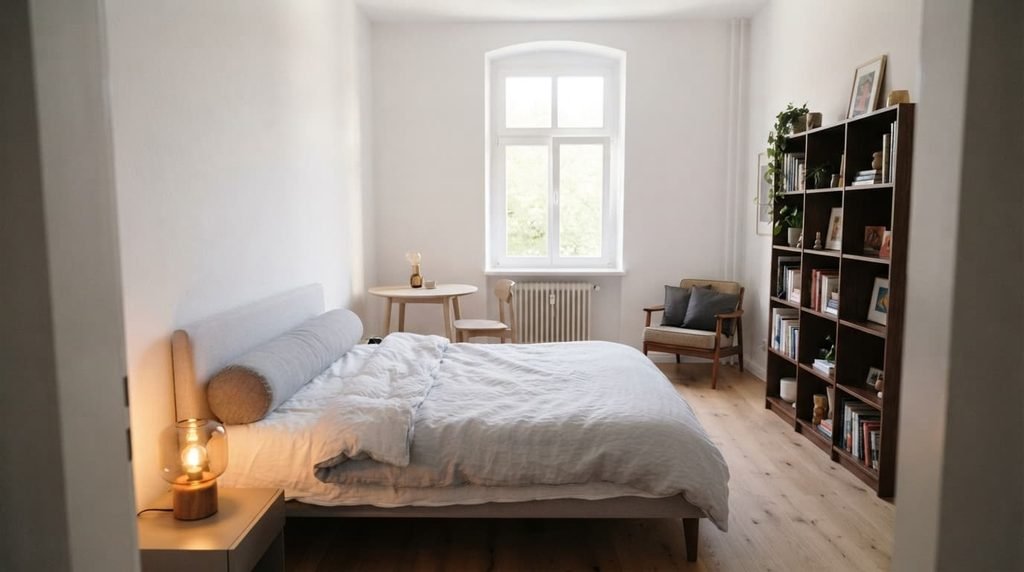
Take a studio with white walls where the door opens onto a long view and the bed sits at the far end under the window. The photograph from the door shows a double bed with dark navy bedding, a tall wooden headboard and nothing else of any size in sight. That points to three causes at once: contrast, position and a lack of competition.
The fixes follow in order of cost. Replace the navy cover with a pale grey one and take away two of the cushions. Turn the bed so its long side lies against the side wall, and add a bolster along it. Then place a tall bookcase on the opposite wall, so that the eye has a second place to land. The bed is still the biggest object in the room, but it no longer owns the view, and nothing has been bought beyond a duvet cover and a bookcase.
Light the room so the bed does not lead
The eye goes to the brightest part of a room. If the brightest light falls on the bed, the bed will dominate whatever its colour or position. Aim your best light at the areas you want to feature, such as the table by the window or the sofa corner, and keep the light by the bed warm and low. A lamp that gives a soft glow beside the bed lets the sleeping area recede in the evening, and it gives you a reason to switch it off in the day.
What not to bother with
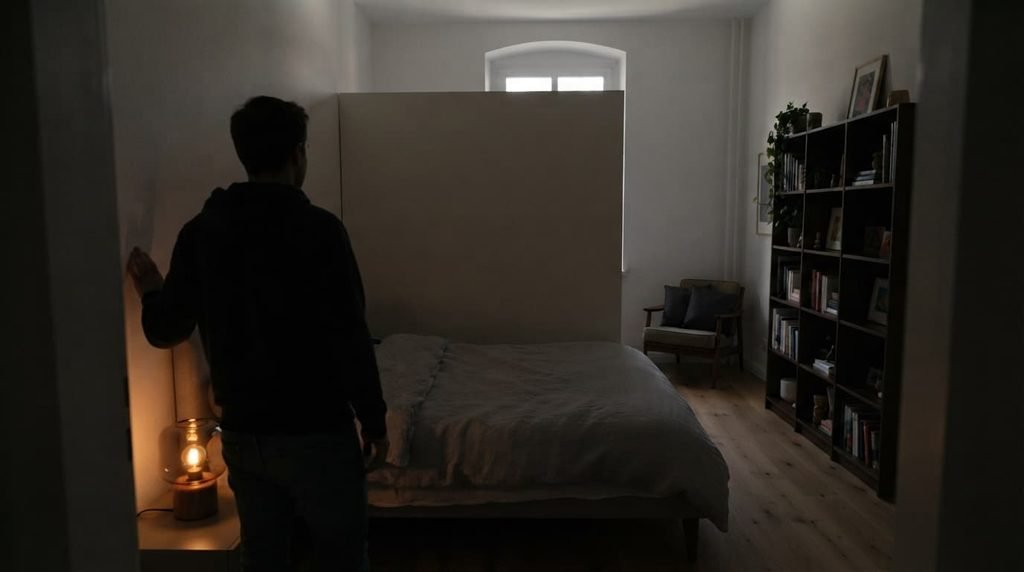
Building a full-height partition around the bed isn’t worth it in a studio with a single window.
It blocks light from the rest of the room, it costs far more than the other fixes, it usually needs permission in a rented flat, and it makes the remaining space feel smaller. A partial, open barrier gets most of the benefit with none of those costs.
If your situation differs
If you rent, stay with the first four fixes. They all work without touching a wall, and you can take every item with you.
If the studio is very small, prefer the sideways bed and a neutral cover over any divider. In a tiny room, anything tall begins to crowd the space.
If your bed folds into the wall, the dominance is a daytime problem solved by closing it, and the only question is how the closed unit looks.
Check before you commit
Before buying anything, test the idea with what you already own. Make the bed in a neutral cover, move a plant or a shelf into the sightline, and photograph the result from the door again. Compare the two photographs side by side. If the change is clear in the photograph, it will be clear in the room.
Questions readers keep asking
Does dark bedding hide the bed better?
Not necessarily. Bedding close in tone to the walls draws the least attention, so a pale bed against pale walls recedes more than a dark one, and a very dark cover can look heavy.
Is a daybed a better choice for a studio?
Often, yes. A daybed is low and sits along a wall, so it reads as seating by day, which suits a studio, although many people find a proper mattress more comfortable for nightly sleep.
Can a curtain around the bed solve this?
It can, if there is a safe way to hang it. A ceiling track needs fixings that suit the ceiling, and a curtain should stay clear of heaters and lamps.
Does a mirror help?
A mirror can add light and depth, but a mirror facing the bed doubles its presence. If you use one, place it where it shows the window or a plant, not the bed.
How long should I try a new arrangement?
Give each layout two or three evenings before you decide. First reactions often reverse once you have used the space, and a layout that looks wrong in the first hour may feel right on the second day.