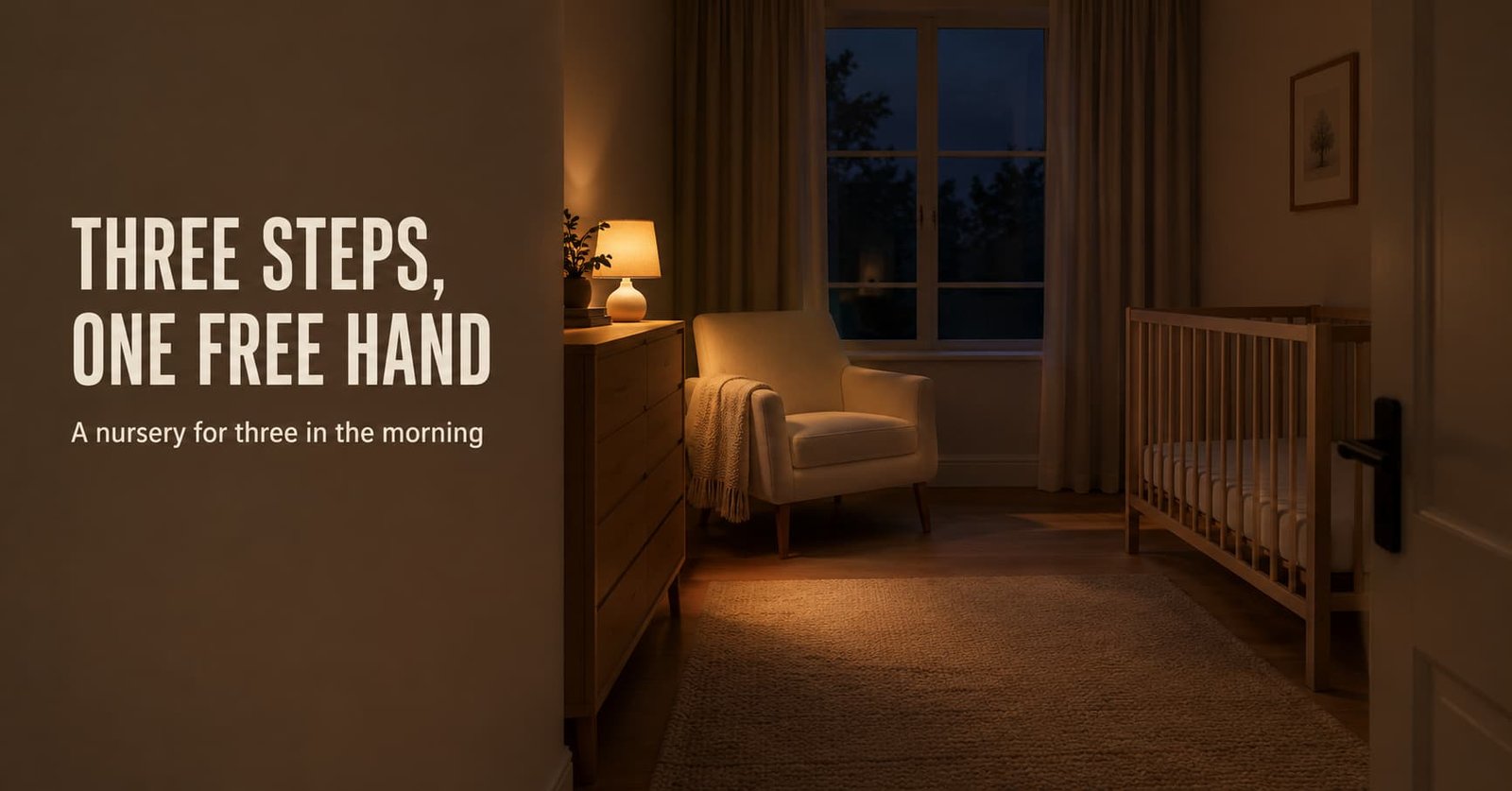
By day a nursery is a bedroom with a cot in it. At three in the morning it’s a production line of four stops, run by someone half asleep with a baby in one arm. A nursery that works at three in the morning is laid out for that route.
This guide assumes a room about 280 by 340 cm, with the door at one end. The NHS says the safest place for a baby to sleep for the first six months is a cot in the parents’ room, so this room is first a night station for changes and feeds. It becomes a bedroom later, and the layout has to serve both.
What a nursery that works at three in the morning demands
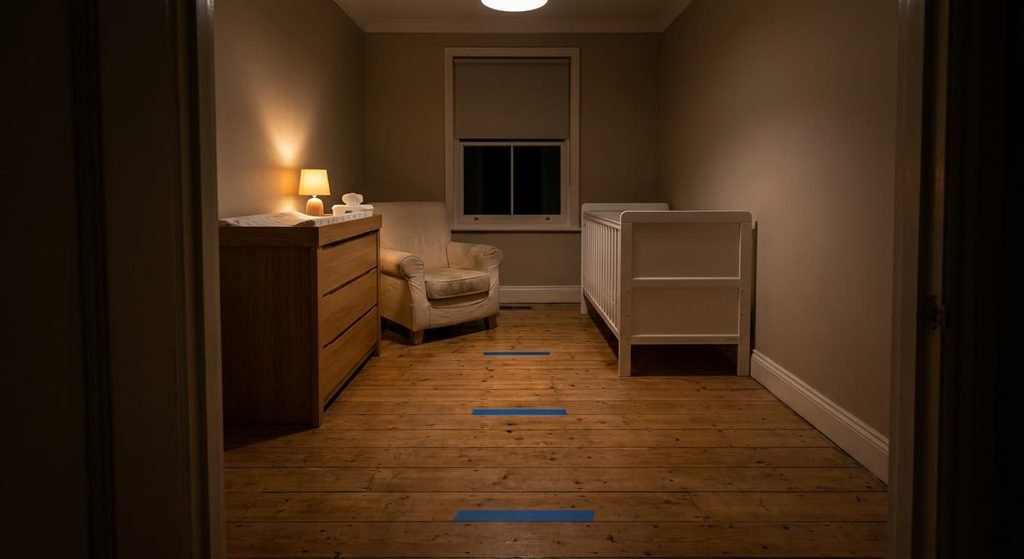
At night distance is counted in steps, and a nursery that works at three in the morning keeps its route short. An adult step is about 70 to 75 cm, so three steps cover roughly 2.2 m. The stops are the door and the changing mat, then the chair and the cot. The whole route should fit inside that distance. The baby takes one arm, and the free hand reaches about 60 cm without a step. A parent carrying a baby is about 50 cm wide, and a 25 cm margin keeps a hip off the rail in the dark, so the gap between chair and cot works at 75 cm, a figure of mine.
Three steps is the budget.
Light matters. The eye needs about ten minutes to adjust to the dark and loses much of that in a moment of bright light, so a full-power ceiling fitting at three in the morning costs you your night vision and can wake the baby fully.
The cot has its own rules. The NHS asks for a firm flat waterproof mattress with no bumpers or pillows and no loose bedding. Its tog guide pairs a standard sleeping bag with a room of 16 to 20 °C. Keep the cot away from radiators and direct sun, and out of reach of blind cords. Plan the room as a route of three steps with one free hand, and place every item by whether one hand can reach it from where you stand.
Four nursery layouts that work
– Rental-friendly, 280 × 340 cm: the cot stands against the right-hand long wall, 120 cm from the window wall so it clears the radiator under the sill. A cream bouclé armchair 80 cm wide faces it across a 75 cm gap, and an oak-veneer chest topped with a changing mat stands by the door. A dimmable lamp at 2200 K sits on the chest. The route takes three steps.
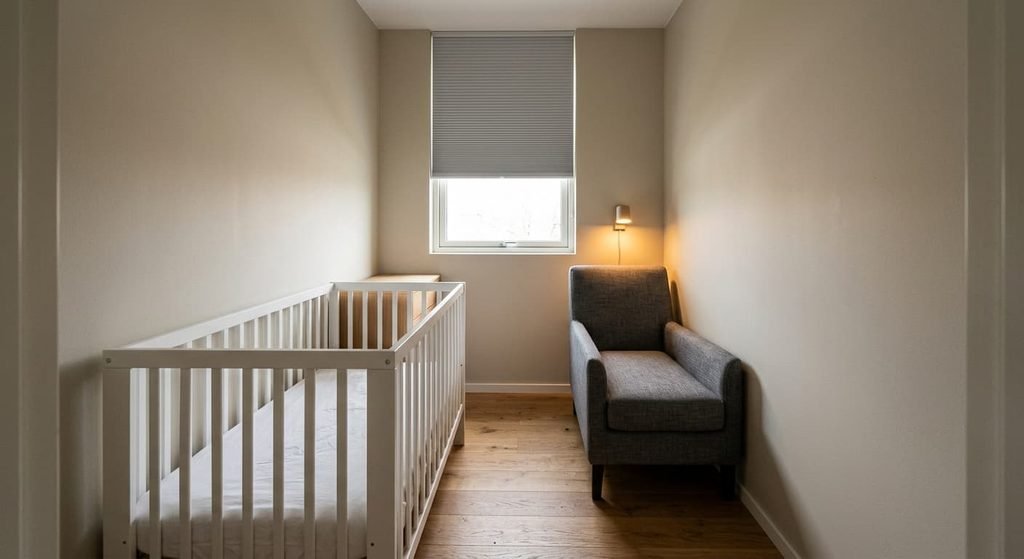
– Tight footprint, 220 × 260 cm: the cot runs along the left wall, with a 65 cm armchair in charcoal linen facing it across a 75 cm gap and leaving 14 cm spare. A chest 100 cm long and 45 cm deep stands at the foot of the cot, and a wall lamp beside the chair keeps the floor clear. Every item is within two steps of the chair.
– Awkward shape, such as an attic with sloping eaves: the cot and the 75 cm gap beside it go where the ceiling clears 160 cm, so you can lean over the rail without stooping. The chair needs the same height for rocking. A row of dimmable spots at 2700 K runs along the ridge. Headroom decides every position.
– Full furnish, 360 × 400 cm: the three-step route stays exactly as before. A 90 cm linen day-bed against the long wall gives a parent somewhere to lie down, and two lamps on separate dimmers keep the main light off. Extra pieces sit off the route.
Where people get this room wrong
A single overhead light on one switch costs you your night vision, and the cause is the eye’s slow adjustment to darkness. The fix is a low lamp on a dimmer within reach of the chair. Set it to its lowest level first and raise it only if you need to read. A switch on the lamp’s cable lets you do that without standing, and in a nursery that works at three in the morning the ceiling light stays off.
A changing surface at the wrong height puts the strain into the back. The cause is a surface set by the furniture rather than by the person, so stand relaxed, measure from the floor to your elbow and aim for a top about 10 cm below that, which is only a rule of thumb. Never leave the baby on it, and anchor the chest to the wall as its instructions say.
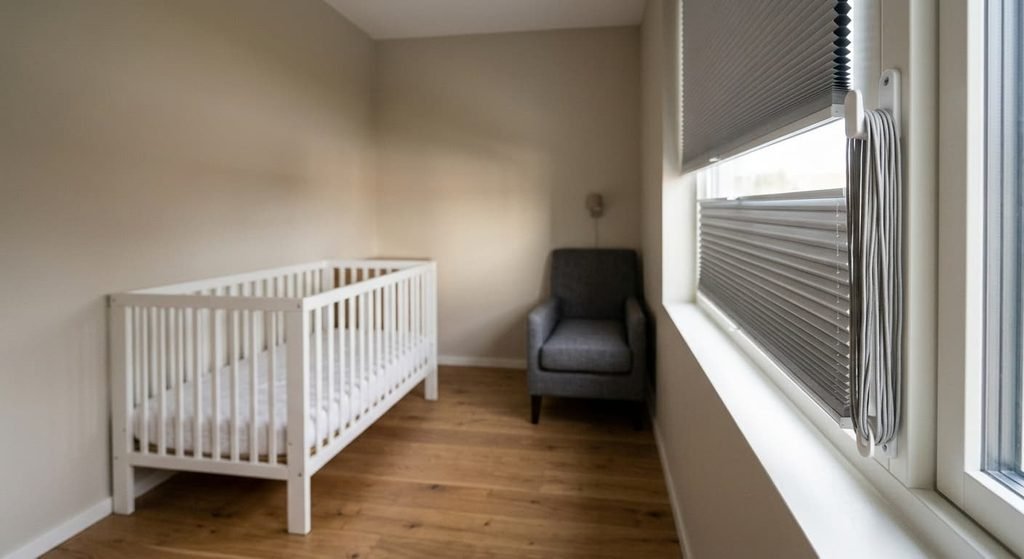
A blind with a looped cord near the cot is a hazard. The cause is the cord, and the Irish consumer authority asks for cords to end at least 1.6 m above the floor. Replace it with a cordless blind. Otherwise cut the loop and fit a safety device. Keep the cot well clear of the window as well.
Wipes and cloths in a drawer fail when one hand is full. The cause is a reach beyond 60 cm, so move an open tray or a shelf within the radius of the chair and the changing mat.
When a nursery that works on paper fails at three in the morning
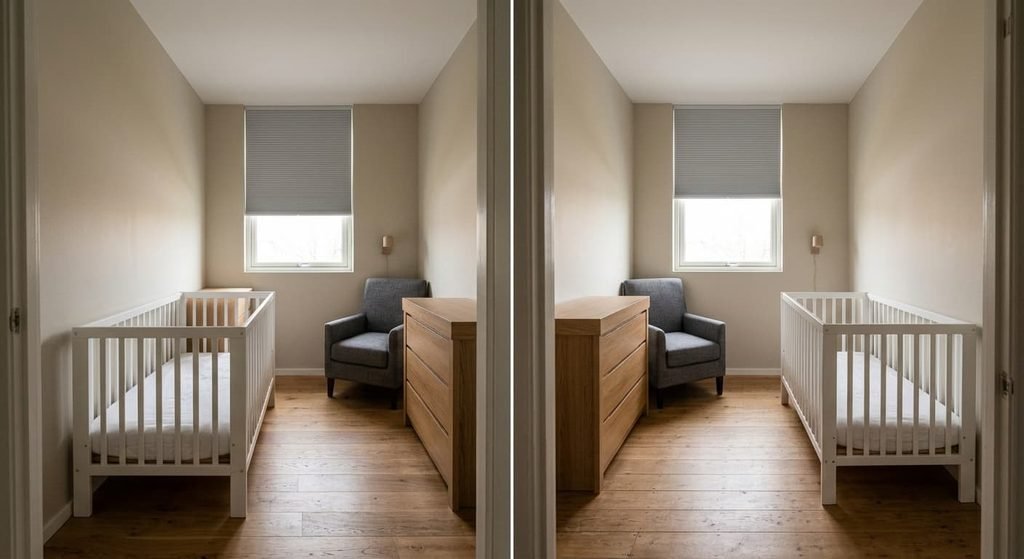
The magazine nursery centres the cot on the window wall, puts a chair in a far corner and keeps the chest by the door. In a room 280 by 340 cm that spreads the three pieces across 340 cm, which is nearly five steps against the three the route allows. It’s tidy and it’s slow.
I’d argue for the opposite plan: the chair is the anchor piece. A night feed in a chair often lasts 20 to 40 minutes, while the cot gets a few seconds of your attention, so the chair deserves the best position, which also means the best light and the nearest storage. Put it where one step reaches the changing mat and one step reaches the cot rail. A rocking chair needs clear wall behind it as well, so check the model before you fix the position.
The window wall also brings draughts and morning sun, and blind cords hang there too, none of which a cot should share. In the first months the cot may sit in your own room. Then the chair and the changing mat carry the whole night.
Plan from the chair outward.
Three things to try this weekend
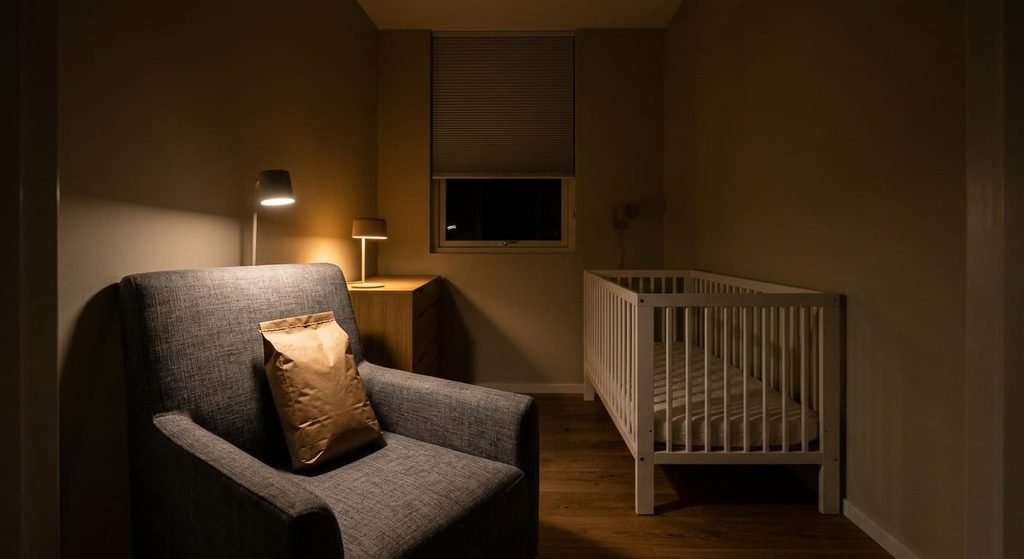
1. Carry a 3.5 kg bag of rice from your bed to the nursery chair in the dark, using only your phone’s lowest light. Count the steps from the door to the chair, because more than four means a piece is out of place. Expect the count to expose the one item that sits in the wrong corner.
2. Measure from the floor to your elbow and mark a spot 10 cm lower on the chest. Rest your forearm there with the mat in place. If your wrist hangs naturally over it, the height is right. Your shoulders should drop too.
3. Leave the ceiling light off and sit in the chair with the lamp on its lowest setting. If you can read a nappy size label and reach the wipes without standing, the room works. If you can’t, move the tray first.
A nursery for the night is a three-step route with one free hand. Put the chair first and the lamp within reach, since those two decide how the hours between midnight and dawn feel. Keep the cot clear of the window and its cord. Then walk the route in the dark with a bag of rice before you buy another piece, and move whatever pushes the count past four.
Questions readers keep asking
How big should a nursery be?
Big enough for the route rather than the furniture. A room of 220 by 260 cm holds a cot with a narrow chair and a chest if the gap between chair and cot stays at 75 cm. Anything larger adds comfort, but the three steps matter more than the area.
Where should the cot go in a nursery that works at three in the morning?
Keep it away from the window and its cords. Radiators and direct sun are out too, and it should sit within one step of the chair. The NHS also asks for a firm flat mattress and an otherwise empty cot. In the first six months the safest sleeping place is a cot in the parents’ room.
What light is best for a nursery at night?
A low, warm lamp on a dimmer that you can reach from the chair. Around 2200 to 2700 K feels gentle, and a dimmer keeps it low. A bright ceiling light costs the eye its dark adjustment and leaves you less able to see.