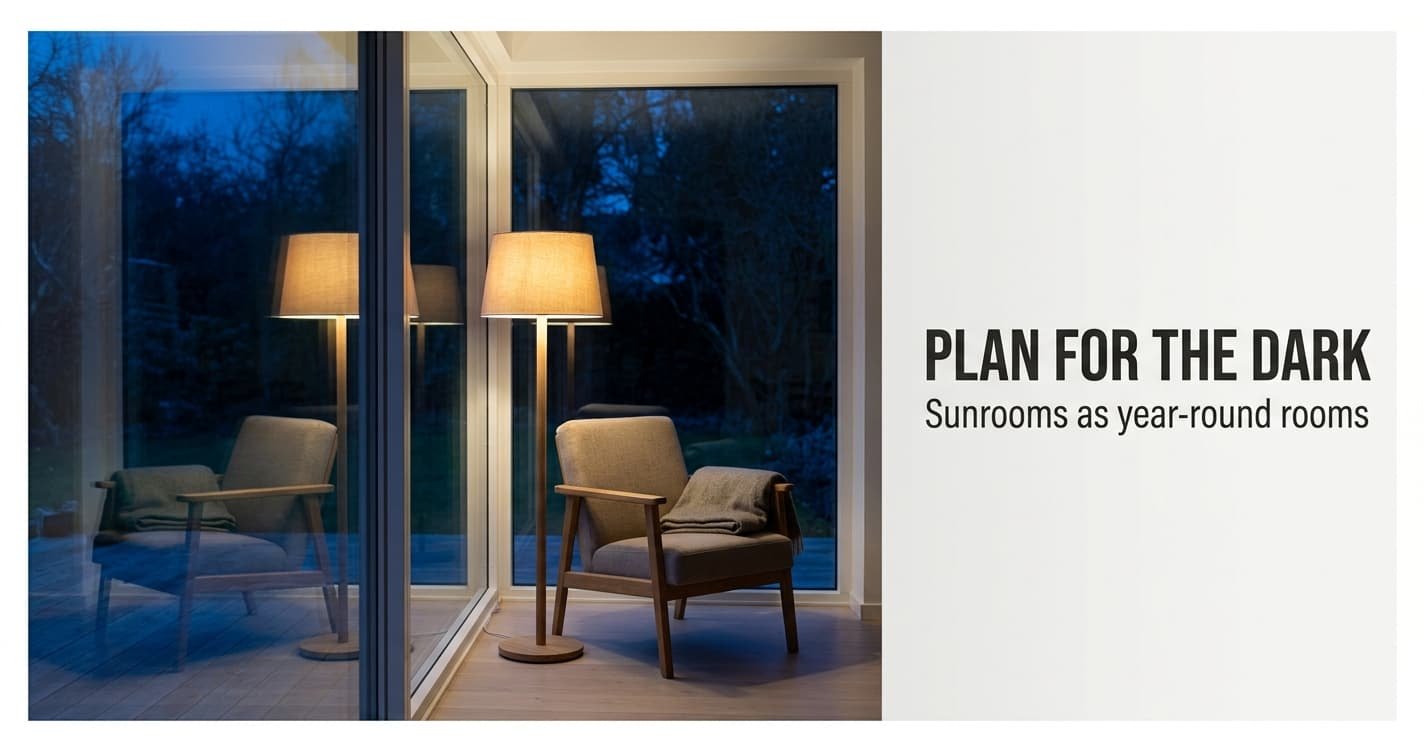
The usual grumble about a summer sunroom is that it’s a greenhouse for six weeks and a cold box for the rest. Sunrooms are becoming year-round rooms, and the change has less to do with heat than with the dark. In late December the Netherlands gets about 7 hours 43 minutes of daylight, against more than 16 hours in June. This piece explains what that does to the room and who the change suits. It assumes a sunroom 310 by 400 cm with a glass front 210 cm high. Heating and glazing belong to your builder and the maker’s sheets.
Where the summer room came from
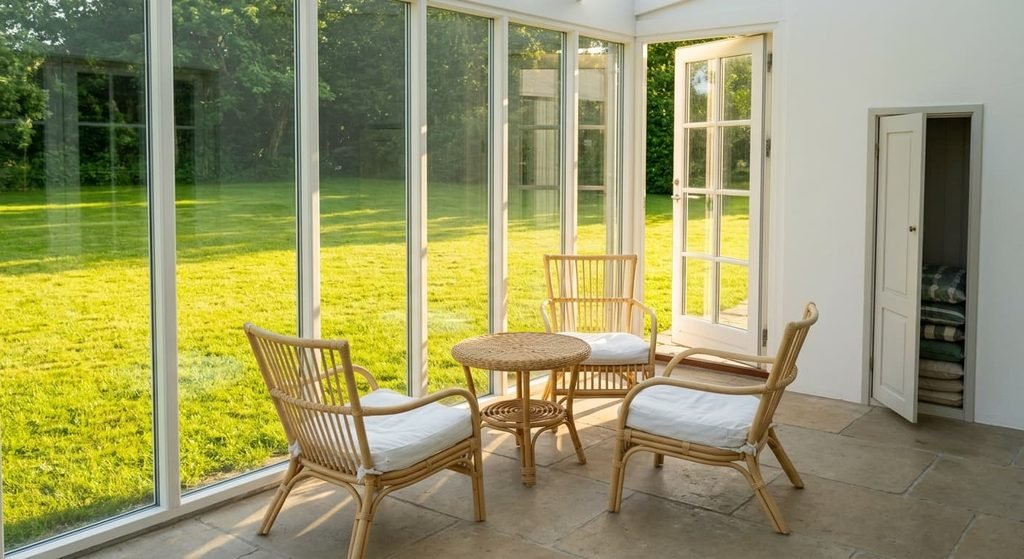
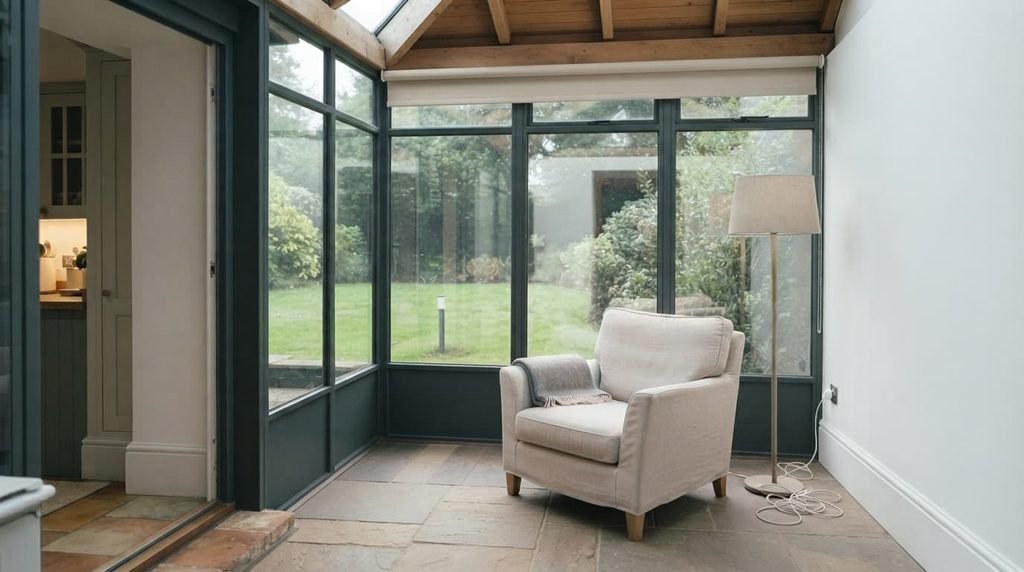
The classic sunroom was a summer room by design. It was added to the back of a house to catch the long days, and in midsummer it stayed bright from early morning to ten at night. Nobody needed a lamp in it. The glass was a view, the seats faced the garden, and the door stood open. Cane and light cotton did the job, because the room was used on dry days between spring and early autumn and left alone after that. Storage meant a cupboard of cushions that came out in May and went back in September.
Three shifts sit behind the new interest in the glass room. Panes and frames hold warmth better than they once did, which the maker’s sheets describe in figures. The room also sits one door from the kitchen, where the house already lives. And a household may want one more room for the hours after work, when the rest of the house is busy. None of this changes the glass. It changes the hours the room is asked to cover.
What changed as sunrooms are becoming year-round rooms
Count three things. The shift runs from sixteen hours of light and no lamps to eight hours of light and an evening in the dark. A summer room is bright until late. A winter room gets about 7¾ hours, and around the solstice the sun sets at roughly half past four. Every hour after work is spent in the dark.
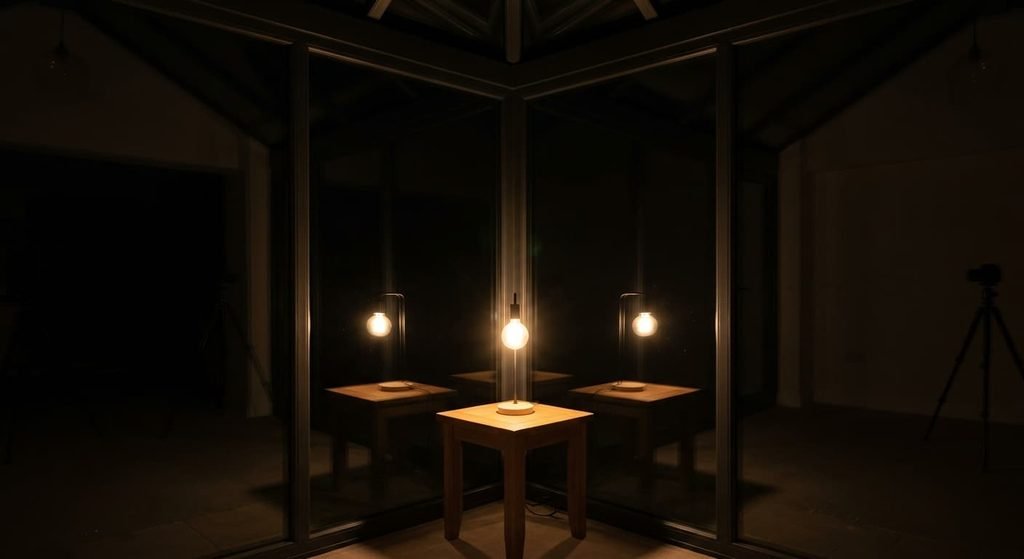
Glass is the second count. The front wall of this room measures 400 by 210 cm, which is 8.4 m², two thirds of the 12.4 m² floor. By day it is a window. After dark the room is lit and the garden is black, so the glass turns into a mirror. A bare bulb then shows twice: once on its stem and once in the glass, as far behind the pane as the lamp stands in front of it. A lamp 150 cm from the glass appears 150 cm beyond it.
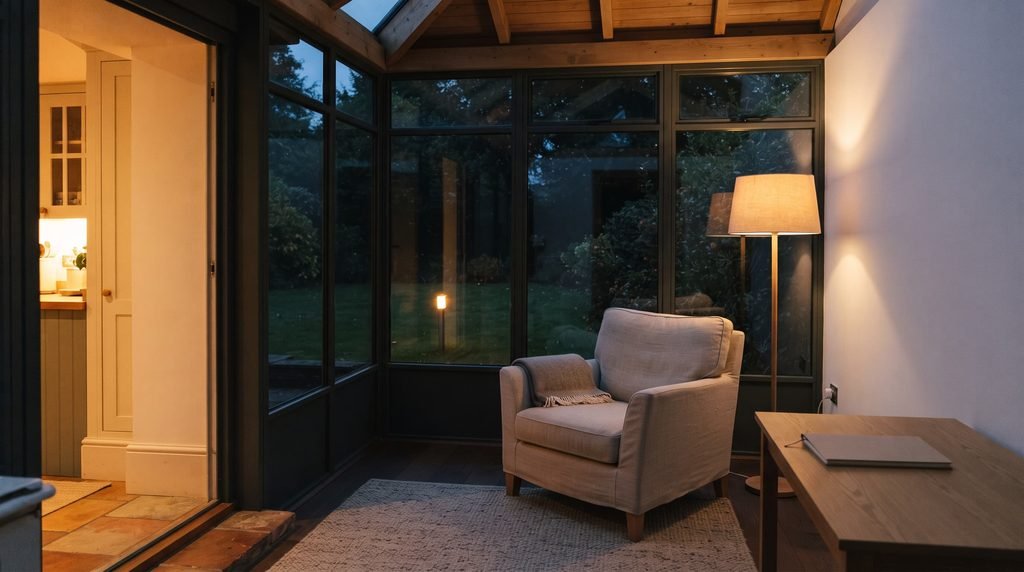
The third count is where the seats point. In summer every seat faces the glass. In winter at least one faces the room with its back to the glass, and a shaded lamp stands beside it.
The cover for the glass changes job as well. The roof blind that shaded the room in July is no help at night. A blind or curtain on the front wall takes its place, and it stays open by day.
Materials follow the hours. Cane and light cotton still work by day. The evening adds a woollen throw for each seat and a lamp shade in warm fabric, which gives the glass a soft glow to reflect instead of a hard point.
Who it suits, and who it doesn’t
A household with a use for the hour after work gains most now that sunrooms are becoming year-round rooms. Cooking in the kitchen with the door open, a child’s homework table, a reading chair: each of these fills the evening hours. It suits a room with a plain house wall, since that wall can carry two lamps without putting them between the seat and the glass. It suits a garden with a small light 2 to 3 m out, because the glass then shows the garden as well as the room. And it suits someone content to pull a blind at dusk. Leave the kitchen door open, since the evening then feels shared with the cook.
A room that opens onto a street or a neighbour’s window is a poor fit. Anyone passing can see into a lit glass wall, and the blind has to stay down. Nor does it fit a household that wants the room for six sunny weeks only. The extra lamps and covers would sit unused for the other forty-six.
Anyone who wants to watch the garden from the seat at all hours will be disappointed. After about half past four in winter the glass shows the room, unless a light outside balances it.
Pick the evening use first, and fit the room around it.
Are sunrooms becoming year-round rooms for good?
Yes for an evening room, no for the household’s only living space. The change is worth making where the room has a job after dark, because the dark is the one thing every year brings back. A room that works at 17:00 in December also works at 20:00 in August, when the sun is low. A household that eats at 18:00 and sits down at 19:30 gets perhaps two hours a day from it. One that comes home at 21:00 gets almost none.
The easiest check is whether you can undo it. A blind comes off its rail in an afternoon, a lamp moves to another room, and a seat turns back to the glass. Nothing in the evening setup locks the room into winter use. I can’t say how long the habit will last, since that follows how households live.
The version that will date fastest
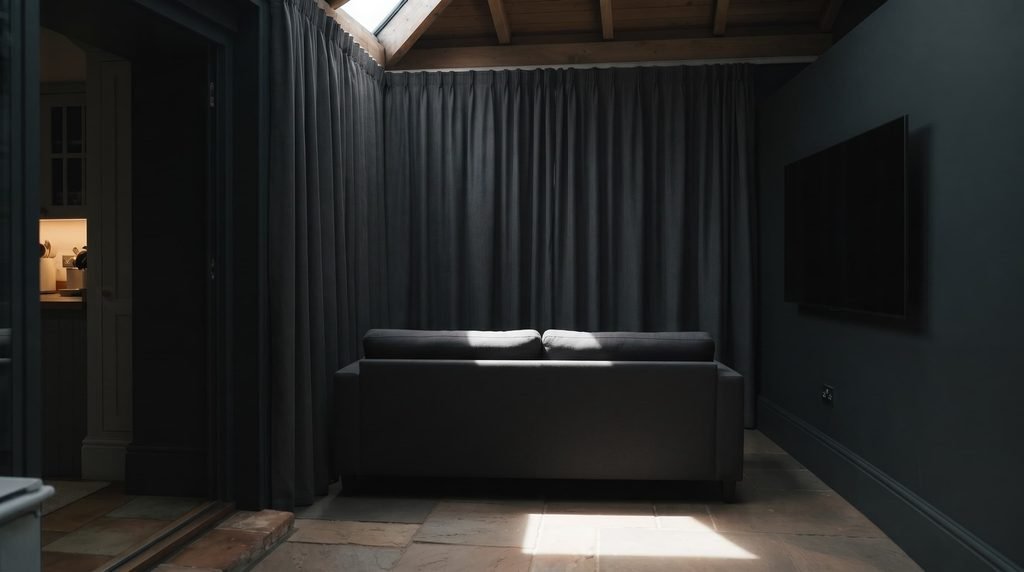
Spot the extreme version by one fact: every pane is permanently blacked out. Thick drapes hang across the whole front on a ceiling track, so the view is gone even at noon. The house wall is painted dark, and a screen takes the place of the garden view. The roof is still glass, and the room still heats on a sunny day.
My view is firm: that version is an old den in a costume. It pays for 8.4 m² of glass and then hides all of it. Once the household tires of the screen and the dark paint, the room has lost both its light and its view. The aim now that sunrooms are becoming year-round rooms is a room used after dark, and a hidden room isn’t one.
A moderate version keeps the glass clear by day and covered by night, with every cover on a track that moves.
How to try it without committing
Start with a test that costs nothing. On a November evening, pin an old bedsheet over half of the glass wall, from the top rail to the floor. Switch on one shaded lamp on the house wall and sit facing the glass for an hour. Notice which half you look at, and which half you’d rather have behind you. The next evening, move the lamp 60 cm and look again to see where the second bulb lands. If you keep reaching for the sheet, buy the proper blind. If you forget it was there, you have your answer for the price of a bedsheet.
Sunrooms becoming year-round rooms is a change of hours, and the glass stays the same. Count the dark you’ll sit through. Then plan the lamps and covers before the seat. If the dark hours fill up with use, the room is worth the effort. If they stay empty, it remains a good summer room, and you’ve lost nothing but an evening or two.
Questions readers keep asking
Should you change a summer sunroom for winter use?
Change the covers and the light first, and leave the furniture alone. A blind for the glass wall and two shaded lamps on the house wall make the evening workable. The seat can wait a month, until you’ve seen where you actually sit after dark.
Who suits a year-round sunroom?
Sunrooms becoming year-round rooms suit households with a use after work, a plain house wall for lamps and a window that does not face the street. A room that only gets used on bright days gains little from the change. Pick the use first, then buy the blind.
Will sunrooms stay year-round rooms?
Nobody can say whether sunrooms are becoming year-round rooms for good, and I won’t guess. What lasts is the dark itself, so a room planned for the evening works in any season. Keep every cover on a track and every lamp on a cable you can move, and the room can change back in an afternoon.