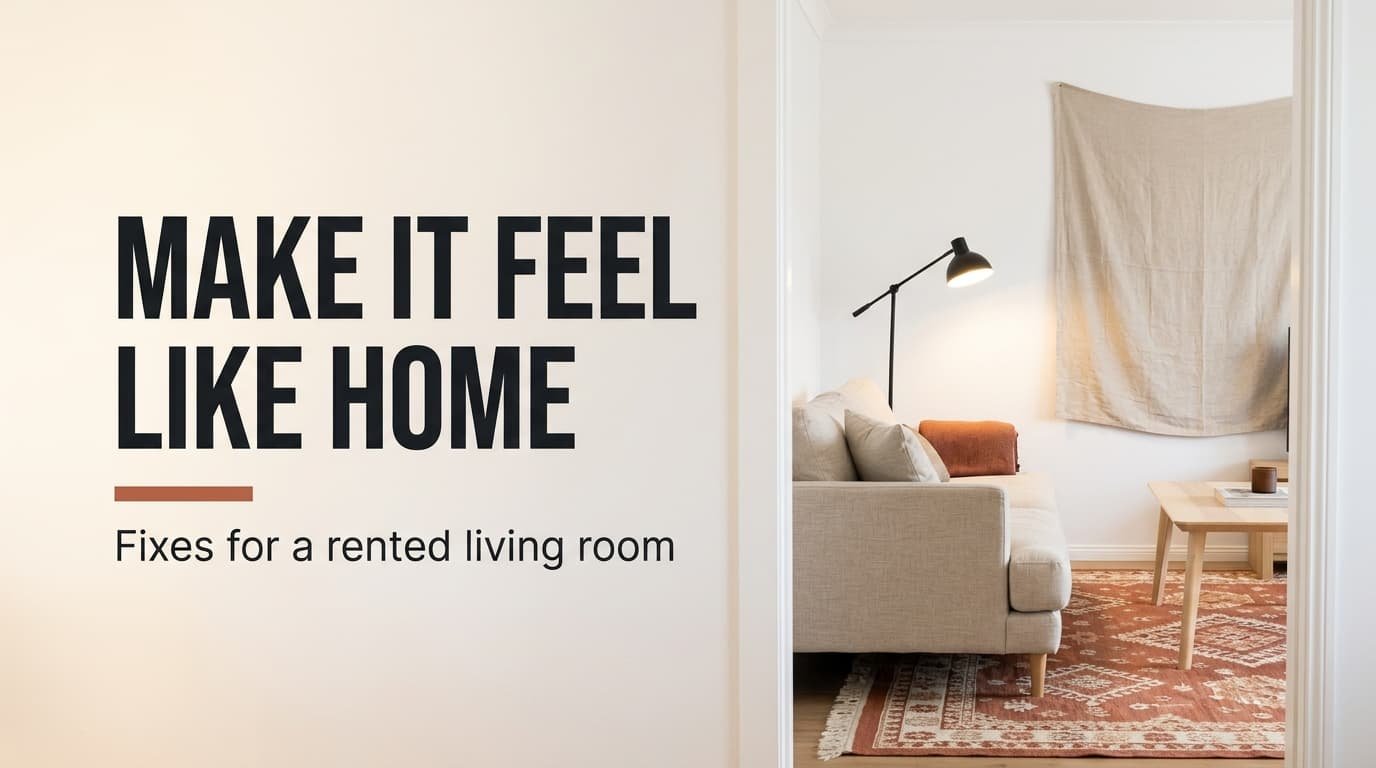
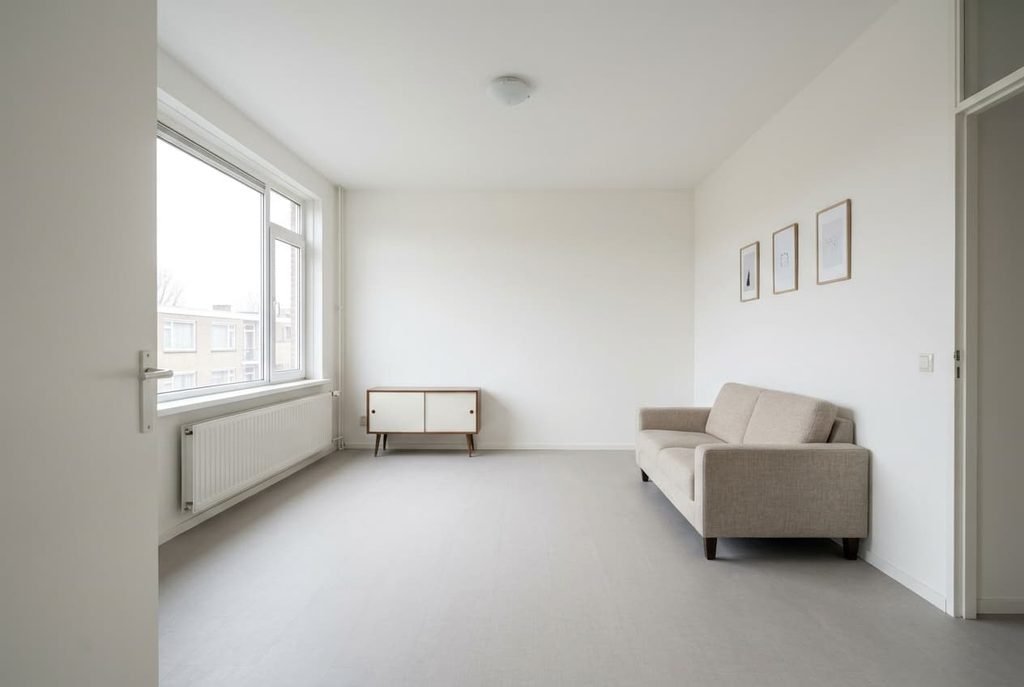
You’ve bought the cushions and hung the pictures, yet the flat still feels like somewhere you’re only visiting. Why does a rented flat still feel temporary after all that effort? Your taste rarely comes into it. Your belongings fill about 6% of what the eye takes in, and the landlord chose the rest. Three measurable causes sit behind that. A measuring tape and one free evening will find each one. Our room sits in a Dutch block: 380 by 470 cm, ceiling at 250, window 180 by 140, door 83 wide. The figures describe one invented room, so your own measurements should replace every one of them.
What makes a rented flat still feel temporary after you’ve decorated it
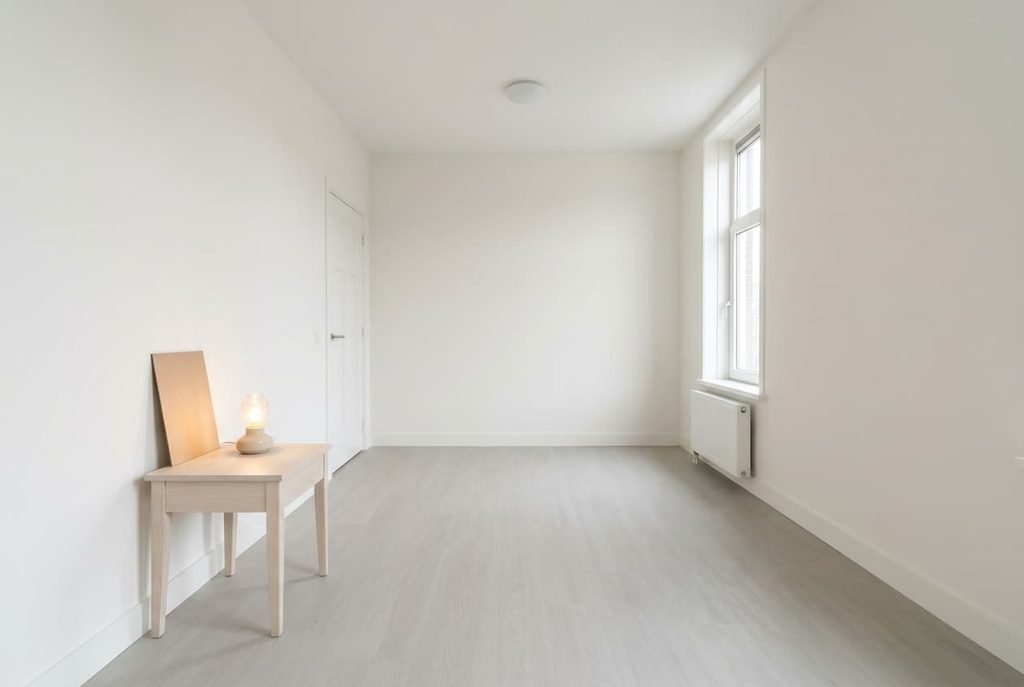
Your eye reads the biggest uniform surfaces first and your belongings second. In a rental, someone else picked every large surface and the ceiling light, and they picked for the next tenant too, so the choices are made to be forgettable. A hotel room feels temporary for the same reason: almost nothing in it is yours. A rented flat reads as temporary when the landlord’s surfaces and light fill most of the view, and your own things are too small a share of the view to overrule them. That’s why a new rug or lamp seems to change nothing.
Most people blame the wrong thing. They decide they need more objects, or a better eye. Yet fifty extra objects still leave the flat looking borrowed when they cover 7% of the view. The sums are simple. Floor and ceiling are 17.86 m² each, and the walls come to 38.3 m² once the window and door are taken out. That’s 74.0 m² of landlord surface. Your furniture and pictures add up to 4.7 m² of yours, which is 6% of the 78.8 m² you see.
Three passes to see why a rented flat feels temporary
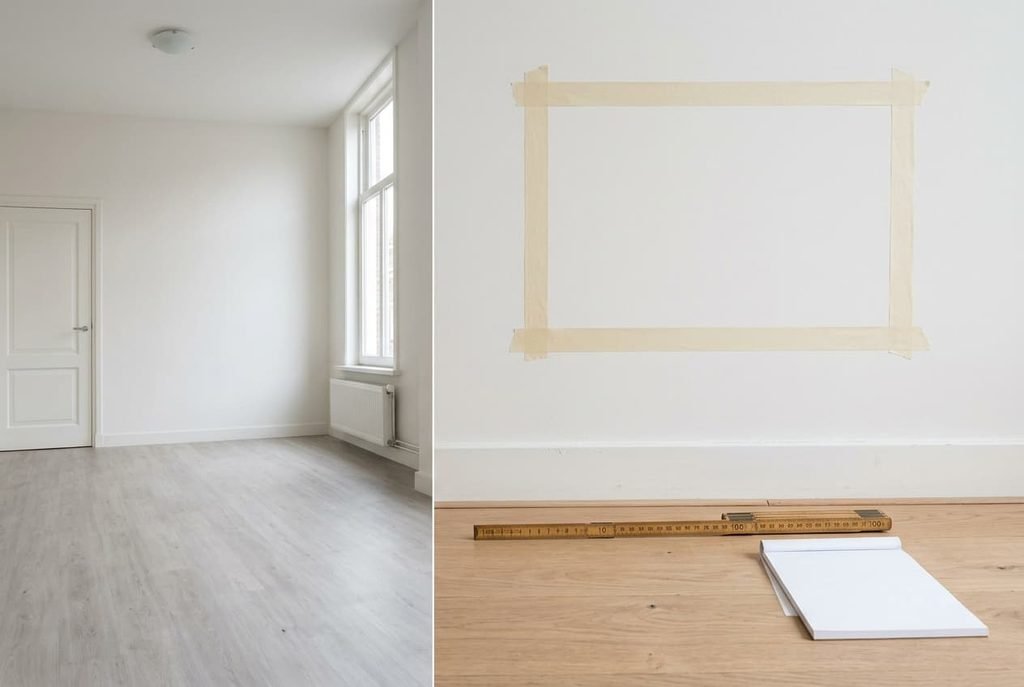
Start in the doorway with a tape in one pocket and a pad in the other. The question behind this page, “why does my rented flat still feel temporary?”, splits into three smaller ones, and each can be answered without buying anything.
For the surface pass, list every large item you own and multiply width by height for its visible face. Add them up, then divide by the combined area of every surface the landlord supplied. Anything under 15% is a warning sign, and a figure under 10% is a clear one.
For the light pass, switch on everything you use in the evening and check the base of each bulb. Two different temperatures in one room mark the second fault. Check the ceiling fitting first, since it was fitted before you arrived.
For the line pass, step into the middle of the floor and rotate slowly. If every large piece touches a wall and the middle is bare, you’ve found the third fault.
Nothing here needs a drill.
The three faults, diagnosed
“Nothing I own looks big enough for the room.” The cause is scale. Your 4.7 m² is 6% of the view, and our working rule says a room reads as chosen near 15%. Start free: hang the largest throw or bedspread you own, 140 by 200 cm, on the emptiest wall, which lifts your share to 9.6%. Next, group the three 30 by 40 cm pictures into one block, because one unit reads larger than three. Use adhesive strips or a tension rod if the tenancy forbids nails. Last, buy a rug measuring 200 by 290 cm. It adds 5.8 m² and brings the share to 16.9%. That is one purchase, and landlord surfaces still fill 83% of the view.
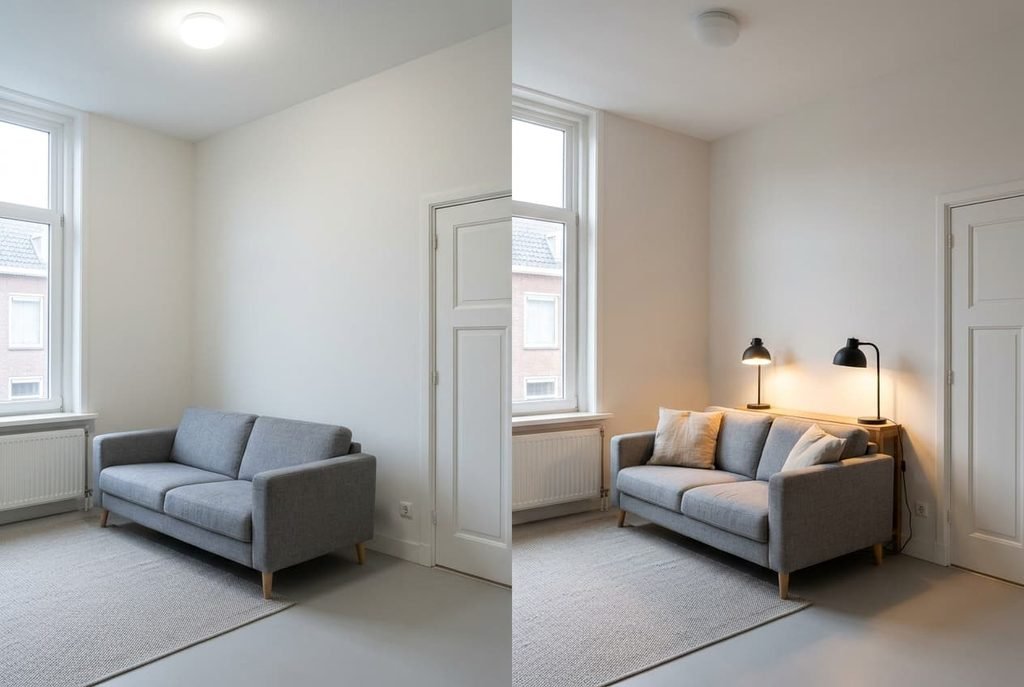
“By day it looks fine, and after dark it goes flat.” The cause is two kinds of white. A ceiling fitting from the landlord gives 1,600 lm at 4,000 K, and your two lamps give 400 lm each at 2,700 K. The eye averages them by output, so the room lands near 3,450 K, which flatters neither. Start free: after dusk, turn the overhead light off and live on the lamps, accepting 800 lm instead of 2,400. Warm white is the one temperature both kinds of fitting can share. Then move each lamp beside a seat, with the shade at about 110 cm. Last, fit a 2,700 K bulb of 1,600 lm in the ceiling fitting. That costs one bulb, and you should check your tenancy terms before touching the fitting itself.
“Everything’s in the room, but it feels like a waiting room.” The cause is placement. Your sofa stretches 200 cm along one wall, with 160 cm of sideboard, a 140 cm TV unit and an 80 cm bookcase beside it. That puts 5.8 m of furniture on the 17.0 m perimeter, and the armchair sits 295 cm from the sofa, further than people comfortably talk. Start free: pull the armchair 95 cm in, which closes the gap to 200 cm. Then turn the coffee table through 90 degrees so its long side faces the sofa. Afterwards, cross from the entrance to the glazing and keep that path 90 cm wide. Last, let the front legs of sofa and armchair rest on one rug. No second purchase is needed, since the rug from the first fix does both jobs.
What to check before you buy the next piece
Before any purchase, run three short tests. Work out the share the piece adds, because anything under 0.5 m² barely moves a 6% share. Read the temperature on the bulb pack, and keep every lamp within 300 K of the others. Then set the piece 40 cm away from its wall, and view it from the door for a full minute. Check the lumens on the bulb pack as well, since 1,600 lm in the ceiling fitting changes the mix. Keep the receipts and a photo of the empty room. Ahead of the next purchase, ask what makes a rented flat still feel temporary, because the cause is seldom a missing object.
A flat you rent will change hands one day, so everything you add should be able to leave with you.
The fix that isn’t worth doing
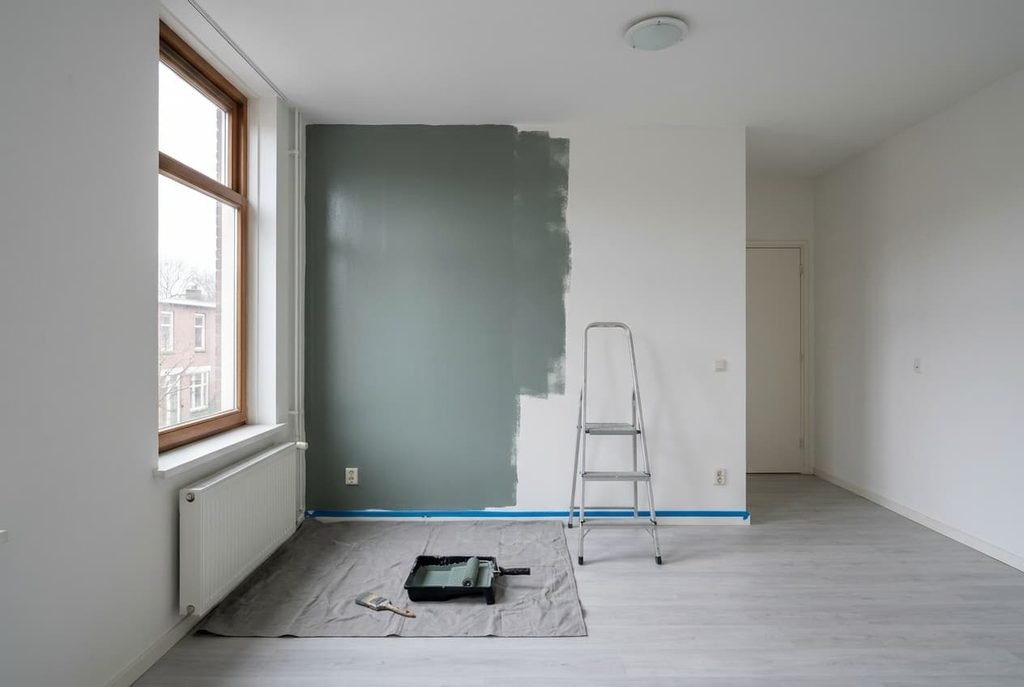
Repainting the walls to make the flat yours is the usual suggestion, and it attacks the wrong cause. Our 38.3 m² of wall needs two coats, so 76.6 m² of coverage and roughly 6.4 L when one litre covers 12 m². Restoring the white at the end doubles that to 12.8 L and a second weekend. Meanwhile a mid-tone with 45% reflectance returns 44% less light than white at 80%, so the room gets dimmer. All three faults remain untouched. At 80% reflectance the white walls actually help your lamps, because they return most of the light they receive. Check your tenancy terms first, since many agreements ask for consent and for the original colour at the end. Why does a rented flat still feel temporary after a repaint? The same three faults are still there.
Your things cover 6% of the view, the light averages out near 3,450 K and the furniture hugs 34% of the perimeter. Each fault is separate, and each has a free first step. Hang a textile and group the pictures, then add a rug. Switch to one kind of white and pull the armchair inward. The share moves from 6% to 17%, the light settles at 2,700 K and the armchair gap falls from 295 to 200 cm. Redo the surface pass afterwards and keep the numbers. It takes about an evening and two small purchases. So why does a rented flat still feel temporary? The numbers will tell you for your own room.
Questions readers keep asking
What makes a rented flat feel temporary?
Mostly scale and light. The landlord’s surfaces cover about 94% of the view, and a ceiling light of a different colour temperature flattens your lamps. In the example, your own things filled only 6% of the view. Taste and budget play little part, and a tape measure can check each cause.
What is the quickest thing to change tonight?
Turn off the overhead light and use only your lamps. The room drops from 2,400 lm to 800 lm, but every source is now 2,700 K, so wood looks warmer within a minute. This costs nothing, and one flick of the switch undoes it if the room feels too dim.
Can I fix this without redecorating or asking my landlord?
Yes, for the most part. Every free or cheap step on this page leaves the walls and fittings untouched. Only the rug is bought, and it travels with you. Check your tenancy terms before drilling or changing the fitting itself.