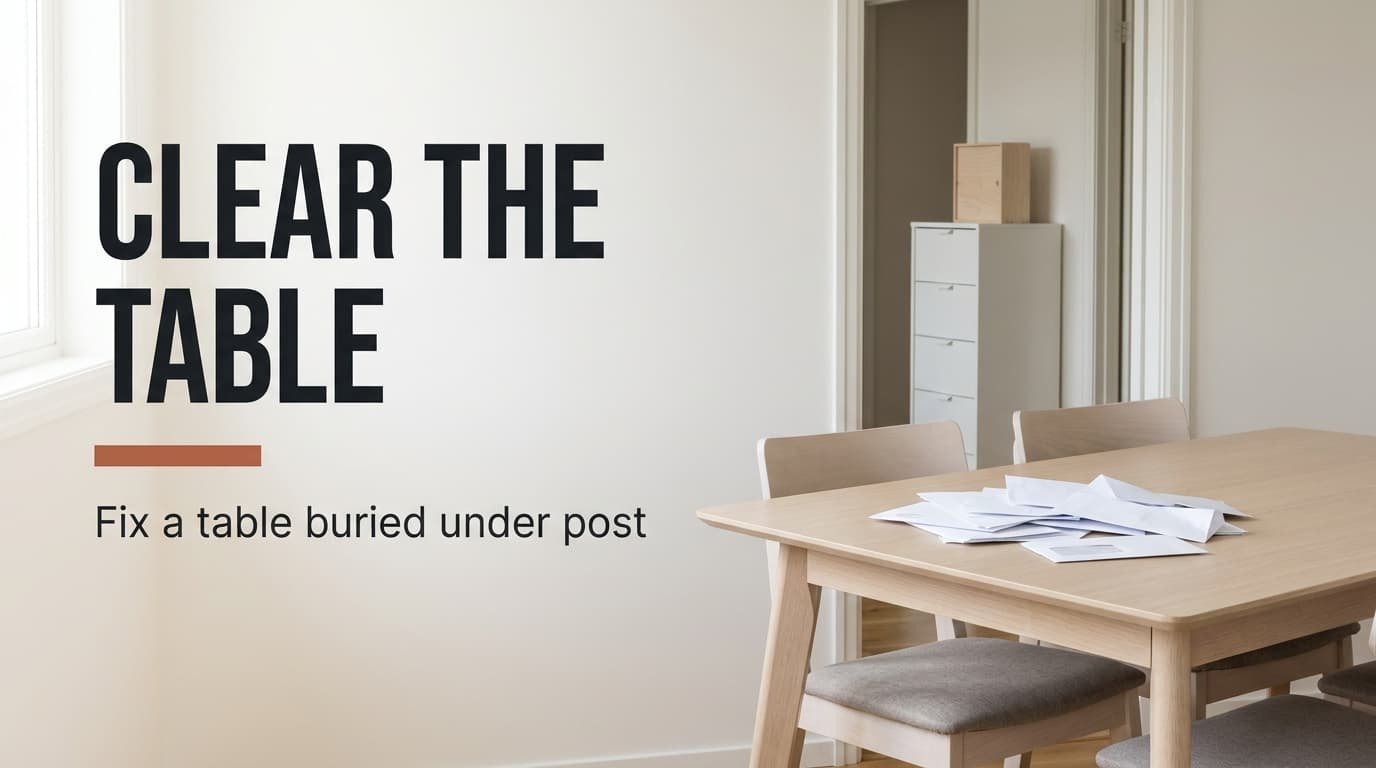
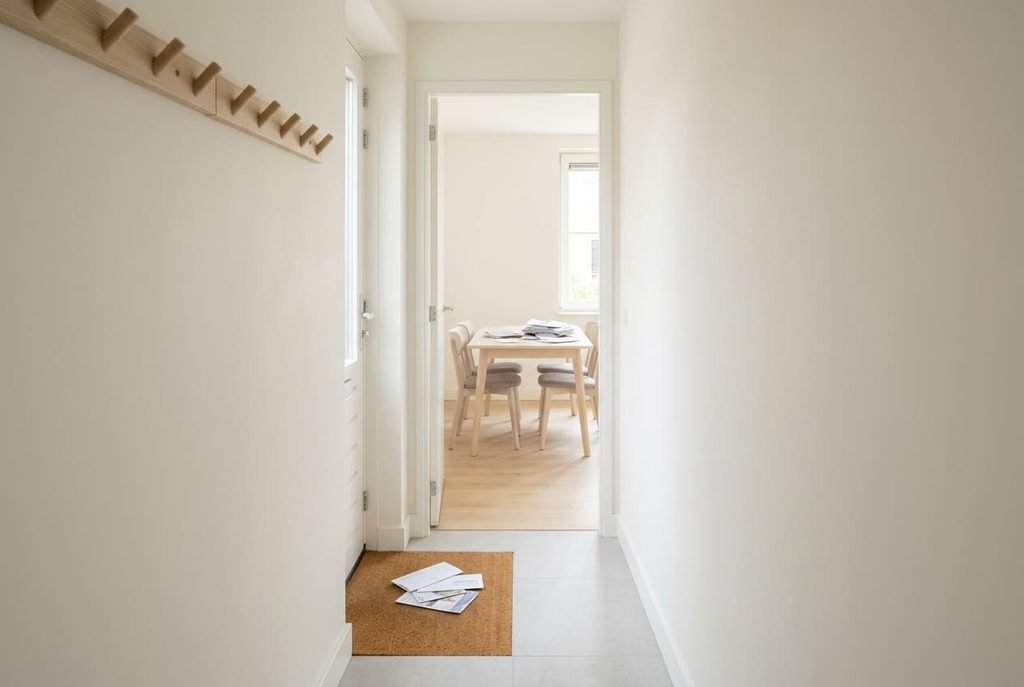
Is your dining table always buried under post and paperwork by Friday? A box on a hall surface near the door, emptied at a fixed time each week, clears it. The model house here is Dutch, with a hall 100 cm wide and a 160 × 90 cm table 2.5 m beyond the door. Two adults and two children live in it, and the post arrives through a slot in the front door.
These numbers are guesses for one model household. Replace each with your own tally from a fortnight of pencil marks on an envelope, since households differ more than hallways do.
What is actually happening to a table buried under post and paperwork
A hand carrying post settles on the first surface between 75 and 110 cm high that it meets after the door. In the model house that surface is the table, 2.5 m from the letterbox, because the hall holds hooks and a mat but nothing flat. That explains the whole pile, since paper stops on the first flat surface it reaches and stays until somebody decides what it is. Carrying is a short job, so the first firm surface within reach wins, whatever it was built for.
The household receives 14 pieces a week. Five are adverts. Four need action, and the other five are to keep or read. Sort once every four weeks and 56 pieces collect, 8.4 cm high at 1.5 mm each. They sprawl over roughly 1,200 cm² of a 14,400 cm² top, or 8.3%. The area is modest, and the harm comes from the timing. Give each action letter a 14-day deadline, and a four-week sort meets 16 of them with 8 already expired. A weekly sort meets every one within 7 days, so none has.
Confirm which version is buried under the post and paperwork
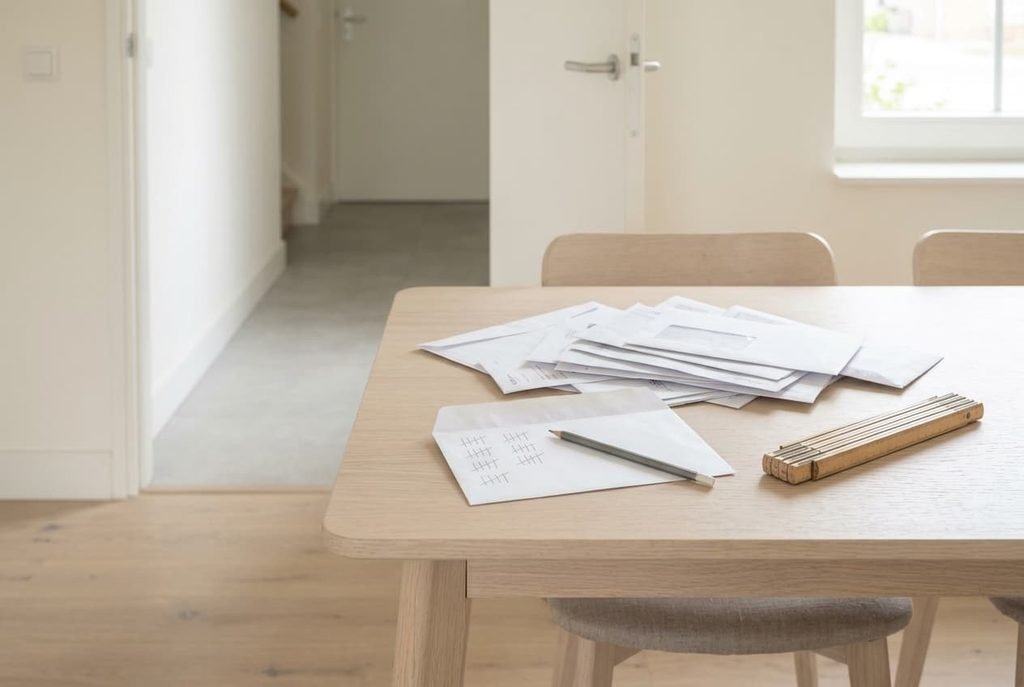
Three checks tell the causes apart, and each takes a minute or two. First, tally a fortnight of post on the back of an envelope, with one column for adverts and one for the rest. Adverts above 30% of the total point to volume, and the model house sits at 36%. Next, go to the front door with an envelope in hand and find the first flat surface between 75 and 110 cm high. A surface more than 1 m away means the path is long, and here it’s 2.5 m. Last, read the oldest postmark in the pile. Under 7 days old points to the path, because nothing has had time to age. Over 14 days points to the interval, as the oldest letter has outlived its deadline. The model house fails all three, with 36% adverts, a 2.5 m path and an oldest postmark 26 days old. Only your own tally settles how far a 14-day deadline fits your letters, since senders differ.
Most tables show all three at once.
The fixes, in order
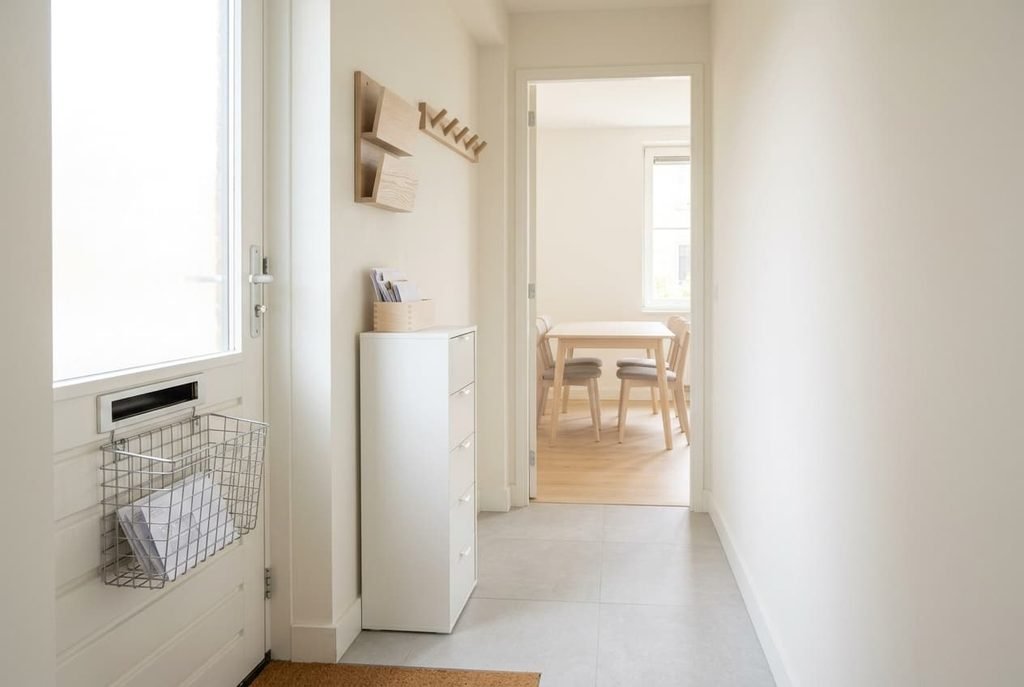
Putting a box on a hall surface 18 cm deep or less comes first and shortens the path, the mechanism behind the pile. Move a narrow chest of drawers from another room and stand a box 12 cm deep and 8 cm high on it at 90 cm. Post then lands 0.6 m from the door instead of 2.5 m. For a table buried under post and paperwork it’s the cheapest first move, since it costs nothing when you own the chest. The box holds 8 cm ÷ 0.15 cm, or 53 pieces. At 14 a week it fills in 3.8 weeks. It moves the pile and decides nothing about it.
Sorting in a fixed 15-minute slot each week closes the gap between arrival and decision. Bin the 5 adverts and pull out the 4 action letters, then return the rest to the box. It costs nothing, and every action letter is met within 7 days instead of half of them expiring. I’d pick weekly over the daily five minutes that many organisers swear by, because a 14-day deadline gains nothing from daily and a daily habit is dropped after the first busy week. The slot can’t empty a box that overflows between visits, so it needs the box first.
A two-slot rack above the chest gives undecided paper a category. One slot takes action letters and the other takes keepers. Screw it to the wall at 140 cm, where it projects 9 cm and leaves the hall at 82 cm. Each slot is 5 cm wide and holds 33 pieces. At 4 a week the action slot lasts 8 weeks. The rack is a small purchase plus ten minutes with a drill. A keeper slot that’s never emptied turns into a vertical pile, so clear it twice a year.
A letter cage behind the letterbox cuts the volume. Fitting takes a handyperson under an hour. Post then drops into a cage at 90 cm instead of onto the mat, and you open it standing. The 5 adverts out of 14, or 36%, go into the recycling at the door, and only 9 pieces a week travel on. The box then lasts 53 ÷ 9 = 5.9 weeks. It needs a door you may drill, so ask a landlord first. It does nothing for paper that arrives by hand, such as school letters in a bag.
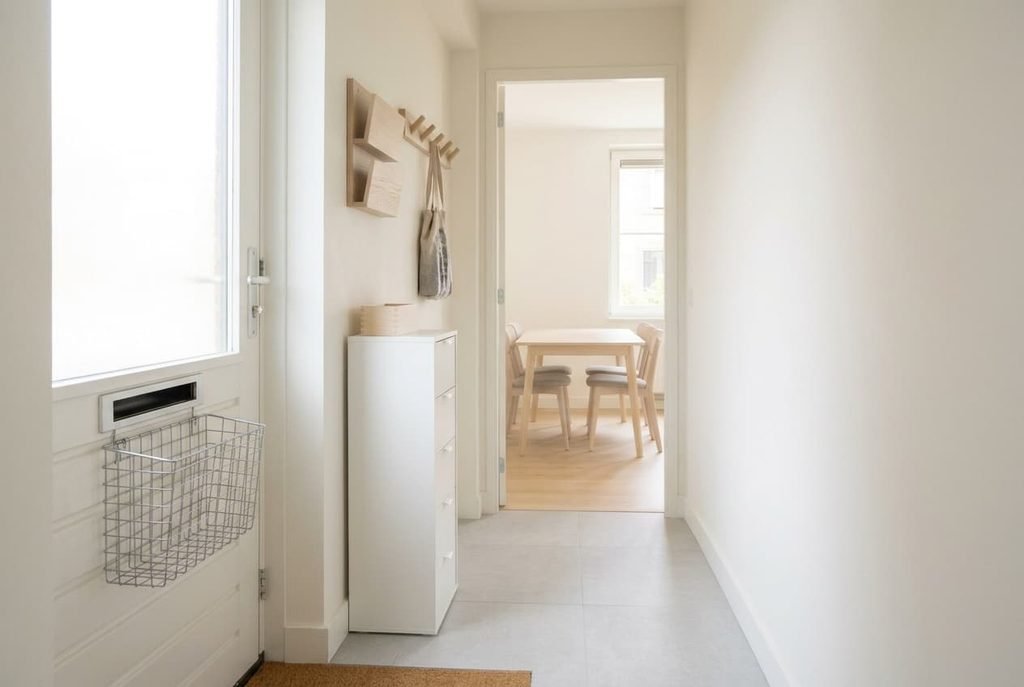
What this hall and doorway mean for you
The hall is 100 cm wide, and nothing you buy widens it. A chest 18 cm deep leaves 82 cm, and I’d treat 80 cm as the floor so a person carrying a shopping bag still passes. That caps every hall surface at about 20 cm deep, which explains the 12 cm box and the 9 cm rack. A pile left for a season on an oiled oak top also leaves a paler rectangle, since the covered wood misses the light that darkens the rest. The table stands 2.5 m away through the doorway, and it stays the nearest large flat surface in the house. When the box fills, the overflow travels there. For a table buried under post and paperwork the doorway carries as much blame as the habit. Flats with a lobby letterbox can’t fit the cage, so they lose the fourth fix and keep the other three.
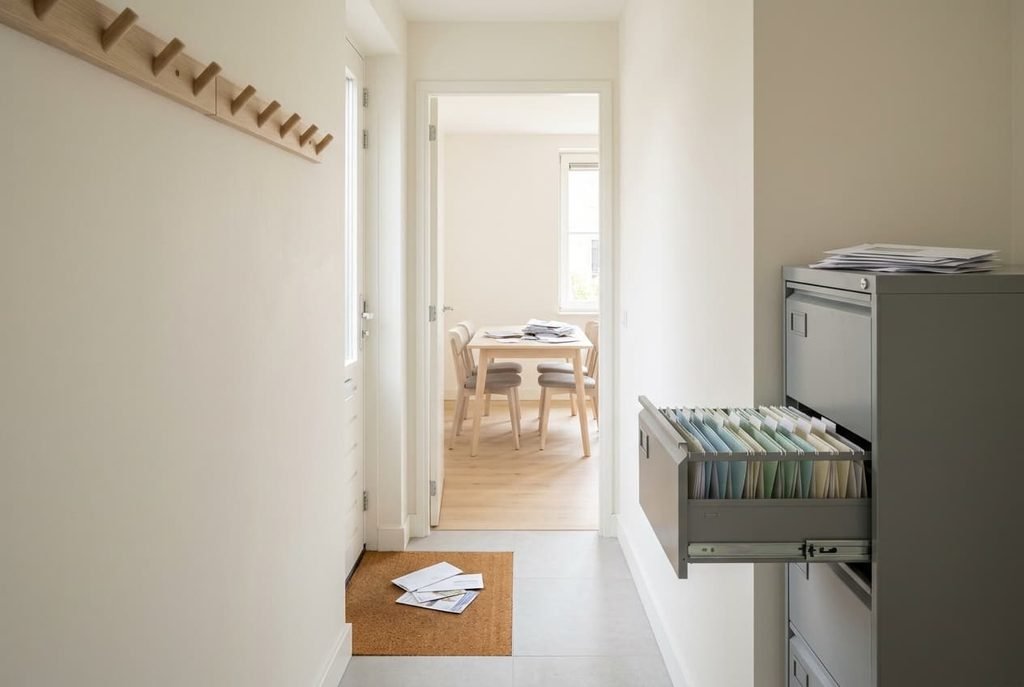
The fix that doesn’t work
A filing cabinet with twelve labelled folders is the popular answer, yet it goes after the wrong paper. Only 5 of the 14 weekly pieces, 36%, are ever filed. The 4 that need action must stay in sight to beat a 14-day deadline, and a closed drawer hides them. Twelve folders also add a choice to every piece. At an assumed 25 s a piece the week costs 14 × 25 = 350 s, against 14 × 8 = 112 s for two slots. Folder names promise that the sorting is already done, so the weekly look gets skipped. The cabinet also stands in the dining room, where its flat top at 70 cm becomes one more surface in reach, and the pile simply moves up onto it.
Filing is for paper that has already been decided.
A table buried under post and paperwork needs a nearer surface before it needs a system. Four fixes exist, and half of them cost nothing. The rack and the cage only matter once you’ve seen the box fill. Close the gap between arrival and decision with a weekly sort. Keep the cage for later, once the box has shown how much arrives. Tonight, count the post. Then put the box where your hand lands first.
Questions readers keep asking
Can a dining table stay clear of post for good?
Yes, as long as paper has somewhere nearer the door to settle. In the model house the table stays clear while the box and the weekly sort both exist. Remove either and the pile returns in about four weeks, when the box fills. Most households settle into the rhythm within a month.
What does it cost to keep post off the table?
A narrow chest and a box you already own make the opening moves free. A wall rack is a small purchase, and the letter cage adds an hour of a handyperson’s time. Start free, because the weekly sort alone removes the expired letters. Costs date quickly, so price each part where you live.
Why do school letters keep coming back to the table?
A school bag gets emptied where the child first sits down, so its letters skip the letterbox and the hall box entirely. Hang the bag on a hook beside the rack and ask for letters to go into the action slot before shoes come off. That puts the school’s paper on the same path as the post.