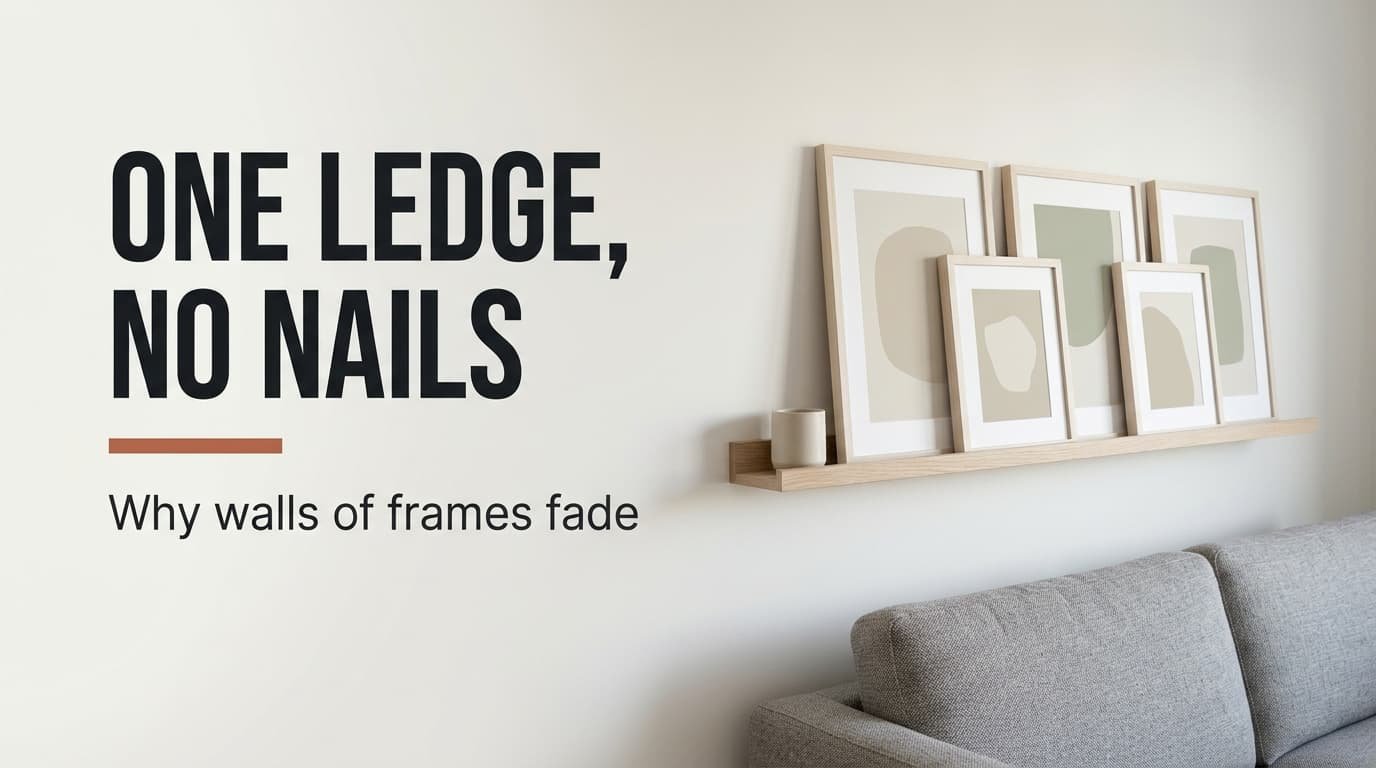
A gallery wall isn’t the safe choice for a rented living room, and more people are quietly switching to a single shelf. Picture ledges are replacing gallery walls for a plain reason: they trade 18 nail holes for 4 screw holes and let you rearrange without a drill. The change shows up in numbers you can count. This piece follows a wall of 180 cm width above a sofa in a rented Dutch flat, using assumed figures throughout. It also says plainly who should still keep the nails, because the answer isn’t everybody. It avoids dates and market claims that nobody can check.
Why picture ledges are replacing gallery walls in rented flats
A gallery wall is a promise that the arrangement is final. Each frame gets its own fixing, and a mistake means a new hole. In a rental, every hole is a small repair you owe when the lease ends. The wall quietly becomes a one-shot decision, made on a Sunday afternoon with a level and some nerves.
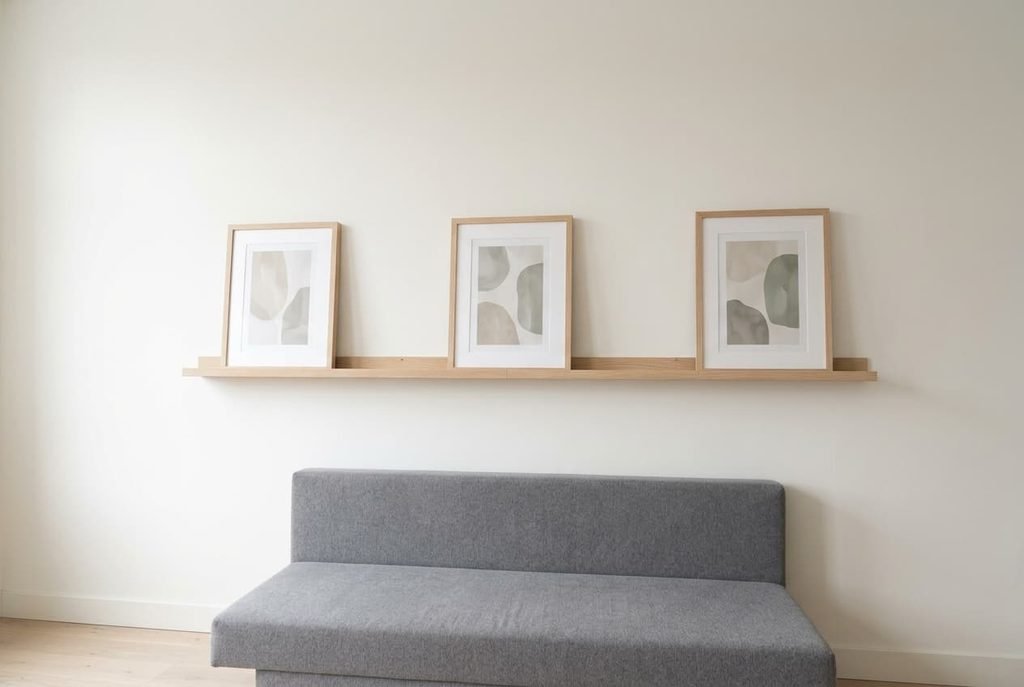
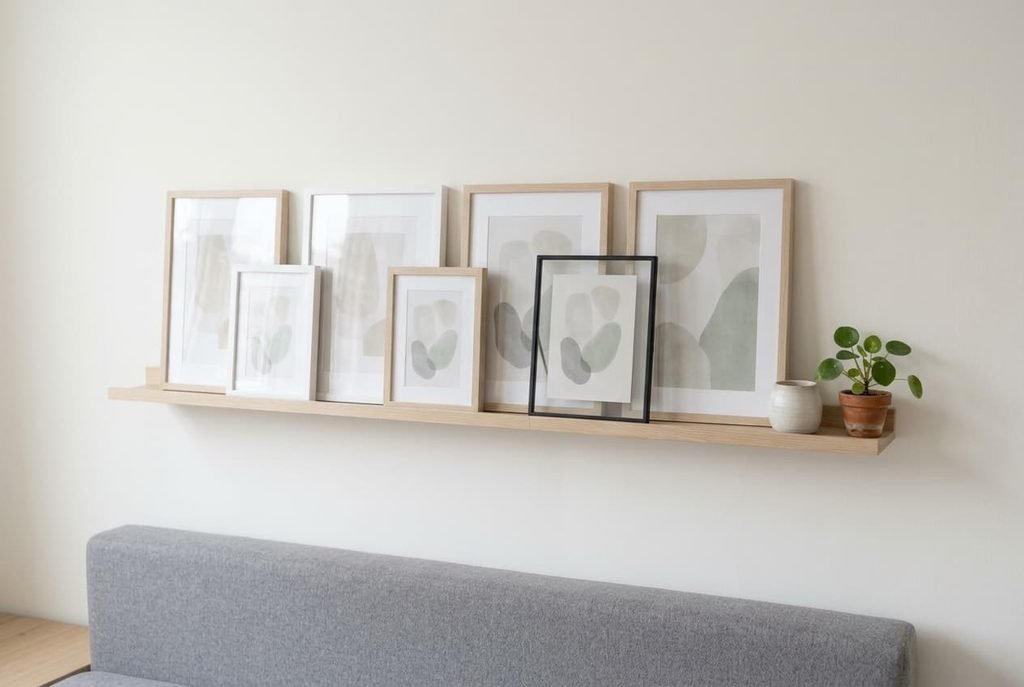
A ledge makes the opposite promise. It’s a narrow shelf, usually 8 to 10 cm deep, fixed once at a measured height, and frames simply lean on it. A 2 cm lip along the front stops them sliding. The arrangement stays loose because no frame attaches to the plaster itself.
That difference explains the shift better than any style argument. People don’t switch because ledges look newer. They switch because the old method punished changes of mind, and renters change their minds often. A ledge also hangs at a sensible height in one go: 130 cm from the floor sits 45 cm higher than a sofa back of 85 cm.
Reversibility is the real driver.
What picture ledges are replacing on gallery walls, in numbers
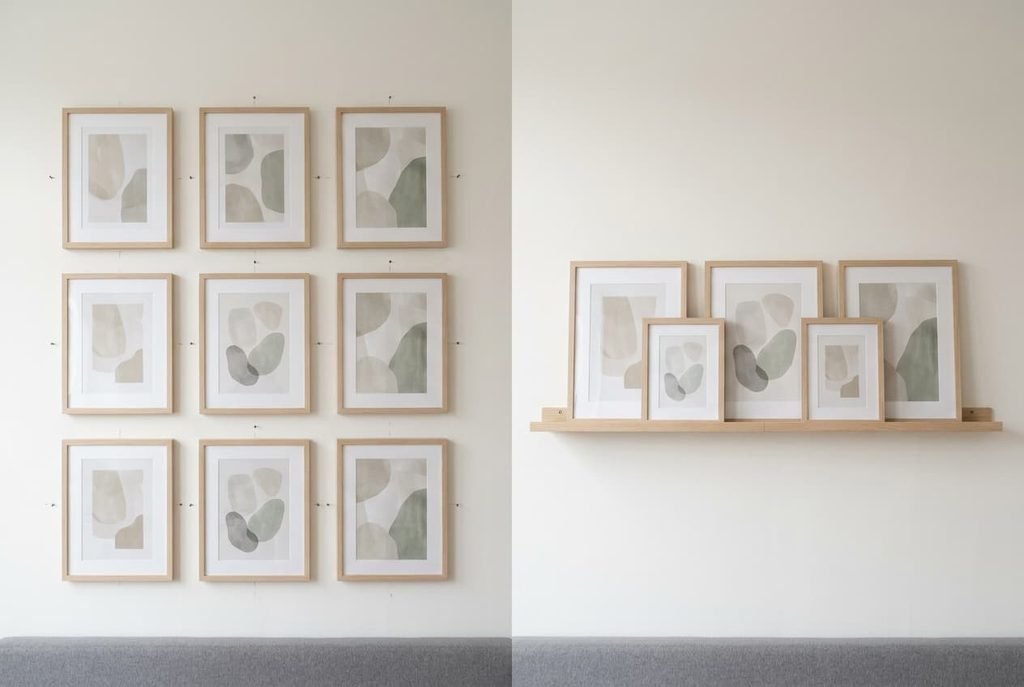
Take the before. Nine frames cover about 120 × 100 cm of wall, which is 1.2 m². Each frame needs two fixings, so the wall carries 18 holes. Assume each frame takes 12 minutes to measure and level. That gives 108 minutes. Moving one frame later costs 2 new holes and a patch of filler.
Now the after. A ledge of 100 cm needs 4 screw holes, and it carries five frames: three at 30 cm wide and two smaller ones in front. The wall goes from 18 holes to 4, and a rearrangement goes from 2 new holes to none. Setup takes about 35 minutes, made up of 25 for the ledge and 2 for each frame.
Per frame shown, the holes fall from 2.0 to 0.8. Wall area covered shrinks from 1.2 m² to about 0.5 m², because frames overlap in depth instead of spreading across the plaster. Bare wall remains, and that bare part is what makes the display read as deliberate.
Stretch the comparison over a year. Swap three frames each season and the gallery wall collects 4 × 3 × 2 = 24 further holes, for 42 in total. The ledge collects none, and stays at 4. Nothing about the ledge’s growth is hidden in the plaster. After two years of ordinary fiddling, the old method has left a wall that needs filler across a quarter of its area, while the new one needs four plugs removed.
Three reasons it spread
Reversibility comes first, and it deserves the top slot. That’s the whole story behind why picture ledges are replacing gallery walls in flats: a frame leans, so you swap it in 2 minutes with no filler and no measuring. A lease puts a deadline on every hole, and a ledge never makes you pay for a change of mind. Seasonal swaps become a ten-minute job, and nobody needs to hunt for a filler tube before the inspection.
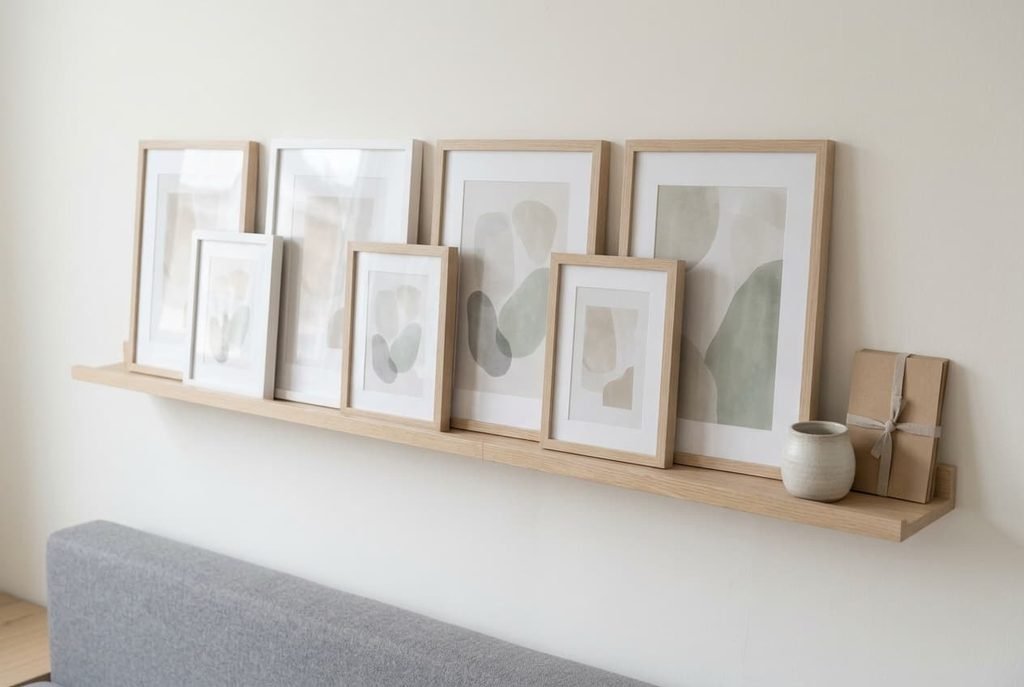
Layering is second. A frame in front of another adds depth that a flat grid can’t offer, and a ledge of 8 cm depth allows a back row of 30 cm frames with a front row of 15 cm frames. Depth arrives without any extra fixings, and the mix of heights gives even a small wall a sense of rhythm.
The third reason is shelf function. On a ledge you can stand a small plant pot. Postcards or a candle fit too, so the wall earns more than a picture surface, whereas a gallery wall holds nothing but frames.
None of this is a forecast. It describes why the choice feels sensible today, and the same logic would favour any method that keeps holes few and changes cheap. The measurements stay valid even if the fashion moves on.
Who it suits
A ledge suits a renter who changes the display every season, since the swap costs minutes. It also suits anyone with frames of mixed size, because a ledge forgives uneven dimensions that a grid can’t. Whether picture ledges are replacing gallery walls in your street hardly matters. What matters is how your own habits match the method.
Skip it for a household that wants one fixed composition for years. A matched grid of nine identical frames looks sharper nailed up than leaning on a shelf. It also fits badly on a busy hallway wall or beside small children, because frames resting on a lip can be knocked by a passing bag.
Plaster takes screws well, while a thin partition may need specific plugs, so find out what lies behind the surface before you drill. A detector or a test hole in a hidden corner is cheaper than a patch midway across the wall.
The extreme version
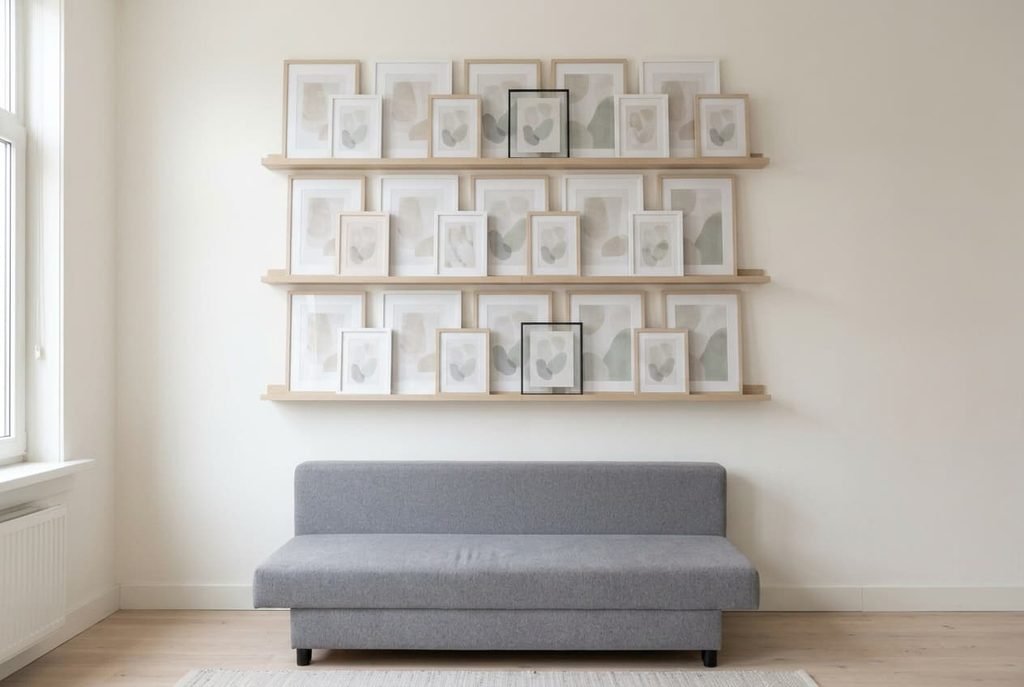
A stack of five ledges 15 cm apart is where the trend overreaches. It turns a wall into a grid of shelves, with each ledge needing its own screws, so the hole count climbs back from 4 to 20. It’s neither lighter nor more flexible than the gallery wall it replaced.
It also crowds the room. Five ledges at 8 cm depth narrow the usable air in front of the wall, and every frame competes with its neighbour for attention. The idea works because a single ledge is restrained, and it fails the moment restraint disappears. A second ledge can sometimes help, but a third starts to look like a bookcase without the books. The stack also repeats the gallery wall’s original flaw, a heavy planning burden.
Restraint is the point.
Treat the stack as a warning and not a goal. One ledge carrying five frames, with a margin of empty wall, is the version that earns the praise.
Keep it or change it
If you own fewer than six frames you rarely rearrange, keep the nails, because a single ledge adds little and the existing holes are already paid for. Six frames on nails cost 12 holes, and moving them costs more than the ledge would save. Fill those holes once at move-out. Then you’re done. Change when you have seven or more frames of mixed size. Change too if the lease means every extra hole counts against the deposit, or if a move looks likely within two years. A ledge goes into the removals box within a minute, frames still on it.
Between those cases, trial the idea. Tape a 100 cm strip at 130 cm height and lean a few frames on a bookshelf of that depth for a week. Your wall and your lease decide the outcome, along with the frames you own. Whether picture ledges are replacing gallery walls elsewhere is beside the point. Count the frames and holes tonight, and wait seven days before you buy.
Questions readers keep asking
Should I replace a gallery wall I already have?
Do it when you plan frequent changes or you’re about to move out. A finished wall costs nothing to keep, and filling its holes can wait until the lease ends anyway. The ledge becomes worthwhile when you plan frequent changes or a fresh start.
Who is a picture ledge right for?
Renters who change displays, and people with mixed frame sizes. It’s wrong for anyone who wants one fixed composition, and for walls that children or bags brush past daily. Check the wall material first, as a thin partition may need specific plugs.
How long will the style last?
Nobody can say, and any date would be a guess. What can be said is that ledges work because they keep holes few and changes cheap, which matters as long as people rent. If that stays true, the habit should outlast the fashion around it.