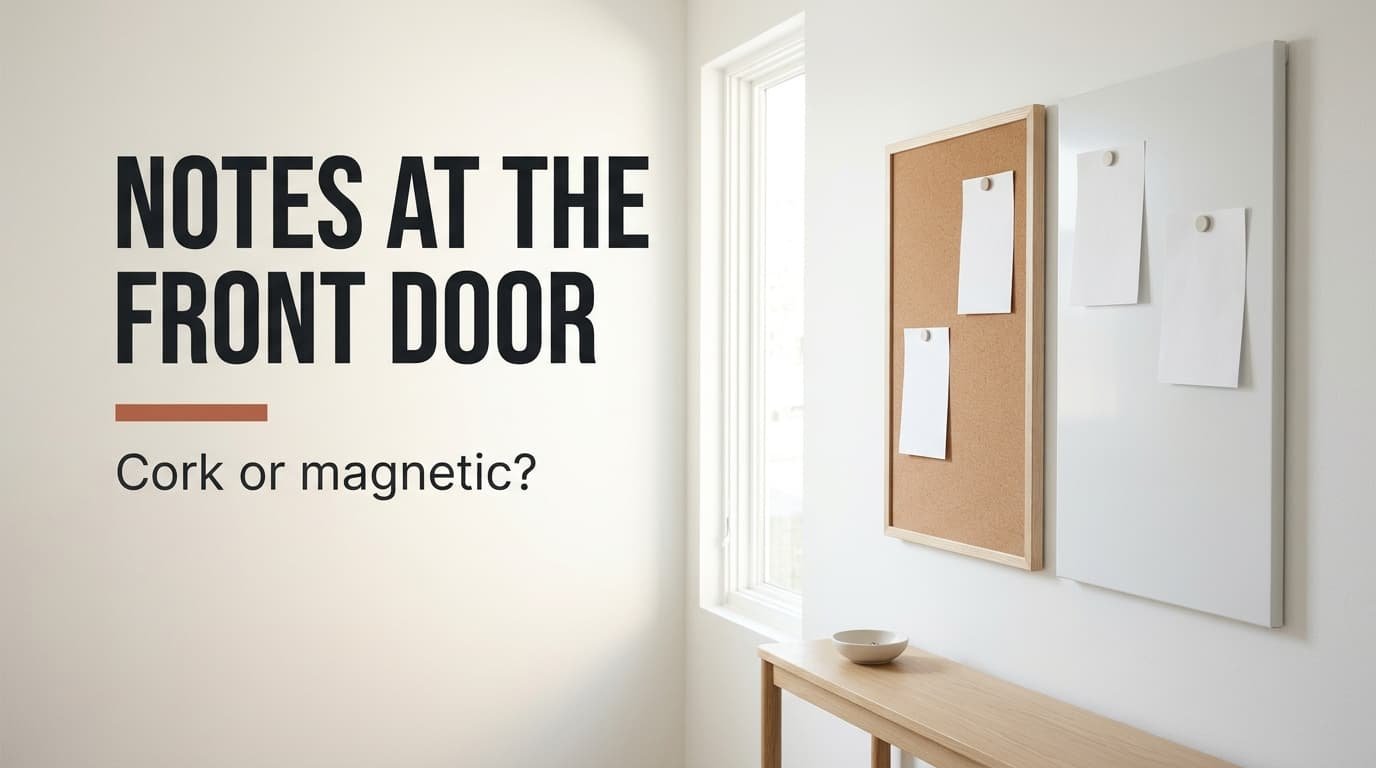
Choosing a cork pinboard or a magnetic board comes down to how much paper reaches your door and how thick the pile gets. Cork holds almost anything you can push a pin through. A steel board holds only what a small magnet can squeeze flat. Our example is a Utrecht flat for four, where the wall by the front door has space for a board 60 by 40 cm. Treat the figures as assumed samples. No brand appears. The two boards look alike on a shop wall, yet they behave very differently once a month of letters has landed on them. You’ll finish knowing which board fits a hall that collects the post.
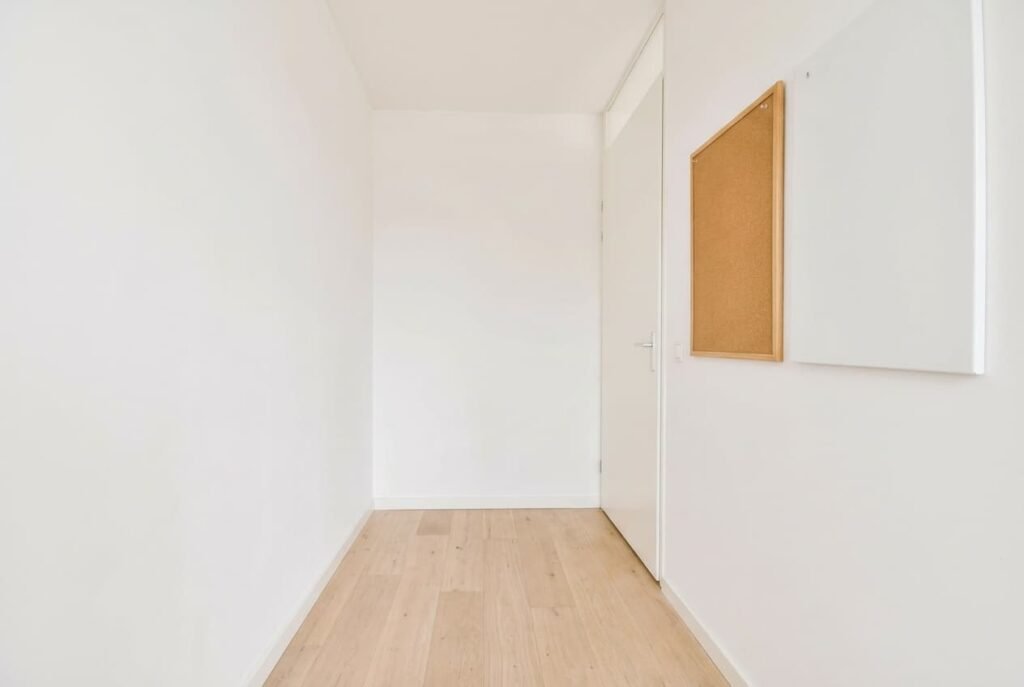
What Separates a Cork Pinboard or a Magnetic Board at the Door
A pin works by puncture. It passes through the paper and wedges in the cork, which squeezes the shaft on all sides. A magnet works by clamping. It pulls toward a steel sheet hidden under the surface, and the paper between them is pinched hard enough to resist sliding.
That difference sets each board’s limit. A pin’s grip comes from the cork. It stays the same however thick the stack is, until the pin runs out of length. A magnet’s pull falls fast with distance, and each extra sheet adds weight while it weakens the grip. The choice between a cork pinboard or a magnetic board is therefore a choice about how thick your paper pile gets.
Take an A4 sheet of 80 g/m². It weighs about 5 g, from 0.0624 m² × 80. Assume a small magnet pulls with 3 N against bare steel and paper friction is 0.4. Ten sheets weigh 0.49 N and hold the magnet 1 mm off the steel, where we assume it pulls with 1.2 N. Friction on both faces carries 2 × 0.4 × 1.2 = 0.96 N, about twice the load. Twenty sheets leave a 2 mm gap and 0.75 N of pull, which carries 0.6 N against a weight of 0.98 N. The stack slides. A magnet reaches its limit at roughly 15 sheets, while a pin keeps holding.
Two Boards Compared Row by Row
Every row here can be tried with a pin or a fridge magnet before buying. Weight and mess matter as much as holding power in a hall you pass dozens of times a day. The figures assume our 60 × 40 cm board, which gives 2,400 cm² of wall.
| Point | Cork pinboard | Magnetic board |
|---|---|---|
| How a note is held | pin wedged in the cork | magnet clamping through paper |
| Heaviest stack held | set by pin length and cork grip, well above 15 sheets | about 15 sheets |
| Marks left on the note | one pin hole | none |
| Marks left on the board | tiny holes in the cork | none |
| Weight at 60 × 40 cm | about 0.6 kg before the frame | about 1.1 kg |
| Loose parts | pins | magnets |
| Cleaning | brush the dust off | wipe with a cloth |
Our hall asks for 3 A5 letters at 311 cm² each and 4 appointment cards at 54 cm² each. That totals 1,149 cm², which is 48% of the board. Both boards have the room. The rows that separate them are the stack limit and the loose parts, and the right board is the one that avoids whichever row hurts your hall most.
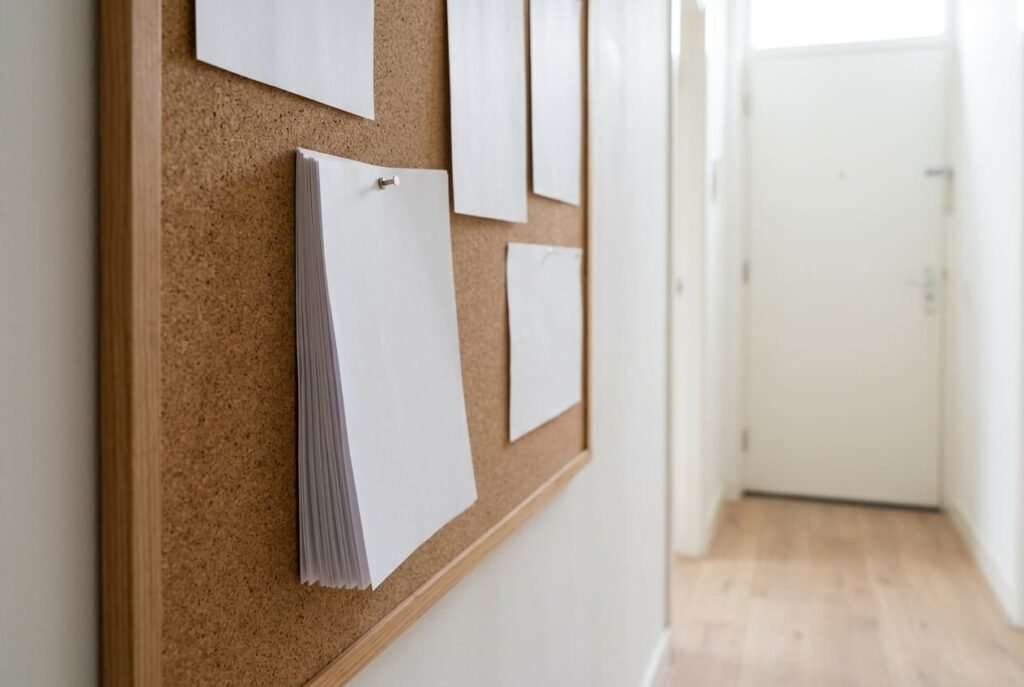
Where Cork Wins When the Pile Is Thick
When you weigh a cork pinboard or a magnetic board for a thick pile, cork wins whenever the pile keeps changing shape. A pin goes through anything. A school letter and a folded flyer each take one pin and lie flat against the board, whatever they weigh. Pins also hold items a magnet can’t, like a key on a loop of string. A paper plan in a plastic sleeve works too.
The cost is a hole each time. Assume our hall swaps all seven pieces every week, which gives 7 × 52 = 364 pin holes a year. A 0.7 mm hole covers about 0.385 mm², and the total is 140 mm², or 1.4 cm². Against 2,400 cm² of cork that is 0.06%, and cork closes much of each hole. You’d have to look closely to find them.
Cork also stays put. Slam the front door and a pinned note stays where it is, while a magnet can creep down the board. Over the years the edges crumble a little. A frame earns its place.
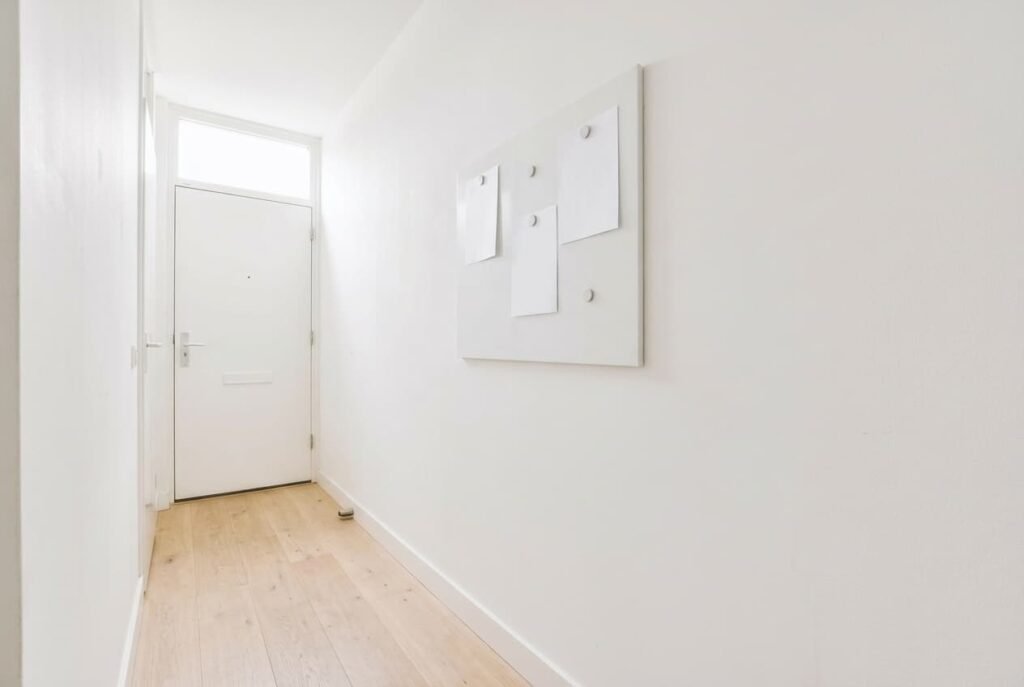
Where a Magnetic Board Wins in a Tidy Hall
If size can’t separate a cork pinboard or a magnetic board, marks can. A steel board wins in a hall where you’d rather leave no marks. Magnets don’t pierce the paper. An appointment slip comes off clean and can go back in a drawer without a hole.
Nothing is punctured in the note or the board.
The surface also wipes clean. A painted steel face wipes clean with a cloth alone, and it stays flat. Cork collects dust and sheds crumbs of itself, which a flat face never does. A magnet moves with one finger too, with no pin to pull out and push back in.
The magnet has two drawbacks. The steel sheet is heavy: 0.6 mm × 0.24 m² × 7,850 kg/m³ comes to 1.13 kg, nearly twice the cork. Fit it with two proper plugs. And the stack limit is real, since 15 sheets of A4 is the most one magnet carries in our example. Seven small magnets also need a home, or they’ll wander off.
The Third Option Is a Clip Rail You Already Know
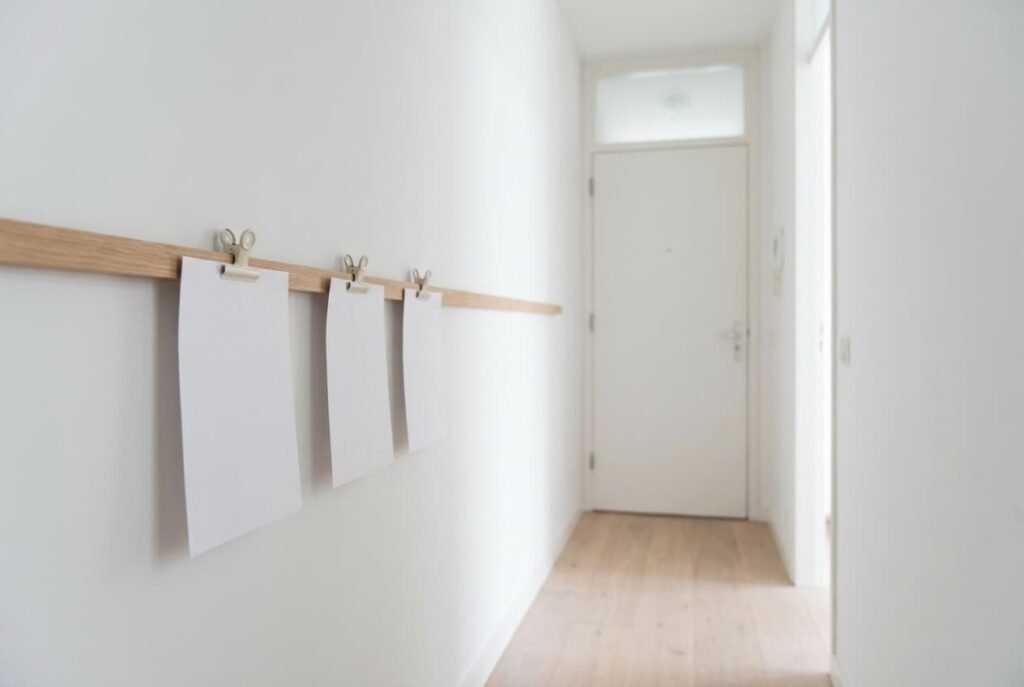
Before you buy a board, look at a rail with spring clips. A clip rail needs no pins and no steel, and it leaves nothing behind on the paper. A 60 cm rail takes six clips at 10 cm spacing. Each clip grips by spring pressure. Thick stacks hold as well as thin ones until the clip runs out of opening. The rail screws to the wall at each end and leaves the space beneath it free.
It suits a short list. Our three A5 letters are 14.8 cm wide each, which takes 44.4 cm of the 60 cm. That leaves room for one card, and the other three need a second rail.
If a bowl on the shelf already catches your post and nothing goes missing, keep it. A new board only helps when the pile has outgrown your present routine, and a bowl costs the wall nothing.
Which Board to Pick: Magnetic Board or Cork Pinboard
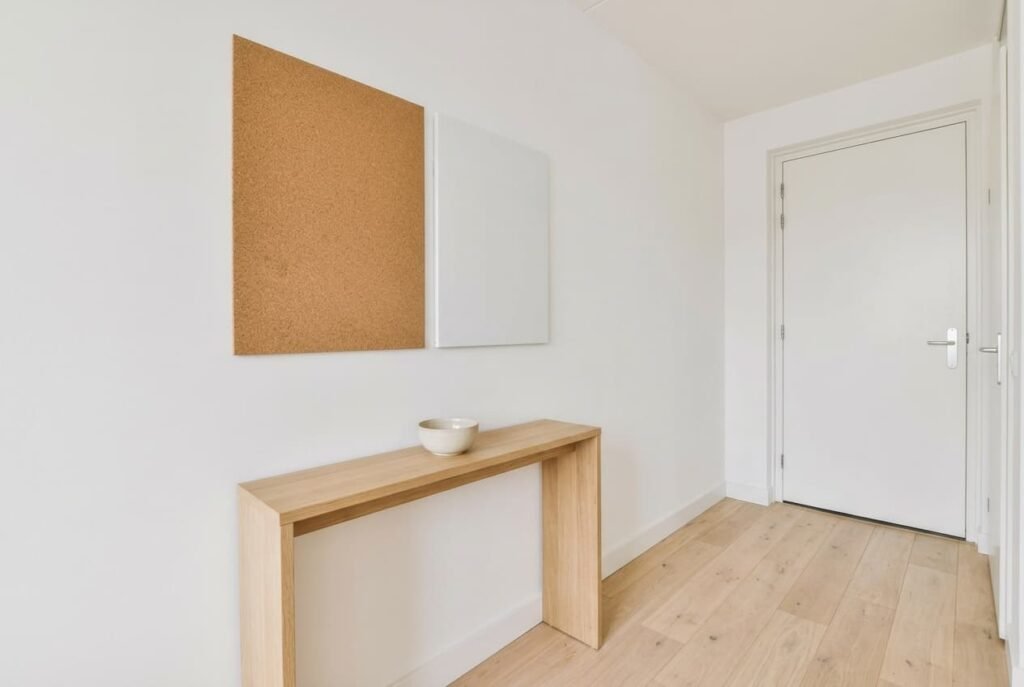
Two branches settle a cork pinboard or a magnetic board for most halls.
If your paper is thick or changes weekly, choose cork. Its pins hold stacks well beyond 15 sheets, and the 364 holes a year cover just 0.06% of the board. Accept the dust and the loose pins in return, and keep a small frame around the edge to hold the crumbling corners together.
If you want no marks and rarely stack more than 10 sheets, choose the magnetic board. It leaves every note clean and wipes off with a cloth. Accept the weight of 1.1 kg, and keep a small tray for the magnets.
Before you commit, tape a stack of ten sheets to your wall for a week and watch what you pile there. If it never reaches ten, steel is the easier choice. A board you glance at every morning beats one that is only clever. Put it where your eyes already land when you pick up the keys. Move it a hand’s width if the first spot feels wrong.
Questions Readers Keep Asking
Which one lasts longer?
In a dry hall steel lasts longer, because only a scratch in the paint can let rust start. Cork wears at the edges and loses small crumbs over the years. A frame protects either one. Wet coats change the picture. Keep a steel board away from them, because moisture finds a scratch first.
How do I keep each one clean?
Wipe a magnetic board with a cloth whenever you swap a note. Cork can’t be wiped. Brush the dust off with a soft brush every few weeks. Lift the board off the wall once a year and clean the wall behind it, because both boards collect dust in the gap.
Which suits a busy household that adds notes all day?
A magnetic board, as long as the stack stays under about 15 sheets. A magnet slides with one finger, while a pin needs a push and a pull. Cork suits the household whose notes come in thick bundles. Count the sheets in your own pile for a week and let the number decide.