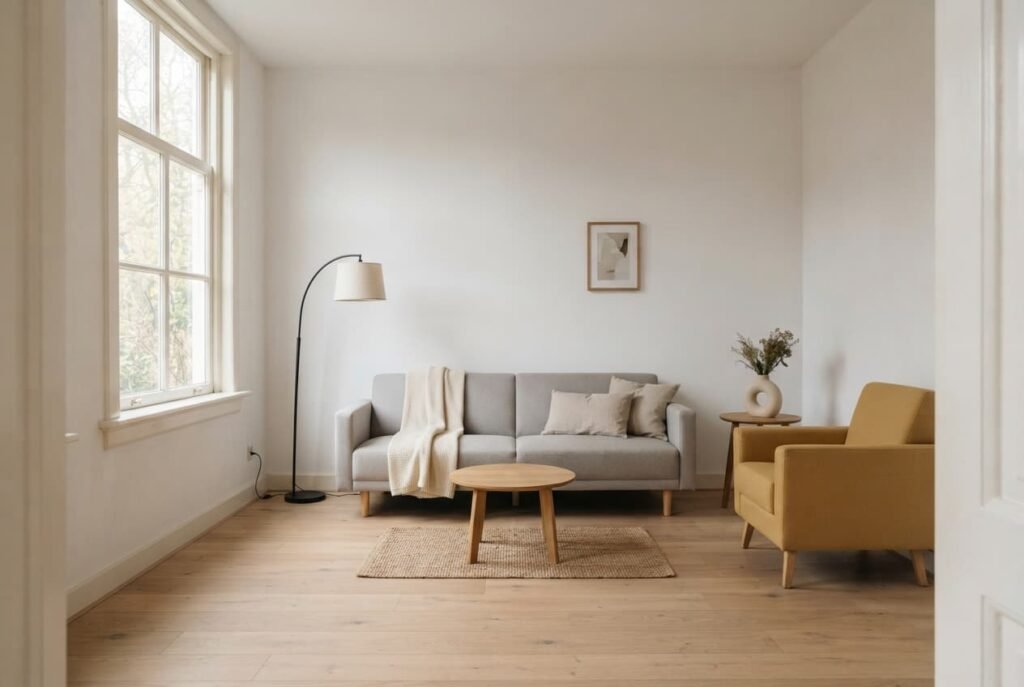
A living room can look better in photos because a phone lens takes in far more than your attention does. Our subject is a flat in Eindhoven whose living room measures 400 by 360 cm, with the ceiling 250 cm up. Four short tests reveal which of three faults opens the gap. Remedies cost nothing at first and finish with one modest purchase, and no builder is involved. These readings come from a single room. Yours will differ. Measure before you borrow any of them. You need only a phone and a ruler, and nothing should be bought before the tests are done.
Why a Living Room Can Look Better in Photos Than in Person
A phone’s main lens covers roughly 74° of the room from side to side, about what a 24 mm lens gives on a full-frame camera. Your attention works through a much narrower cone. I treat 40° as a working figure that no standard backs. From the doorway, 340 cm from the sofa, the lens captures a strip 2 × 340 × tan 37° = 512 cm wide. Attention covers 2 × 340 × tan 20° = 248 cm.
The sofa is 200 cm wide. In the photo it takes up 200 ÷ 512 = 39% of the frame. Floor and wall look generous as a result. In person it fills 200 ÷ 248 = 81% of what you attend to, and the room feels cramped by comparison.
Two more effects pile on. The phone lifts dim corners and evens out colour casts before it saves the file. The frame you chose also drops whatever you didn’t point at. Most owners blame the arrangement, and that misdiagnosis wastes a whole weekend.
The camera simply watched the room in a different way.
Four Readings: Better in Photos, Flat in Person
Wait for an evening with the lamps on, then go to the doorway with your phone. Each reading below puts a number on one part of the gap.
1. Frame share: shoot the sofa at 1× and again at 2× from the doorway. It fills 39% of the frame at 1× and 78% at 2×, and the second figure sits close to what you see.
2. Seat view: settle into the sofa, then shoot the wall opposite. A bare patch or a tangle that the doorway shot never held tells you plenty.
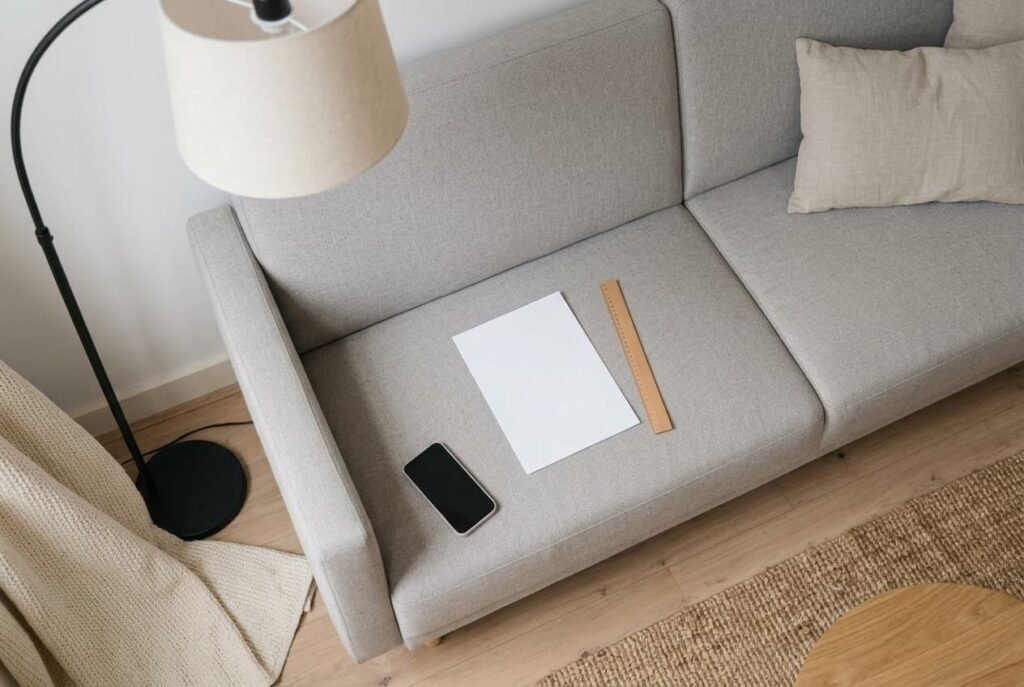
3. Paper white: photograph a single sheet of plain paper under the ceiling light alone, then under the lamps alone. Two different whites mean two colour temperatures are mixing. The bulb labels read 4000 K overhead and 2700 K from the lamps.
4. Corner patch: stand in the darkest corner and try to read a page. Rough readings give 30 lux there against 180 by the window, a six-to-one gap, while the phone’s picture shows about three to one.
Three Faults Behind the Gap Between Photo and Person
Any one fault can open the gap alone. The room feels flattest when all three combine.
The room feels tight at the door. Scale causes this, since the sofa takes 81% of your attention and only 39% of the lens. At no cost: lift the basket and the tall lamp out of the 60 by 60 cm corner nearest the door. By moving furniture: slide the sofa 25 cm along its wall, which widens the walkway beside it to 90 cm. By buying: a sofa on legs 15 cm tall shows a strip of floor underneath and reads lighter at the same width. That last step costs a good deal. Live with the first two for seven days before you commit to it, because most people find the room has stopped bothering them by then, and a fresh sofa that you didn’t need is hard to undo. Any reading above 70% on the frame-share test counts as a scale problem here.
The evening light looks yellow. Mixed colour temperature is behind this one, together with contrast. The 2700 K lamps and a 4000 K ceiling bulb paint two different whites on the same wall; the phone averages them into one tidy tone. At no cost: put the ceiling light out after dusk and run the lamps alone, then repeat the paper test. A room that can look better in photos than in person often owes it to this averaging. By moving furniture: carry one lamp into the dark corner. It adds roughly 50 lux and lifts the corner from 30 to about 80, which narrows the gap against the window from six times to two and a quarter. By buying: bulbs of one colour temperature in every fitting, at a small cost.
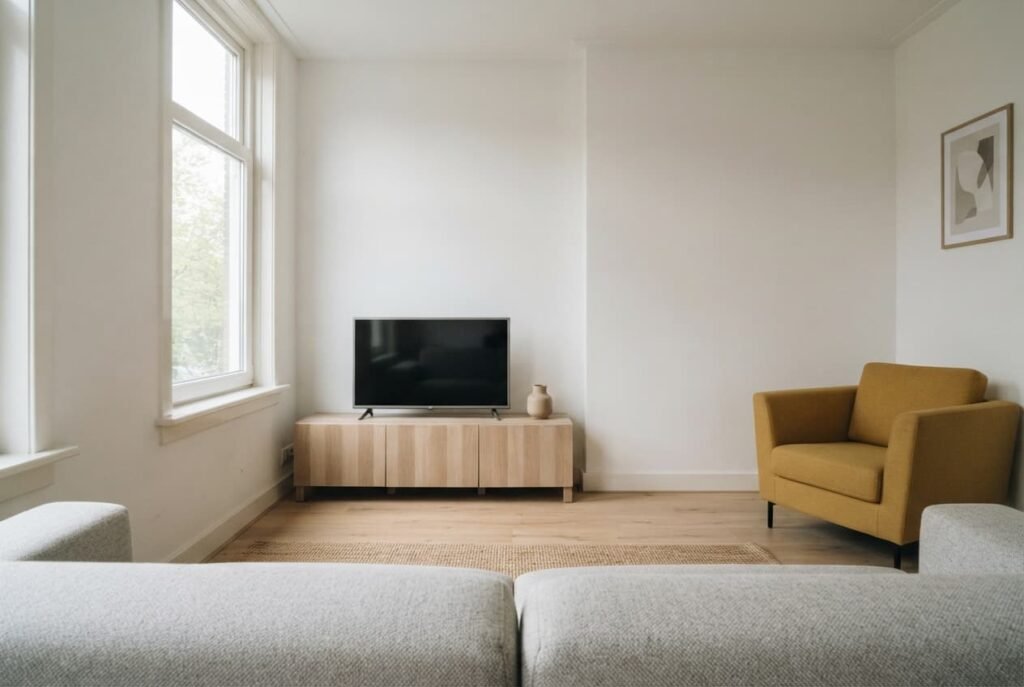
The seat faces a blank wall. Placement is to blame. The doorway shot shows the window wall with a plant on it, yet from the sofa your eye lands on a bare strip 140 cm wide beside the television. At no cost: move the framed print from the hall onto that strip. By moving furniture: turn the armchair 30° towards the window. A seated view then takes in something worth looking at. By buying: a large print, 90 cm wide, hung with its middle 145 cm above the floor. Check the result by sitting down and shooting the same wall again.
Judging a Room Before You Photograph It
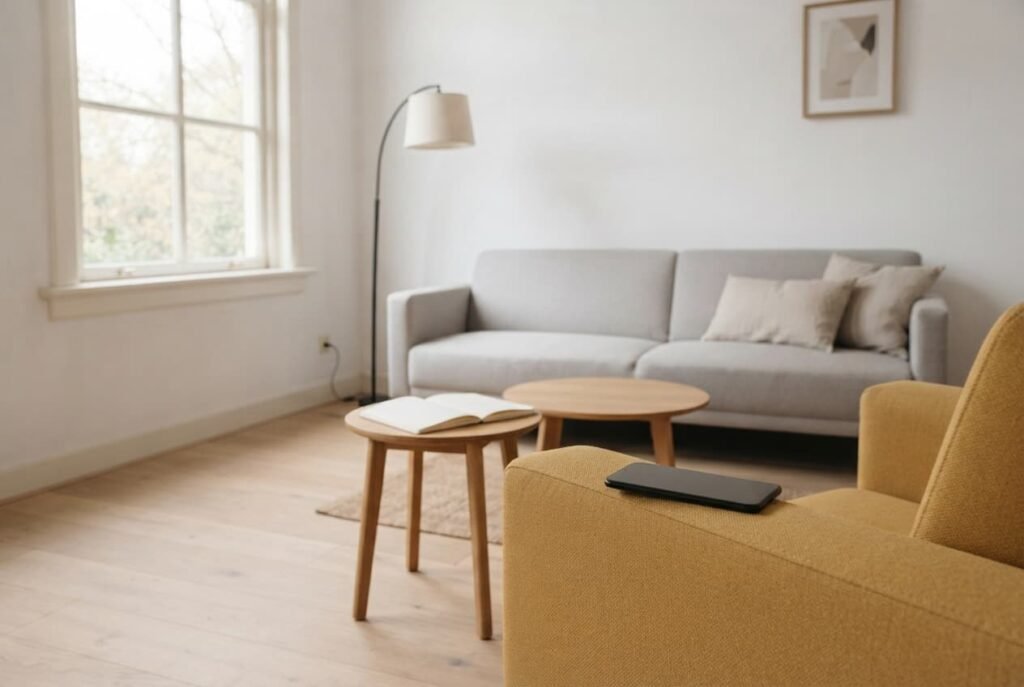
Assess a room from the places where people sit. The spot where the picture looks best is the wrong place to judge from. Make the seat shot, then the doorway shot at 2×, and view the pair together. A room that must look better in photos than in person has usually only ever been checked from the door.
Write down both frame shares and both paper whites. Keep the note somewhere that survives a tidy. Before any purchase, compare the new item’s width with the 248 cm your attention takes in at that distance. A piece that would fill more than about 80% of that cone feels heavy, whatever a photo suggests. That rule of thumb is mine and rough, and it suits wide items best.
The seat view takes five minutes with a phone, and you can run it again whenever you like.
A Fix Not Worth Doing
Repainting the walls to match the photo is the common first move, and it disappoints. The phone cleaned up the colour cast before saving. The paint you’d chase exists only on screen. You’d repaint to match a white the lens invented, and the lamps would still tint it yellow by dusk. Samples held against the wall tell the same story, because the tin’s colour never changes while the light on it does. Even an exact match on a Monday drifts by Friday evening.
A wider lens clip is meant to help a room look better in photos, yet it makes the gap bigger, since the sofa then shrinks to a smaller share of the frame than the 39% it already takes. Editing filters flatter the picture and leave the room untouched. A large mirror to double the view just shows the clutter twice.
Start this evening with the frame-share reading, because its result picks your fault. Make the change that costs nothing, then judge your view from the sofa after a few days. Should the room stay tight or flat, move furniture next. Buy last. Most rooms are settled by one free change and a single lamp carried across the floor, since the seat view is the reading your eye trusts above the others. Replacing the sofa or buying a full set of bulbs makes sense only where the gap stays wide after all that. A second 2× shot from the doorway shows which kind of room you own. Keep both pictures somewhere findable; they’ll answer the question again after any later change.
Questions and Answers
What is the most common cause?
Furniture fills most of what you attend to but only a third of the lens. The phone’s wide view shows floor and wall that your attention skips. The picture therefore reads roomier than the room feels. Shoot at 2× from the doorway, then view both frames together.
What is the quickest fix?
Put the ceiling light out after dusk and use the lamps alone. That removes the mixed colour for nothing, and the paper test confirms it within a minute. Moving one lamp into the darkest corner then narrows the brightness gap there, again with nothing to buy.
Can this be fixed without renovation?
Yes. Every remedy here is a small job. Moving something is one job. Switching a light is another. Buying a single item is the most you’d do. Nothing touches the walls or ceiling, and no builder is needed. Most rooms improve enough after the first free change that the gap stops bothering you, and it won’t return.