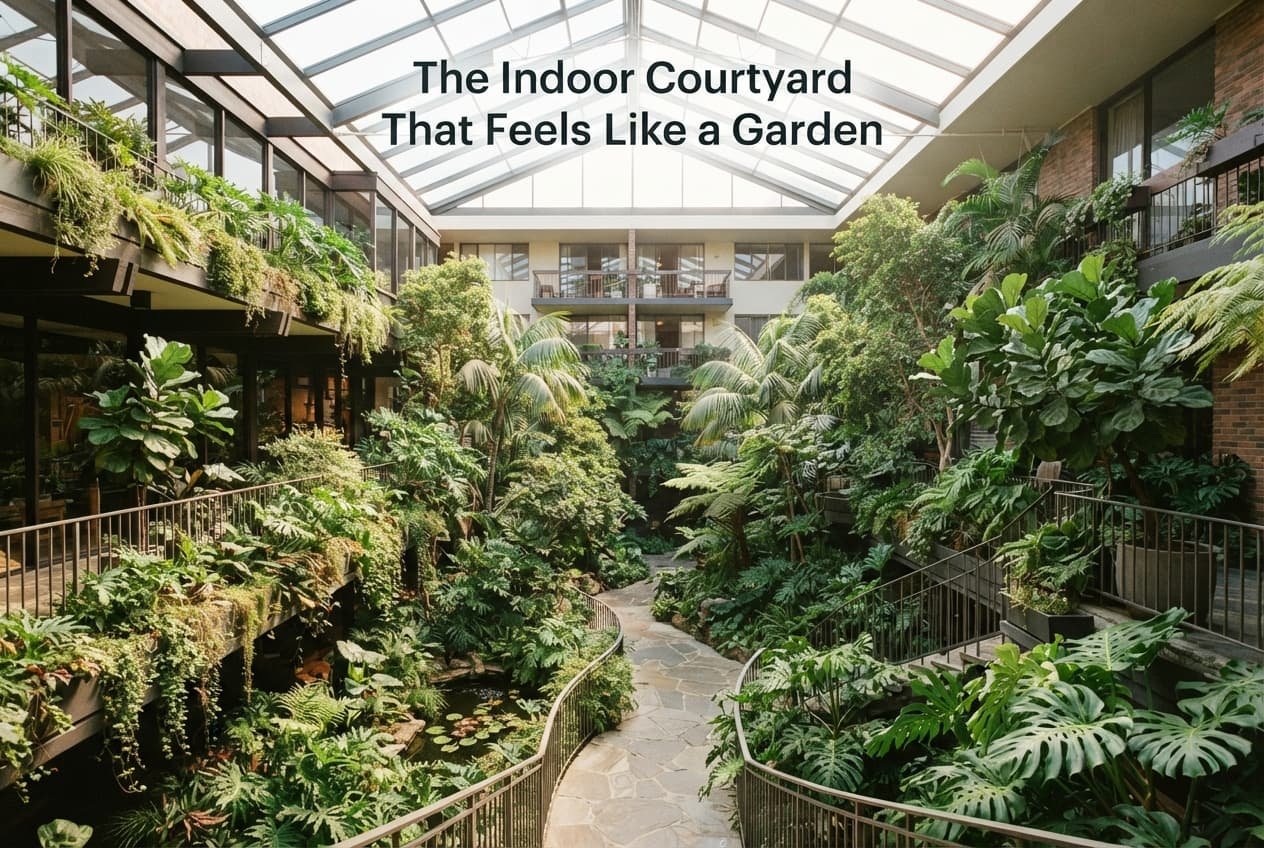
Most indoor plant corners fail to deliver genuine garden-like atmosphere for one predictable reason: they’re treated as a decorative afterthought – a few scattered pots rather than a genuinely considered green space designed around how plants and light actually interact within an interior setting. The indoor courtyards that genuinely feel like a garden aren’t accidentally lush – they’re built around a specific, identifiable set of priorities most scattered plant arrangements simply skip.
The one decision that shapes this space
The deciding factor is whether the space genuinely provides adequate light and airflow for the plants it actually contains, not simply whether it looks visually green when first arranged. A beautifully styled plant corner that gradually loses its plants to inadequate light conditions fails at its actual purpose regardless of how appealing the initial arrangement looked, while a space genuinely matched to its actual light conditions sustains its garden-like feeling over time.
This single distinction – genuine environmental suitability over initial visual arrangement – should guide nearly every choice below, more than any specific plant style or decorative trend.
Getting the actual light conditions genuinely right
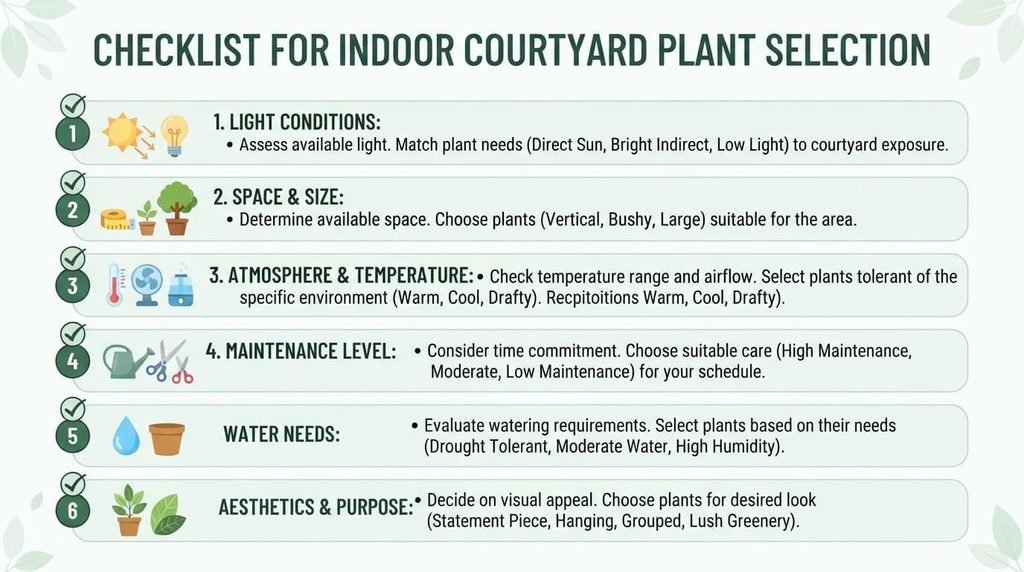
Assess your space’s genuine actual light conditions specifically – direction, intensity, consistency throughout the day – before selecting plants, since choosing plants suited to conditions you wish you had, rather than conditions you actually have, sets the entire space up for gradual decline regardless of initial care quality.
Consider genuinely supplemental grow lighting specifically for spaces with inadequate natural light, since this addition can meaningfully expand which plants genuinely thrive in an otherwise light-limited interior space, extending your realistic plant selection considerably.
What the plant selection is actually doing
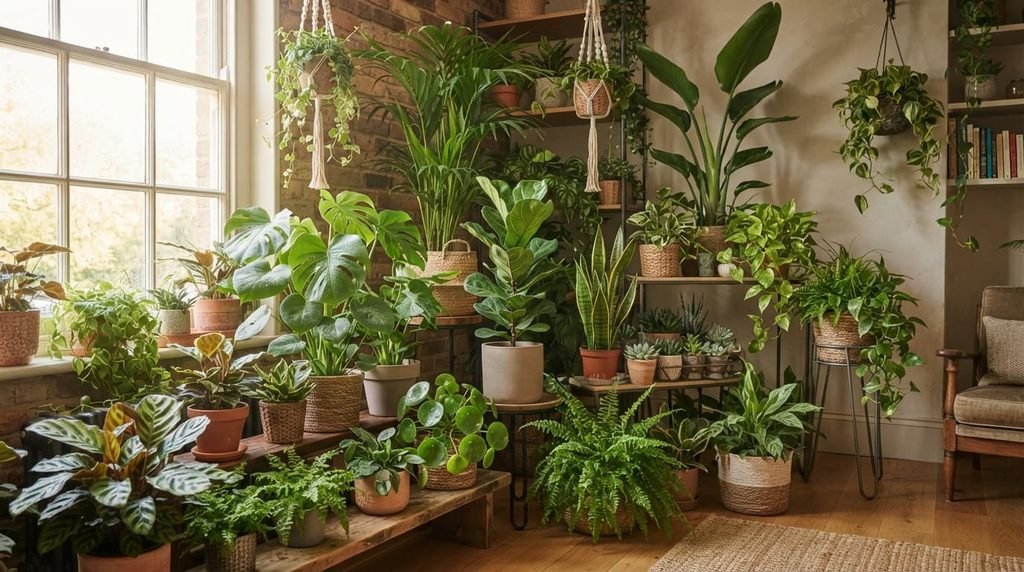
Choose a genuinely varied mix of plant heights and textures specifically, rather than uniform selections, since this variation is what creates the layered, genuinely garden-like visual density that distinguishes an indoor courtyard from a simple collection of individual houseplants.
Include plants with genuinely different care requirements deliberately matched to different specific spots within your space, since a uniform care approach applied across genuinely varied micro-conditions within one room often results in some plants thriving while others struggle in the same general care routine.
Building in genuine maintenance sustainability
Establish a realistic, genuinely sustainable watering and care routine specifically matched to your actual available time, rather than assuming enthusiasm alone will maintain an elaborate care schedule indefinitely, since a genuinely garden-like space depends on consistent care considerably more than any single design decision.
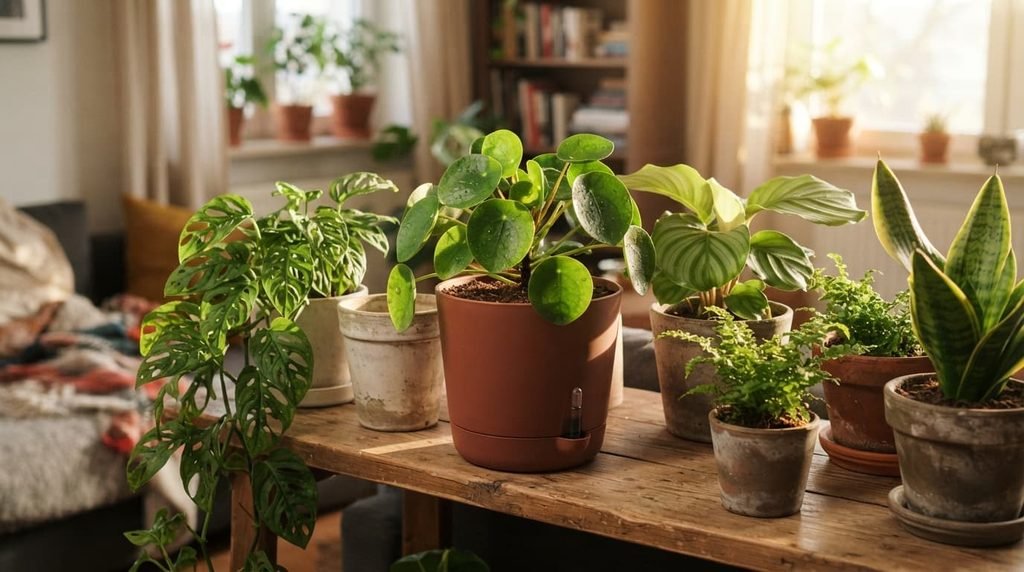
Consider self-watering planters or similar low-maintenance solutions specifically for plants in your collection that might otherwise suffer from inconsistent care during busier periods, since this addition can meaningfully bridge gaps in your regular routine without sacrificing overall plant health.
Choosing flooring and surfaces genuinely suited to indoor plant care
Select flooring or surface materials genuinely resistant to water exposure specifically within your plant area, since regular watering inevitably involves some spillage or moisture exposure that can damage materials not genuinely suited to this condition over time.
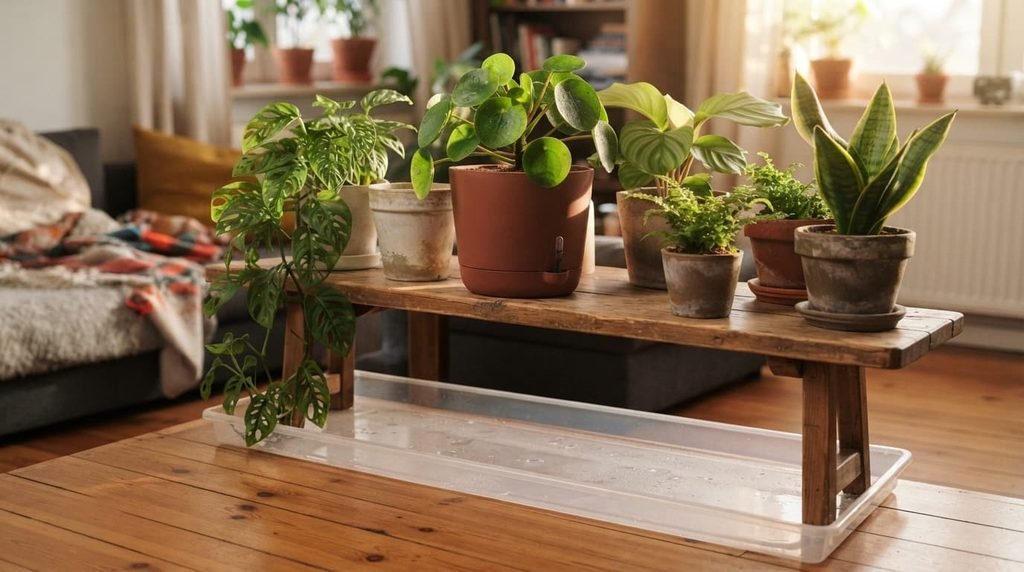
Consider a designated tray or mat system specifically for catching excess water during watering, since this addition protects your actual flooring while also making regular care considerably more convenient than working around this consideration each time.
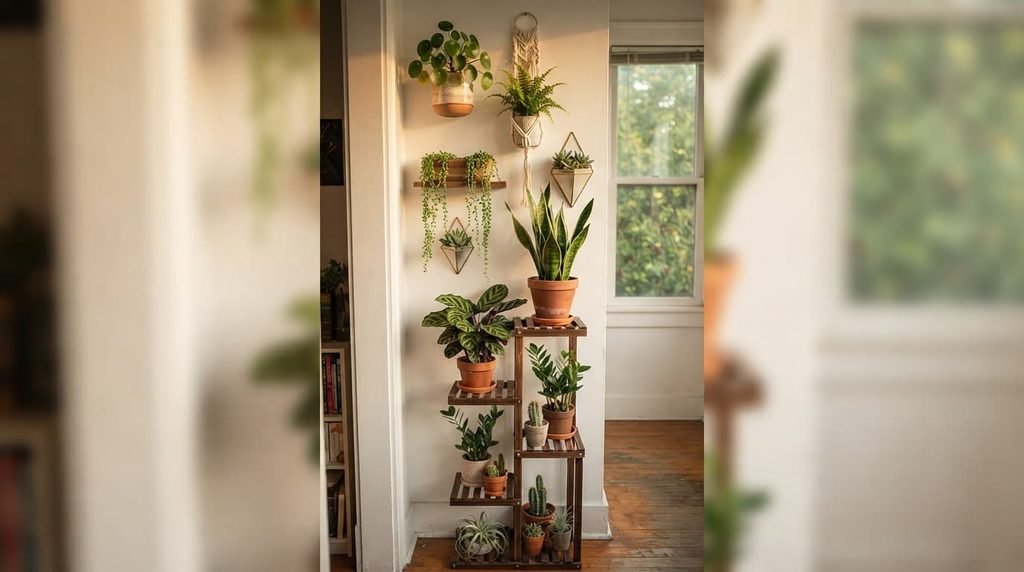
What changes if you’re working with genuinely limited floor space
If your indoor courtyard space is genuinely limited specifically, prioritise vertical growing solutions – wall-mounted planters, tiered plant stands – since these approaches can create genuine visual density and garden-like feeling without requiring extensive floor footprint a more traditional horizontal arrangement would need.
Consider hanging plants specifically for genuinely limited floor space situations, since this approach adds vertical visual interest and plant variety without consuming any floor space at all, extending your genuine plant capacity within physically constrained conditions.
What isn’t worth prioritising here
An elaborate, highly curated pot and planter collection isn’t worth prioritising over the light and plant-selection foundation above, despite how commonly this gets recommended for indoor courtyard styling specifically.
A beautifully coordinated collection of planters that overlooks genuine light suitability still results in a space where plants gradually decline, since visual coordination alone doesn’t address what actually determines whether the space sustains its garden-like feeling over time.
Matching the approach to your situation
If your space genuinely receives strong, consistent natural light, prioritise a wider variety of genuinely sun-loving plants that can showcase this advantage, since this light condition supports considerably more plant diversity than a more limited-light space could sustain.
If your space genuinely has more limited or inconsistent light, prioritise a smaller selection of genuinely shade-tolerant plants known to thrive in these specific conditions, since attempting a wider variety in limited light typically results in more struggle than genuine garden-like thriving.
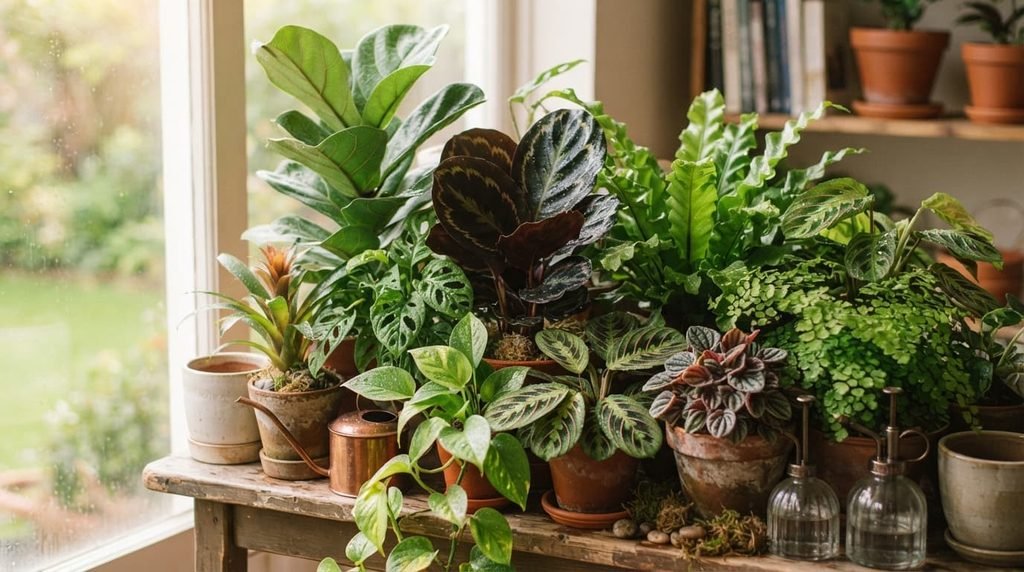
Considering humidity and genuine plant health together
Address your space’s actual humidity levels specifically, since many popular indoor plants genuinely prefer higher humidity than typical indoor air provides, and this mismatch can undermine plant health regardless of how well light conditions are otherwise addressed.
Consider grouping plants with genuinely similar humidity preferences together specifically, since this clustering can create a beneficial local humidity effect that individual, scattered plants throughout a drier space don’t achieve as effectively.
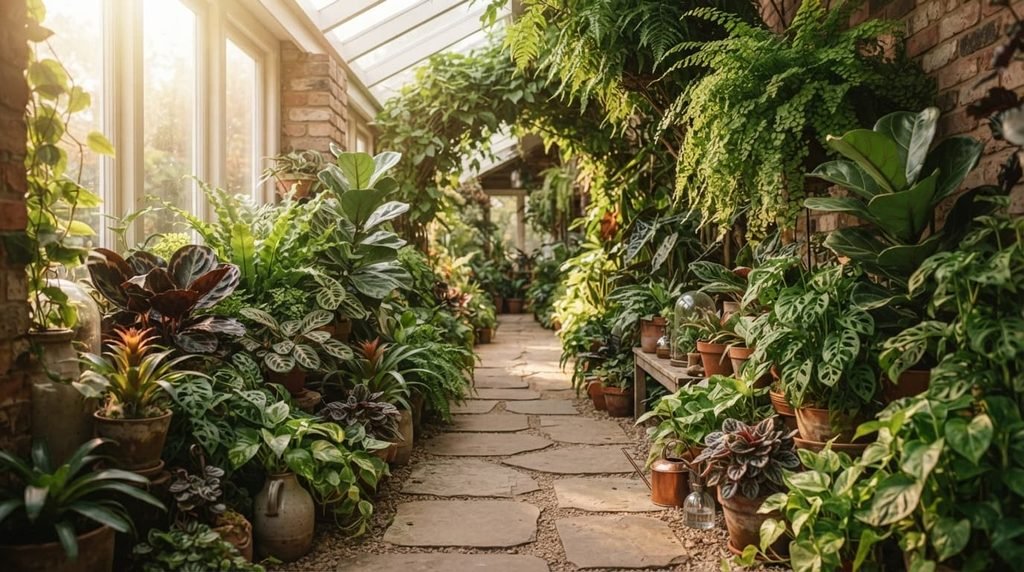
What changes for a courtyard space that’s also a walkway or transition area
If your indoor courtyard genuinely doubles as a walkway or transition space between rooms, prioritise plant placement that maintains genuine clear passage specifically, since an overgrown arrangement blocking comfortable movement undermines the space’s practical function regardless of how lush it looks.
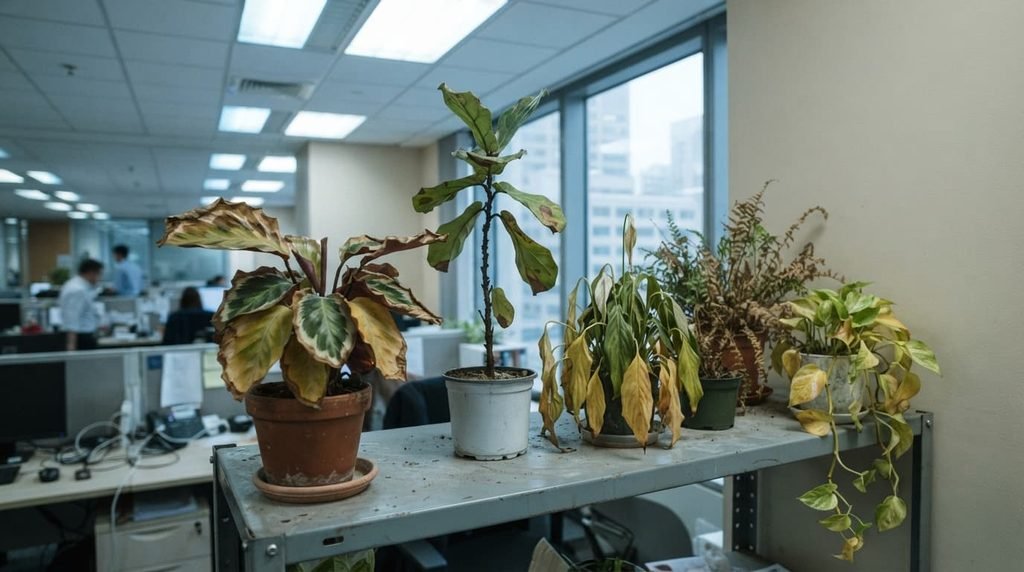
What people get wrong when creating this space
The most common mistake is selecting plants purely based on visual appeal in a store or online, without genuinely researching their actual light and care requirements against the specific space intended for them. This visual-first approach frequently results in plants that look appealing initially but decline once placed in conditions that don’t genuinely match their actual needs.
A second common mistake is overcrowding the space with too many plants too quickly, rather than building the collection gradually while genuinely learning how each specific plant responds to your particular conditions. A more measured, gradual approach allows genuine adjustment and learning before committing to an elaborate collection that might not all genuinely thrive in your actual space.
Questions readers keep asking
What’s the single most overlooked factor in creating a genuinely garden-like indoor space?
Genuine light suitability tends to be the most overlooked factor specifically – many indoor plant corners have attractive initial arrangements, but choosing plants without genuinely confirming their light needs match the actual space undermines long-term success regardless of how thoughtfully everything else is arranged.
Is it worth investing in supplemental grow lighting for a space with genuinely limited natural light?
For households genuinely committed to a wider plant variety than their natural light alone would support, supplemental grow lighting can be a worthwhile investment, though choosing genuinely shade-tolerant plants remains a viable, lower-cost alternative for more limited-light spaces.
Does the specific type of pot or container material genuinely affect plant health beyond appearance?
Yes, meaningfully – material affects genuine moisture retention and drainage differently, with some materials drying out considerably faster than others, making this worth considering alongside your specific plants’ actual water needs rather than choosing purely for visual coordination with your broader space.
How can I create a garden-like feeling in a genuinely small indoor space?
Prioritising genuine plant health through appropriate light and humidity matching, even with a smaller plant selection, typically creates a more convincingly garden-like feeling than a larger but poorly matched collection struggling in unsuitable conditions.