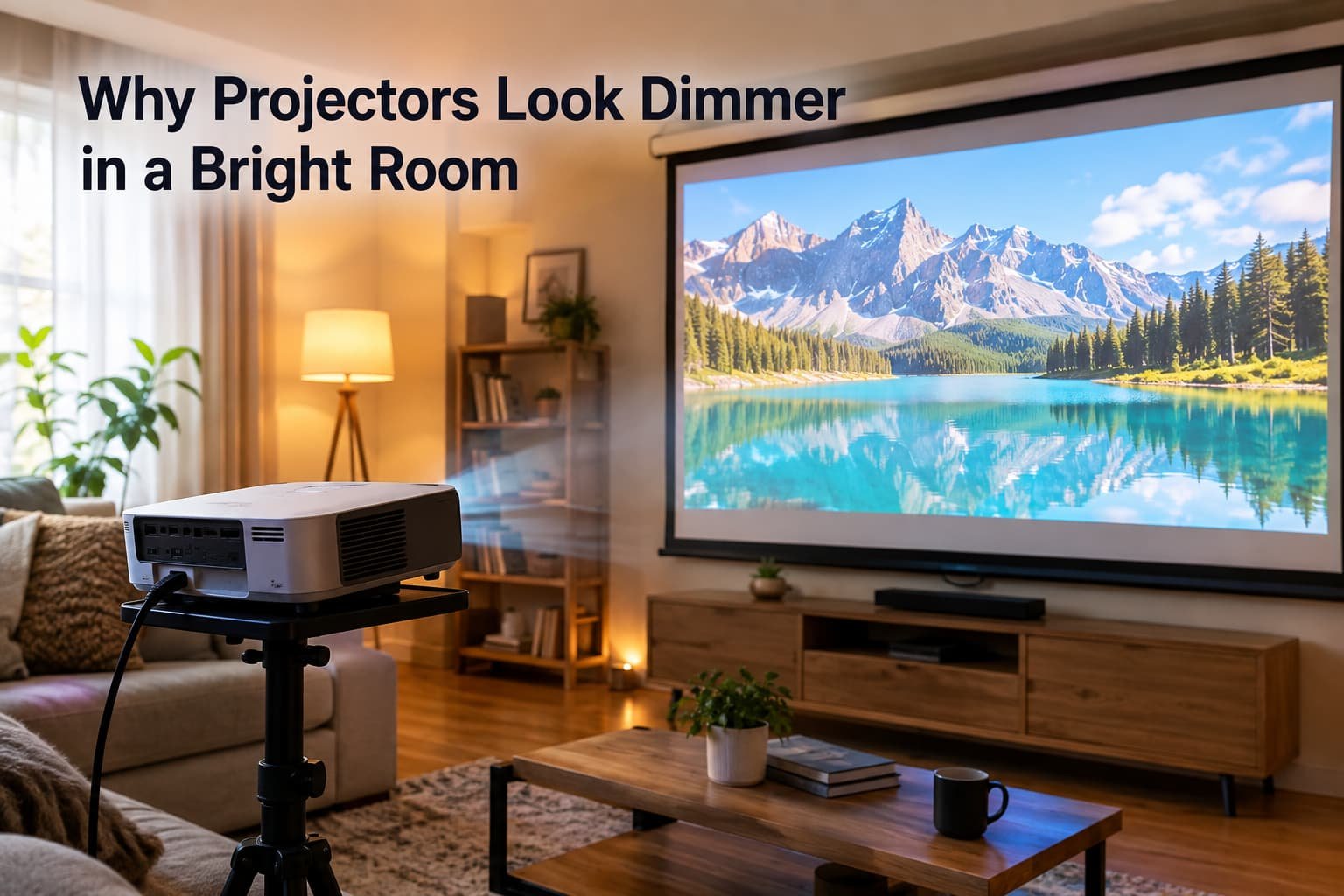
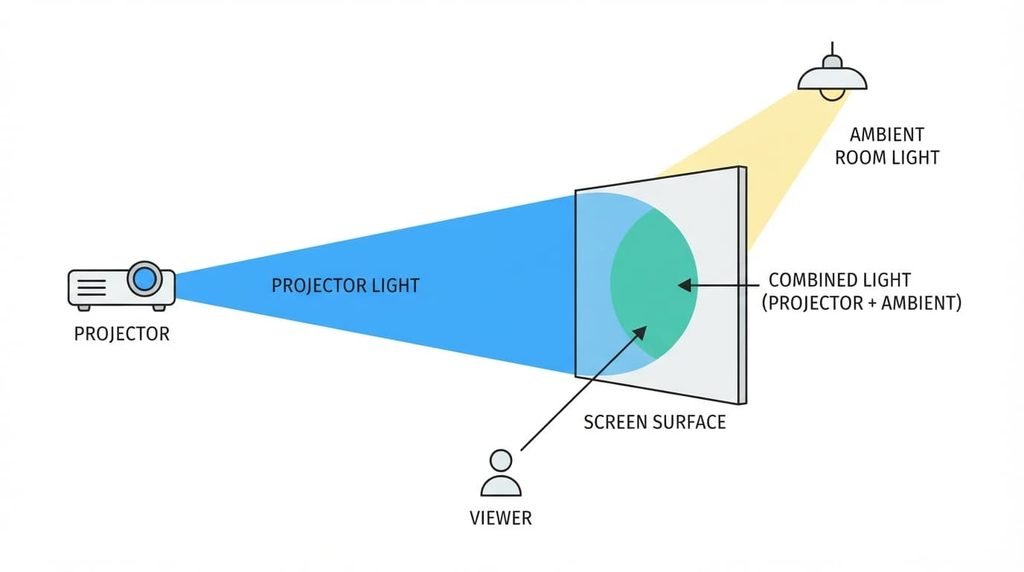
Projectors genuinely work by casting light onto a reflective surface specifically, meaning the image you actually see is a genuine combination of the projector’s own light output and the ambient light already present in the room, both competing for your eye’s actual perception of contrast and brightness together. This fundamental mechanism explains why the exact same projector produces a noticeably dimmer-looking image in a bright room than in a dark one, even though the projector’s actual light output hasn’t changed at all.
The short answer, and what it leaves out
A projector’s brightness rating measures the actual light it emits, but what you perceive as image brightness depends on the contrast between that projected light and the ambient light already present in the room.
What that leaves out is why this specific relationship matters so much practically – a projector emitting a genuinely fixed amount of light produces a vivid, high-contrast image in a dark room, but that same fixed light output must now compete with ambient room light in a brighter setting, reducing the perceived contrast and making the image appear genuinely washed out even though nothing about the projector itself has changed.
How it actually works, step by step
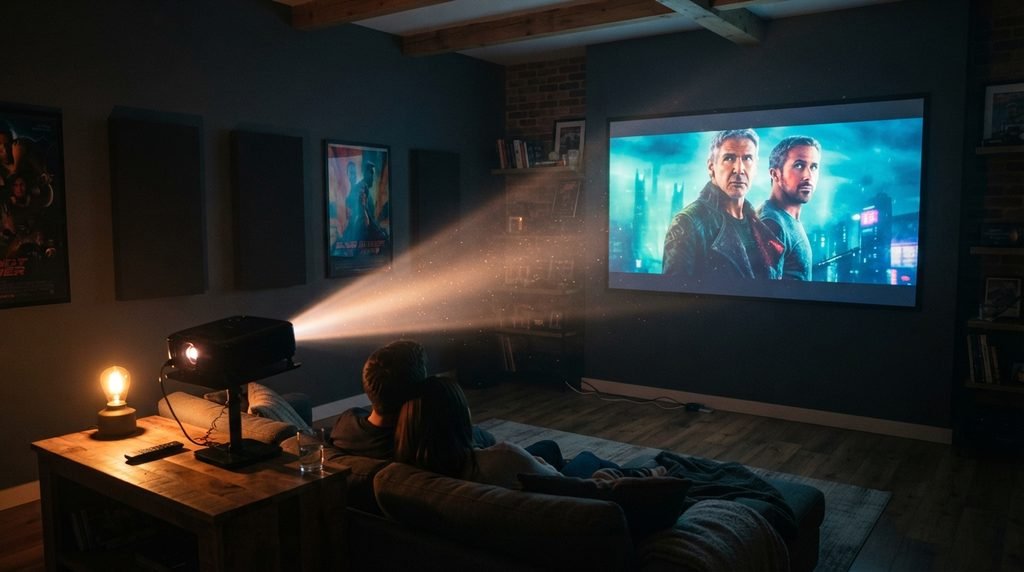
Your projector emits a genuinely fixed amount of light specifically, measured in lumens, which reflects off your screen surface and travels to your eyes as the image you perceive.
In a dark room, this projected light faces essentially no competing ambient light, meaning your eyes perceive the full genuine contrast between the darkest and brightest parts of the image, producing what feels like a vivid, well-defined picture.
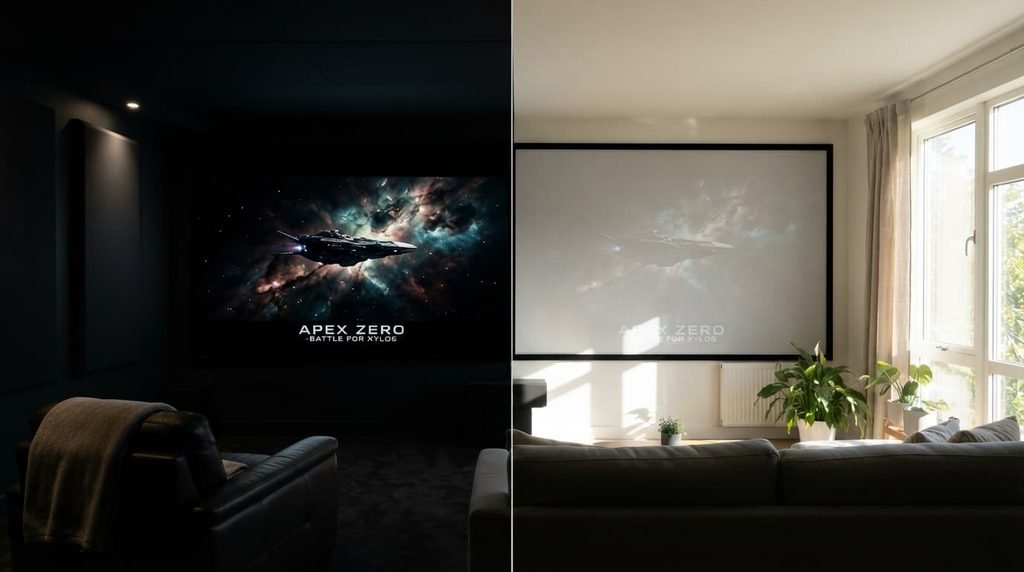
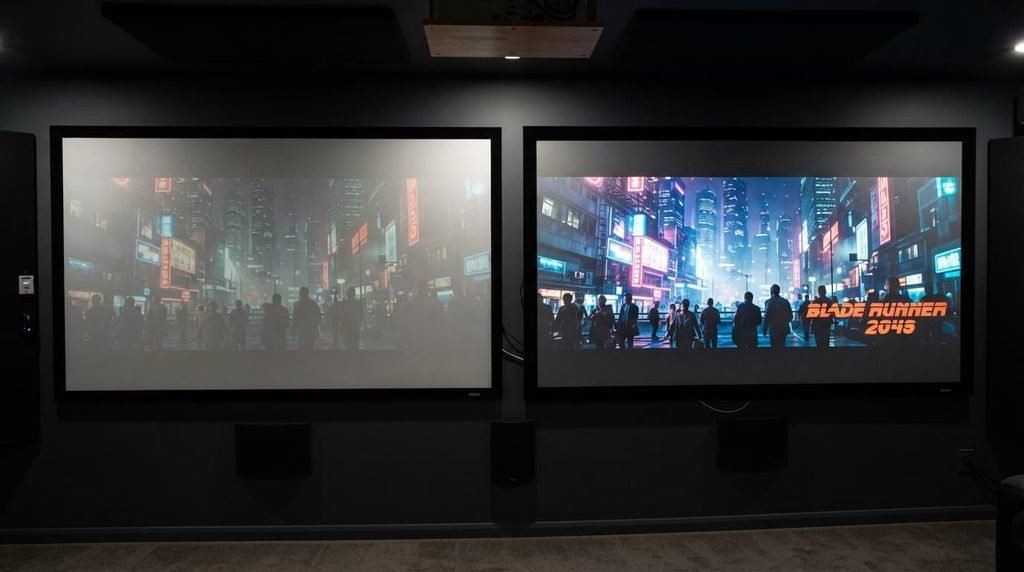
In a bright room, ambient light genuinely adds to every part of the screen simultaneously, including the areas meant to appear dark, which reduces the actual contrast ratio your eyes perceive between light and dark areas, making the entire image appear genuinely washed out and less vivid despite the projector’s own light output remaining completely unchanged.
Why this matters more for dark scenes than bright ones
Genuinely dark portions of a projected image are disproportionately affected by ambient light specifically, since a scene meant to appear near-black genuinely can’t achieve this perception if ambient light is adding brightness to that same area regardless of the projector’s own output there. Bright scenes, by comparison, are less dramatically affected since the projector’s own light output already dominates that portion of the image more substantially.
This is genuinely part of why viewers often notice this ambient light effect more distinctly during genuinely dark content specifically – a night scene in a film, for instance – than during consistently bright content, since the perceptual impact of ambient light competition is considerably more pronounced wherever the image is meant to appear genuinely dark.The analogy, and where it breaks
This effect is sometimes compared to trying to see a candle’s flame clearly in daylight versus at night – the candle’s own actual light output doesn’t change, but its visibility relative to the surrounding light genuinely does.
The analogy holds well for the core relative-brightness-perception distinction. It breaks because a candle’s flame remains a genuinely fixed, small point regardless of surrounding light, while a projected image’s entire surface is affected by ambient light simultaneously, making the impact considerably more pervasive across the whole image than a single point source’s visibility change would suggest.
What this does not explain
The ambient-light-competition explanation clarifies why brightness perception changes with room lighting, but it doesn’t explain or address every image quality factor specifically – your screen material’s actual reflectivity also genuinely affects perceived brightness independently of ambient light conditions, meaning two screens can produce different perceived brightness even under identical projector and room lighting conditions.
It also doesn’t explain why some projectors handle ambient light considerably better than others specifically, since genuine differences in projector brightness rating and contrast technology mean higher-rated projectors maintain more perceived image quality in brighter rooms than lower-rated models facing the same ambient conditions.
What people get wrong about it
The belief that a projector experiencing this issue is genuinely malfunctioning or has degraded in quality. This forms because the image genuinely does look worse, but this perceived decline stems from the ambient light relationship described above, not from any actual change or fault in the projector’s own functioning, meaning no repair addresses a “problem” that isn’t actually a malfunction at all.
The belief that closing curtains or dimming lights only marginally helps, when the room still has some ambient light present. Even partial ambient light reduction genuinely improves perceived overall contrast meaningfully, since the relationship between ambient light and perceived brightness isn’t purely binary – every reduction in ambient light provides some genuine improvement, even without achieving complete darkness.
Where the popular explanation oversimplifies
Advice describing this issue as simply “projectors need dark rooms” glosses over the meaningful degree-based nature of this relationship, treating it as an absolute requirement rather than accurately reflecting that ambient light reduction provides genuine, incremental improvement even without complete darkness.
This distinction matters practically: understanding that even partial ambient light reduction provides genuine benefit means a room that can’t achieve complete darkness can still support genuinely improved projector viewing through partial measures, rather than assuming a bright room makes projector use entirely unviable.
Projector brightness perception depends on genuine contrast between projected and ambient light, not simply the projector’s own fixed light output – this explains why the same projector looks different across different rooms without any actual change to the unit itself. Understanding it as a relative, degree-based relationship, rather than a strict dark-room requirement, is the detail most explanations skip, and it’s the one that actually explains why partial ambient light control still provides genuine, meaningful benefit.
Questions readers keep asking
Does a higher lumen-rated projector genuinely perform better in bright rooms specifically?
Yes, quite meaningfully – a projector with genuinely higher light output can maintain more perceived contrast and vividness against ambient light than a considerably lower-rated model, making lumen rating a worthwhile consideration specifically for anyone genuinely planning to use their projector in brighter room conditions.
Is there a genuine benefit to using a specialised ambient-light-rejecting screen?
Yes, quite considerably – these screens are genuinely designed to reflect projector light more directly toward viewers while reducing reflection of ambient light from other angles entirely, providing a genuine perceived brightness improvement beyond what curtains or dimming alone typically achieve.
Does this ambient light effect matter equally for genuinely dark content and consistently bright content?
Not equally at all, as genuinely covered above – genuinely dark scenes suffer more noticeably from ambient light competition specifically, while consistently bright content maintains more perceived quality in ambient light, making the type of content you typically watch genuinely worth considering when assessing how much ambient light control genuinely matters for your own particular use.
Can adjusting a projector’s own settings genuinely compensate for a bright room, or does this only help marginally?
Settings adjustments – contrast, brightness calibration – can provide some genuine improvement specifically, though these adjustments work within the fundamental ambient-light relationship described above rather than actually overcoming it entirely, making genuine ambient light reduction still the more impactful approach overall.