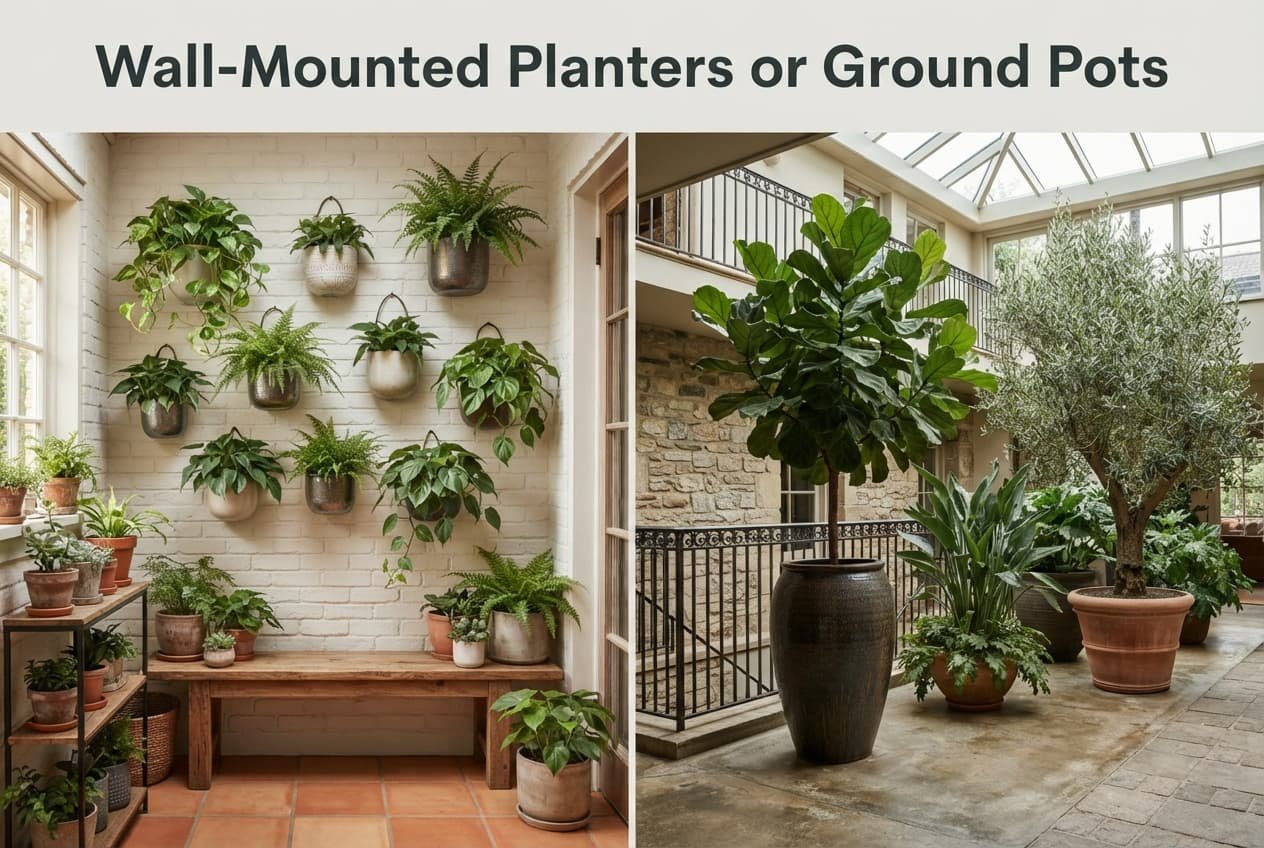
The right choice for a genuinely indoor courtyard’s plant arrangement isn’t decided by which one looks more striking in a design photo specifically – it’s decided by how much genuine floor space you actually have and whether your own specific plants genuinely suit vertical or ground-level growing conditions. Wall-mounted planters and ground pots solve genuinely different practical needs, and choosing based on trend alone misses what actually determines whether either one works well for your specific space.
The one property that decides it
The deciding factor is whether your genuine priority is recovering floor space or accommodating plants that specifically need more root depth and stability, not simply which format looks more contemporary. Wall-mounted planters directly recover floor space by growing vertically, while ground pots prioritise genuine accommodation for larger, deeper-rooted plants that wall mounting structurally can’t support as effectively.
This matters because your actual space constraints and the specific plants you want to grow determine which format’s core characteristic genuinely serves you better, rather than either being universally superior regardless of your specific situation.
Head to head
| Wall-Mounted Planters | Ground Pots | |
|---|---|---|
| Floor space used | Minimal | More |
| Good for big plants | Limited | Genuinely well |
| Easy to water | Can be trickier | Often easier |
| Visual height variation | Naturally provided | Requires stands |
| Easy to set up | Requires mounting | Minimal |
| Weight capacity | More limited | Higher |
The row that surprises people most is watering convenience specifically. Many assume wall-mounted planters are equally simple to maintain, but reaching and watering elevated planters consistently, without genuine drainage complications affecting the wall or floor below, often proves considerably trickier than ground-level watering’s straightforward access.
Where wall-mounted wins
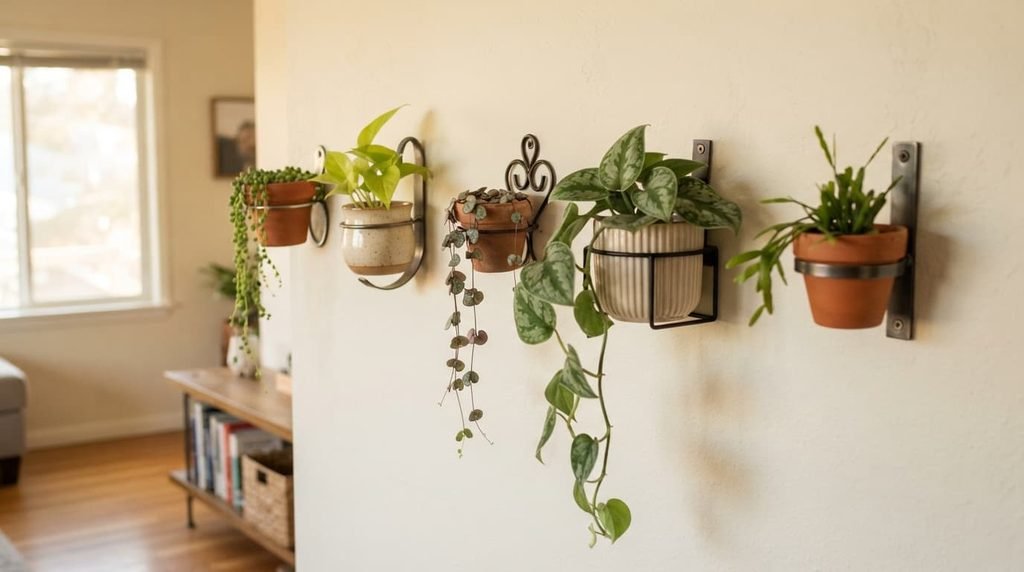
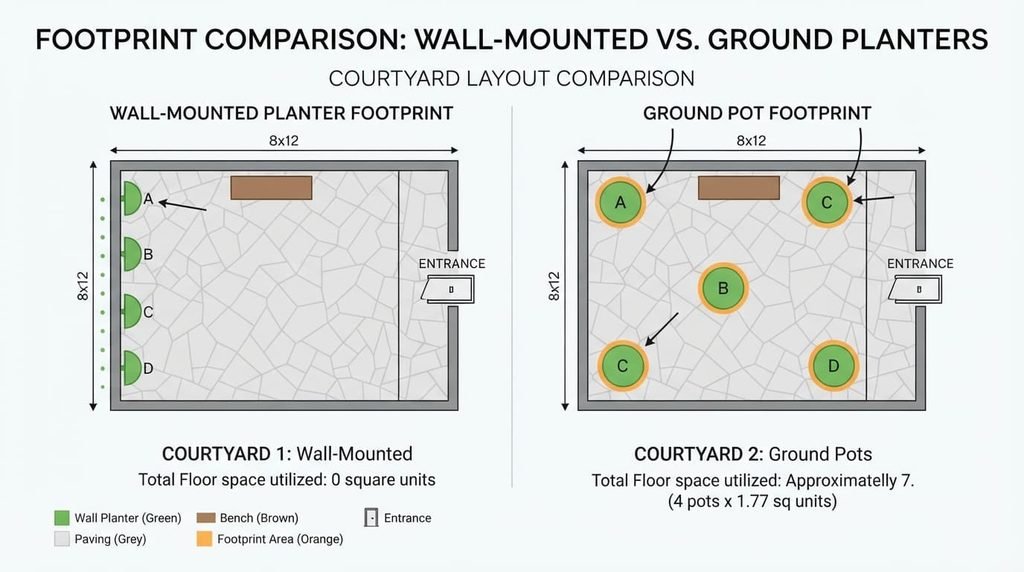
Anyone who genuinely has limited floor space benefits from wall-mounted planters’ vertical footprint, since this directly addresses a small courtyard’s core space constraint in a way ground pots’ floor-based footprint structurally can’t match regardless of how efficiently those pots are otherwise arranged. The unglamorous reason: wall-mounted planters also naturally create the layered height variation genuinely established as important for garden-like visual density, without requiring additional plant stands ground pots would need to achieve the same effect.
Anyone genuinely wanting to keep floor areas fully clear for other purposes also benefits from wall-mounted planters’ zero floor footprint in a related way, since this leaves the entire ground area genuinely available for seating, walking space, or other furniture a ground-pot arrangement would otherwise occupy.
Where ground pots win
Anyone who genuinely wants to grow larger, deeper-rooted plants benefits from ground pots’ genuine capacity for this, since this directly addresses plants that wall-mounted planters structurally can’t accommodate regardless of how sturdy that specific mounting might be. The unglamorous reason: ground pots are also typically considerably easier to water consistently, which matters more than it might initially seem for anyone who’s dealt with the genuine hassle of watering elevated planters without creating drips or mess below.
Anyone genuinely wanting the option to easily rearrange their plant layout over time also benefits from ground pots’ inherent portability in a related way, since a pot can simply be moved to a new spot, while a wall-mounted planter’s fixed installation makes this kind of experimentation considerably more involved.
When neither is right
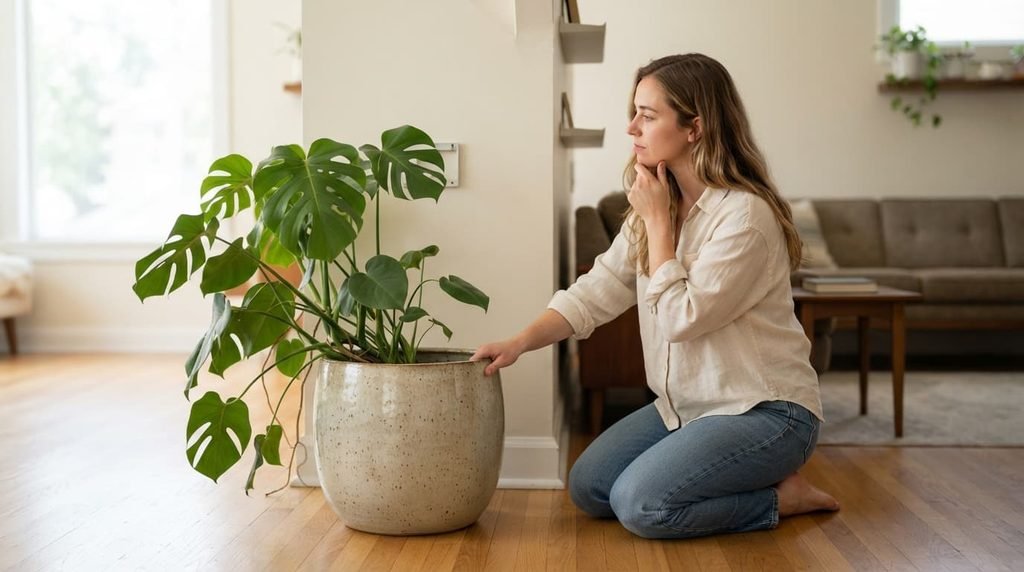
Choosing based purely on which format is currently more popular in courtyard design content, without genuinely considering your own actual floor space and specific plant needs, is worth ruling out regardless of which option you’d otherwise prefer.
Wall-mounted planters installed for a household genuinely wanting larger, deep-rooted plants sacrifice the accommodation ground pots would have comfortably provided, while ground pots chosen despite genuinely limited floor space miss the specific space-recovery benefit wall mounting would have addressed.
How to decide in thirty seconds
If you genuinely have limited floor space and want smaller, shallow-rooted plants, choose wall-mounted planters. Their vertical footprint directly addresses this specific combination in a way ground pots’ floor-based approach doesn’t match.
If you genuinely want larger, deeper-rooted plants and have adequate floor space, choose ground pots. Their genuine root accommodation directly addresses this specific need in a way wall mounting structurally can’t provide.
What changes the answer later
Your actual floor space genuinely becoming more constrained is worth reconsidering the choice at, since this specific shift may favour wall-mounted planters’ space efficiency more than your previous situation required.
Your genuine plant ambitions changing – wanting to grow considerably larger specimens than previously, for instance – is also worth reconsidering the choice at, since this shift favours ground pots’ genuine capacity over wall-mounted planters’ more limited accommodation.
What people get wrong when making this choice
The most common mistake is assuming wall-mounted planters are automatically the more “space-efficient,” universally correct choice for any indoor courtyard, without genuinely confirming whether your specific plant ambitions actually suit this format’s root and weight limitations. A household genuinely wanting to grow larger specimens loses real potential by defaulting to wall-mounted purely because the space happens to be modest.
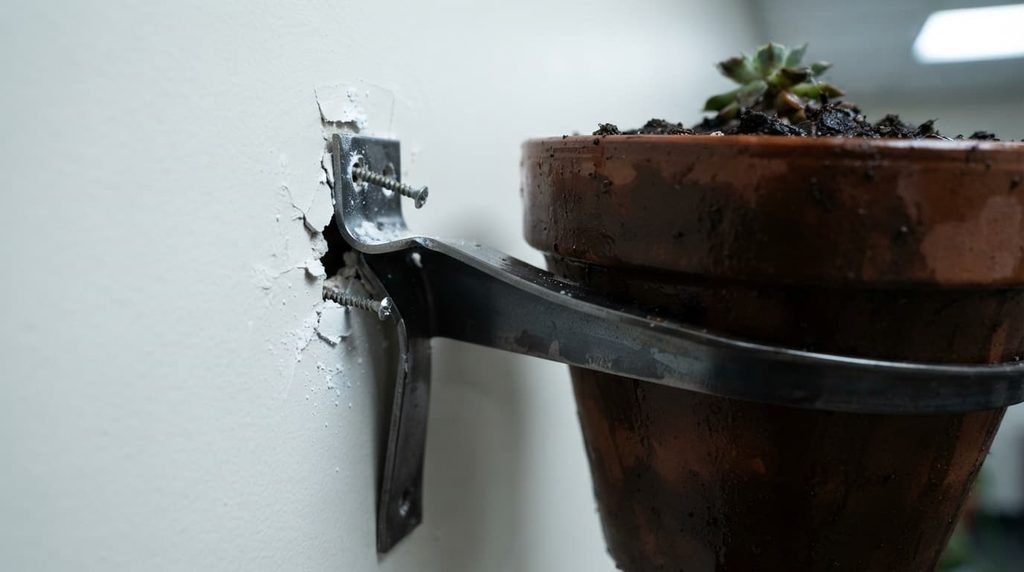
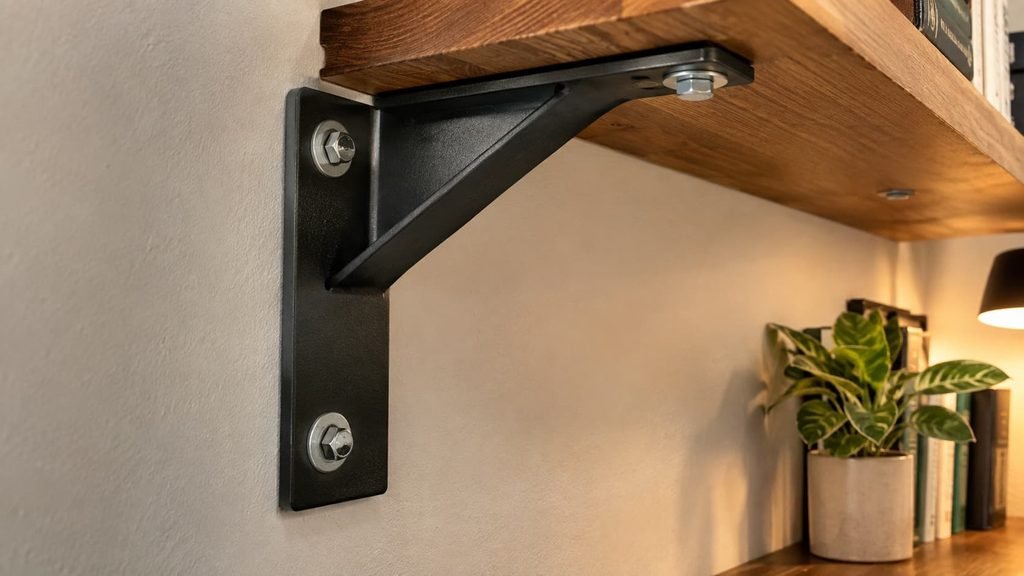
A second common mistake is not confirming genuine wall structural capacity before committing to wall-mounted planters specifically, resulting in mounting hardware that’s inadequate for the actual weight once plants mature and soil becomes saturated after watering. Confirming your specific wall’s capacity and choosing appropriately rated hardware prevents this genuine safety and structural concern.
What changes if you’re genuinely renting rather than owning
If you’re renting your space specifically, confirm whether your lease permits the wall modifications wall-mounted planters typically require, since ground pots involve no structural change at all, making them a more straightforward choice for many rental situations regardless of your own underlying space preference between the two formats.
What to walk away from
Any wall-mounted planter setup genuinely lacking confirmed hardware weight ratings appropriate for your actual anticipated plant and soil weight, chosen purely because it’s cheaper or more visually appealing, should end your interest regardless of the price or style difference.
Genuine structural safety matters here specifically, and this is a case where cutting cost on appropriate mounting hardware isn’t a reasonable trade-off – the consequence of failure is meaningfully more serious than with most other courtyard decisions covered elsewhere.
Questions readers keep asking
Can wall-mounted planters genuinely support the weight of larger, mature plants over time?
This depends considerably on the specific mounting hardware and wall material – genuinely robust mounting can support moderate weight, though very large, mature plants typically exceed what most wall-mounted systems are genuinely designed to support safely.
Is it worth combining both wall-mounted planters and ground pots within the same courtyard?
Yes, many genuinely successful indoor courtyards combine both approaches, using wall-mounted planters for smaller, trailing plants while reserving ground pots for larger specimens, achieving the genuine benefits of both formats within one space.
Should I worry about genuine safety when mounting planters, given the note above about wall capacity?
Yes, genuinely – confirming appropriate mounting hardware rated for your actual anticipated weight, including fully saturated soil, is a genuine safety consideration worth taking seriously, rather than treating this purely as an aesthetic or space-planning decision alone.
Do wall-mounted planters genuinely require more frequent watering than ground pots?
Often yes, somewhat – smaller planter volumes typical of wall-mounted systems tend to dry out faster than larger ground pots, making more frequent watering attention worth planning for if choosing this format specifically.