If you hear one earbud louder than the other, the usual cause is a partly blocked sound port, and a dry soft brush clears it. Earwax or lint narrows the opening that carries sound into your ear canal. A drifted balance setting gives the same effect. So does a loose seal. A failing driver is the rarest cause. Each test below points to one fix, and the first fixes cost nothing. This page separates the causes with listening tests that take ten minutes and need only a torch. Treat the figures as simplified samples for a typical pair of earbuds and trust your ears over the numbers.

Why You Hear One Earbud Louder Than the Other
Each earbud pushes sound through a short nozzle into your ear canal. The wider the opening, the more pressure reaches your eardrum. Take a nozzle 4.0 mm across, which has an open area of 12.6 mm². Wax settles in a ring and leaves a clear opening of 2.83 mm, which is 6.3 mm² or half the area. In a rough model the pressure follows the open area, and half the area costs 6 dB. Your brain reads a 6 dB gap between ears as a clear shift. A voice that should sit in the middle drifts toward the louder side.
Other mechanisms produce a gap of their own. A balance slider a third of the way off-centre leaves one channel at 70% of its level, a loss of about 3 dB. Low notes leak out of a loose seal, and at 100 Hz we’ll assume a loss of 10 dB. A weak driver gives less sound at every pitch. That’s why you hear one earbud louder than the other even when both drivers are sound.
The surprise is that the louder bud is almost always the normal one. The quiet side carries the fault, and that is where to look.
Tests That Let You Hear Which Earbud Is Louder Than the Other
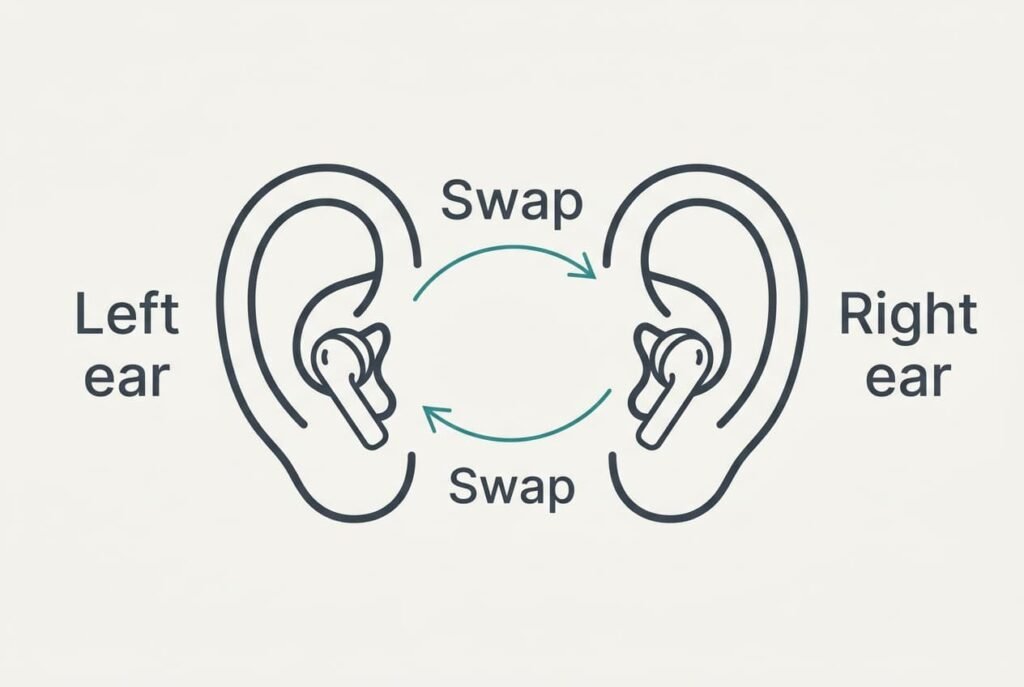
Swap the buds between ears, and do it at a low volume, because a small gap is harder to judge at high volume. When the quiet side follows the bud, the fault sits in that bud. When it stays in the same ear, suspect the source.
Pair the buds with a second phone or laptop. Should the gap disappear, the first device has a balance setting or a mono-mixed file at fault. If the gap follows the buds to the new device, the earbuds are to blame.
Play a steady bass note, then a spoken voice. A quiet bud that sounds thin on the bass note but normal on the voice has a leaky seal. A bud that is quieter on both has a blocked port or a weak driver.
Shine a torch into each nozzle and compare. A clean mesh looks even and bright. A blocked one looks dull and crusted. If the quiet bud shows the dull mesh, the blocked port is your cause. Jot the outcome of each test as you go. Four short notes usually point at a single fault.
Run all four before you change anything.
Four Fixes From Free to Irreversible
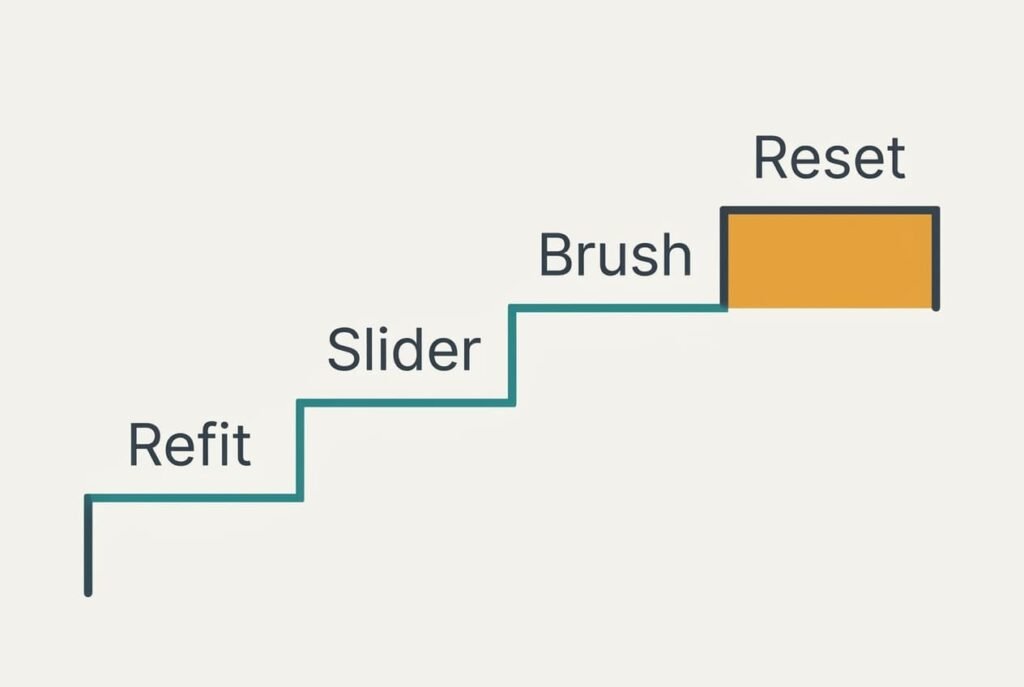
Refit the quiet bud and turn it a quarter turn, because a loose seal loses the low notes first. Press the bud in gently and rotate it until the bass note fills out. That costs nothing, and the bass note is your test. The 10 dB bass loss we assumed shrinks to a gap you can’t hear once the seal closes. A deeper fit presses on the ear canal and begins to tire you after an hour. A blocked port is untouched by it. If the bass returns but the gap remains, try the next one.
Centre the balance slider in the phone’s sound controls when the same bud is quiet on one device and normal on another. That matches the settings result in the tests. A slider a third off-centre gives a 3 dB gap, and centring removes it at no cost. You’d lose any offset you set on purpose, such as a compensation for one tired ear. Note the position before you move it, because every device keeps its own setting. That also explains why a pair can sound level on a laptop and lopsided on a phone.
Clear the nozzle with a dry soft brush and give it ten patient minutes, because a blocked port is the commonest reason you hear one earbud louder than the other. It matches the dull mesh in the torch test. Brush from the outside towards you with the bud pointing down. Debris then falls out instead of sinking in. Work on one side at a time and compare the two nozzles under the torch as you go. The cost is only time. Rushing risks pushing the wax deeper, which widens the 6 dB gap, and a brush that is too stiff can tear the mesh.
Reset the pair, or replace the quiet bud, when every test points at the bud and the port is clean. This matches a driver fault, or a pair that has drifted out of step. A factory reset wipes saved devices and any custom sound profile, and you can’t undo it. A replacement bud or a new pair costs money. Try the reset before you buy anything. Replace the bud only if the gap survives it, and ask the seller whether a single bud is sold on its own.

If None of the Fixes Worked
Gather what you know before you contact the seller. Note which side is quiet, and note if that side follows the bud. Note whether the loss is in the bass or across the whole range. Add the second-device result and the torch result. With that list a seller can judge a faulty driver from one message. You won’t spend a week swapping questions, and the seller can’t ask you to repeat tests you’ve already run. If you still hear one earbud louder than the other after all that, the warranty is your next step.
Check the warranty period on your receipt before you write.
Before you reset anything, write down the paired devices and your sound profile. A reset clears all of them, and you’ll set them up from scratch afterwards. Photograph the settings screen if you can, because rebuilding a profile from memory is slow.
The Fix That Isn’t Worth Doing
Many people reach for a pin or a toothpick in the nozzle, and it does more harm than good. The mesh is a thin screen over the driver. A pin tears it or pushes the wax deeper to where no brush can follow, and the 6 dB gap becomes permanent. A torn mesh also lets debris reach the driver itself, which turns a cleaning job into a failed part. The pin saves one minute and can cost you the whole bud.
Turning the balance slider the other way to hide the gap is almost as poor. It lowers the louder side to match, and the whole sound falls in level. The blockage stays in place and slowly grows. That leaves a quieter pair that is still lopsided, and the gap returns the moment you play from another device.
Run the listening tests, then fix the cause they point at. Most pairs need only a brush or a slider nudge, and both are free to try. Keep the pin in the drawer where it belongs, and let the tests lead. The aim is a gap small enough that a voice sits in the centre of your head again. Your two ears differ slightly. An exact match is unusual.
Questions Readers Keep Asking
Can I fix this at home?
Mostly, yes. Three of the four causes yield to quick home remedies, and each takes minutes. Only a weak driver needs a replacement. Run the swap test before the others, because it shows whether the bud or the setup is the problem.
What causes it most often?
A partly blocked sound port. Wax and lint gather in the nozzle over weeks, and the loss builds so slowly that you adapt until the gap becomes obvious. A brushing once a month keeps the opening clear and the two sides matched.
How do I know the earbud itself has failed?
The quiet side follows the bud to the other ear and the mesh looks clean. The seal is good, and a second device shows the same gap. When all four tests agree, the driver is probably faulty. A replacement bud is the sensible next step.