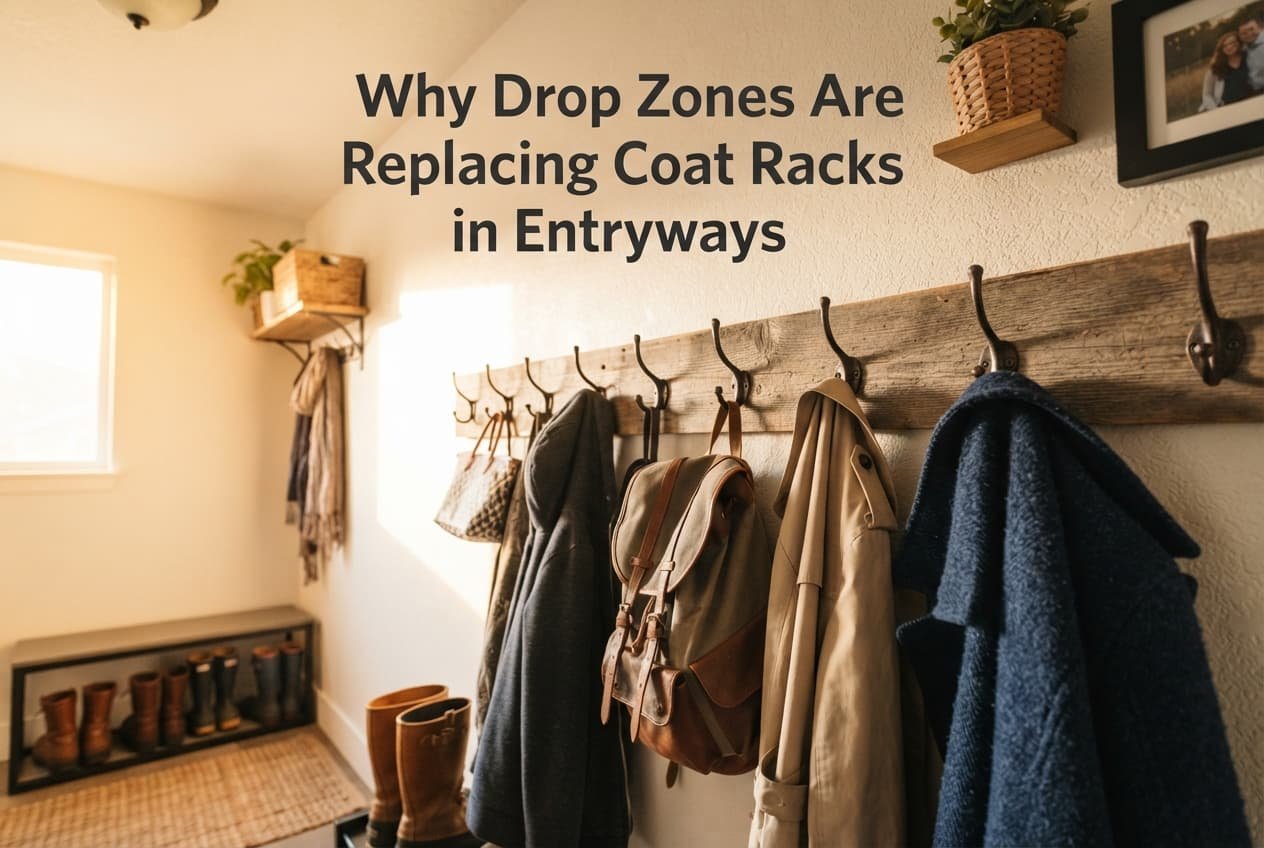
Drop zones – purpose-built stations combining hooks, shelving, and bins into one organised system – keep displacing the traditional single coat rack for entryway design specifically, for a reason grounded in measurable household throughput, not seasonal taste alone. Understanding that reason tells you whether it’s worth adopting or just the current version of a cycle that will pass. The shift is real and checkable in how much genuine daily friction a drop zone actually removes compared to a single-function coat rack, not simply a matter of one storage style being more fashionable than another.
What actually changed
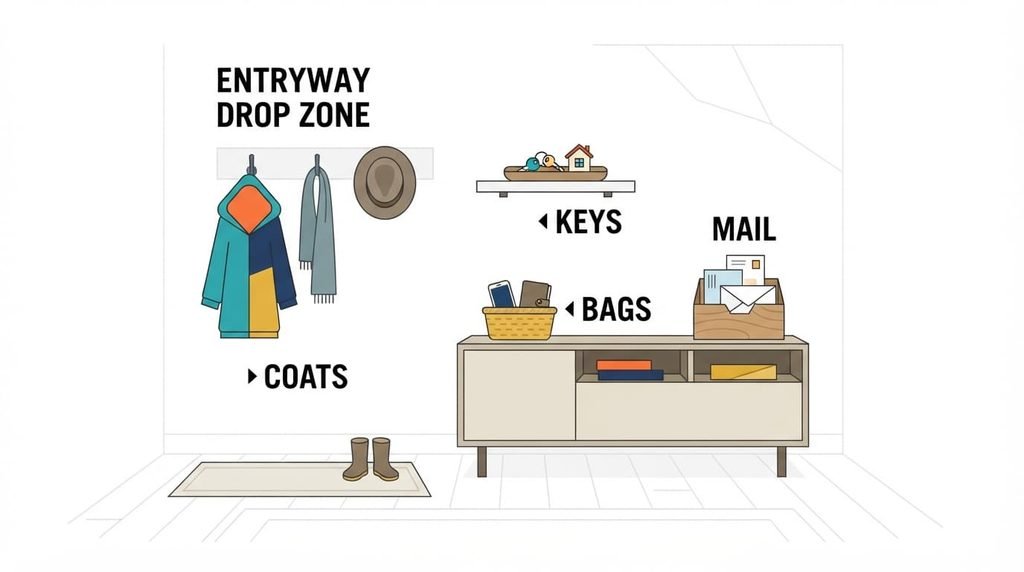
The measurable shift is a move away from a single-function coat rack handling only outerwear, toward an integrated drop zone combining multiple item categories – coats, bags, keys, mail – within one organised, purpose-built system. Where a traditional coat rack addresses only one category of daily item, a drop zone specifically accounts for the genuine range of items a household actually drops at the door each day.
This isn’t purely aesthetic preference – it’s connected to the same designated-spot principle that determines whether an entryway actually stays organised, extended specifically to cover a household’s full range of daily items rather than just outerwear alone, which is why the approach recurs across different design eras rather than being tied to one particular decorating trend.
Why it keeps coming back specifically now
The continued reality that households manage a genuinely wider range of daily items at the entryway than outerwear alone – bags, technology, mail, keys – has created a direct tension that drop zones specifically address: a single coat rack simply doesn’t account for this full modern daily item range the way an integrated system can.
For many households specifically managing busier daily routines with more individual items to track at the door, this tension between a traditional coat-rack-only approach and genuine modern daily item variety has become increasingly relevant, which is a concrete structural reason drop zone popularity tracks this broader organisational need rather than purely following showroom styling alone.
This distinguishes the current cycle from earlier uses of multi-function entryway furniture, which were sometimes driven primarily by a particular aesthetic movement’s popularity rather than by genuine household throughput needs. The underlying mechanism is the same regardless of cause, but a technique genuinely driven by an actual organisational need tends to persist considerably longer than one driven purely by a design movement’s popularity alone.
What this actually changes in a space
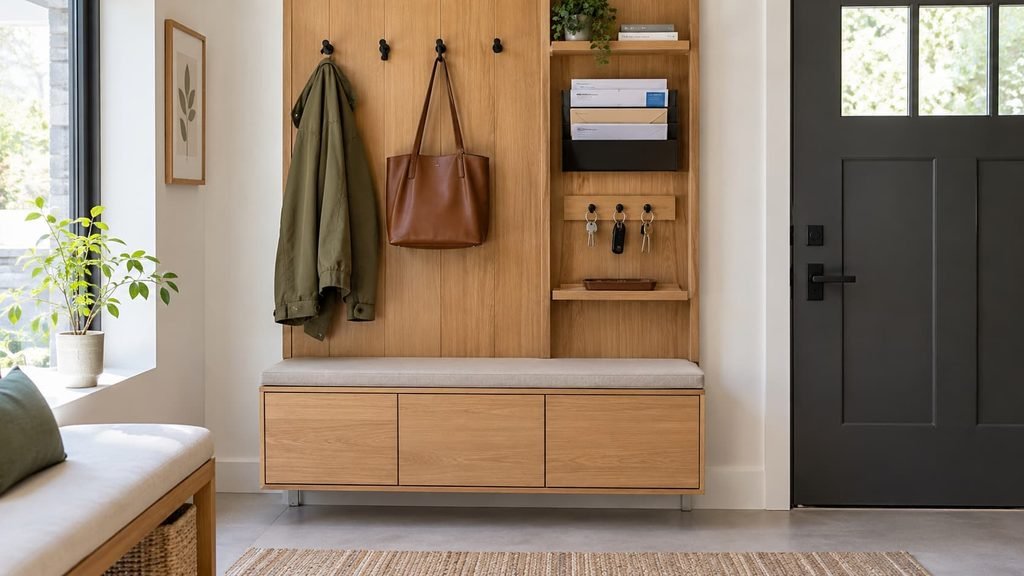
A drop zone’s multiple designated spots directly address a wider range of actual daily items than a single coat rack can, which is the direct mechanism behind its organisational advantage specifically for genuinely busy modern households. This isn’t purely subjective impression – it’s the direct result of matching storage variety to genuine daily item variety, rather than addressing only one category while leaving others without any designated spot at all.
Traffic flow through the entryway also changes specifically with a well-designed drop zone, since consolidating multiple item categories into one organised zone reduces the scattered, multi-location clutter a single coat rack alone tends to produce once items beyond outerwear inevitably accumulate somewhere nearby regardless.

What this looks like in practice
A row of individual hooks at varying heights for different household members, paired with a small shelf for keys and a basket for mail, forms a common practical expression of this approach, though the specific combination genuinely varies considerably depending on each household’s actual daily item range. This underlying combination – multiple designated spots matched to genuine item variety – is what actually delivers the organisational benefit, not any single specific furniture piece or material choice alone.
Individual assignment of specific spots to specific household members, rather than entirely shared undesignated space, often strengthens this system further, since a spot genuinely “belonging” to one person tends to get used more consistently than a shared spot anyone might use inconsistently.
Where this trend genuinely holds up
The item-variety-matching mechanism behind drop zones doesn’t depend on current taste, which is why it’s a reasonable longer-term choice specifically for households genuinely managing a wide range of daily items at their entryway. A household with several people and correspondingly varied daily items benefits from this approach regardless of which decade’s aesthetic currently favours the specific drop zone styling being used.
Where the verdict should stay negative
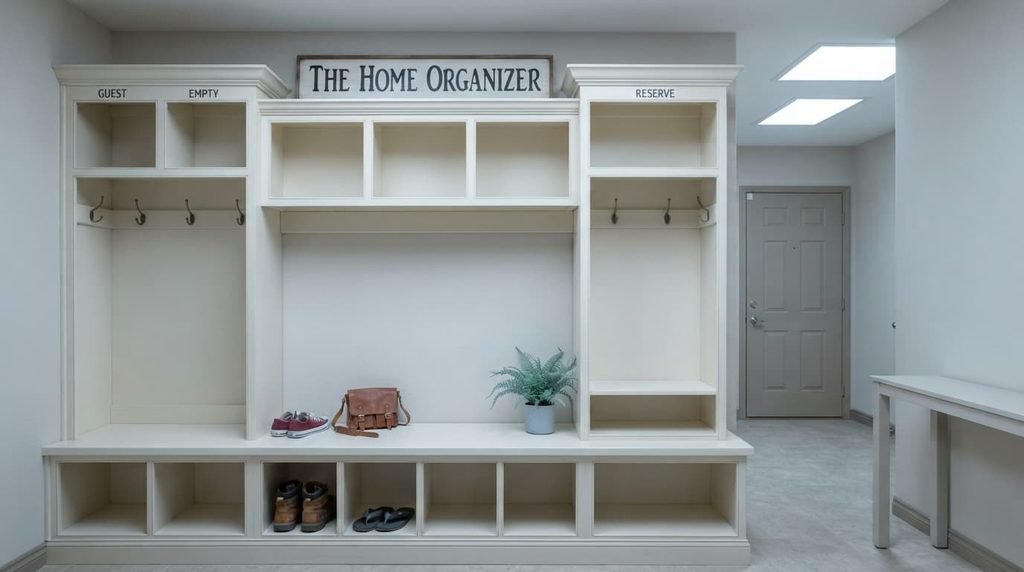
A drop zone genuinely isn’t worth the additional space and cost for a household with genuinely minimal daily entryway items, despite how consistently this system gets marketed as a universal entryway upgrade.
In a household with very few people or a genuinely simple daily item range – primarily just outerwear, for instance – the item-variety-matching mechanism that makes drop zones valuable elsewhere simply doesn’t address a need that doesn’t meaningfully exist in that specific scenario. Adopting the approach purely for its current popularity, in a household with genuinely minimal daily item variety, adds unnecessary space commitment and cost without producing the practical organisational benefit people actually expect from it.

What people get wrong when adopting it
The most common mistake is building an elaborate drop zone with more individual designated spots than a household’s actual daily item variety genuinely requires, resulting in several designated spots that go consistently unused while adding unnecessary bulk and cost to the entryway. Matching the system’s actual complexity to your household’s genuine daily item range matters more than maximising the number of designated spots for their own sake.
A second common mistake is failing to actually label or clearly designate each spot’s specific purpose, defeating the entire mechanism behind why drop zones work in the first place. A drop zone with several undesignated, ambiguous spots provides little more genuine organisational benefit than a single coat rack did, since the underlying principle depends on each spot having a clear, specific purpose household members can consistently return to.
Questions readers keep asking
Does a drop zone need to be a purpose-built piece of furniture, or can it be assembled from separate pieces?
It can genuinely be assembled from separate pieces – hooks, a small shelf, a basket – rather than requiring one purpose-built furniture piece specifically, provided the resulting combination genuinely covers your household’s actual daily item variety with clearly designated spots for each category.
Is this trend just a temporary aesthetic preference that will look dated soon?
The underlying item-variety-matching mechanism it’s connected to doesn’t depend on current taste, suggesting genuine longevity specifically for households with genuinely varied daily items, though specific styling choices within the broader drop zone approach can still date in the usual way any decorating choice eventually does.
Can an existing coat rack be incorporated into a new drop zone rather than fully replaced?
Yes, often quite easily – an existing coat rack can typically serve as the outerwear-specific component within a broader drop zone system, supplemented with additional designated spots for other item categories, rather than requiring complete replacement of furniture that’s already functioning well for its specific original purpose.
How many designated spots does a typical household’s drop zone genuinely need?
This varies considerably by household size and actual daily item variety, so counting your own household’s genuine typical daily items – rather than assuming a standard number applies universally – gives a more accurate sense of how elaborate your own specific drop zone genuinely needs to be.