Plenty of people take the case off because the phone stopped charging on the pad. How does a wireless charger send power through a phone case? A coil in the pad makes a changing magnetic field, and a second coil in the phone turns that field back into current. Plastic and silicone matter very little, while distance matters a great deal. This explainer follows one 10 W pad and a 2 mm silicone case through a full charge, then shows where the picture breaks. All numbers are assumptions for illustration, and no brands appear. The sums are short enough to redo with your own case and a ruler.
How a wireless charger can send power through a phone case
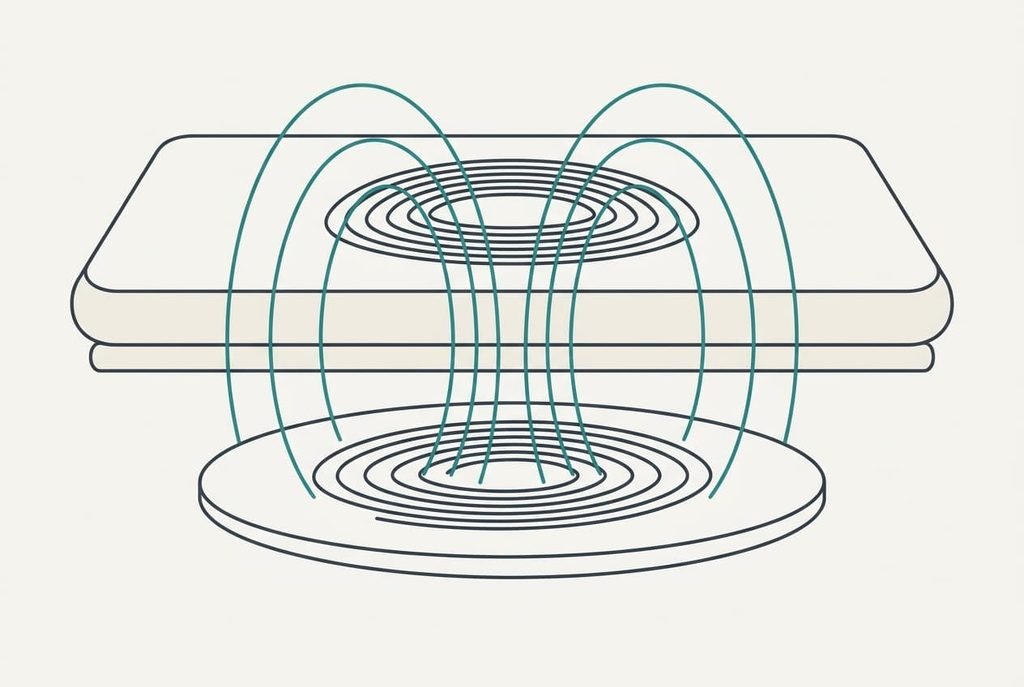
Power crosses the case as a changing magnetic field between two coils, and the case matters only through the distance it adds. A magnetic field passes through plastic and silicone almost as it does through air. A coil is only a loop of wire, and a loop in a changing field has a current pushed through it. The pad’s field alternates about 130,000 times each second. That is how energy crosses a gap without contact. What it needs is a short gap and a receiving coil lined up with the sending one. A 2 mm case adds 2 mm to a gap that’s 3 mm already, so the total is 5 mm.
That is the whole answer in a sentence, and it leaves out two things. The phone and the pad also talk to each other, which is how the pad knows how much power to send. And some of the power never arrives, because the field spreads out as the gap grows. How a wireless charger can send power through a phone case is easy to state. It’s harder to trace, so the next section follows one charge from the socket to the battery.
Tracing how a wireless charger sends power through a phone case, step by step
Take a 10 W pad, a phone whose battery holds 4,200 mAh and runs at 3.85 V, so it stores 16.2 Wh, and a 2 mm silicone case. The phone’s own back is 3 mm thick, so the two coils sit 5 mm apart. First, the pad draws 10 W from the wall. An oscillator turns it into alternating current of about 130 kHz in a transmit coil 45 mm wide. Next, that current builds a magnetic field that rises and falls 130,000 times every second. The field loops out of the pad and through 5 mm of glass and silicone. It reaches the phone’s receive coil, which is 35 mm wide and must overlap the transmit coil to within about 10 mm.
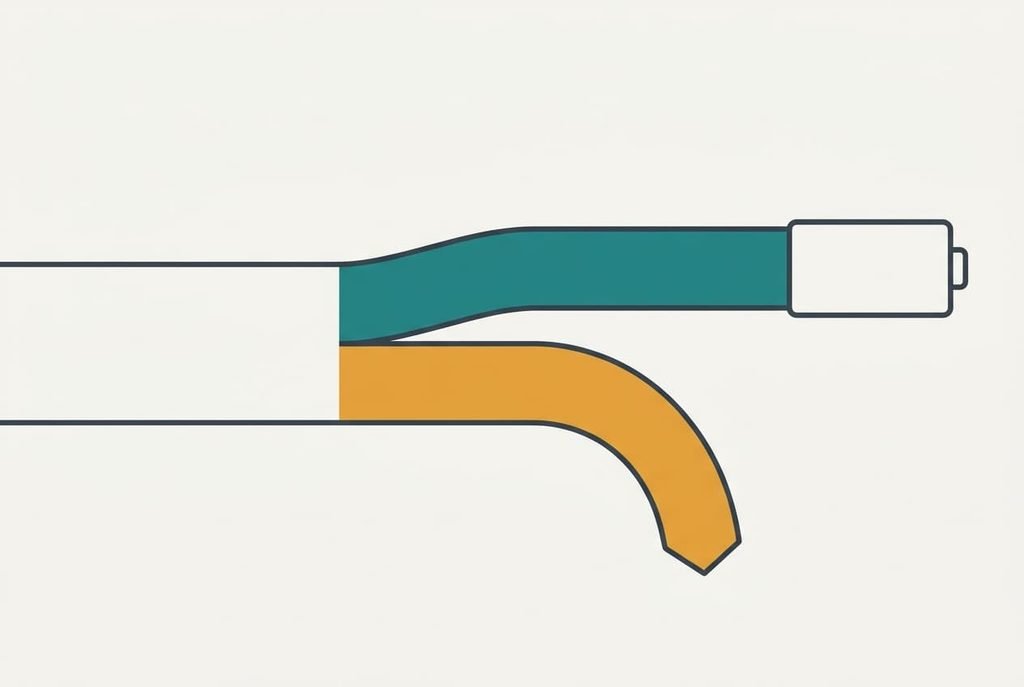
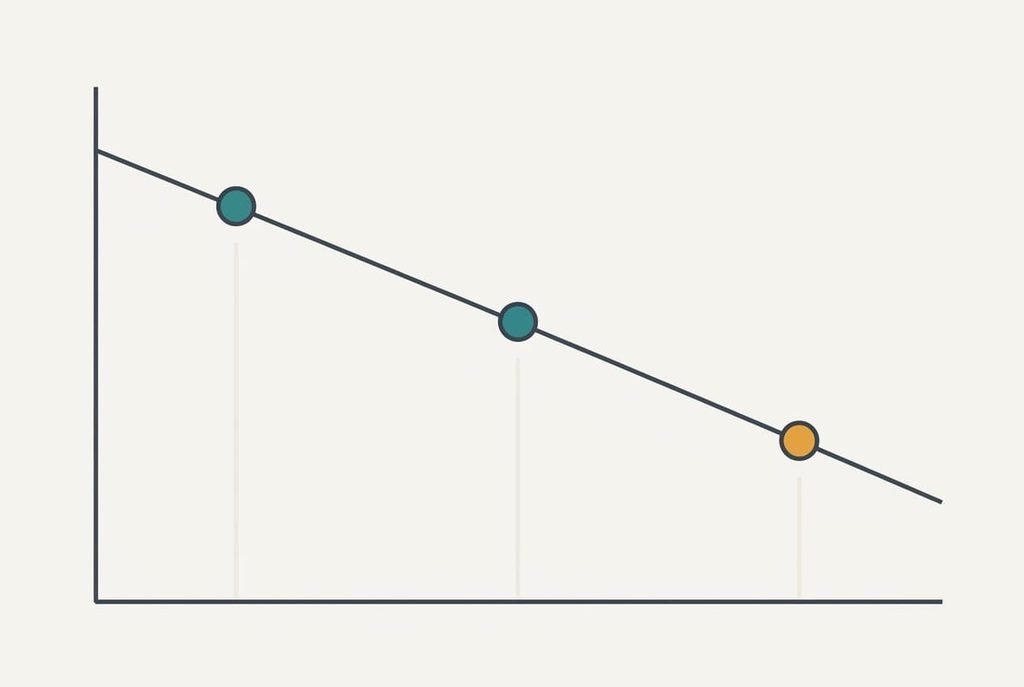
Third, the changing field pushes current through the receive coil. A rectifier turns it into steady direct current, and a charging chip sets the voltage the battery wants. Assume the pad’s efficiency is 97.5 − 7.5 × gap in millimetres, a straight line that holds over this range only. At 5 mm that gives 60%, so 6 W arrives. Fourth, the phone tells the pad how much to send by briefly changing how much it loads its coil. The pad reads that as a ripple in its own current. Last, if the pad finds no phone or a metal object, it stops. A full charge takes 16.2 ÷ 6 = 2.7 hours. The other 4 W turns to warmth in the coils and the case. The pad draws 10 W the whole time, so the wall supplies 10 × 2.7 = 27 Wh to store 16.2 Wh. Each extra millimetre of gap costs 7.5 points in this model, so the 2 mm case costs 15 points against a bare phone.
Without the case the gap is 3 mm and 75% arrives, which is 7.5 W and a 2.2-hour charge.
One analogy for the coupling, and where it breaks
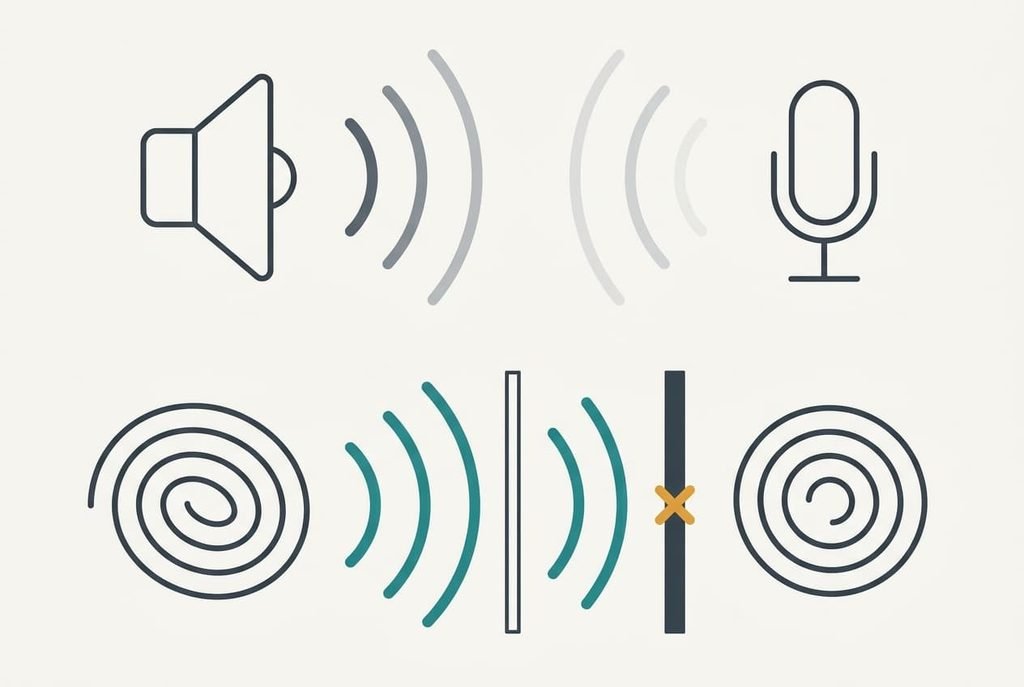
Think of the pad as a loudspeaker playing a steady tone and the phone’s coil as a microphone tuned to that note. Move the microphone away and the signal fades. Turn it away and it hears less. The comparison explains why distance and alignment matter, and why a thin case does little.
It breaks in two places. Sound needs air, but a magnetic field needs nothing and passes through plastic with ease. And a microphone listens without changing the speaker, whereas the phone’s coil draws energy out of the field, which the pad can sense. That second difference is what lets the pad adjust its output, and it has no counterpart in the loudspeaker picture.
What the coupling cannot do at a distance
The part people misunderstand is the case itself. The distance between the coils costs you power, and the material of the case has almost no say. A 2 mm silicone case costs you 15 points of efficiency. A 6 mm rugged one costs 45. At a 9 mm gap the formula leaves 30%, so 3 W arrives and the charge takes 5.4 hours. Past about 13 mm the straight line says nothing arrives, though real pads cut out sooner.
Alignment behaves alike. A phone sitting 10 mm off centre loses roughly 20 points. That turns the 6 W of our example into 4 W and stretches the charge to 4.1 hours. Metal is the one material that does matter. A metal plate or ring between the coils soaks up the field, and the pad either loses power or stops. Anything meant to send power through a phone case with a metal sheet inside is a poor bet.
Alignment is the cheaper limit to fix.
What people get wrong about wireless charging
Three beliefs come up again and again. The first is that any case blocks the charge. It formed because the cases that did cause trouble were thick or contained metal, and people generalised from those. Still, a thin case of plastic or silicone costs a few points and nothing more.
The second is that wireless charging needs no wires. That word suggests it, yet the pad still plugs into the wall, and the cable is simply moved to the desk. The third is that a bigger pad charges faster. It looks logical because bigger usually means more power. The phone’s receiving coil and chip set the ceiling. A large pad gives a larger landing area and the same flow. All three beliefs survive for one reason. The symptom is real, and a pad that stops is easy to blame on the last thing you changed.
How to decide whether to keep the case on
Add the case thickness to the phone’s own 3 mm back. Keep the total at 5 mm or less and leave the case on, since the 2.7-hour charge adds only about 30 minutes. Choose the rule by what you value. A desk pad that charges all day can tolerate up to 8 mm, while a short charge before leaving rewards a thin case. Between 5 and 8 mm, keep it on for overnight charging and take it off when you’re in a hurry. Above 8 mm, or with metal inside, switch to a thinner case. Otherwise use the cable.
Whether a charger can send power through a phone case at 8 mm is something you can settle before buying. Measure the case with a ruler at its thickest point over the coil, because it’s the figure that decides everything. A bare phone on the pad is the control test. If it charges bare and fails with the case on, the gap is the culprit. A charger that stops and starts is telling you the gap or the alignment is wrong. Look there before you blame the pad.
Questions readers keep asking
Can a phone case stop wireless charging completely?
Yes. A thick case or one with metal inside can do it. Once a case pushes the gap past about 13 mm, little power arrives. A metal plate or ring can make the pad shut off. Ordinary plastic or silicone cases of 1 to 3 mm only slow the charge a little.
Is a special case needed for wireless charging?
No, a thin plain case works fine. Look at thickness and metal, not at labels on the packaging. A case under 3 mm with no metal inside keeps the gap near 6 mm and stretches the charge by less than half.
How does wireless charging compare with a cable?
A cable delivers nearly all its power, and wireless loses a quarter or more as warmth. In our example the pad wastes 4 W of 10. A cable also doesn’t care about alignment. Wireless wins on convenience, since you drop the phone on the pad without plugging anything in.