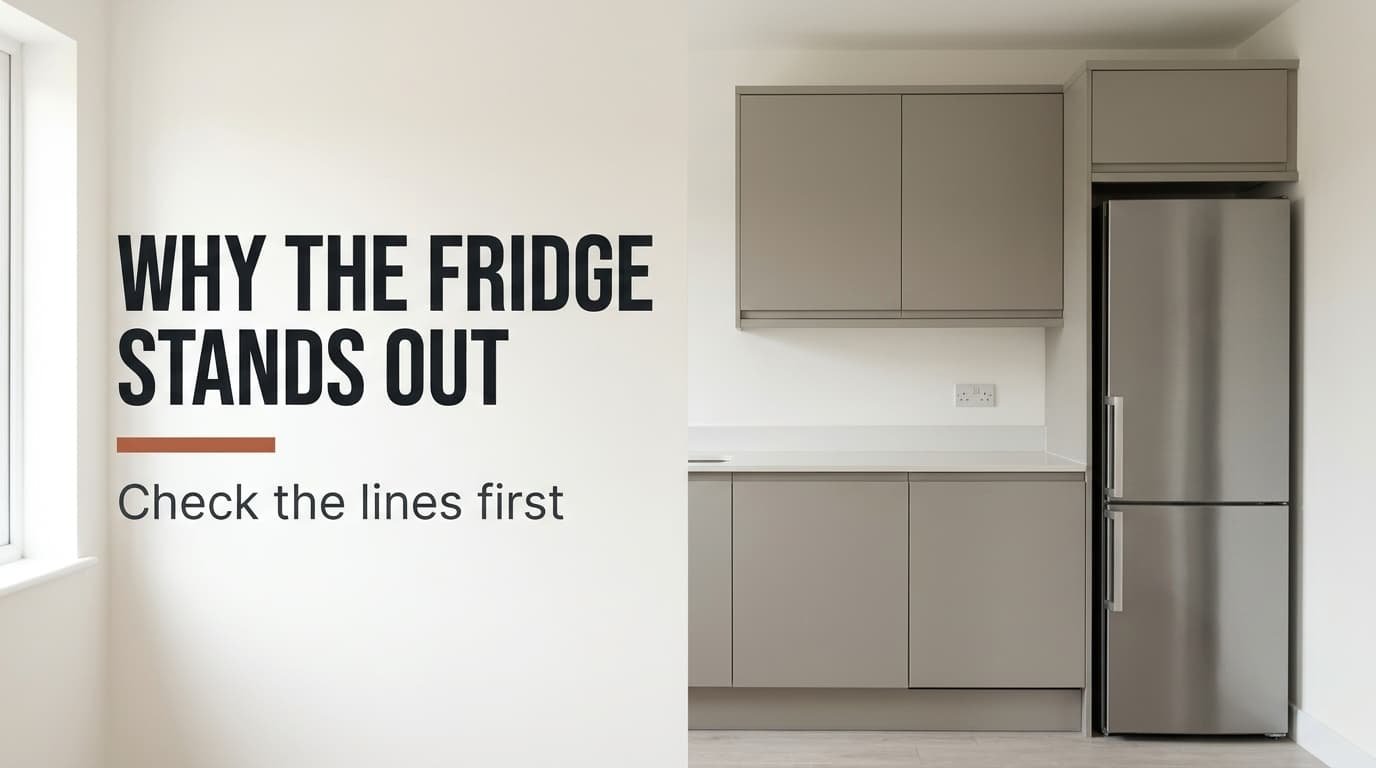
An object draws attention when it breaks a line the eye was already following. Does your fridge freezer stand out in a kitchen that is otherwise quiet? The tape measure says it fits, yet the room keeps pointing at it. Below you’ll find where that pull comes from, a quick look at the kitchen, and three faults you can measure, each with remedies that start at no cost and finish with something bought. Our sample is a single run 360 cm long and 250 cm high. The appliance is 60 cm wide and 185 cm tall, with a depth of 65 cm.
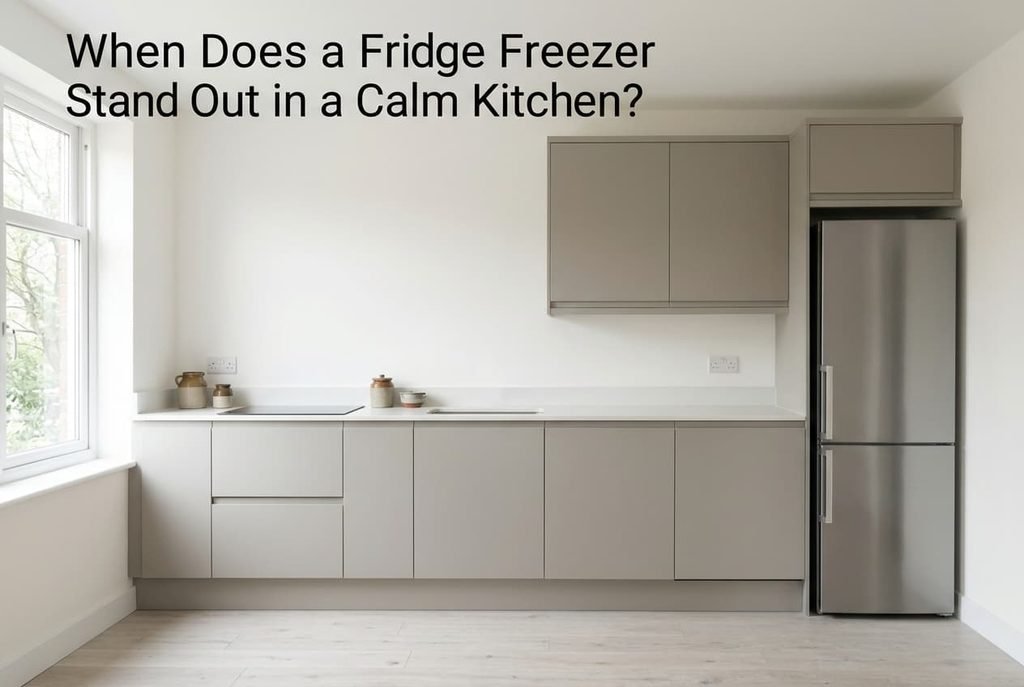
When Does a Fridge Freezer Stand Out in a Calm Kitchen?
Attention follows edges and gaps in a pattern, and size barely enters into it. In a calm kitchen the eye travels along three lines: the worktop at 90 cm, the lowest edge of the cupboards above at 140 cm and their tops at 210 cm. Everything on that wall sits on one of the lines, which keeps the room quiet.
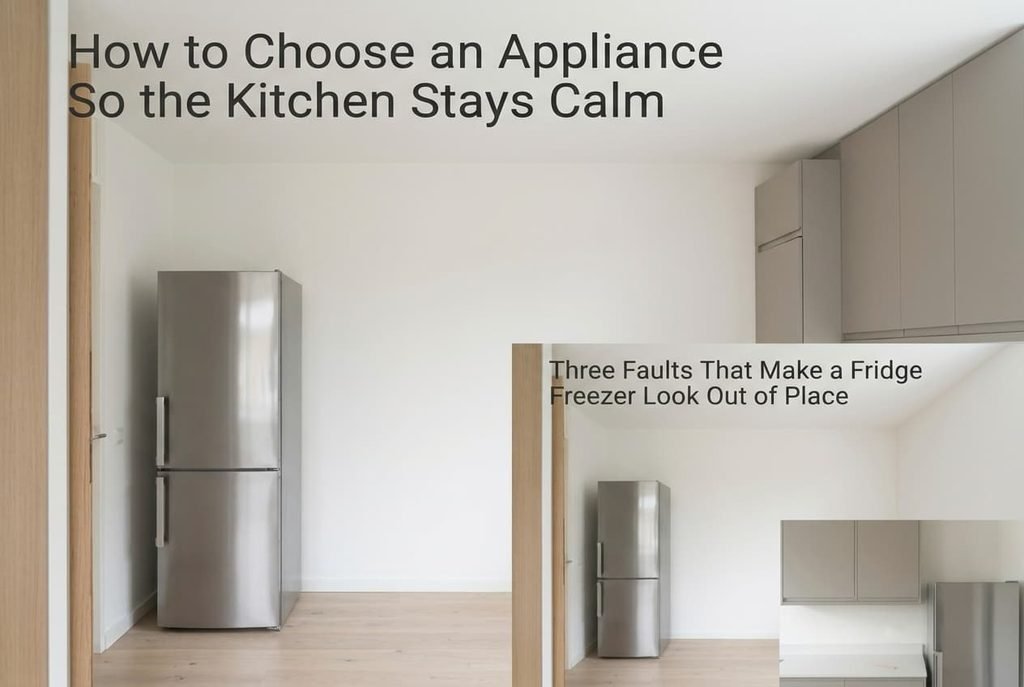
A tall appliance ignores every line. The sample fridge freezer rises 95 cm above the worktop, then stops 25 cm below the top of the wall units, so its outline ends at a height that nothing else uses. It stands 5 cm proud of the 60 cm base units, which adds a shadow along its edge. Its steel door covers 11,100 cm², roughly one fifth of what you can see of the fronts, in a finish that no other front shares.
Owners usually blame the colour. The trouble is mostly the lines the appliance breaks, and the colour is the smaller part, which is why a white one in the same place fares little better.
Swap it without mending those lines, and the room keeps pointing at it.
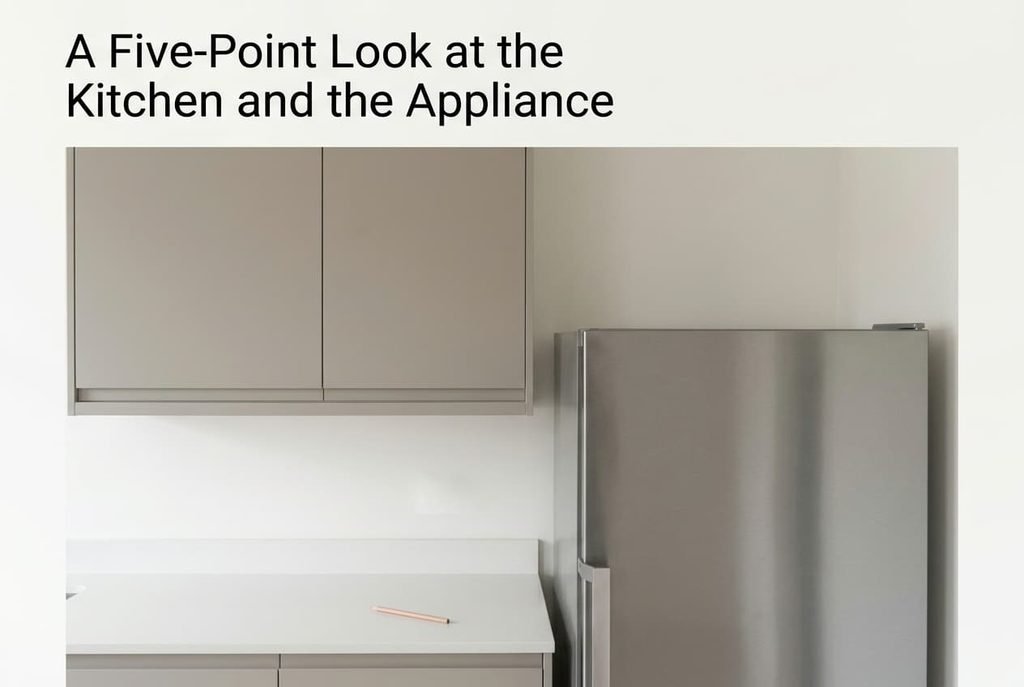
A Five-Point Look at the Kitchen and the Appliance
Go to the doorway holding a pencil and a folding rule. An appliance that draws the eye typically misses on two or three of these points, and seldom on every one.
1. Glance from the door. Ask yourself whether the fridge freezer stand out before anything else. If it does, the other four checks show the reasons.
2. Measure the top. Hold the rule from the top of the appliance up to the highest edge of the wall units. The sample gap is 25 cm, and anything beyond about 10 cm leaves a visible stump.
3. Measure the depth. Lay the rule along the base units and over the front of the appliance. Ours sits 5 cm proud, and that isn’t a small step.
4. Read the reflections. Stand where you usually stand and name what the door shows. A window frame or a lamp means the steel is working as a mirror.
5. Count the clutter. Magnets and letters, plus a pile of boxes on top, add detail to a surface that’s already busy, whereas a clear one reads calmer.
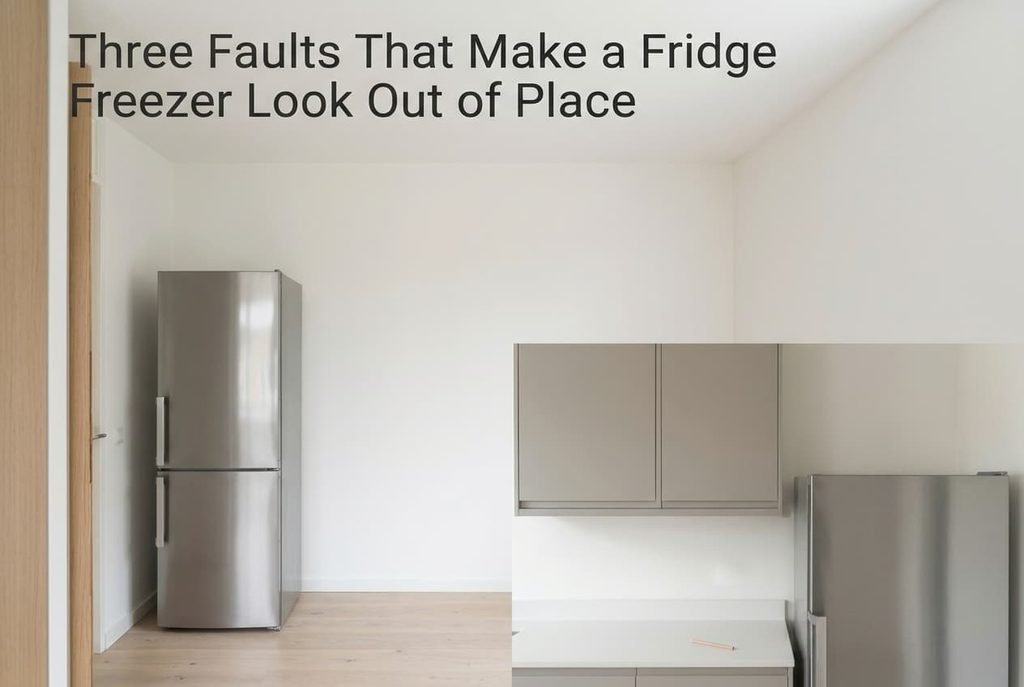
Three Faults That Make a Fridge Freezer Look Out of Place
Does the fridge freezer stand out because of its height, or does its finish do it? Position can be the cause as well, and one of the three usually leads.
The top stops short of the wall units. The 25 cm gap and the 5 cm step give an outline that matches nothing around it. Begin by clearing the top, since boxes up there turn a plain gap into a ragged skyline and double the number of edges the eye must follow. Next, carry the top line across with a plank or shelf fixed at 210 cm above the appliance, so one edge runs from cupboard to cupboard. Finally, a bridging cupboard 25 cm tall closes the gap for good. It’s a lot cheaper than buying another appliance, and it hides the dust that gathers on top. Check that any plank sits level, since a tilt of 1 cm across the 60 cm width is easy to spot.
The steel door reflects the whole room. Its 11,100 cm² of mirror-like surface repeats window light and every movement in the kitchen, and the eye treats movement as news. Start free: move whatever the door mirrors, such as a bright kettle or a lamp, so the door shows something quiet. Then hang a matt cloth or a pale picture on the opposite wall, giving the steel a calm image to carry. For a bought step, choose a matt adhesive film in the colour of the fronts, which covers 1.11 m² and turns the door into one more front. It goes on best over a dry door that has been cleaned, and it peels off when you move out.
The appliance sits right at the entrance. It sits barely 40 cm from the frame of the door, inside the first metre of every entry, and nothing else competes for that first glance. Free of charge, you can give the eye a second stop by hanging a pale picture at 150 cm on the far wall. Test it from the doorway, because the entrance view is the one that matters. Rearranging helps next: move a plant or a bowl to the worktop nearest the window, so the brightest spot lies deeper in the room. A small wall lamp over the table is the purchase to make, and it pulls the light further in.
How to Choose an Appliance So the Kitchen Stays Calm
Prevention costs less than repair. Before ordering, ask whether the new fridge freezer stand out on your actual wall. Stick tape where the wall cupboards finish, then compare that with the height printed on the label. Then measure the depth of your base units, because a model a few centimetres deeper will sit proud again.
Ask to see the finish in daylight and look at what it reflects. A matt or fingerprint-resistant surface throws back far less than polished steel, so the door stays quieter.
Plan the top before delivery day, so that a bridging cupboard or a plank can go up the same afternoon.
Leave the ventilation gap the maker specifies behind the unit. Check that the plan still shows a continuous line at 210 cm.
The Fix That Isn’t Worth Doing
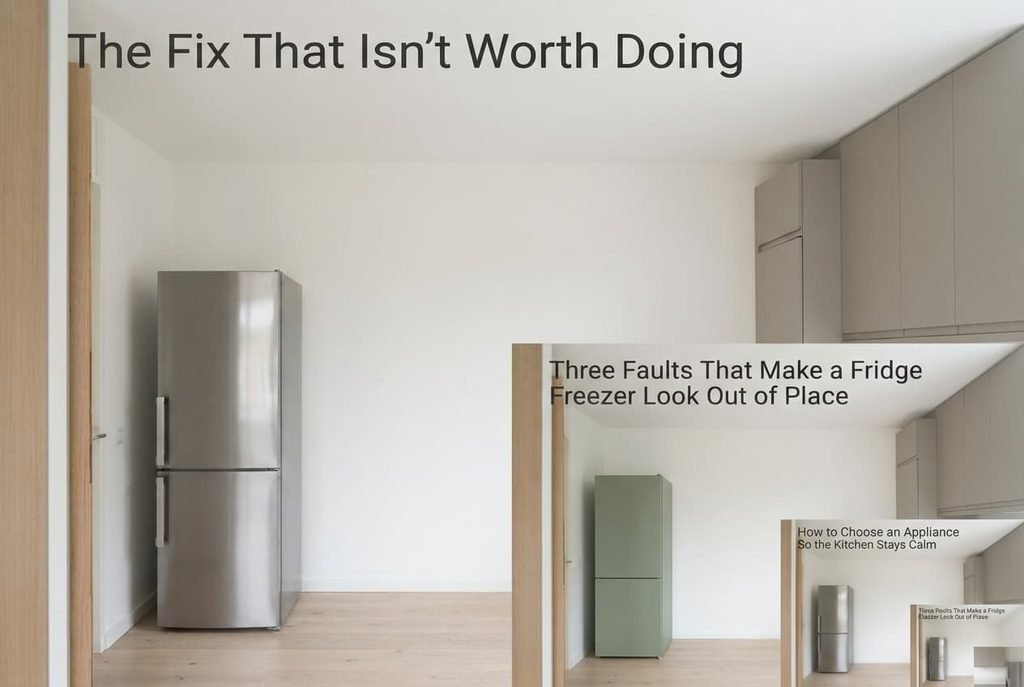
Many owners reach for swapping the appliance for a new one in the colour of the fronts, and it’s the weakest choice here. A coloured fridge freezer still stands 5 cm proud, still stops 25 cm short and still sits at the entrance. Of the options here it is also the dearest, and the old unit was never the problem. Painting a steel door fares no better, because the paint wears at the handle first and leaves a patchy surface.
A larger change, such as moving the whole run, is rarely needed either. The lines around the appliance carry most of the effect.
Moving the appliance to the opposite end of the run is the other tempting repair. It needs a free 60 cm slot and a socket, and it only swaps one entrance view for another.
Fix the lines and keep the appliance. Measure the top gap first. Then check the depth and the reflections, and change whichever fails worst. Most kitchens need a single change from the no-cost list, sometimes two. Spend on a film or a bridging cupboard before you consider a new appliance, because those change the setting around it for far less. Then look from the doorway again and ask once more. Does the fridge freezer still pull the eye, or has the kitchen settled around it? A calm answer after one or two small moves is a result worth keeping, and it won’t need a second thought. Small corrections to the lines usually settle it.
Questions Readers Keep Asking
What usually makes the appliance stand out?
The broken lines come first. A top that stops 25 cm short of the wall units and a front that sits 5 cm proud leave an outline nothing else shares. A mirror-like door adds movement, and a spot by the entrance makes it the first thing anyone sees.
What is the quickest fix?
Clear the top, then move whatever the door reflects. Both take a few minutes and cost nothing. They remove the ragged skyline and the busiest reflections, which is often enough to calm the view. If it still pulls the eye, add a plank at 210 cm.
Can it be fixed without renovation?
Yes. A plank and a matt film involve no building at all, and nor does a picture, so most rented kitchens allow them. A bridging cupboard is the largest step you’d take. Replacing the appliance rarely helps, so treat it as the last resort.