A television on a unit takes floor, and a television on the wall takes none, which is the whole appeal when a lounge decides to mount the TV on the wall. We also count what the move costs, because a trend is worth following only when its price is clear. The trade is less simple than it looks, because the unit also holds things that must live somewhere else afterwards. We work with a Dutch lounge of 360 × 480 cm, a 55-inch screen (140 cm along the diagonal) and a unit of 140 × 40 × 50 cm. Every figure is invented; swap each for a measurement from your own room.
Where the Urge to Mount the TV on the Wall Began
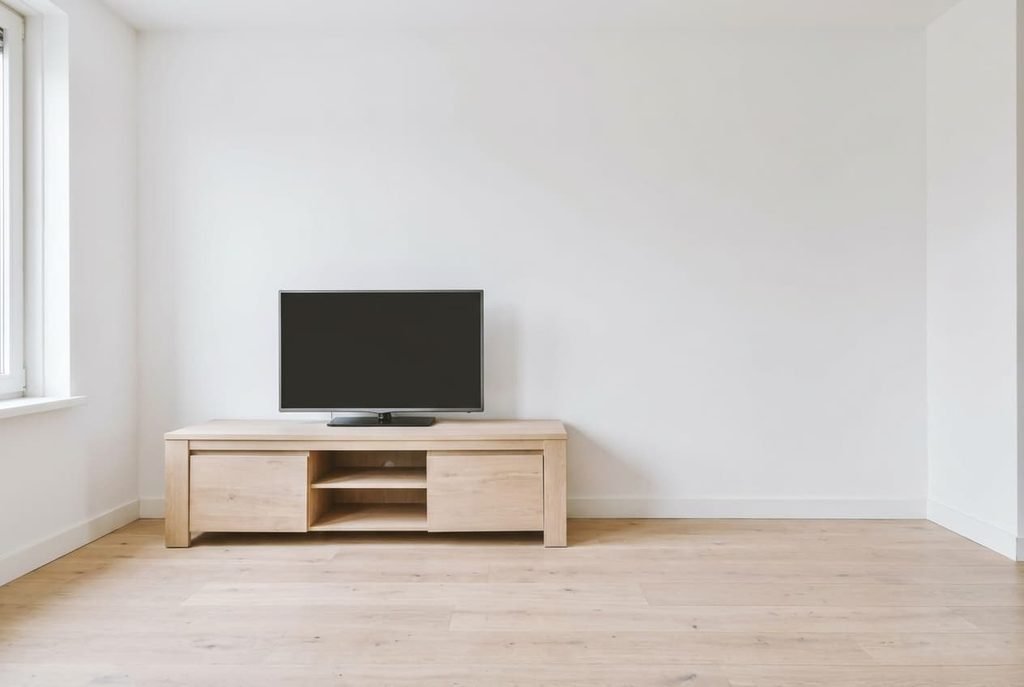
The unit existed for a reason. A tube set of 28 inches typically stood about 45 cm deep and weighed over 30 kg, which called for a floor-standing base. The base then grew shelves for the player and the games, with a hole at the back for cables. Furniture followed the machine.
Then the machine changed shape. A flat panel of 55 inches is only a few centimetres thick and weighs about 15 kg in our sample. The unit stayed because nobody asked what it was for, and its depth of 40 cm now carried a screen only 6 cm deep, plus storage that could live in any cupboard.
Dutch lounges notice the difference quickly. Many are narrow, and a 40 cm unit eats a ninth of a 360 cm width. Once a household decides to mount the TV on the wall, the first surprise is a stretch of wall that runs clear to the skirting board. It also reveals the dust that gathered in the 5 cm gap behind the unit. The next sections count what that clearance is worth.
What a TV on the Wall Changes in Square Metres
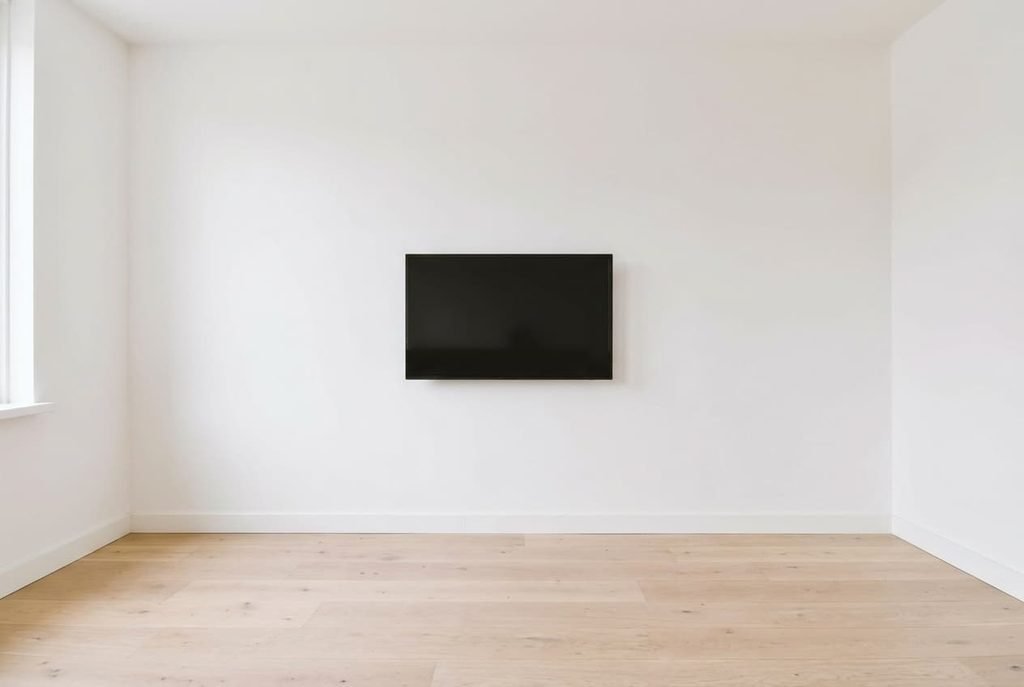
Floor comes first. The unit covers 140 × 40 = 5,600 cm², which is 0.56 m². Our lounge measures 17.28 m², and mounting frees 3.2% of it. Along the TV wall, the free depth rises from 440 cm to 480 cm.
Mounting frees 0.56 m² of floor, or 3.2% of this room, and it shifts the screen in three further ways. The picture centre sat 89 cm up on the unit: 50 cm for the unit, 5 cm for the feet and 34 cm for half the screen’s 68.5 cm height. A bracket can place it at a seated eye height of 105 cm, which is 16 cm higher. Seen from a sofa 4.2 m away, that tilts the gaze by only about 2 degrees.
The screen face also moves back from 35 cm to 6 cm off the wall. Your seat stays put. The viewing distance therefore grows from 4.20 m to 4.49 m, or 7%. A 55-inch screen then sits at 3.2 diagonals from your eyes rather than 3.0.
Storage is the price. The unit’s inside measures 136 × 36 × 46 cm, which makes roughly 225 L. A mounted screen provides none of it. The wall gains four holes for the bracket and a cable route as well. Behind the unit the cables ran 30 cm up to the socket, whereas up at the screen they need 75 cm of vertical run, which a channel 15 mm wide can hide.

Which Lounges Gain Most From the Wall
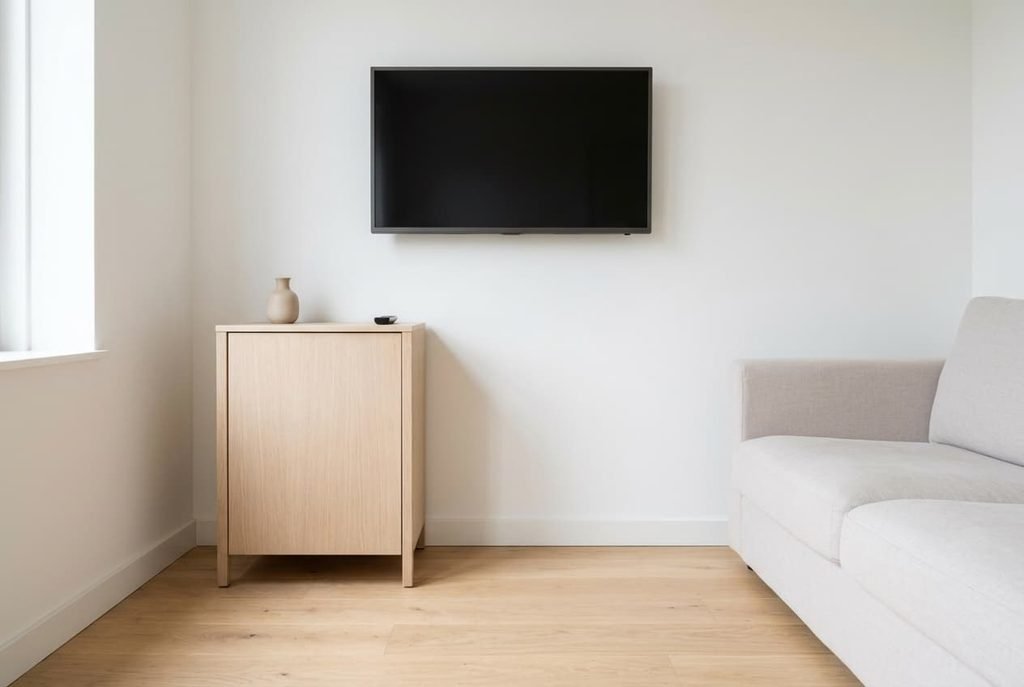
Storage decides first. Suppose the unit’s contents fit on a slim cabinet of 80 × 30 cm, which covers 2,400 cm² or 0.24 m². The net gain then falls from 0.56 to 0.32 m², which is 1.9% of the room. Mounting still helps, though it delivers a little over half of the headline figure.
The wall decides second. Masonry takes a bracket directly into plugs. A partition of plasterboard on a frame needs the fixings to reach the timber or metal studs behind it. Weight matters here. Screen and bracket together come to roughly 18 kg in our sample, and the wall’s rating comes from its maker. Ask before you drill.
The socket decides third. A socket behind the unit sits at 30 cm, while a screen at 105 cm wants one nearby or a channel 75 cm long.
Moving the socket is an electrician’s job, while a channel is a weekend of DIY.
Lounges where the TV wall doubles as a walkway gain most, because the freed 40 cm lengthens the clear route. Owners gain too, and so do households with a robot cleaner that likes bare floor. Renters gain least, as four holes under a deposit clause can outweigh the floor you win. Anyone whose unit stores a lot should expect a bill in new furniture.
Is It Worth It for Your Lounge
Mounting earns a conditional yes. Mount the TV on the wall if the wall takes plugs or sits on a sound frame and your lease allows four holes. The unit’s contents should also fit in 0.24 m² of cabinet or less. Then the room gains 0.32 m² and a screen at the right height.
Keep the unit when it holds more than a slim cabinet could, because a mounted screen moves that storage and never removes it. A renter with a strict deposit clause should keep it as well. The unit also suits a household that swaps equipment often, since a shelf makes swaps easy while a bracket makes cables awkward.
A seated eye height of 105 cm fits most sofas, and standing viewers gain only a little from going higher.
The Extreme Version Nobody Needs
The extreme version hangs the screen high, centred at 150 cm so that the room reads like a bar. From a sofa with eyes at 105 cm, that centre sits 45 cm over the line of sight. At 4.2 m the gaze tilts up by about 6 degrees for every evening of viewing.
A screen centred at 150 cm offers nothing that 105 cm doesn’t, and it adds a long run of cable. It also leaves a bare patch of wall beneath the picture, which people tend to fill with a shelf they hadn’t planned. A gaze held upwards through a long film can feel more tiring than a level one. Hang the screen where the viewers’ eyes are, not where photographs put it.
Nobody needs the high version in a small lounge. A level screen costs less and reads more calmly. It also leaves the lower wall free for a cabinet or a plant. The only rooms that justify height are those where the sofa sits far back or where people stand to watch.
A Tape Test Before You Drill
Cut paper to the screen’s size, 122 × 69 cm, and stick it up so that its middle sits at 105 cm, which runs it from about 70 to 140 cm. Live with it for seven days of ordinary evenings. Check the view from every seat. Stand where the cleaner will pass, and note whether a visitor’s eye goes to the paper first.
Walk the cable route with a tape measure as well. A channel of 75 cm covers the vertical run, and a socket within reach saves a visit from an electrician. Mark the stud or the plug positions in pencil.
If the paper looks right and the wall is sound, mount the TV on the wall. If it looks wrong, keep the unit. Record the sofa’s eye height and the kind of wall, then put the freed floor in square metres beside a doorway photograph, for a decision built on records. The paper costs nothing and a hole costs a deposit, which settles the order of the tests.
Questions Readers Keep Asking
Should I replace a TV unit that already works?
Only when the freed floor matters more than the storage inside it. In our sample, mounting frees 0.56 m² but moves 225 L of contents. Stick up a paper outline of the screen first. If the unit holds little, mounting helps. If it holds plenty, keep it.
Who suits a mounted TV best?
Owners with a masonry wall suit it best, along with households whose unit holds little and whose sofa sits several metres away. Renters with a strict deposit clause suit it least, since four holes cost more than the floor gains. Those with a lot of equipment should expect to buy extra storage.
How long will the idea last?
Nobody can say, and the geometry ignores fashion. A screen 6 cm deep will always need less floor than a screen on a 40 cm unit. If you tire of it, take the bracket down. Four holes need filling, and the unit can always return.