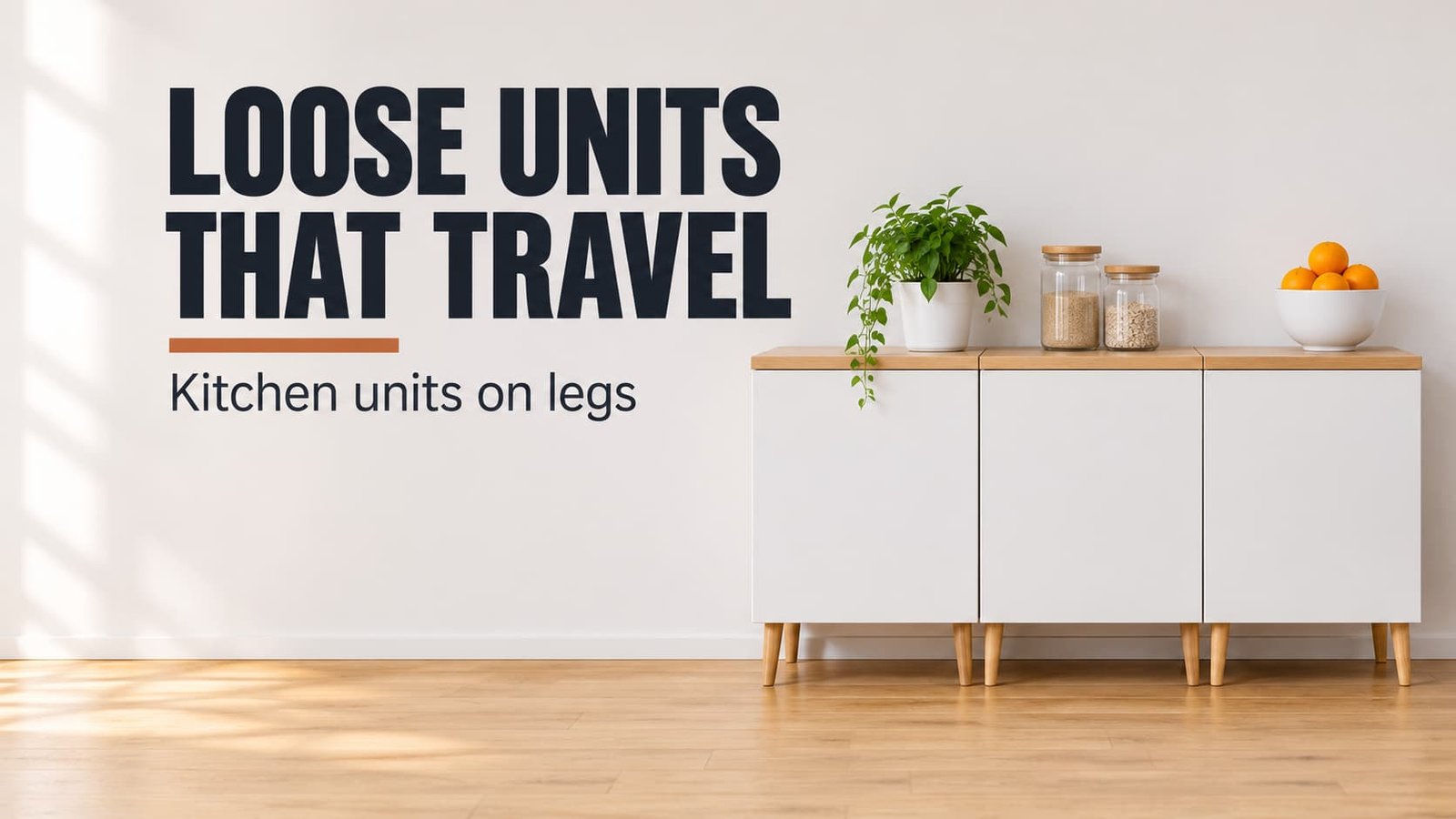
A kitchen unit on legs stands 15 cm clear of the floor, while a fitted cupboard sits on a plinth and screws to the wall. That gap, and the freedom behind it, explains why more renters now pick freestanding kitchen units over fitted ones. This piece sets out what actually changes and who gains, then shows where the idea stops working, with no market figures. The example is a rental kitchen with a wall measuring 300 cm. Its units are 60 cm in depth, and the building has a stair 70 cm wide. Every number belongs to that one invented room. Measure the room you actually have before deciding anything.
Where the Idea of Freestanding Kitchen Units Began
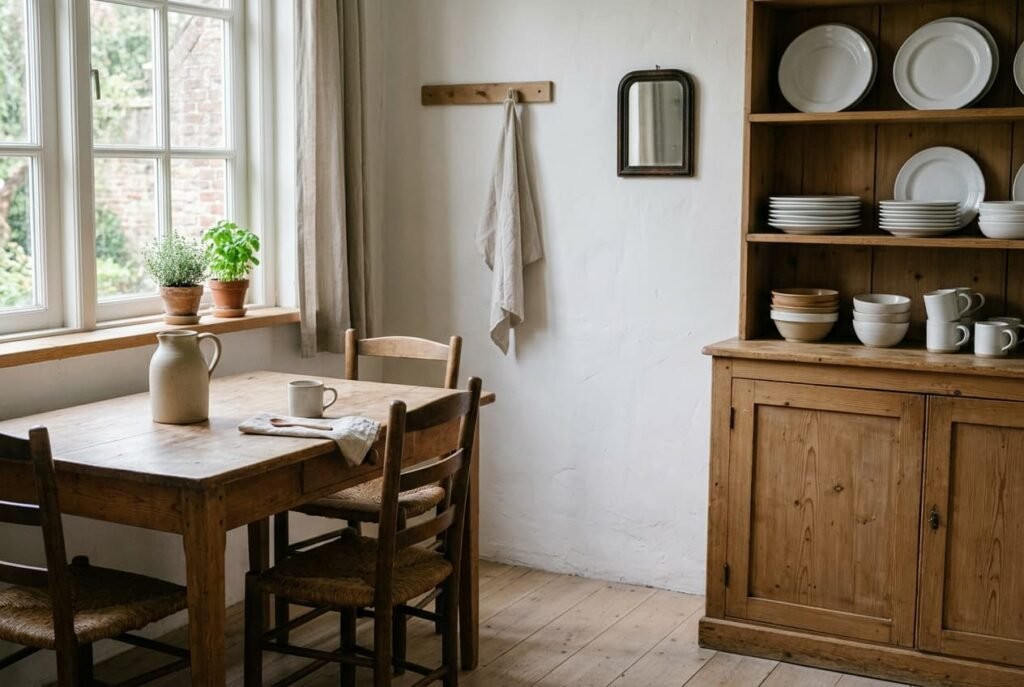
Kitchens were once assembled from loose furniture. A dresser held the plates and a table took the preparation, while the stove stood wherever the chimney allowed. Nothing was fixed, because the household owned each piece and carried it away on leaving.
The fitted kitchen won for good reasons. One continuous top has no seams for water to creep into, and cupboards screwed to the wall stay put. A single installer can level the whole run in a morning.
Renting changed the sums, and it explains why some tenants pick freestanding kitchen units from the start. A tenant who moves every few years leaves a fitted kitchen behind with everything spent on it. Some rentals come with a fitted kitchen that tenants may not alter without consent, while others come with just a sink and connections. In the second case the choice is between building a fitted run that stays and buying units that leave with you.
Units on legs travel well. Two people can lift each carcass, take it down a stair and set it up again using a level and a screwdriver.
The next section puts both choices into centimetres.
What Changes When Renters Pick Freestanding Kitchen Units
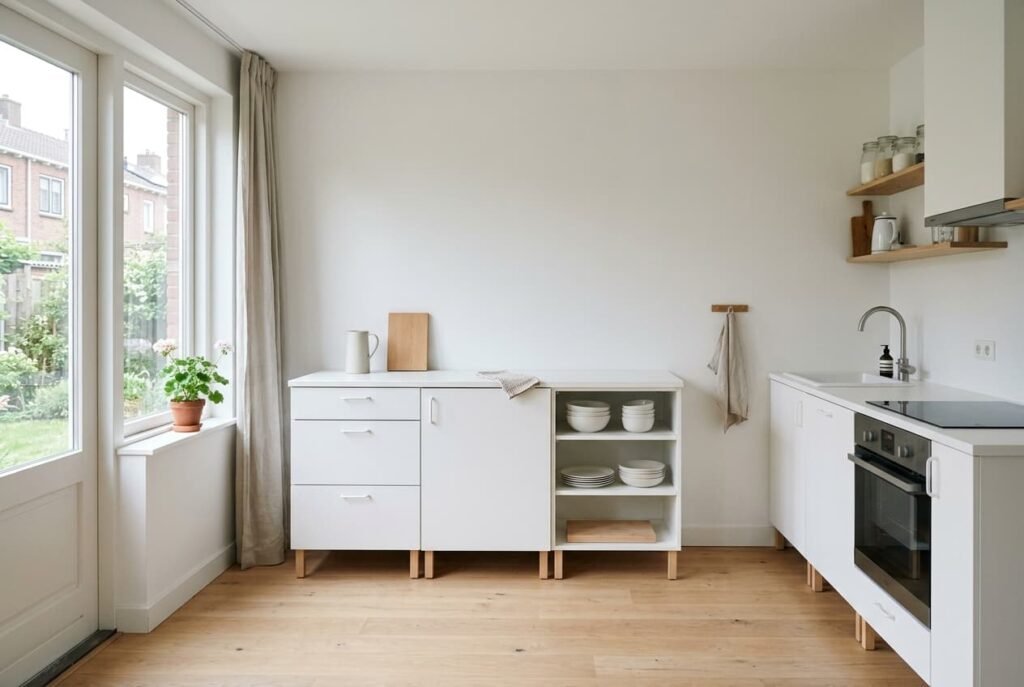
Take the wall of 300 cm and compare a fitted run of five cabinets with five loose units. Each loose unit covers a square of 60 cm and stands 90 cm high counting 15 cm legs and a 4 cm top. Assume each weighs about 40 kg with its top.
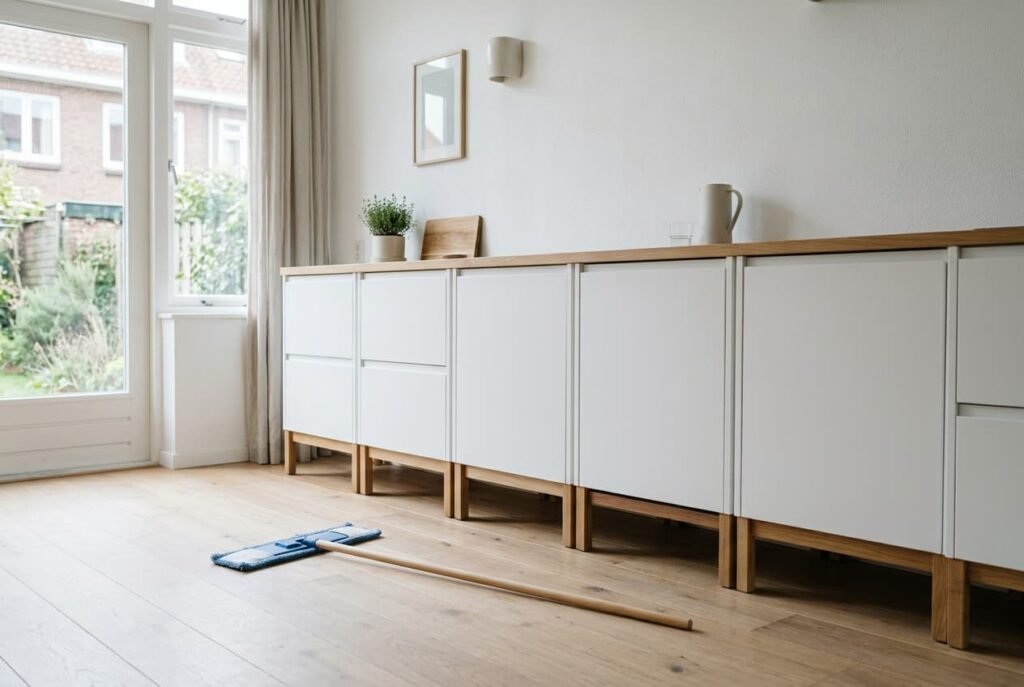
Floor comes first. A fitted plinth is 10 cm high and hides 300 × 55 = 16,500 cm², or 1.65 m², of floor that no hand can reach. Loose units on 15 cm legs leave that floor open to a flat mop whose head is 8 cm high. The hidden area falls from 1.65 m² to none.
Fixings change next. The fitted run takes about 10 wall screws and one top, and it stays when you go. A loose set takes none and leaves with you. The cost of that freedom is four seams of 60 cm, which add 240 cm of joint line to clean and seal. A fitted top has no seams at all.
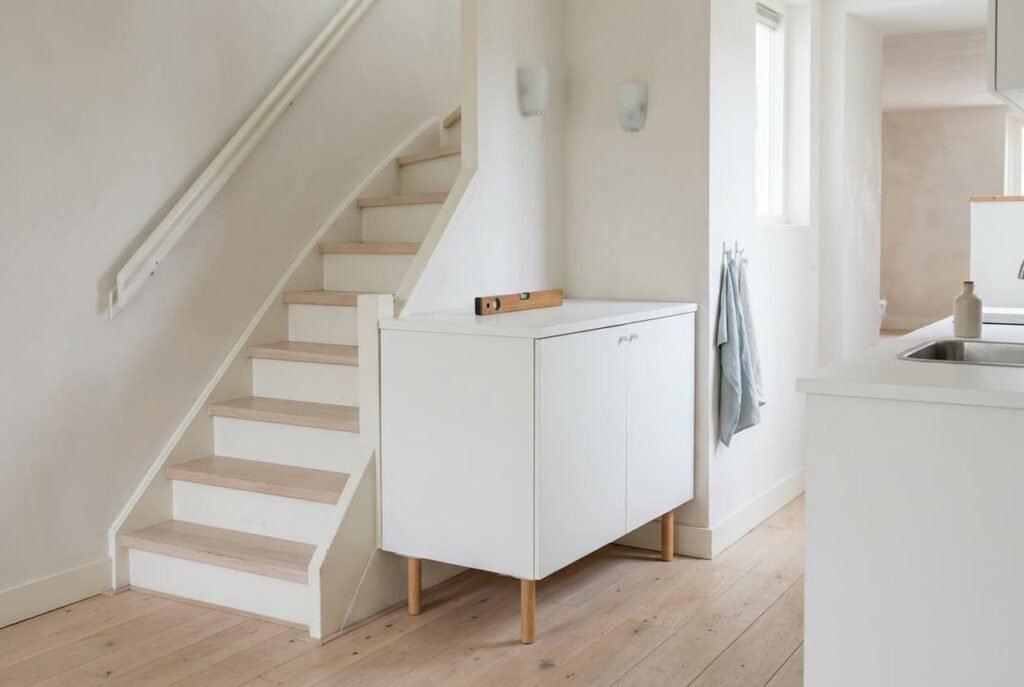
Movement is the third change. A unit 60 cm wide slides up a stair 70 cm wide with 5 cm of play on both sides. Two people carry 20 kg each. The legs also adjust. A floor sloping 2 cm across 300 cm is absorbed by the feet, whereas a fitted run needs packing strips behind it. In short, the fitted run offers a clean top and a fixed life, while the loose set offers open floor and a portable one.
Which Households Gain Most From Loose Units
Gains concentrate where moves are frequent and the floor is uneven. A tenant who expects to pick freestanding kitchen units again in the next flat keeps the same five carcasses for years. The benefit grows with each move. Assume a move every three years: in nine years that’s three moves and 600 kg carried in total. Two people can manage it in an afternoon of about three hours, including levelling.
Tenants of bare rooms gain too. A room let with only a sink and connections offers nothing to build against, and loose units fill it without a fitter. Households in old buildings gain from the adjustable legs, because a floor that slopes 2 cm over three metres is common in older flats.
Losers cook with water. A tap that splashes the edge of a loose top finds the seam. A seam of 60 cm admits spills that a continuous top would shed. Households that scrub the worktop daily feel it first.
Tall units ask for care. A tall loose cupboard of 200 cm needs a bracket to the wall, and many landlords refuse any hole at all. Without a bracket the gain disappears, because the unit can’t be held upright.
Moves bring the gain, and water brings the loss.
Do Loose Units Earn Their Place in a Rented Kitchen?
Each unit’s job sets the verdict. Where the work is storage or preparation, a loose unit is a reasonable swap. Anyone who’d pick freestanding kitchen units for those zones loses little. You keep the open floor and the freedom to leave, and you lose only a continuous top.
Where water or heat reaches the unit, the balance tips. A sink on a loose unit and a hob on a loose unit both ask more of their connections than a fitted run does. Judge each unit by whether water or heat reaches it, and not by how easily it moves, since ease of moving is the same in every unit.
Most rented kitchens earn a cautious yes. Let the dry zones stand free. Keep the sink and the hob fixed in place wherever the lease allows it.
The Extreme Version Nobody Needs
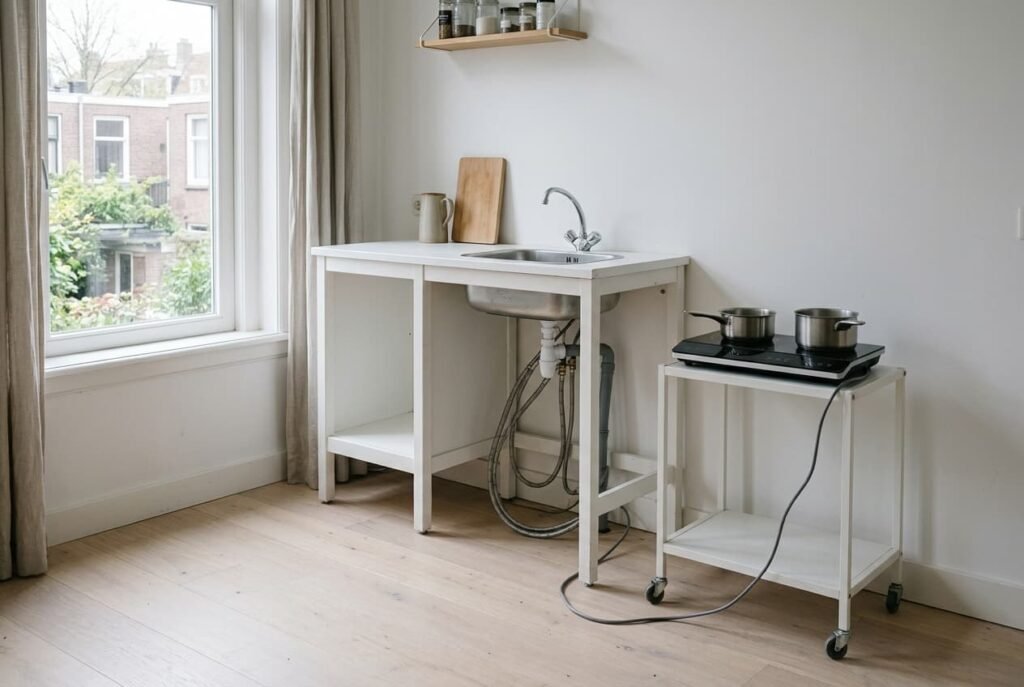
In the extreme version every element is loose. The sink unit stands on legs with hoses that hang free to the wall tap. The hob sits on a trolley with a cable trailing across the floor. Gaps of 5 cm separate the units, which leaves each one free to be shoved aside at will.
Both set-ups ask hoses and cables to absorb every knock the unit takes. A drawer pulled hard shifts a unit by 2 cm, and a hose clamped at both ends feels each shift. A joint that begins to weep at 1 mL per minute loses 1.4 litres a day behind the unit, where nobody looks. In a week that’s about 10 litres.
The 5 cm gaps add crumbs and pests to the problem. Nobody needs the whole kitchen on wheels. A sink with a fixed water connection and a hob on a solid base cost you little in freedom. Both can stay behind with the flat.
A Cardboard Test Before You Commit
Cut five squares of cardboard, each 60 cm along every side, and lay them along the wall with gaps of 2 mm. Put the first one in the corner where your present run begins. Mark each of the four seams with tape. Snap the layout from the threshold and hold it against a snap of your present run. The comparison makes the gain and loss plain. Walk the room and open the doors, then stand where the sink would be. If the cardboard leaves less than 90 cm to the opposite side, choose shallower units, because a cook needs that width to turn.
Look at the seams as well. If a seam sits where you chop or pour, move the unit along. The test takes ten minutes and needs only card. The real test of freestanding units is how the seams behave after a month. Run a cloth along each one once a week and decide then, noting the result for your next move.
Questions Readers Keep Asking
Should I replace a working fitted kitchen with loose units?
Usually not. A working fitted run is free to retain, and taking it out needs your landlord’s consent. Loose units make sense when the room has no kitchen or when you plan to move soon. They also suit a fitted run that is failing and cannot be repaired.
Who suits loose units best?
Tenants who expect to move within a few years suit them, as do households in older buildings with uneven floors and anyone who cleans under the units. They suit people who cook mostly at the worktop and don’t splash. Families with a very wet sink area do better with a fixed run.
How long do loose units last?
There’s no single figure, since lifespan follows the carcass and how wet the floor gets. A unit that stands on a dry floor with level legs can stay sound for years. One on a wet floor swells at the base first. Wipe spills quickly and check the legs once a year.