Is giving up the bath for a larger shower worth it in a flat? For most people who wash standing up every day the answer is yes, while with a toddler in the home it is no. The benefit is genuine but narrow: you trade soaking for room to wash. This guide measures the swap in an invented Dutch bathroom, explains why people make it and shows where it goes wrong. It also names the extreme version that nobody should copy. All sizes below are samples; compare each with the figures of your own bathroom.
Why Giving Up the Bath for a Larger Shower Keeps Spreading
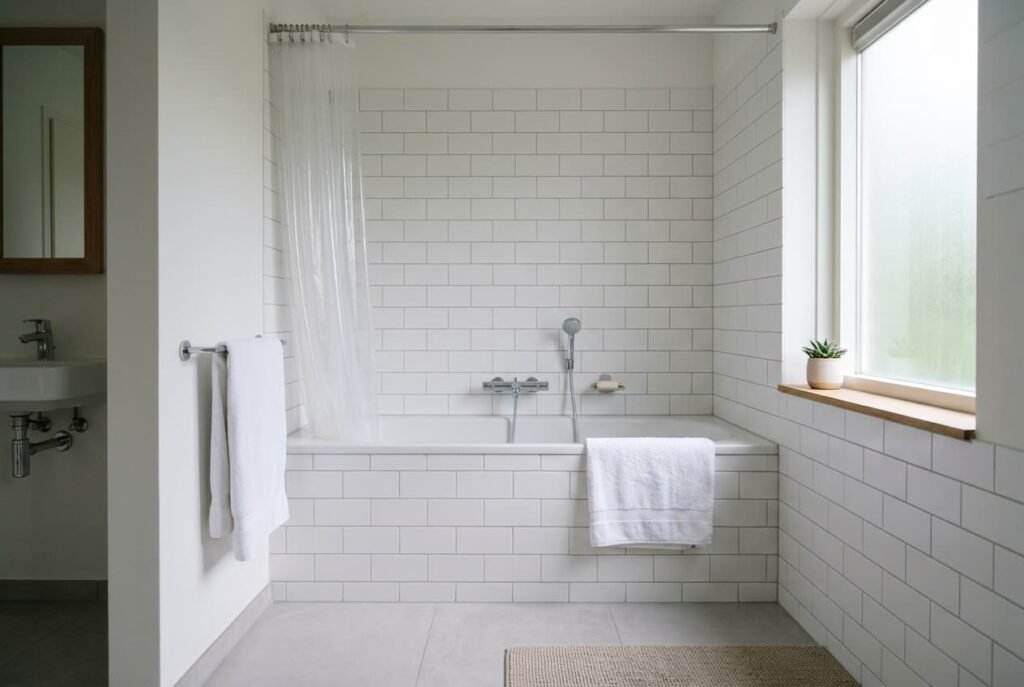
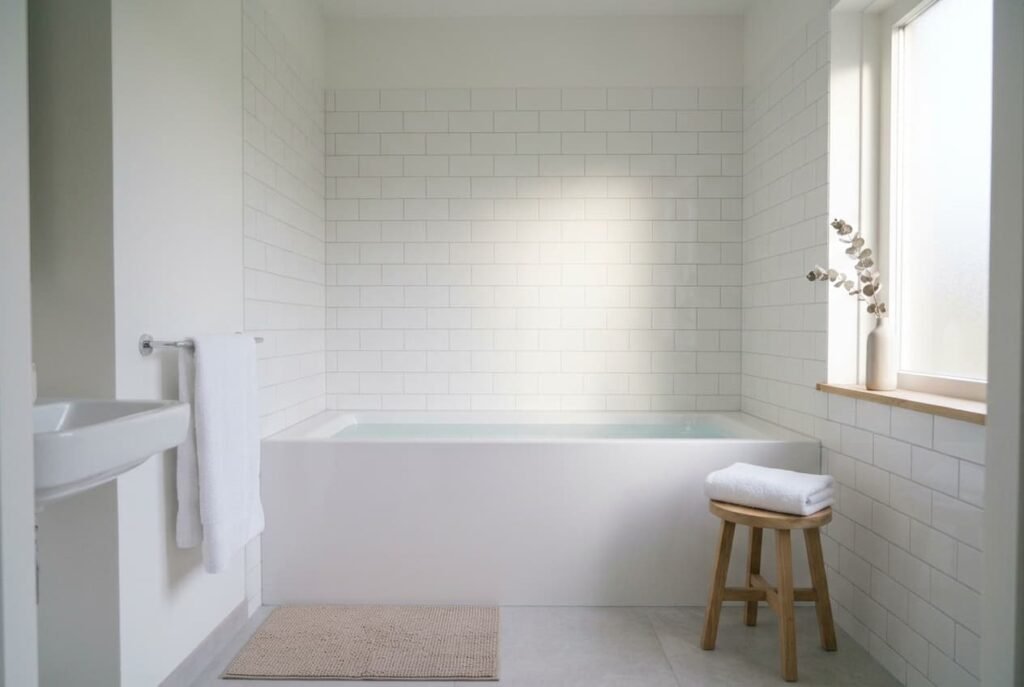
A bath is built for soaking, yet in a flat with one bathroom it mostly serves as a place to stand under a tap. It does that job badly. The flat part of the tub floor is narrow, about 55 cm across; the sloping sides push your shoulders against a curtain. The rest of the 170 cm length sits idle on an ordinary morning.
Showering has simply become the default way to wash, a habit that formed without anyone announcing it. Ask who in your household filled the bath last month. If the honest answer is nobody, the tub occupies a large share of the room for something that happens a few times a year.
That is the whole mechanism. A fixture that earns its footprint rarely is swapped for one that earns it daily, in the same corner. The room doesn’t grow. You use more of it, and more often. The tub’s long edge stops collecting dust and shampoo bottles.
Giving Up a Bath for a Larger Shower: What Changes in Numbers
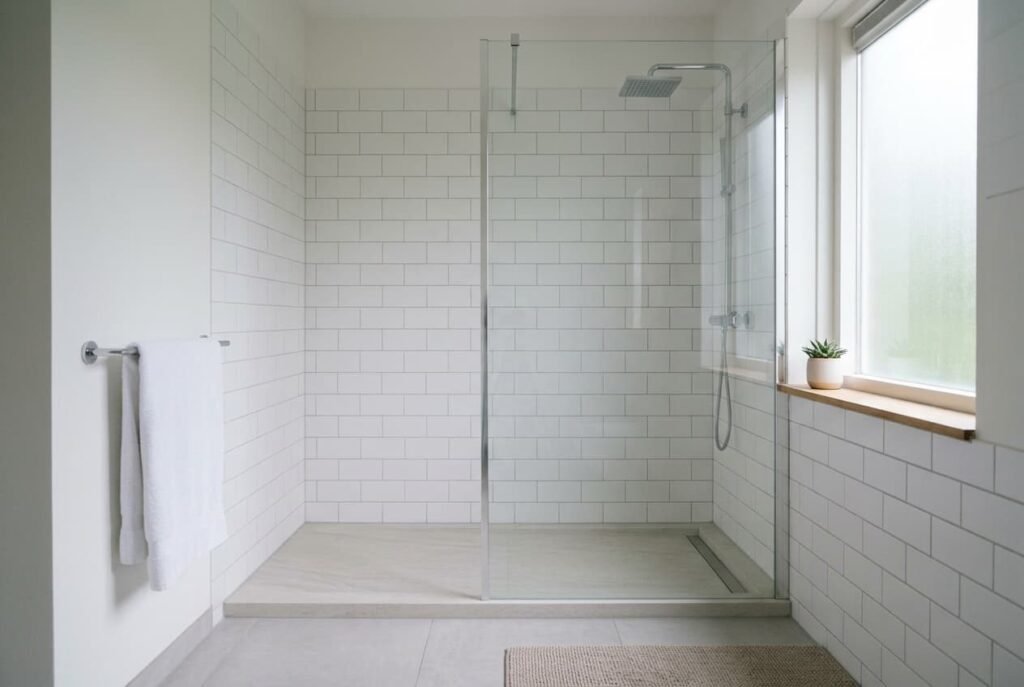
Giving up the bath for a larger shower changes four things you can measure. Take a bathroom 210 cm long and 170 cm wide, which is 3.57 m² or 35,700 cm². The bath fills the end wall at 170 × 70 cm, or 11,900 cm², which is 33% of the whole. A tray of 170 × 80 cm replaces it, taking 13,600 cm² or 38%. The swap therefore claims 1,700 cm² more of the room.
Standing room is where the change shows. Usable floor in the old tub measures about 55 × 100 cm, or 5,500 cm², while the new tray gives 13,600 cm², and the space for washing grows by a factor of 2.5. The step in drops too, from a rim at 55 cm to a lip of 2 cm.
Water use shifts as well. A bath filled to a normal level takes roughly 150 litres. A shower of 8 minutes at 8 litres a minute uses 64 litres, which is 43% of that. Both figures are samples. A long shower or a deep fill would change them.
Cleaning changes shape. The tub rim and the sealed joint along it make a long, awkward line to wipe, while a tray with one glass panel leaves a clear floor plus one plane of glass to dry. Along the wall, the bath has 170 + 70 + 70 = 310 cm of sealed joint against 170 + 80 = 250 cm for the tray, which is 60 cm less to inspect.
Why Households Make the Swap
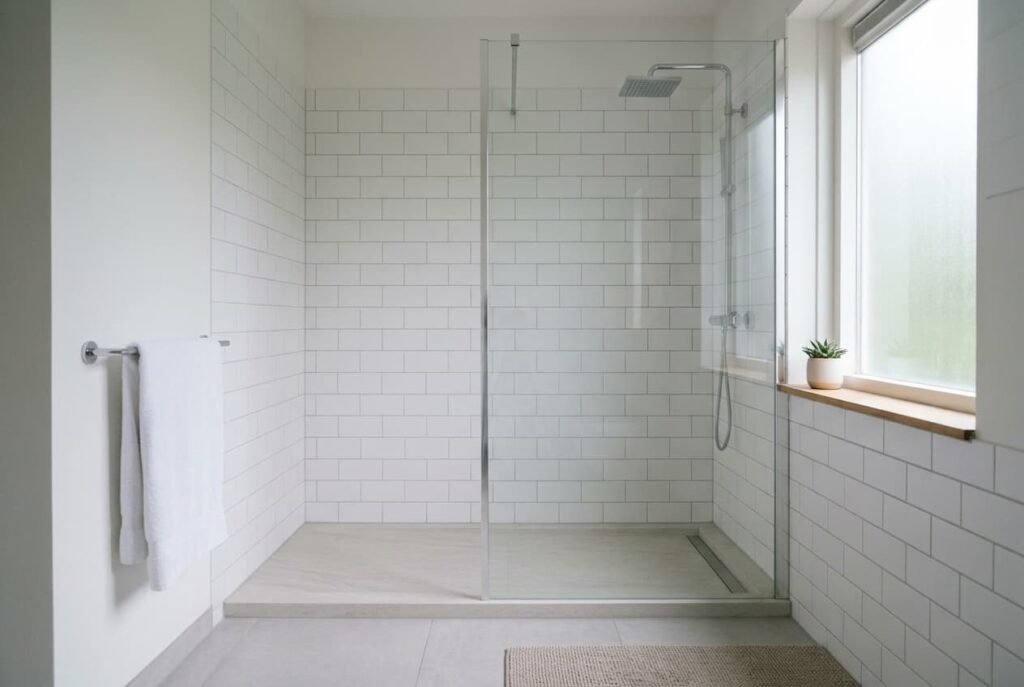
Four reasons recur, and each one concerns daily use rather than looks. The first is reach. In a tub you stoop to wash your legs and can’t turn freely under the stream. In a tray of 170 × 80 cm you can take a full step in any direction, and a second person can stand beside you to rinse a child’s hair without climbing over a rim.
The second is the step. Lifting a leg 55 cm is a small effort for a fit adult and a real obstacle for anyone with a stiff knee or an armful of towels. A 2 cm lip asks for almost nothing, and the same walk-in tray stays usable as the years pass.
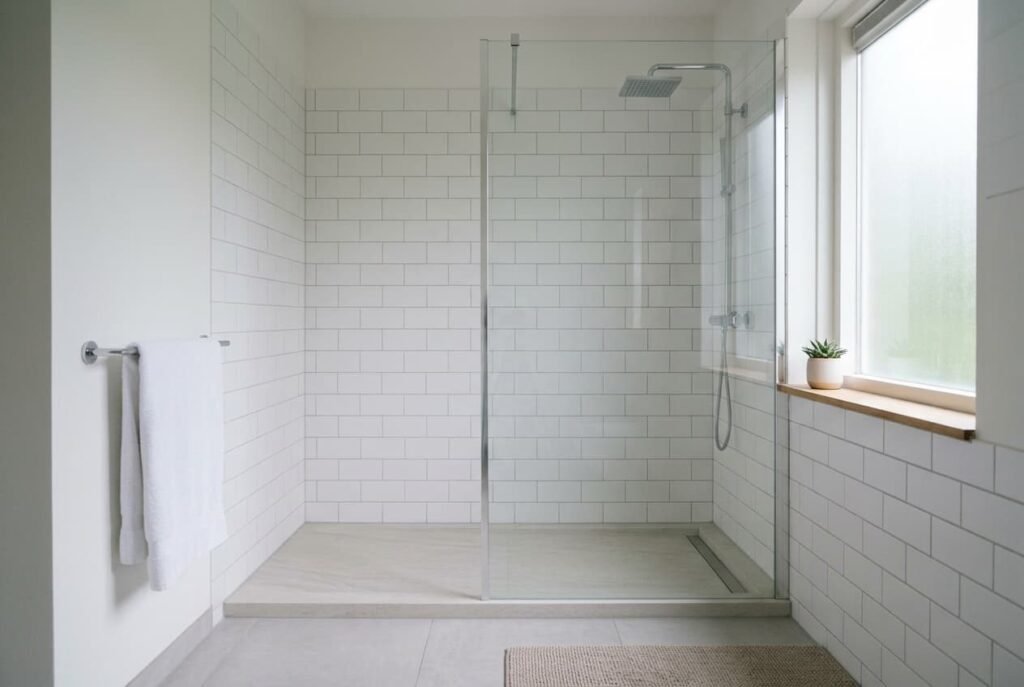
The third is light. A glass panel of 90 cm lets daylight and the view travel across the room, which a curtain would cut in two. A bathroom of 3.57 m² reads as larger when the eye can reach the far wall.
The fourth is drying. A curtain clings to wet skin and stays wet against the tub. Glass sheds the water, and an open tray dries faster because air moves across it.
Nothing here needs a larger bathroom, only the same room used for what you do there.
Where the Swap Goes Wrong
The swap fails first for households with a small child, which still need a tub for washing someone who can’t stand. A child who is carried into a tray has nowhere to sit, and kneeling on a wet tray floor with a wriggling toddler is harder than leaning over a bath. A flat with a second bathroom and tub avoids the problem. Only a single-bathroom flat should keep its bath.
Plumbing is the second snag. A tray needs a gentle fall towards the drain, and the old bath outlet often sits in the wrong place. Moving a drain by 60 cm means opening the floor. Ask an installer before you fix a date.
Giving up the bath for a larger shower also ends soaking for good. If you take a hot bath each week, the swap trades a pleasure for a convenience, and no tray can give it back.
The Extreme Version: a Wet Room With No Panel
One version of the idea removes both the tub and the glass. The whole floor slopes to a single drain, and the entire room becomes the shower. In our bathroom that turns the 13,600 cm² of the tray into the full 35,700 cm² of floor, or 2.6 times the area that must stay waterproof. Every wall and every socket then sits inside the splash zone, and a shower head throws water across the toilet and the basin unless each one is moved or sealed. The floor of 3.57 m² must also fall towards one outlet. The slope therefore has to be right across the entire room. It is an extreme version, and most flats should leave it alone. It needs a continuous waterproof layer that only a qualified installer can guarantee. A tenant or a shared building can rarely authorise it. A tray and one panel capture most of the gain for far less risk.
Who Should Do It and Who Should Keep the Tub
Giving up the bath for a larger shower suits a household that washes standing up and hasn’t filled the tub in a month. Do the swap if nobody has bathed in that tub for a month, and the room will thank you. Keep the bath if a small child needs it or if you soak weekly. Keep it too when the flat has no other tub, because then nothing else in the home can wash a child. The swap suits couples and single people who shower daily, and anyone who finds a high rim awkward.
Measure the tray position and the drain before anything else.
A room is worth what you use it for. A bath filled four times a year holds its 33% of the floor all year, while a daily shower holds 38% and earns it every morning. Count how often each fixture is used and set that beside its share of the floor. If the tub hasn’t been filled for a month, you already know what the numbers say.
Questions Readers Keep Asking
Should I swap if I only soak a few times a year?
Probably yes. At four soaks a year the tub is idle on more than 98% of days, since 4 ÷ 365 is about 1%. If those soaks matter to you, keep the bath. If they don’t, the daily gain in washing space outweighs four evenings.
Does a larger shower suit a household with a small child?
Not on its own. Anyone who can’t stand needs somewhere to sit and be washed, and a tub does that better than a tray. A flat with a second bathroom can lose one bath. A flat with a single bathroom should keep it until the child can stand and rinse unaided.
How long does a walk-in shower last?
The tray and the glass can last for many years. The sealant joints wear first. Check them every year and renew any joint that cracks or turns dark, because water behind a failed joint reaches the floor unseen. A sound joint takes minutes to renew and costs a floor if ignored.