Plenty of people renew a plan they’ve outgrown because they fear losing their digits. Staying with a mobile provider just to keep your number is a poor reason, since the number can travel without the plan. Priya lives in Bristol and pays for more allowance than she uses. Nine of her accounts text her login codes. Three alternatives follow, and each trades a different thing. One costs effort. Another costs money. The last costs a convenience. We assume a UK household whose handset takes any network’s SIM card. Nothing here names a company or a tariff, and no amounts appear.
What Survives When You Stop Staying Just to Keep Your Number
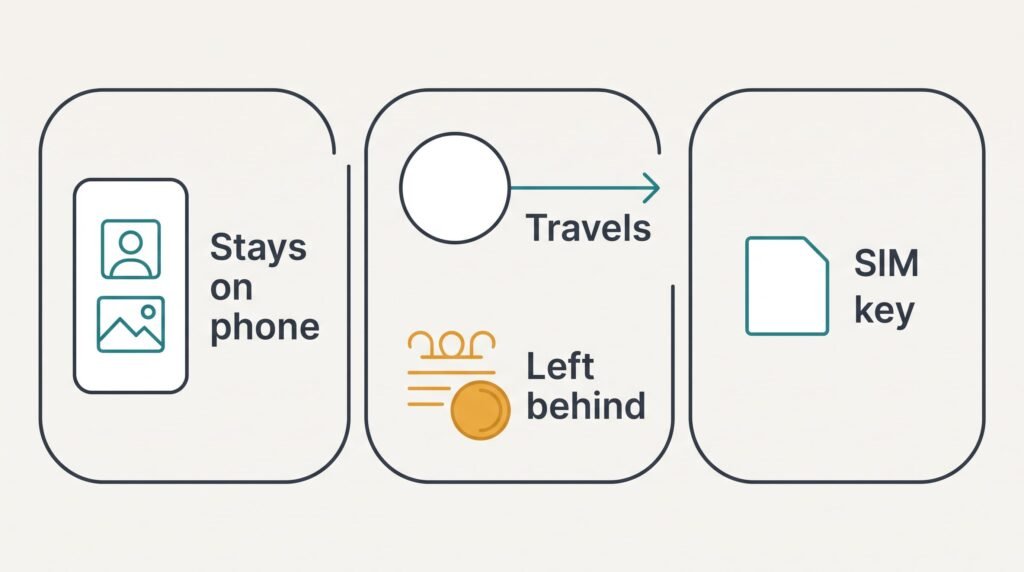
Three parties each keep something different. The phone holds your contacts and photos. Saved messages and apps live there too. The network holds the number itself along with the plan and any voicemail still waiting. A SIM card is only a key. It tells the network which handset should answer to the number, and a number can travel without the plan. Each holder also fails separately: a lost phone leaves the network’s records alone, and a closed plan leaves the phone’s contents alone.
Priya’s inventory shows the split. Her contacts and message history live on the handset, which means they stay put. The number moves whenever she requests it. Three voicemail recordings sit on the old network’s system and don’t follow the number. She plays each one aloud beside a second device before anything changes.
Credit left on a pay-as-you-go plan stays behind too. So does any mailbox the provider gave her, and both deserve a check before the final day.
Everything else on her list survived the move, which surprises people who assumed the digits and their history were one object.
Three Ways to Keep Your Number While Changing Plan
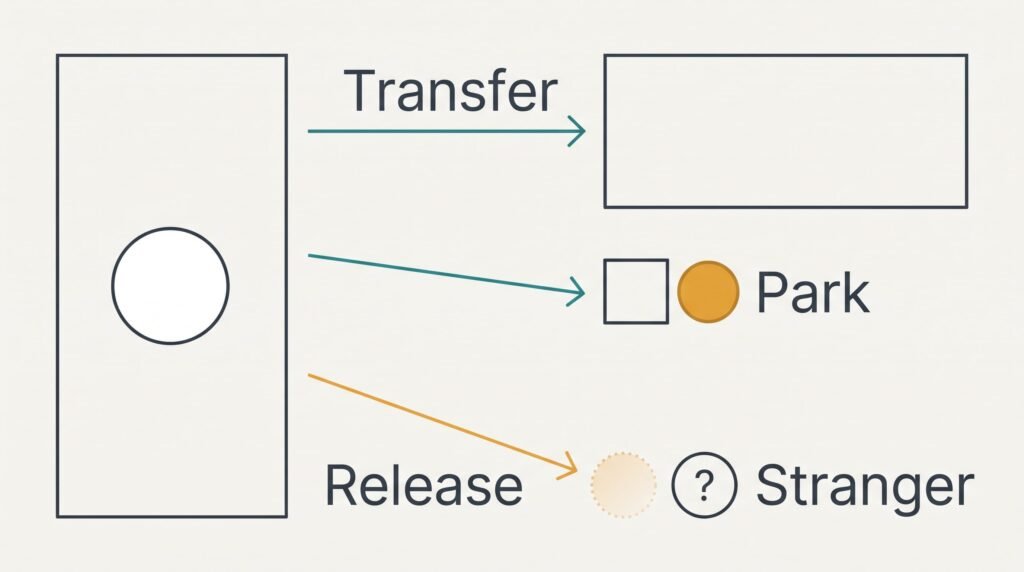
Each route moves the burden somewhere else. Weigh all three before you choose one.
1. Transfer the number using a switching code. The route suits anyone free to leave, though its burden is effort. You ask the old provider for a code, normally by text message. That code goes to the new provider with the number itself. Within about a working day the number wakes up on the new SIM, and the old plan closes on its own. Timing is where it breaks. The code lapses after a few weeks. Leaving mid-contract triggers an exit charge. One wrong digit in the code stalls everything for a day. Allow for a short gap with no service while the cards change over.
2. Park the number on a minimal plan with the old provider. Someone who can’t leave without paying is the natural user, and so is anyone who needs the line alive for a handful of accounts. The burden here is money. You pay a small standing amount for a line you barely touch, while a second SIM from the new provider handles daily calls. Neglect ruins this route. A number with no activity for months can be closed by its provider and recycled to somebody else. One text a month from it prevents that. The arrangement also keeps your options open if you aren’t sure the new plan will suit you, and anyone who would otherwise stay just to keep your number gets the same result for less.
3. Release the number altogether. A person with few text-code accounts and no habit of taking calls on the old line loses little. Convenience is what you give up. Friends and banks lose the old digits, and you must update each account by hand. After a cooling-off period the provider may hand the number to a stranger. That stranger then receives any code you forgot to redirect. A site left unchanged will leave you locked out. The route works best for a number that has been quiet for a long stretch, with few people using it.
What Month Three Looks Like
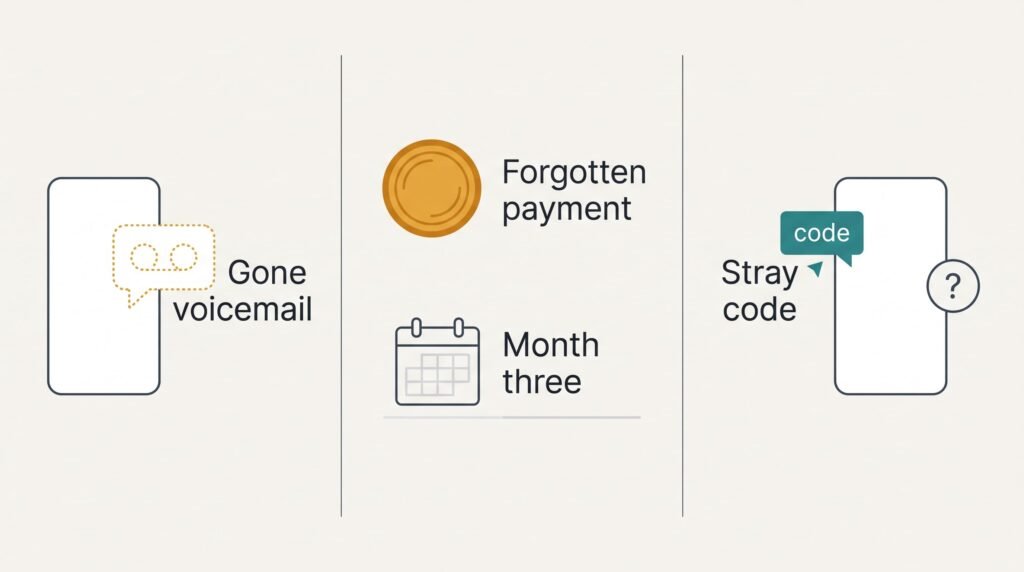
Three months in, the route you chose has presented its bill. After a transfer a friend mentions a message you never heard, because the old voicemail has gone. Parking leaves a standing payment that’s easy to forget, and a forgotten payment buys a line nobody uses. Releasing the number leaves a few accounts still texting the old digits, and a code arrives on a stranger’s phone.
Staying with a mobile provider just to keep your number hides every one of these costs, since nothing changes until the contract ends.
Priya counted her list. Nine accounts sent codes by text. Six could use an app on the phone instead. Three insisted on a number she could keep. That count made the decision for her, because only a transfer kept all three alive without a monthly fee.
Moving Over in the Right Order
Prepare before you touch the provider. Give yourself 20 minutes to list every account that sends a text code. Switch each to an app or an email method where the site offers one. Record the voicemail you want to keep. Only then ask for the switching code, a job of about five minutes.
Give the code and number to the new provider and wait for the new SIM, which tends to arrive within days. Keep the old card in the phone until the move date. On that day the old SIM goes quiet and the new one takes over, often within a few hours.
Fit the new card and restart the handset. Send yourself a test text from another phone. Then ring the number from a landline and listen for it. Leave the old plan open until the line passes both tests, since closing it early removes your fallback.
When Staying Put Wins
Staying wins when the exit charge exceeds the saving, and it can win honestly. Take an exit charge equal to four monthly fees. Say the new plan saves a quarter of one fee each month, with six months left. Six quarters give 1.5 fees saved against four paid to leave. Waiting costs you nothing, and you move when the contract ends.
Staying also wins if you use every bit of your current allowance and a leaner plan would shrink it. Some contracts bundle the handset, and leaving early means paying off the rest of its cost at once. Read what yours includes before you count only the monthly fee.
Someone who stays just to keep your number has at least chosen with the arithmetic in front of them. A diary date for the end of the contract makes that choice cheap to reverse.
Keep the Record
Write down every account that texts you a code, with the date you moved it to an app or an email address. That list is the file you carry to any future change. It names the accounts that hang on the number. You’ll learn that from the page instead of from a lockout.
Store it with your passwords and review it twice a year. Nine lines take a minute to update, and they’ll spare you an afternoon of recovery forms. Remove lines for accounts that no longer exist. Mark any account that insists on a text, because those decide whether the number could ever be released.
With that record in hand, the number stops being a trap. It becomes something you can move on your own timetable, and no provider can hold it hostage again. Next time a renewal letter arrives, you’ll know within a minute which accounts a change would touch and which route fits. That knowledge outweighs the number itself.
Questions and Answers
Does my data move with the number?
The number moves. The contacts and messages already on your phone stay with you. Voicemail kept on the provider’s system and remaining credit stay behind, and so does any mailbox the provider supplied. Play and record the voicemail first. Spend the credit, then copy whatever you need from the old mailbox.
How much does each route cost, in relative terms?
A transfer costs effort and, in some cases, an exit charge. Parking adds a small standing payment while the line stays open. Releasing costs nothing at the start. Lockouts and missed codes charge you later instead. Compare all three against the months left on your contract before you decide.
Is it worth the disruption?
For most people near the end of a contract with a handful of text-code accounts, yes, because the work takes one evening and the saving repeats every month. If the exit charge outweighs that saving, or you need the old allowance, wait until the contract ends and move then.