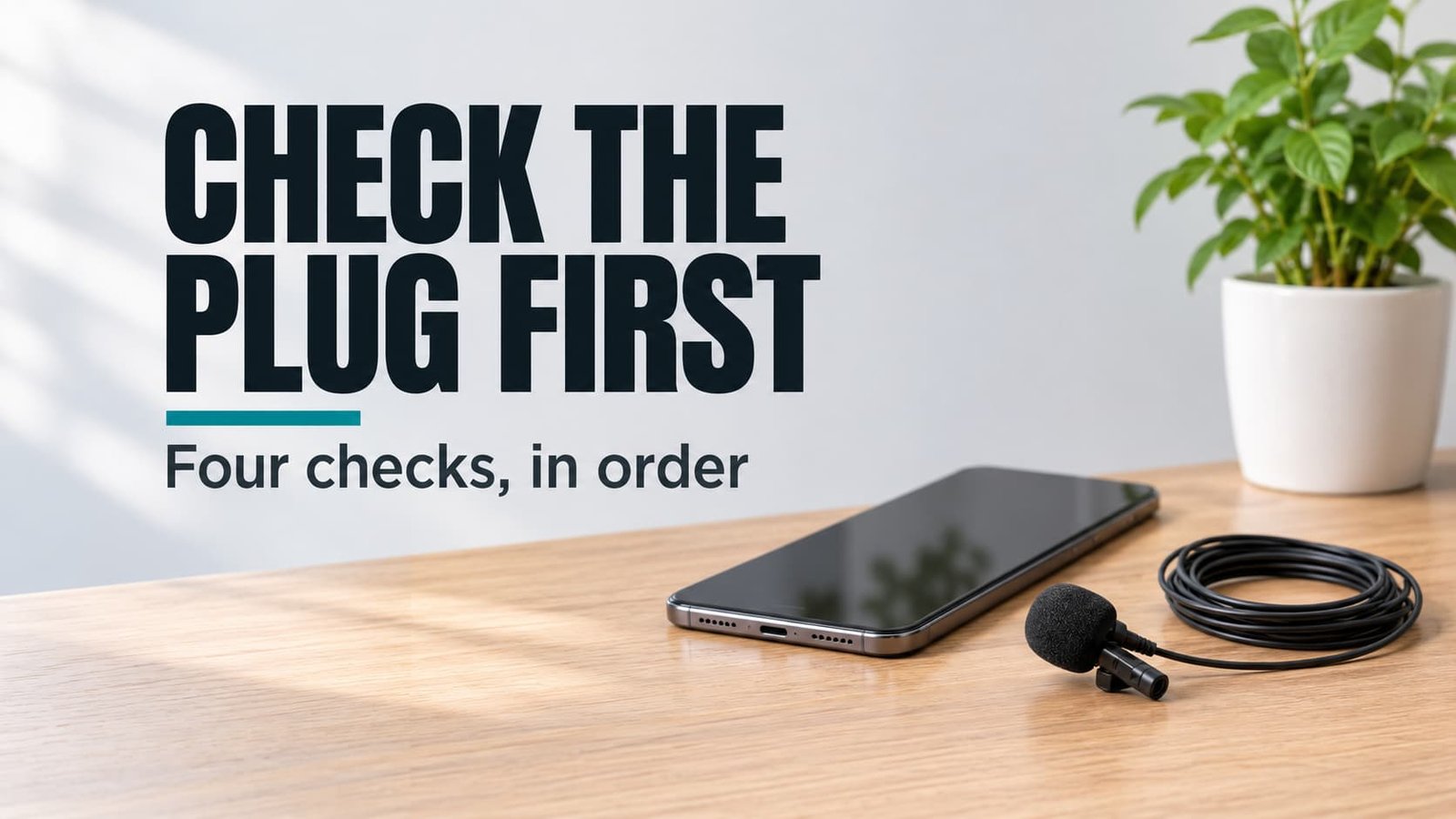
Buying a lapel microphone for phone videos starts with one check: whether the plug matches the phone’s socket. A plug that fits but is wired differently records silence. Rhys films three-minute lesson videos in a Swansea flat. His phone stands on a tripod 1.6 m away and the microphone clips to his shirt. Four checks follow, ranked by how many wasted evenings a wrong guess would cost him. After them come the claims that sell better than they work, three readers with different priorities and a ten-second test for the day the box arrives. Each number given is an invented sample, and nothing in the piece names a brand or an amount of money.
How to Decide When Buying a Lapel Microphone for Phone Videos
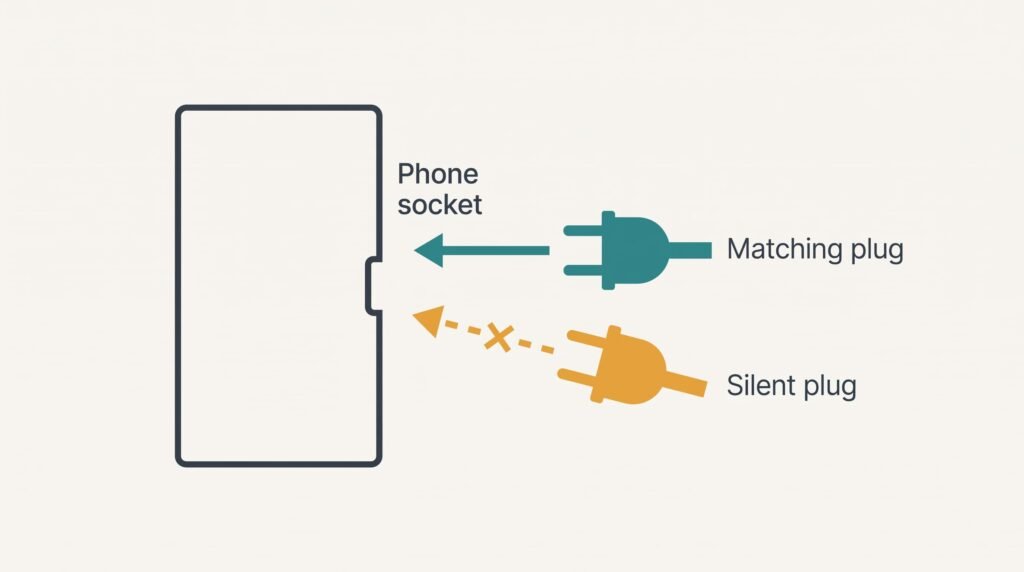
A phone takes an outside microphone through one of two doors. Some have a round socket, and many have only a flat USB-C port. Round plugs come in two kinds. One has three contacts and carries sound out to headphones. The other has four and also carries the microphone signal back in.
The plug and the socket must match, and that includes the number of contacts as well as the shape. A three-contact plug slides into a round socket without complaint and then records nothing. A USB-C microphone usually works as a digital device, and the phone must accept it as one.
That is why this check outranks every other. The failure is quiet: the plug seats and the recording timer runs as usual. Only when you play the clip back in the evening does the silence show up.
A mismatch fails without a single warning.
Adapters exist, though each one adds a joint where a crackle can start. Rhys owns a phone that has just a USB-C port, which means a microphone with a matching plug removes the question. Look for the connector by name in the listing. Treat “works with most phones” as no answer at all.
Four Checks for a Lapel Microphone for Phone Videos
1. Plug and phone. This is the connector that joins microphone to phone: USB-C or a round plug with four contacts. It changes nothing day to day when it matches, and it changes everything when it doesn’t. To judge it, locate the phone’s own port, then the same connector named in the listing, in words rather than in a picture. If it’s wrong, the clip is silent. An adapter becomes the cure, with a new joint attached. When buying a lapel microphone for phone videos, settle this before the cable or the clip.
2. Cable length against the shot. Rhys lays 1.6 m of string from his chest to the phone and adds 30 cm for slack, which gives 1.9 m. A 1.2 m lead falls 0.7 m short. A 3 m lead leaves 1.1 m spare to coil, and a coil can rattle. Judge it by laying the string along your real path and comparing the length. If it’s wrong, a short lead drags the phone toward your hand, while a long one tangles in your sleeve.
3. Clothing noise and the clip. Cloth that rubs on the cable or the capsule makes a rustle that the microphone hears louder than your voice. Look for a clip that holds the cable just below the capsule, plus a small foam cover in the box. To judge it, run a thumb along the cable near the capsule and listen for the noise. If it’s wrong, the take needs repeating. Tape only partly helps.
4. Which app records. This one escapes most shoppers. A camera app may use the outside microphone while a messaging app’s built-in camera keeps using the phone’s own. Judge it by recording ten seconds in the app you really use. Tap the cable once during the recording and listen for the tap afterwards. If it’s wrong, the purchase does nothing in that app. Another app or a return is the remedy.
Claims That Sound Better Than They Work
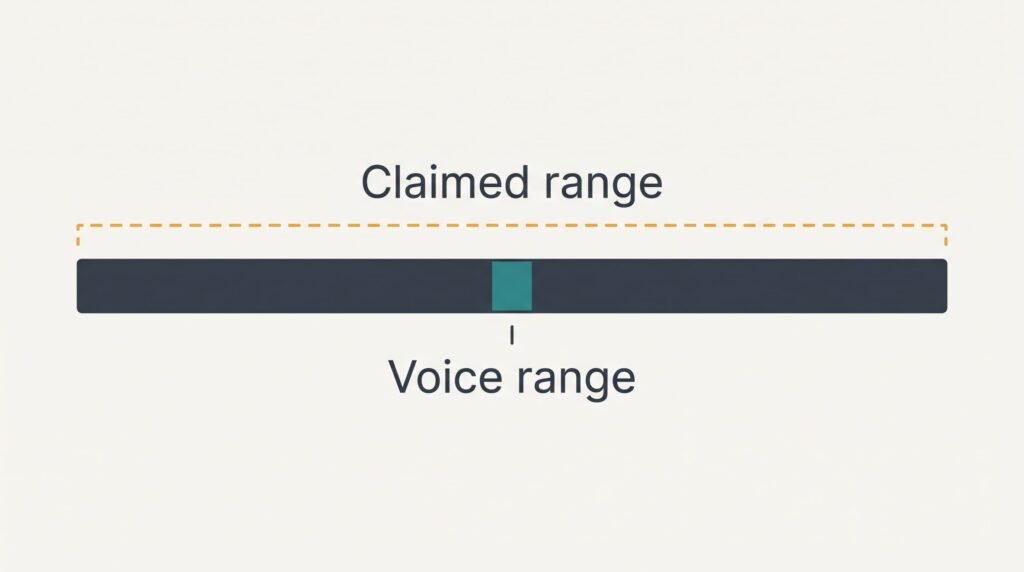
A wide frequency range is promoted hardest, because a big span looks like quality on a box. A speaking voice fills only a narrow slice of that span. The rest carries sounds a lesson video never contains. Rhys would hear no difference between a wide figure and a modest one.
Gold-plated plugs come second. The coating sits on a contact that is pushed in a few hundred times in its life, and it adds nothing audible to speech.
Included extras are third. A pouch or a spare cover can fill the page. The plug and the cable decide the result. A bundle can hide a weak microphone behind good company.
Noise-cancelling wording comes last. A lapel microphone sits close to the mouth and picks up mostly voice anyway. The claim promises more than a few centimetres of distance can deliver, and says nothing on the plug.
Three Readers, Three Priorities
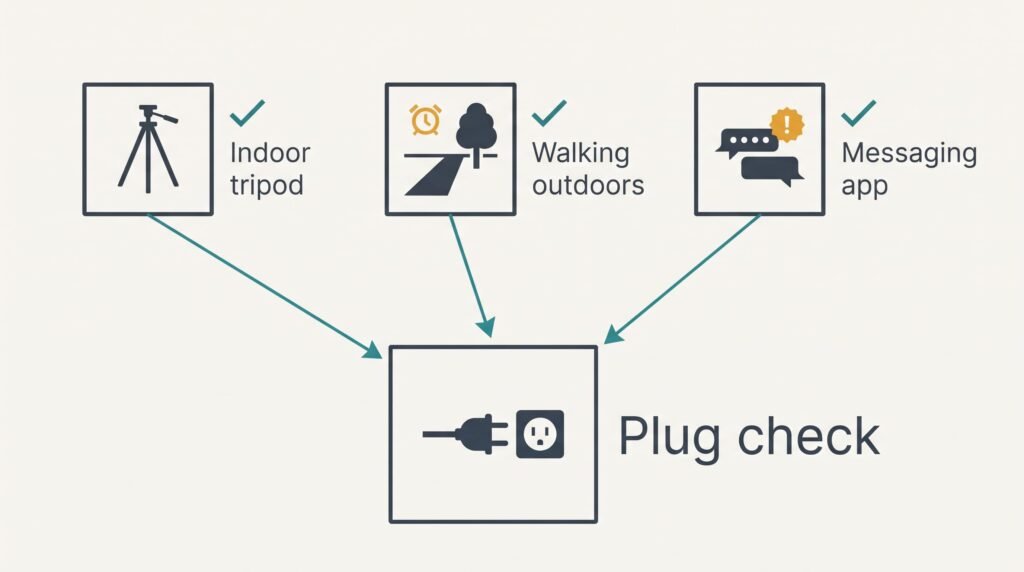
Rhys is the plain case. He films indoors with a fixed phone. Checks 1 and 2 matter most to him, and a lead of 1.9 m is his target. For anyone in his position, buying a lapel microphone for phone videos comes down to matching one plug to one port.
Maya films walking interviews outdoors with the phone in a jacket pocket. A short cable suits her, and check 3 jumps to first place. Wind and cloth are her main enemies, which makes the foam cover the most valuable item in the box.
Sam films inside a messaging app rather than the camera app. For Sam check 4 comes ahead of the rest, because a microphone the app ignores is wasted whatever its plug. He should run the ten-second test before keeping the box.
When to Walk Away From a Listing
Close the tab if no plug is named. A description that says only “compatible with phones” leaves you to guess, and a wrong guess records silence. A page that names the connector and the cable length in its first lines is respecting your time.
A vague listing has answered for itself.
Also drop a microphone whose page says nothing about its cable. Without a length you can’t judge check 2 at all. Think twice about a bundle that spends its photos on a tripod and a light, since the microphone is the part that matters. Leave behind any page that promises studio sound from a phone. A listing that shows the plug only in a photo is no better, since a picture can’t tell you how many contacts it has. Two questions settle most pages. Which connector does it use, and is the cable length given? A page that answers both has done its homework.
A Ten-Second Recording Test
The real test happens at home, and it settles whether the box stays. Buying a lapel microphone for phone videos ends with a home test. Record ten seconds of normal speech and listen to it on headphones. Say a sentence at your usual volume. Tap the cable once, then rub the clothing near the capsule.
A clean voice and a faint tap mean the plug and the app are fine. Little rustle means the clip is doing its job. Silence means the plug is the wrong kind. A recording that sounds like the room means the app is using the phone’s own microphone. Either result means a return.
Write the cable length and the plug type on the box lid before you file it. The plug decides whether anything is recorded, and the clip decides how clean it sounds. Keep both facts together and the next purchase will take minutes, because the same two lines answer every listing you meet.
Questions and Answers
Does a longer cable matter?
Yes, because it sets where the phone can stand. Measure from your chest to the phone, add 30 cm of slack and buy at least that length. A much longer cable leaves a coil that can rattle against the shirt. Choose the nearest length above your measurement.
How much should I spend compared with the phone?
A modest share of what the phone cost, in relative terms. Spend on the connector match and a cable that fits your shot, because those decide whether it works. Extras such as pouches and bundled stands add little, and a modest microphone with the right plug beats a costly one with the wrong one.
How long will a lapel microphone last?
Years, if the cable is treated well. Cables wear out before capsules do, usually where they bend next to the plug. Coil it loosely and never wrap it tight round the phone. A spare cover is worth keeping, since foam wears out sooner than anything else.