A glass screen weighs about 26 kg and a curtain weighs 0.4 kg, and that gap settles most arguments in a rented bathroom. Before you pick a shower curtain or glass screen, find out how far the spray overshoots the tray and what your wall can carry. The invented bathroom here is Dutch, 160 × 200 cm, with a 90 × 90 cm tray in the far corner. Treat each figure as a stand-in for your own tape-measure readings. The page offers a spray sum plus a comparison table. It ends with a free third route that needs no barrier. Weight and cleaning time settle most cases, and looks tend to follow once those are known.
What decides a shower curtain or glass screen in a small rented bathroom
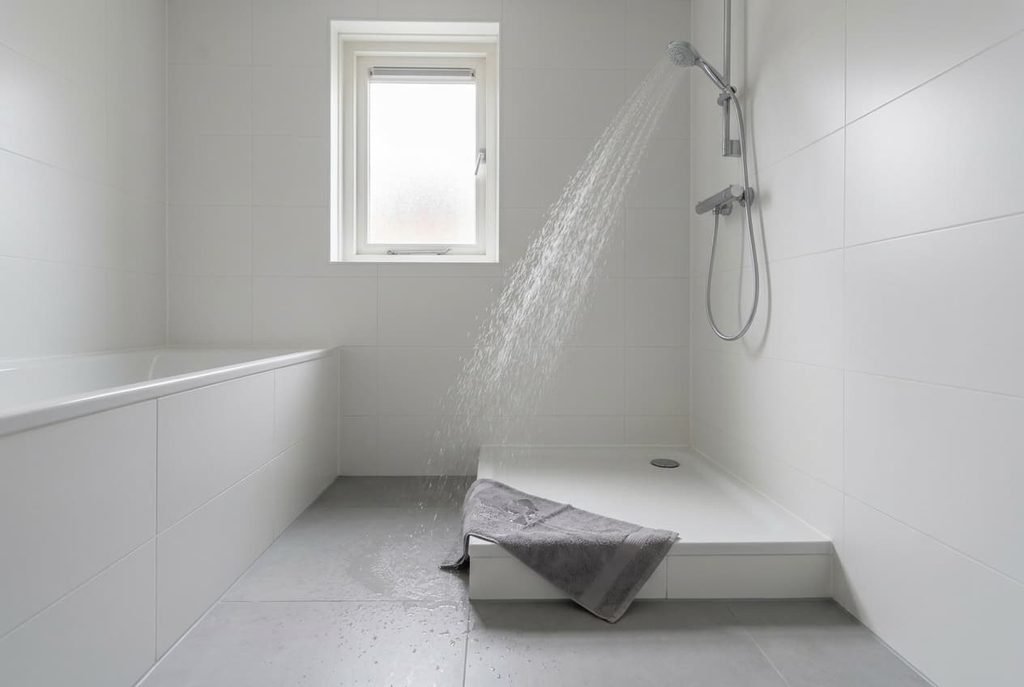
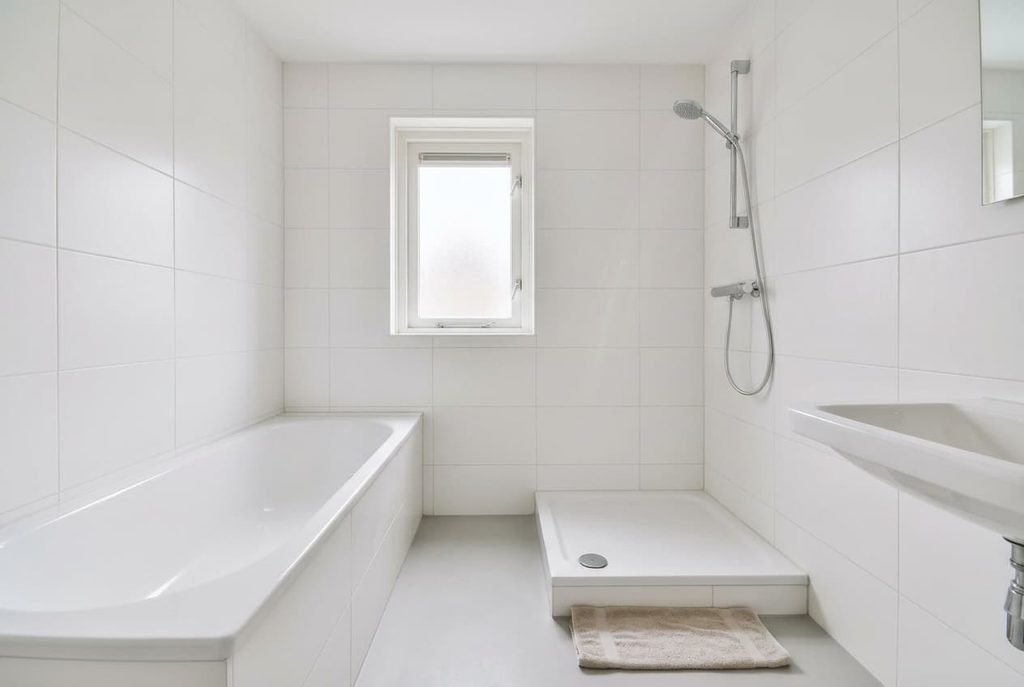
A shower head throws a cone of water, and the barrier exists to catch the part of it that lands outside the tray. Our head sits on the back wall at 200 cm, 15 cm out from the tiles. Assume a spray half-angle of 25°. The cone then reaches 200 × tan 25° = 93 cm across the floor, so it travels 15 + 93 = 108 cm from the back wall. The tray is 90 cm deep, so the spray overshoots its front edge by 18 cm.
Anything you hang or fix has to stand at that front edge and run from head height to the floor. Its job is simple: catch 18 cm of overshoot. The figure to measure at home is how far your own spray reaches past the tray edge. Hold a dry towel at the edge for one shower and see where it gets wet. A shower curtain or glass screen can do that job, so the real question is what each costs you elsewhere. Each has a side effect of its own: billow for a curtain and load for glass. The 18 cm overshoot is a result of geometry. The towel test turns it into a measurement in a minute.
Water that escapes has to be mopped.
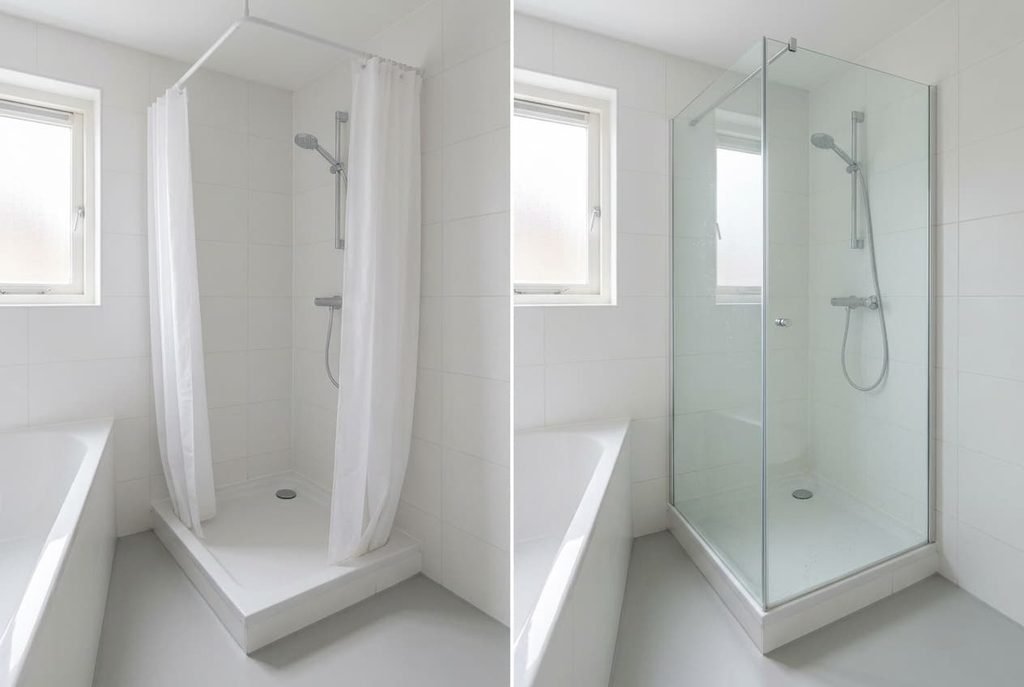
Shower curtain against a glass screen, side by side
Read the rows against your own bathroom, because each one changes with the room. Swap in your own figures where they differ.
| Situation | Curtain | Glass screen |
|---|---|---|
| Catching the 18 cm overshoot | Yes, if it hangs at the tray edge | Yes, fixed at the edge |
| Air drawn in by the spray | Hem swings inward about 8 cm | Stays put |
| Weight on the wall | About 0.4 kg on a tension rod | About 26 kg through four fixings |
| Cleaning per year | About 55 minutes of washing and wiping | About 6.5 hours of squeegee work |
| Entry width | The full 90 cm when drawn back | About 55 cm through the door leaf |
| Light in the room | Opaque, so it closes in 1.755 m² of the view | Clear, so the floor reads as open |
| Holes needed | None with a tension rod | Four, drilled through tile |
The weight row decides most rentals first. A tension rod hangs the curtain without a hole while the screen needs four, so a landlord’s rules can end the discussion in a sentence. The cleaning row is the one people forget until month three, when a film has built up on the glass or the hem of the curtain has grown stiff and stained.
Where a shower curtain wins
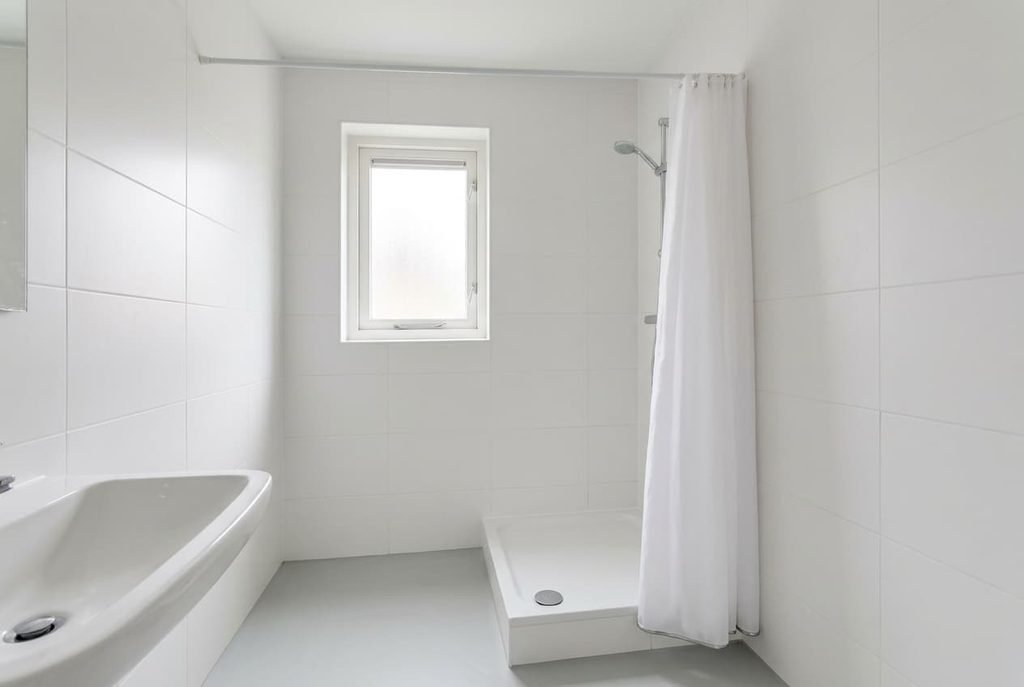
When the choice is a shower curtain or glass screen, the curtain wins if the walls can’t be drilled or can’t take 26 kg. Glass of 6 mm weighs 2.5 kg per square metre per millimetre. A panel of 0.9 × 1.95 m therefore comes to 15 × 1.755 = 26 kg. A tension rod carries 0.4 kg with ease. The curtain also costs the least time. Nine washes a year at 5 minutes of handling, plus 10 minutes wiping the rod, make 55 minutes against the screen’s 6.5 hours.
Billow is the price. The downdraught pulls the hem about 8 cm inward. It clings to your legs, and the tray’s usable depth drops to 82 cm. Fix it with a weighted hem, which we’ll assume cuts the swing to 2 cm. Wipe the rod’s contact points dry before you twist it tight, since damp tile can let a tension rod slip. You lose a little drape, since a stiff hem hangs flat, but the 18 cm overshoot stays caught.
A weighted hem is cheap insurance.
Where a glass screen wins
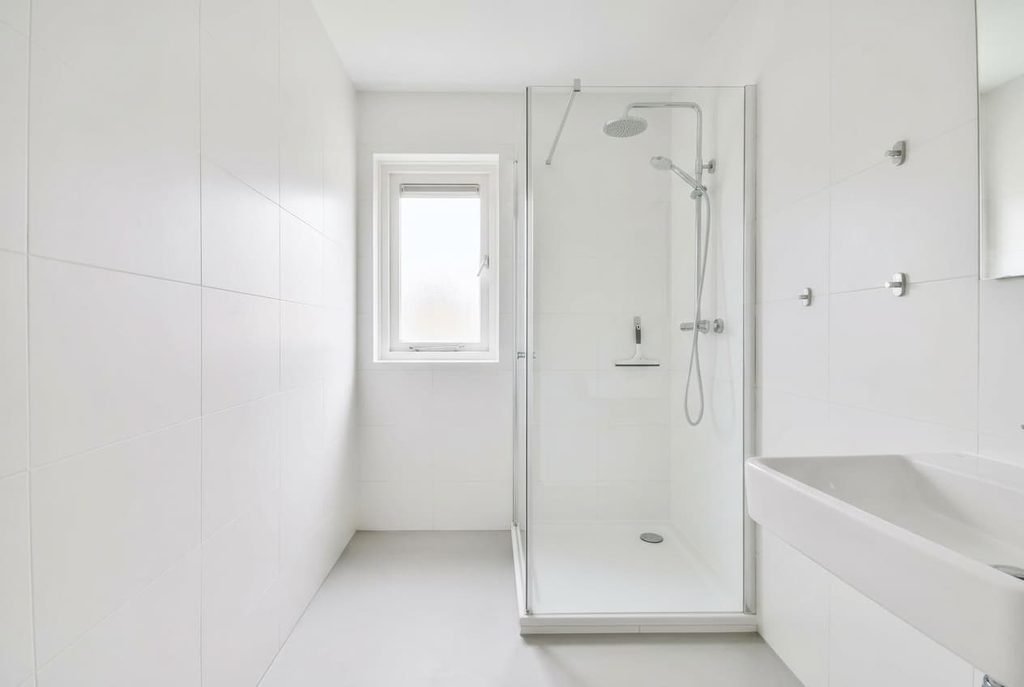
Glass suits a wall of tile over brick and a tenant who can accept four holes. It doesn’t billow, and it needs no weight. It also keeps the bathroom visually open. The 1.755 m² panel is clear, so the floor still counts as 3.2 m² of open space rather than a shower closet.
The cost is upkeep and entry. Squeegeeing for 90 seconds after each of five showers a week adds up to 6.5 hours a year. Skipping it leaves a film that takes longer to remove. The door leaf opens only 55 cm, so a laundry basket won’t go through easily. Fix the film with a squeegee hung on a hook inside, where your hand finds it. Fix the entry by checking the leaf width before you buy, because 55 cm suits most people and 45 cm doesn’t. Put the hinge on the wall side so the leaf swings clear of the basin. Tighten the fixings after a month. Heat and damp work them slightly loose.
When neither is right
The third option sits outside any shower curtain or glass screen debate. It costs nothing and needs no barrier at all. It simply turns the head. Tilt it 15° toward the back wall. The leading edge of the cone then sits at 25° − 15° = 10° from the vertical. It reaches 200 × tan 10° = 35 cm from the head, which is 15 + 35 = 50 cm from the wall. At 90 cm deep, the tray now swallows the overshoot of 18 cm and the front edge stays dry.
The fix is to tilt the head toward the back wall so the spray stays inside the tray. The limit is the back wall, which now takes more of the water. Tile handles it. Painted plaster or a thin panel doesn’t, so check the surface in the zone around the head first. That tilt can’t help the sides if your tray opens on two edges. Prove it with the towel at the edge. A dry towel after one shower means the tilt has done the job.
How to choose in two minutes
Run a towel test and a wall test. Hold a dry towel at the tray edge for one shower and note where it dries. Then tap the wall: tile over brick sounds solid, and hollow tile over board doesn’t. Photograph the towel and the wall so you can compare after any change.
If the wall is solid and your landlord allows holes, choose the glass screen and hang a squeegee beside it. If the wall sounds hollow or drilling is banned, choose the curtain with a weighted hem on a tension rod. The tilted head works with either one and costs nothing, so try it first.
Both options catch the same 18 cm of water. The choice is really about weight and holes, plus cleaning hours. Tally them before any money is spent, and the answer usually announces itself. Fit what suits your wall and test the tilt. Then leave it alone for a month. A bathroom that stays dry after the first week will stay dry, so the decision can stand.
Questions readers keep asking
How long does a shower curtain last?
A curtain lasts a year or two before the hem turns stiff and the colour dulls. It needs washing every six weeks to get that far. Wash it every six weeks and replace the liner before it turns cloudy. Glass lasts for years. Its seals and hinges wear first.
How do I clean a glass screen and a curtain?
Squeegee glass for about 90 seconds after each shower and wipe the frame weekly. A curtain goes in the machine every six weeks at the temperature on its label. Wipe the rod at the same time, since limescale builds up there quietly and spoils the grip.
Which suits a flat where drilling is banned?
A curtain on a tension rod, since it needs no holes. A glass screen needs four fixings through tile, so it requires the landlord’s permission. If permission arrives, check that the wall behind the tile is solid before drilling. A hollow wall can’t take 26 kg.