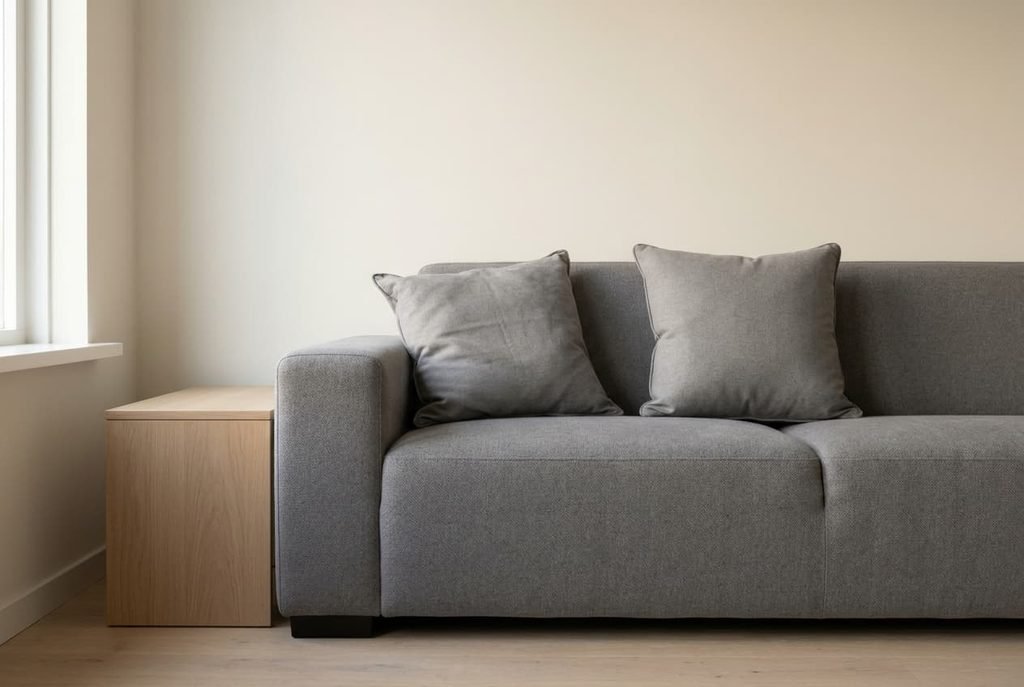
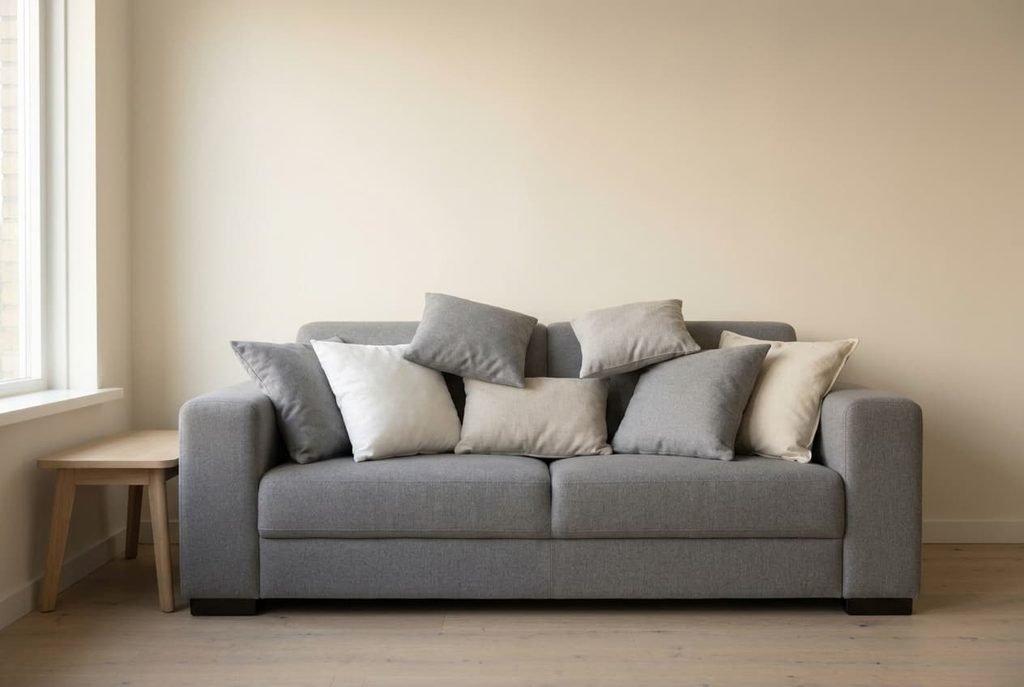
The five cushions came home looking crisp and plump. By evening they slump along the sofa like tired sandbags, and nobody has touched them. Cushions look fine in the shop and lumpy at home for reasons that have almost nothing to do with how well they’re made, and three faults explain almost every sofa. Our example is a flat in Utrecht whose sofa spans 210 cm. Between its arms the seat is 170 cm wide and 43 cm high, while the back reaches 85 cm. Every cover measures 45 × 45 cm. All the figures are invented, so measure your own sofa before you compare.
What makes cushions look fine in the shop and lumpy at home
A shop stands each cushion upright against a rail, filled right to the corners and lit evenly from above. Nothing leans on it. At home the same cushion tips back into a soft seat and catches light from the side. Its own weight matters too, and each of those details changes how it reads.
Two sizes shape the result. When a 45 cm cover holds a 45 cm insert there’s no tension in the fabric, and the corners sag. Fit a 45 cm insert into a 40 cm cover and the insert’s 2,025 cm² of face has to fill a cover face of 1,600 cm², which is 26.6% more, so the corners push out.
The count matters just as much. Five covers of 45 cm give 225 cm of cushion on a 170 cm seat, leaving 55 cm that has to climb over its neighbours.
Blaming the quality of the cushions is the usual misdiagnosis. The same cushions looked right in the shop, so the fault lies in how they meet this sofa. A firmer replacement would carry identical sizes and an identical count into the room.
Cushions that look fine in the shop: a checklist from the sofa
Settle across the room in your usual evening light. Then check five things with a tape measure.
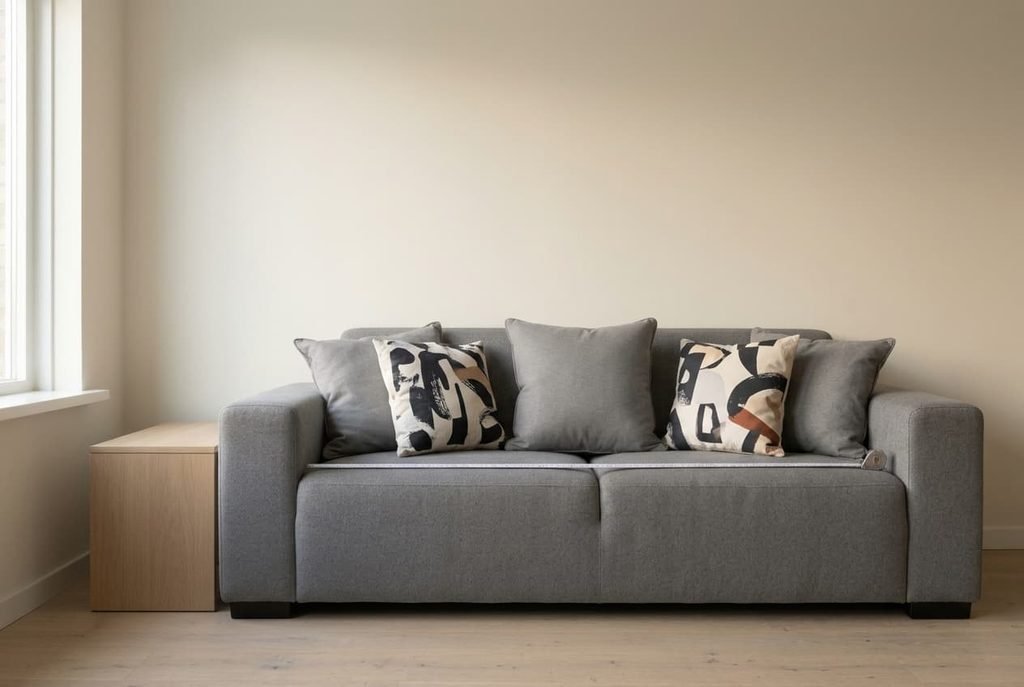
1. Add up the cushion widths that sit on the seat. Anything above 60% of the seat is crowding. That limit is 102 cm here, and ours total 225 cm.
2. Pinch a corner between finger and thumb. If it feels flat and empty, the insert is no larger than the cover, so compare the two measurements.
3. Squeeze along the bottom edge. A hard ridge there means the filling has slid down and settled.
4. Compare each cushion’s top edge with the sofa back. The back shows 42 cm above the seat and the cushions stand 45 cm, so they push up past it.
5. From across the room, squint at the set. When two bold prints sit side by side, your eye reads each as a separate lump.
Our room fails four of the five checks, and only the filling test passes.
Three faults behind lumpy cushions
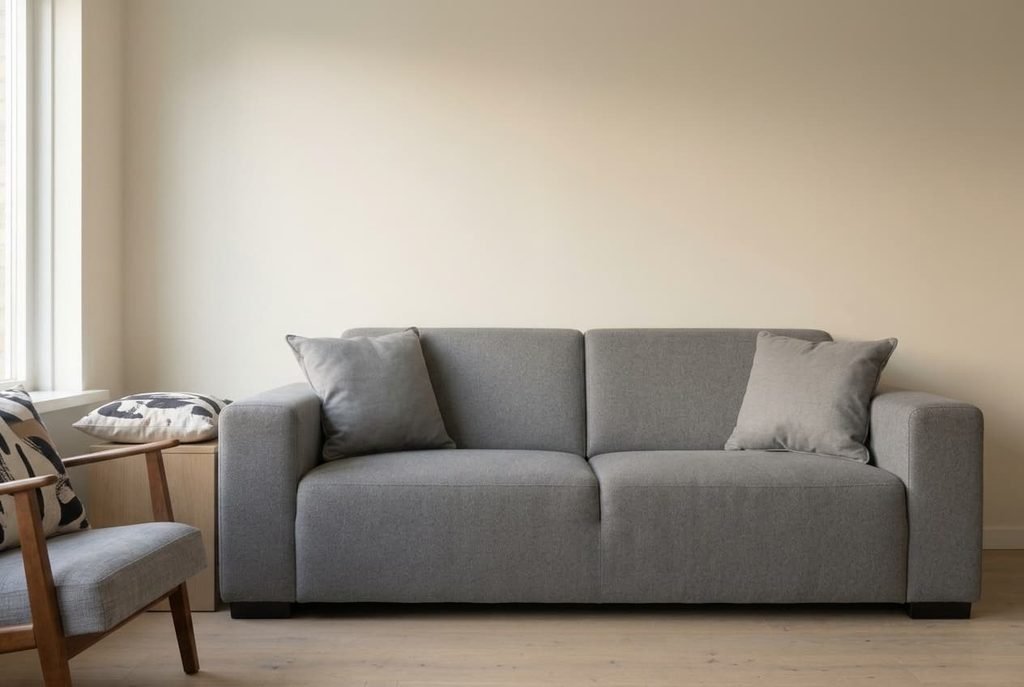
When the cushions pile over each other on a crowded seat, the cause is simply too many covers. Five at 45 cm total 225 cm. Capping them at 60% of the seat allows 102 cm, and 102 ÷ 45 is 2.3, so two cushions fit. Carry three of them to a bed or an armchair and leave one beside each arm. That covers 90 cm, or 53% of the seat, and it’s free. If someone wants an end seat, the cushion goes to the floor, because the sofa’s first job is sitting.
When the cushions read as separate blotches instead of one set, the culprit is contrast. Two of the five covers carry a bold print on a mid-grey sofa. A print chops a cushion’s outline into patches, so the eye stops seeing a soft square. Swap both prints for plain covers of the same size from a bedroom or a spare chair, and keep one print only. Nothing is bought, though the bedroom turns a little duller, and you’ll see that by tomorrow. Choose plain covers within one tone step of the sofa, otherwise the blotches simply return in solid colours.
When the corners look empty and the cover wrinkles at the seams, scale is to blame. A 45 cm cushion stands 3 cm taller than the 42 cm of visible back, and its insert matches its cover exactly, which leaves the corners without fill. That’s another reason cushions look fine in the shop, where the filling is usually generous. Buy two covers of 40 cm and two inserts of 45 cm. The top then rises to 43 + 40 = 83 cm, 2 cm below the back, and the insert’s face is 26.6% bigger than the cover’s. Only the covers and inserts cost money. Keep the difference near 5 cm, because a much larger insert drags the zip open and bulges the seams.
Take them in sequence, since the cost rises each time, and sit on the sofa for a full evening between changes. Stop once the cushions look calm.
Checks before the next cushions
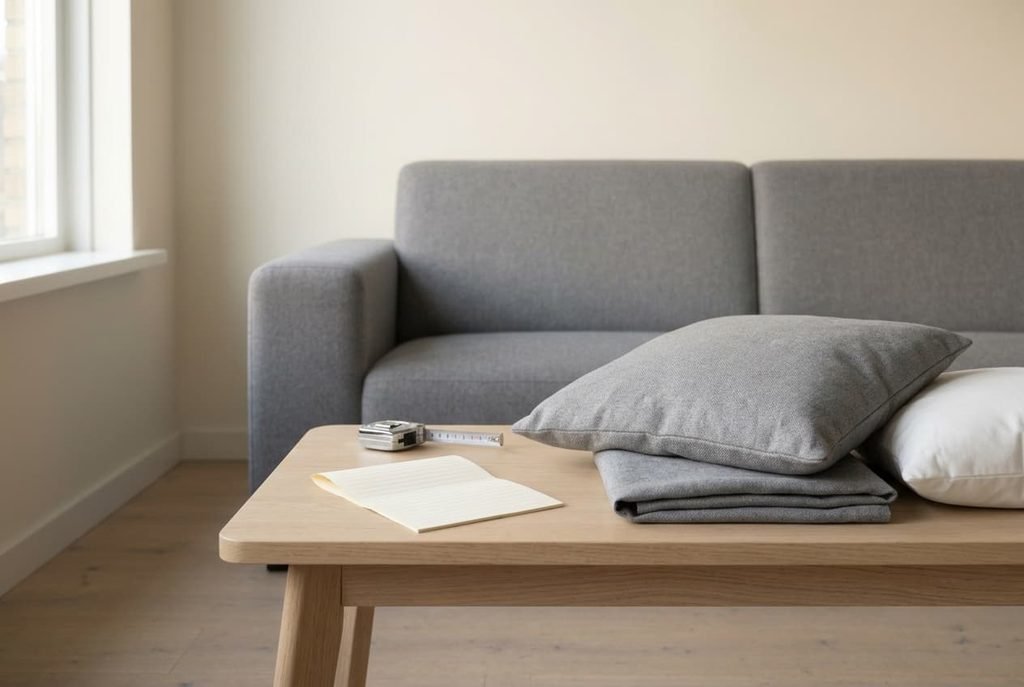
Measure the sofa before you open a shop page. Write down the seat width. Then note the seat height and the back height, and subtract the first from the second. Here that’s 85 − 43 = 42 cm, so a cover of 40 cm sits just under the back line.
Listings often give the cover size and leave the insert unmentioned, so ask for both. An insert about 5 cm larger than its cover is a sound starting point. Take your tape measure to the shop if you can, because sizes quoted online can differ from the real covers.
When you arrange them, favour odd counts. A pair at one end with a single cushion at the other looks looser than a mirrored pair, though a mirrored pair is how shops arrange things, and cushions look fine in the shop partly for that reason.
The fix that isn’t worth doing
Adding more cushions to hide the lumpy ones feels like the generous answer, and it makes the sofa worse. Seven covers of 45 cm add up to 315 cm on a 170 cm seat, which is 185% of its width. The extra cushions shove the rest forward and take away the room to sit.
Another dead end is plumping each cushion hard every morning. That pushes the filling back into the corners for roughly an hour, and the lumps return by lunch because the sizes haven’t moved. A third is a tighter cover bought in the same 45 cm size, which squeezes the filling without adding any. Turning the cushions over each day spreads the wear, though it can’t change their shape.
Nothing here changes why the cushions look lumpy.
Cushions look fine in the shop because nothing there asks them to do a job, whereas a sofa asks several. Start with the count. It costs nothing and often does most of the work. Check the prints next. Buy covers and inserts last, and only for the cushions that stay. A sofa that looks calm after the first two steps needs no purchase at all. After a few evenings you’ll see whether the sofa has settled. Keep a note of your seat width and back height. Add the 60% limit, so your next shop visit begins from your own measurements instead of from the display.
Questions readers keep asking
What is the most common cause of lumpy cushions?
Too many cushions for the seat. When their widths total over roughly 60% of the seat between the arms, they climb over each other. Measure the seat and add up the covers before you suspect the filling. Most sofas need two or three cushions, rarely five.
Is there a quick fix I can try tonight?
Yes. Remove every cushion except two, placing one beside each arm. Then sit down for an hour. A calmer sofa means count was the problem. A blotchy one calls for printed covers to be swapped for plain ones from another room.
Can I fix this without buying anything?
Usually the first two faults, yes. Cutting the count and swapping prints cost nothing. Only the scale fault needs new covers and inserts, and you can preview it by pushing a folded towel inside a cover to see whether a fuller corner helps.