Choosing a coir doormat or rubber doormat sounds like a matter of looks and grip, yet behind a front door that opens inward a ruler settles it first. The door in this case is 83 cm wide and hangs 12 mm above the hall floor. Any mat taller than that clearance gets dragged by the leaf whenever someone comes in. Both materials clean shoes well enough. They differ in height and in what they do with grit and water. A door sweeping across them tests both. We’ll set them side by side, follow each through a normal week and test a third route. A short rule closes the page.
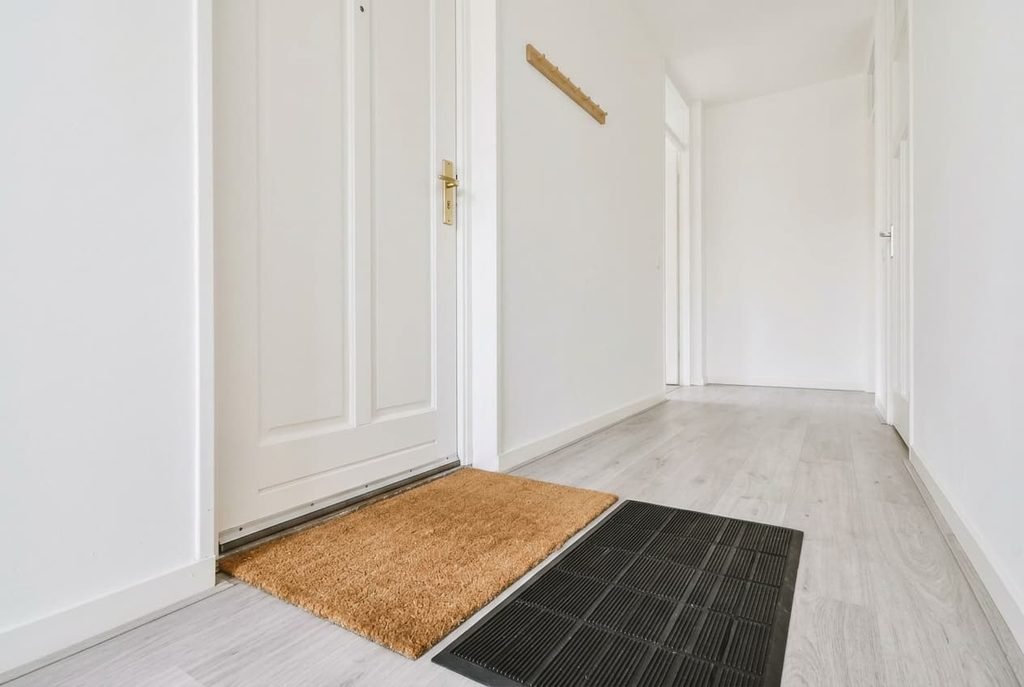
How a coir doormat or rubber doormat compares at an inward-opening door
A mat has two jobs. It scrapes grit off soles, and it keeps what it scrapes until you empty it. The pair differ in that coir hides grit between stiff fibres below the surface, while rubber keeps it on top where a brush can reach it. Coir is coarse and springy, so each step presses a sole into hundreds of small ridges. Loose sand drops between them and vanishes. The mat looks tidy long after it has stopped being clean. A rubber mat has a moulded face of low ribs or studs. It scrapes more gently, yet whatever it catches stays visible and shakes out in seconds.
Height matters more than either action at this door. An inward-opening leaf swings across the floor on the inside, and its lower edge passes 12 mm above the boards. Coir mats usually stand 15 to 25 mm tall. Rubber ones stand 5 to 9 mm. A coir mat 20 mm thick overlaps the leaf’s path by 8 mm. The door rides on the fibres at every opening. A rubber mat 7 mm thick leaves 5 mm to spare.
That comparison skips where the mat lies, because a mat outside on the landing never meets the leaf, and this page assumes the only space is on the hall side.
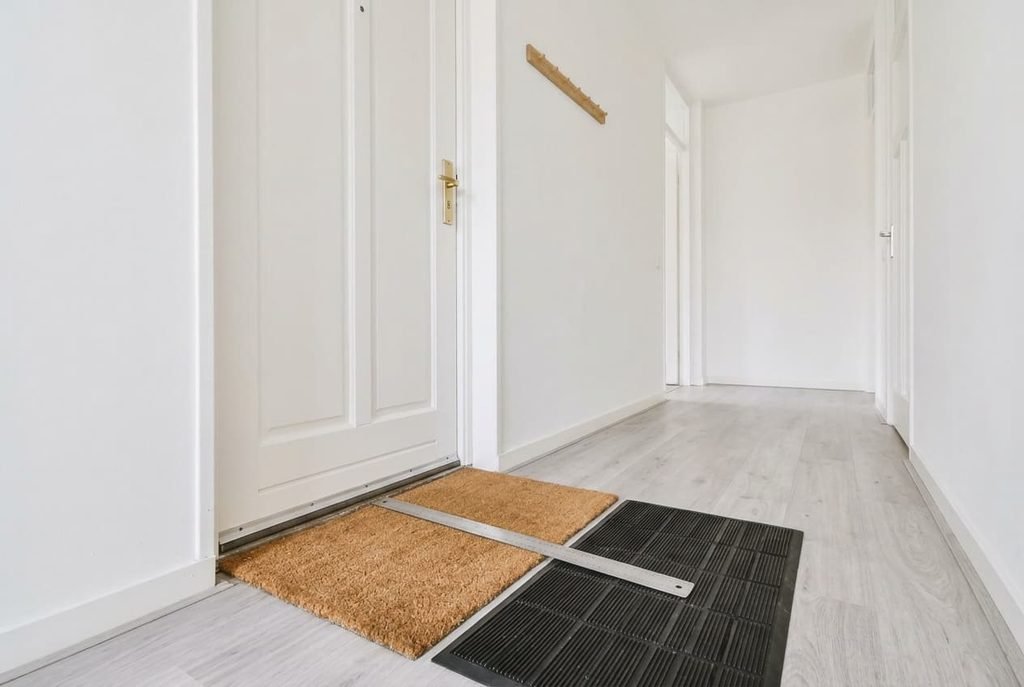
The two mats side by side
The pair differ on six counts. Each follows from the material, so the rows hold for whichever mats you shop for. A table lays them out quicker than prose would. The first two rows usually settle a door like this one, and the rest describe the upkeep that follows.
| Property | Coir mat | Rubber mat |
|---|---|---|
| Height above the floor | 15 to 25 mm | 5 to 9 mm |
| Under an inward door | usually catches | usually clears |
| Grit | drops between the fibres | sits on the surface |
| Water | soaks in slowly | pools on the face |
| Loose material | fibres shed for weeks | none |
| Staying put | relies on its backing | grips through its own base |
A mat that catches the leaf gets moved or trimmed within a month. That’s why the height rows come first. Rows three and four decide how much cleaning each mat asks for. The next two sections follow that through a week of use.
Two rows also interact. A backing that grips the floor well but stands tall is the worst pairing for this hall, because the leaf drags on it and the grip stops anyone sliding it aside. Thin and gripping is the combination to look for.
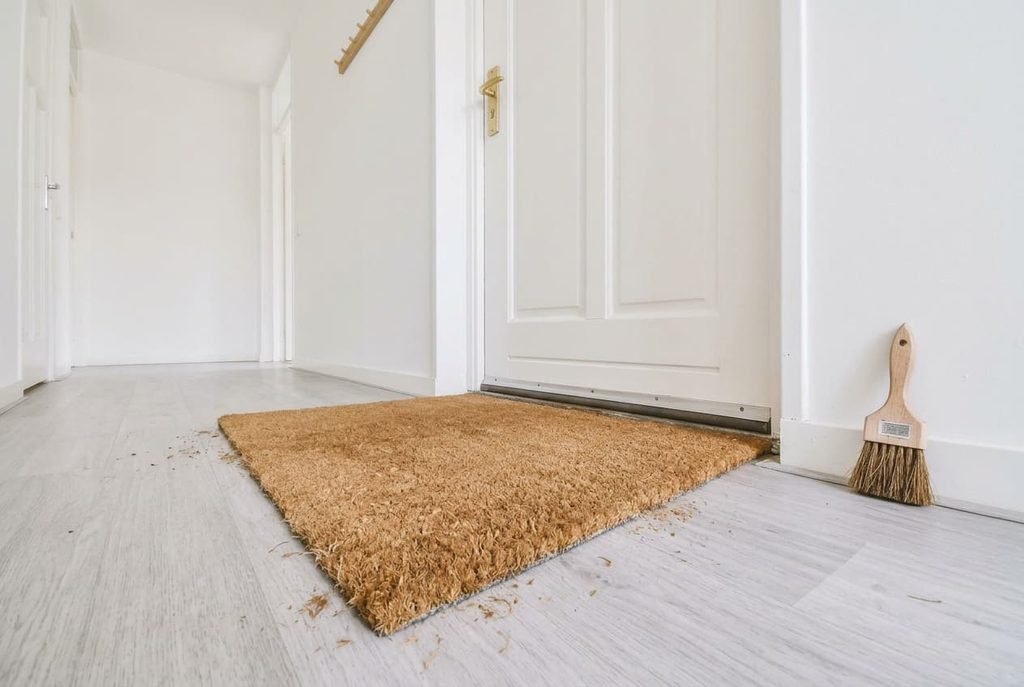
How a coir mat behaves through a week
For the first fortnight a new coir mat sheds brown strands onto the floor around it. A vacuum collects them in a minute. After that the mat settles. A step covers about 75 cm. A mat that long, laid along the walking line, catches one footfall, so wipe each sole in turn. Coarse fibre scrapes harder than anything else here, so a wet street leaves its worst on the mat. Little reaches the boards.
Whether a coir doormat or rubber doormat wins at your door often comes down to that 20 mm height. At 12 mm of clearance, the leaf presses the fibre flat along a quarter-circle track. That track wears bald in a couple of seasons. To clean the mat, shake it over a balcony rail or tap it against a wall. The grit packed underneath falls out. Rain soaks into the fibre rather than running off, so the mat wants a dry spot afterwards. Left damp on laminate for days, it can print a faint ring where its backing sat.
How a rubber mat behaves through a week
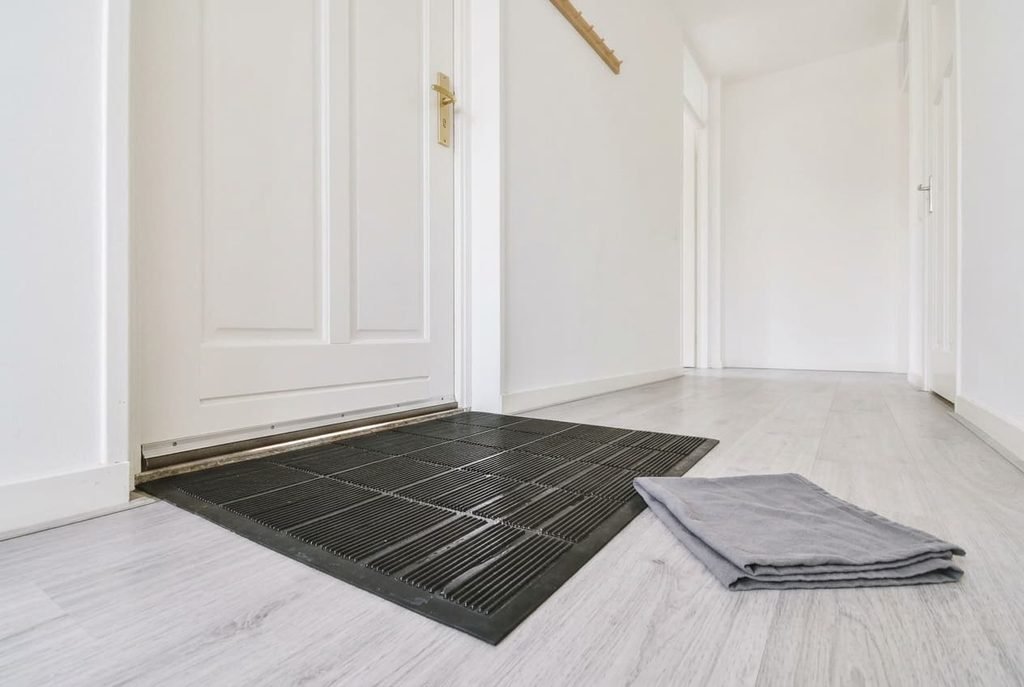
At 7 mm tall, a rubber mat clears the leaf by 5 mm, and the door opens without noticing it. Its base grips laminate well enough that it doesn’t creep when a bag swings against it. A cold hall can stiffen the corners until they curl, though. Dirt stays visible on the ribs. That works both ways, since the mat looks grubby sooner, yet a brush clears it in the same minute. It’s heavy for its size, so it lies flat when the leaf passes, which a light coir mat with a loose backing won’t always do.
Water behaves differently here. It collects between the ribs and runs towards the edges. After a wet day the floor beside the mat gets a film that the mat never absorbed. Tip the water into a sink or wipe it with a cloth. A weekly rinse in the bath takes about two minutes. A towel over the surface gets it ready again. Some rubber bases may mark pale vinyl, so lift one corner after the first month and look underneath.
The third option: a flat-woven washable mat
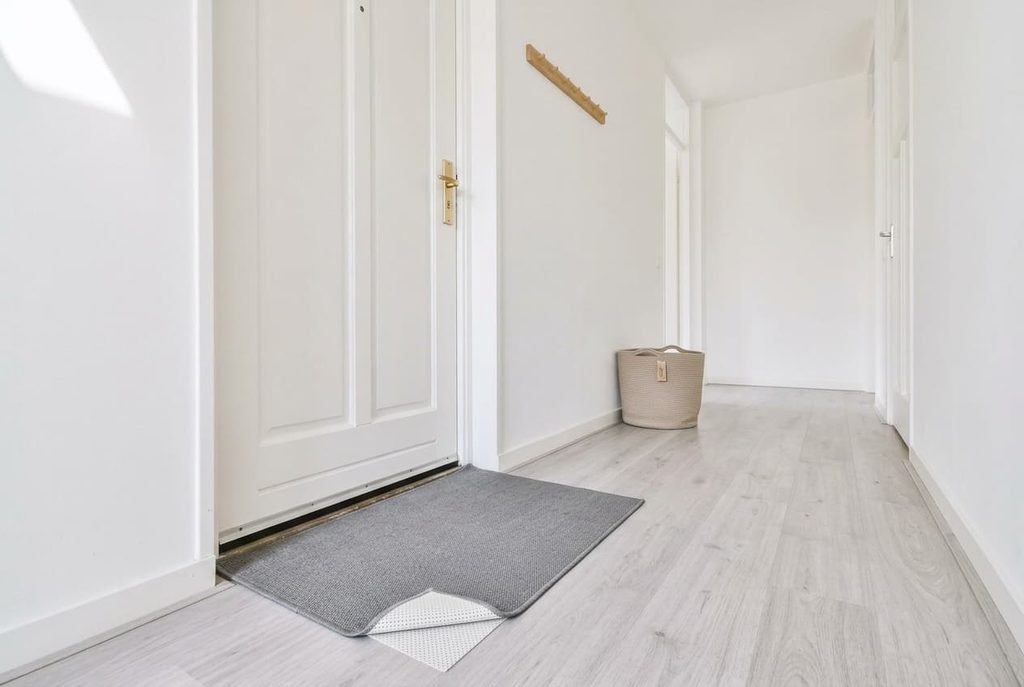
If the clearance is tight and neither of the usual two appeals, a flat weave only 4 mm thick passes under the door with 8 mm to spare. It holds grit in the weave. A good shake plus a turn in the washing machine returns it to its first state. A piece measuring 60 × 40 cm covers 0.24 m² and folds into a drawer whenever the hall is being painted. It’s also the gentlest surface underfoot, a point in its favour wherever people walk in barefoot.
It has limits. It scrapes less than coir, so mud from a field path goes straight through it. A smooth floor makes it slide unless an anti-slip underlay sits beneath, and that underlay needs washing as well. Pale shades show dirt within days, so choose a mid-tone.
When a coir doormat or rubber doormat both fail the clearance test, a flat weave is the honest answer, and it can also share the work with a rough mat laid outside the door to take the mud.
Coir or rubber: which doormat should you choose?
If the leaf clears the floor by less than 20 mm, choose rubber. You pay with a plainer face and a weekly rinse, and you gain a mat the door never touches. A hallway 100 cm across has room for a mat of 75 × 45 cm beside the swing. Slide a card 7 mm thick under the leaf before buying, and check that it passes without rubbing.
If the clearance is 25 mm or more, or you can lay the mat outside the swing, choose coir. You pay with shed fibres and a mat that hides its dirt. You gain the strongest scrape on offer, and nothing in the hall ever catches on it.
With a coir doormat or rubber doormat still undecided, subtract the mat’s height from the clearance and ask whether 3 mm or more remains. A pass leaves taste to decide it. Ask whether you’d rather brush grit off a surface or shake it out of a fibre. Both answers work once the number has cleared, and a fail removes the thicker mat from the running.
Questions readers keep asking
Which lasts longer?
Coir tends to outlast rubber in a quiet hall, since the fibres only wear where the door drags. Rubber lasts well too, but its ribs flatten under steady traffic and its corners can crack in cold. A flat weave wears slowest of all because it carries almost no load, though it also does the least scraping.
How do I keep each one clean?
Shake a coir mat outside once a week and vacuum its surface. Rubber needs a rinse, and a quick wipe dries it. A flat weave goes into the wash at 30 degrees when it looks dull, then dries flat on a rack. Whichever you own, empty it before the grit builds into a layer.
Which suits a flat with a muddy path outside?
Rubber copes with wet mud better, since the water stays on the surface and a cloth clears it. Coir takes the water in and needs time to dry. If the path is truly bad, put a coir mat outside the door. A rubber or flat-woven one inside will still clear the leaf.