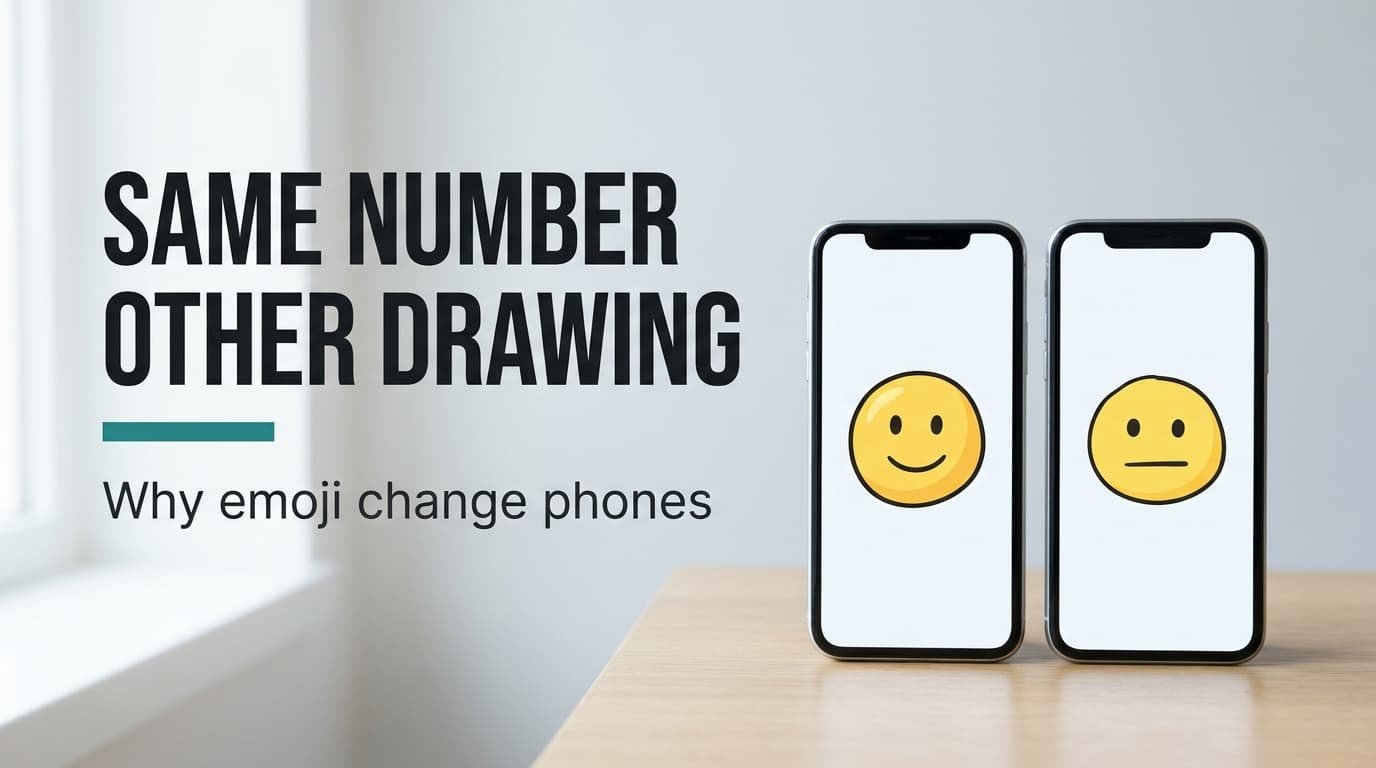
What makes the same emoji look different on another phone? Your message carries only a number, and the phone that receives it draws its own picture for that number. Two makers can draw the face with tears of joy in two styles. Both follow the standard. It fixes the name and the meaning, and the artwork is left to each maker. Below, one message makes the trip from your thumb to their screen, and a kitchen comparison is tested against it. The page then covers what the standard leaves to each maker. Three false beliefs get corrected, and a short rule closes it, for choosing between an emoji and a few words.
What Makes the Same Emoji Look Different, in One Line
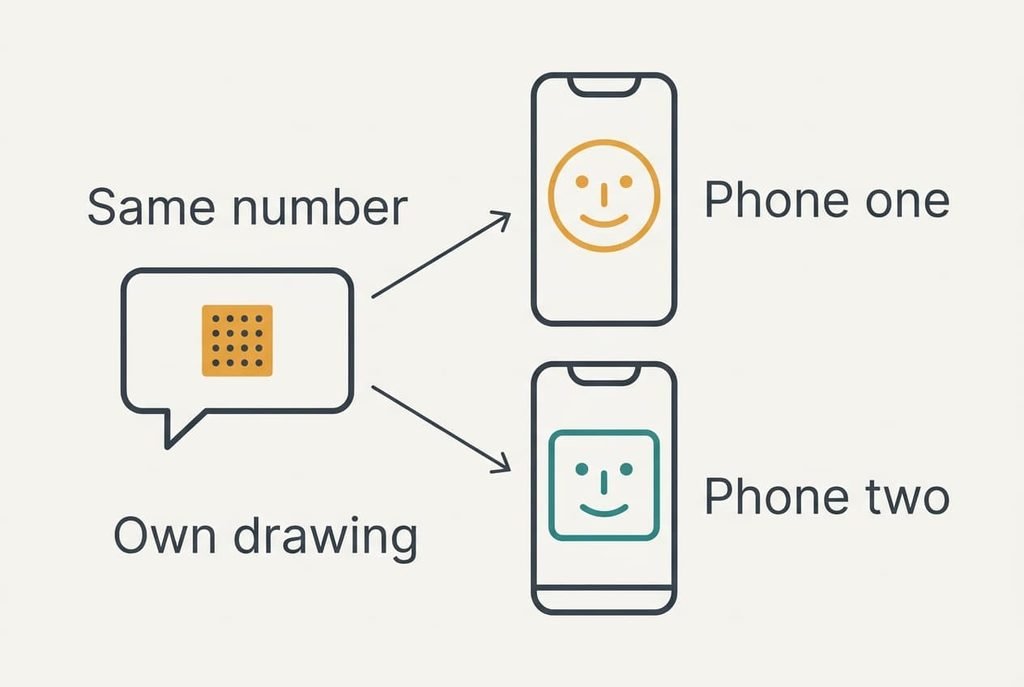
In one line, an emoji is a number that each phone turns into a picture. The message carries the number, and every phone supplies its own drawing, so two phones can show two pictures for one number.
A shared list supplies the numbers. Each emoji has an entry with a number and a short name, such as face with tears of joy, and every maker follows that list so a message means the same thing everywhere. A laugh stays a laugh whichever phone shows it.
That answer leaves out how the picture gets chosen. The list describes each emoji in a few words and leaves the artwork open, so one maker draws a rounder face with a bigger tear and another draws a flatter one. It also leaves out what happens when a phone has no drawing for a number, and that comes up below. Apps that bring their own artwork sit outside the answer too.
Meaning travels with the message, and appearance stays behind on each phone.
Following One Emoji From Your Thumb to Their Screen
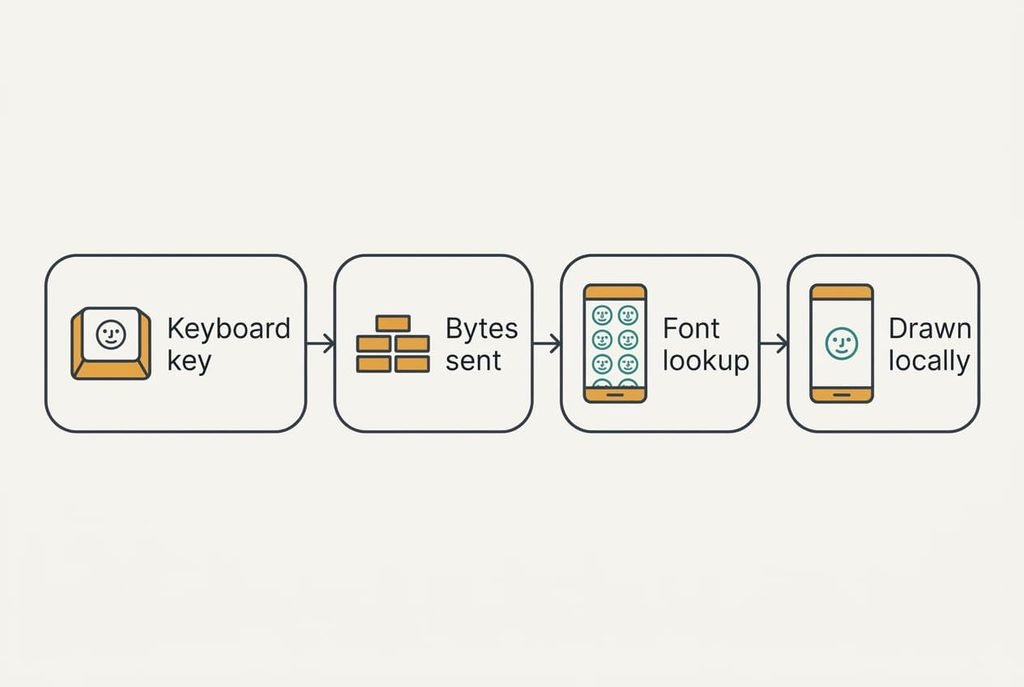
Start with Priya, who types the words “Well done” and opens the emoji keyboard. She picks the face with tears of joy. What the keyboard inserts is a character, and every character has a number. This one is 1F602 in the counting system programmers use, which is 128,514 in everyday numbers.
The phone stores the message as bytes. The words and the space take 10 bytes, and the emoji takes 4 more, so the whole message is 14 bytes. For comparison, a small picture of 20,000 bytes would be 5,000 times bigger than the emoji’s 4.
Those 14 bytes travel to Sam’s phone, and nothing resembling a picture is inside them. The emoji’s four bytes are written F0 9F 98 82 in the same programmer’s counting, and the first one tells the receiving phone that four bytes belong together. Sam’s phone reads them and rebuilds the number 1F602. It then searches its emoji font. A font is a collection of drawings with one entry per character, and this one holds small coloured pictures. The phone finds its own entry for 1F602 and paints it at the size of the surrounding text.
At this point, what makes the same emoji look different? The drawing on Priya’s screen came from her phone’s font, and the one on Sam’s screen came from his. Different artists drew the two fonts, so the tear is rounder on one phone and the yellow is warmer on the other. Both drawings answer to the same name and number, and both read as laughter.
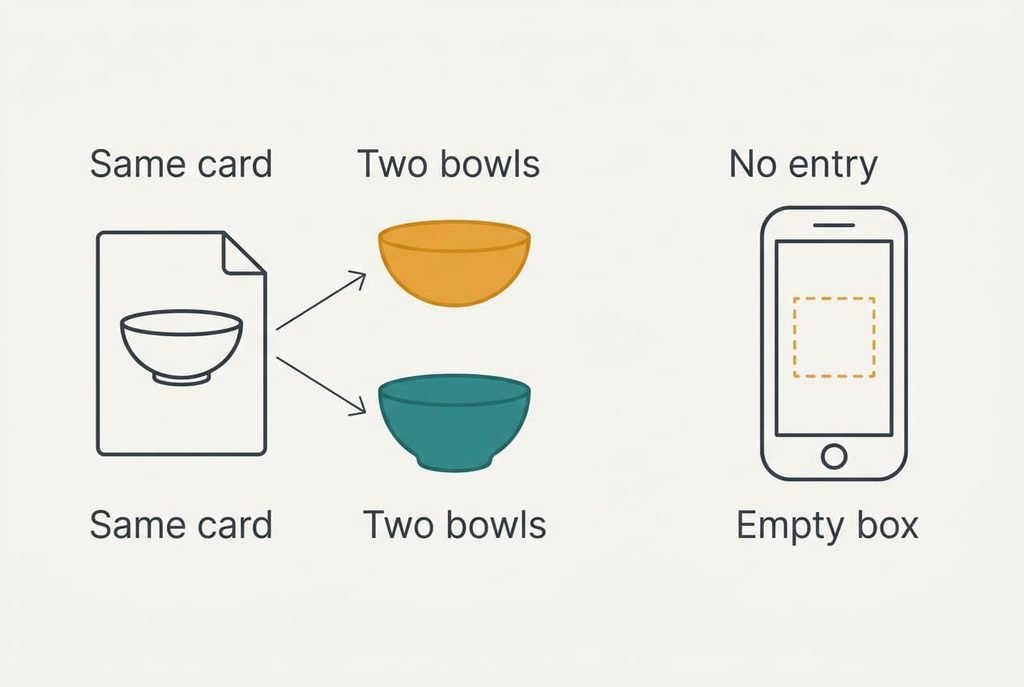
Now suppose Sam’s phone is old and its font stops at older numbers. It finds no entry for 1F602, so it paints an empty box where the picture belongs. The box tells him that something arrived and that his phone couldn’t draw it. Priya sees her own picture and never learns about the box.
Every step follows one rule. The message carries numbers, and each phone turns them into pictures with its own font.
The Recipe Card Picture: Same Emoji, Different Look
Think of a recipe card that says tomato soup. Two cooks follow it and make two bowls that differ in colour and thickness, yet both are tomato soup. Neither bowl is wrong, since each cook worked from the same card. The card is the number, the cooks are the phones, and the bowls are the drawings.
Here the comparison breaks down. A cook who lacks an ingredient may swap another and carry on. A phone with no entry for a numbe never invents a substitute, and the empty box is all it can offer. The card also leaves room for style, yet the emoji list still sets limits, because a face with tears of joy must show a face and tears.
What the Shared List Leaves to Each Phone
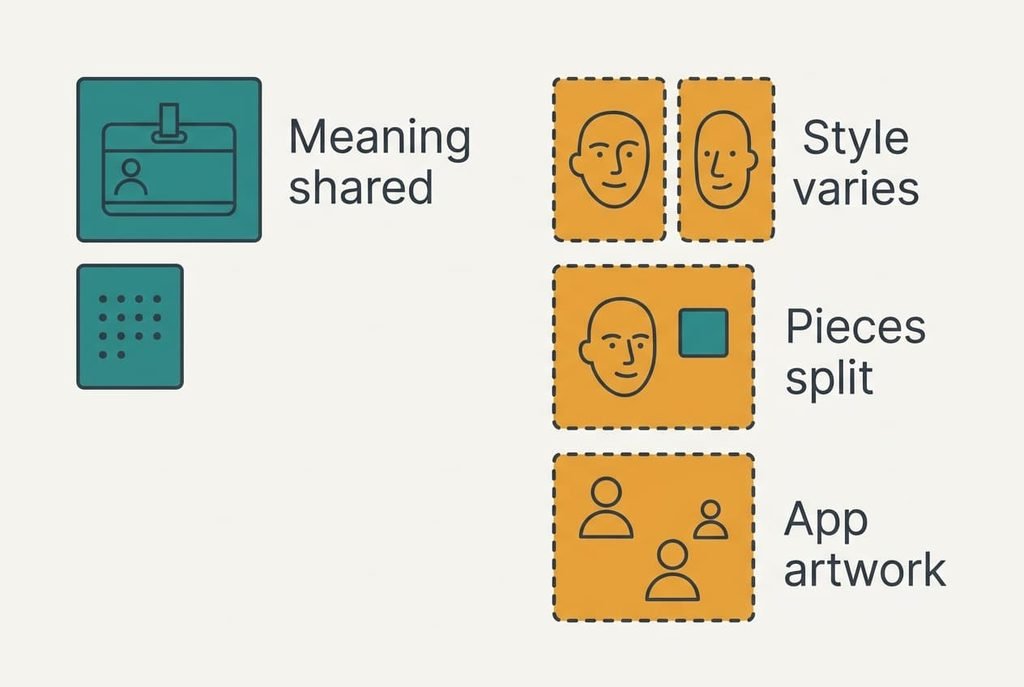
The list fixes meaning and stops there. It gives each emoji a number and a short name, and it describes the idea in a few words. It gives no rule for how round a face must be or which yellow to use, so the look of an emoji belongs to each maker and not to the standard, and no sender can promise how it will appear.
Other limits follow. Skin tones are separate numbers placed after the base character, so a phone without them shows the base face and a coloured square side by side. Joined emoji, such as a family, are several numbers glued together, and an older phone shows them as loose pieces. A phone that updates its font changes how an emoji looks while nothing else on it has changed, so one device can show a different picture from one year to the next. An app can also bring its own pictures, which is another reason the same emoji look different inside two apps on one phone.
Common Mix-Ups About Emoji
Many people assume a picture travels inside the message. The belief forms because a picture appears on both screens, so it seems the same thing arrived. In fact four bytes arrived and the picture was drawn on the spot. The drawing existed on the receiving phone long before your message came in, waiting in its font for a number to call it up.
Another assumption is that the sender decides how the emoji looks to the reader. It takes hold because a sent message looks right on your own screen, so you expect the reader’s screen to match. Your screen shows your phone’s drawing, and theirs shows its own.
A third assumption says a different look means a different meaning. Meaning rarely changes, because the list names each emoji. Expressions can shift, though. A smile on one phone may read as a grimace on another. Add a few words when the exact feeling matters.
When to Add Words to an Emoji
Use one rule: send the emoji alone when its meaning is enough, and add a few words when the exact feeling or the exact picture matters. A thumbs-up for “got it” fits the first case. Jokes that depend on one particular face fit the second.
Recently added or joined emoji deserve the same care, since an older handset may show boxes or loose pieces. Stay with long-established ones when you don’t know the reader’s phone. Save the newer ones for friends whose phones you know.
Test the message on a second screen when it matters, since that takes seconds.
Most readers need only one idea. The number is shared and the drawing belongs to each phone, so the same emoji look different whenever the two phones carry different fonts, even when both are fully up to date. A shared standard guarantees the meaning and nothing more. Test it once by sending yourself the face with tears of joy and opening it on two devices. Half a minute shows you the whole mechanism, and you’ll choose your words with more care afterwards.
Questions Readers Keep Asking
Can an emoji look rude on someone else’s phone?
Occasionally. Expressions differ between makers, so a smile on your phone can read as a grimace on theirs. The meaning in the list stays the same, but the mood can drift. If the tone matters, add a few words beside the emoji, or send a short phrase instead.
Do I need to care which phone my reader has?
Rarely. For everyday chat the meaning arrives intact, and small differences in style rarely matter. A joke that depends on one particular face deserves a thought, and so does a recently added emoji, since an older phone may show a box.
Is an emoji the same as a sticker or a photo?
No. A sticker or photo travels as a picture file, so everyone sees exactly the same image, and it takes thousands of times more data. An emoji travels as a number and gets drawn by each phone. That’s why stickers look identical for everyone while emoji vary.