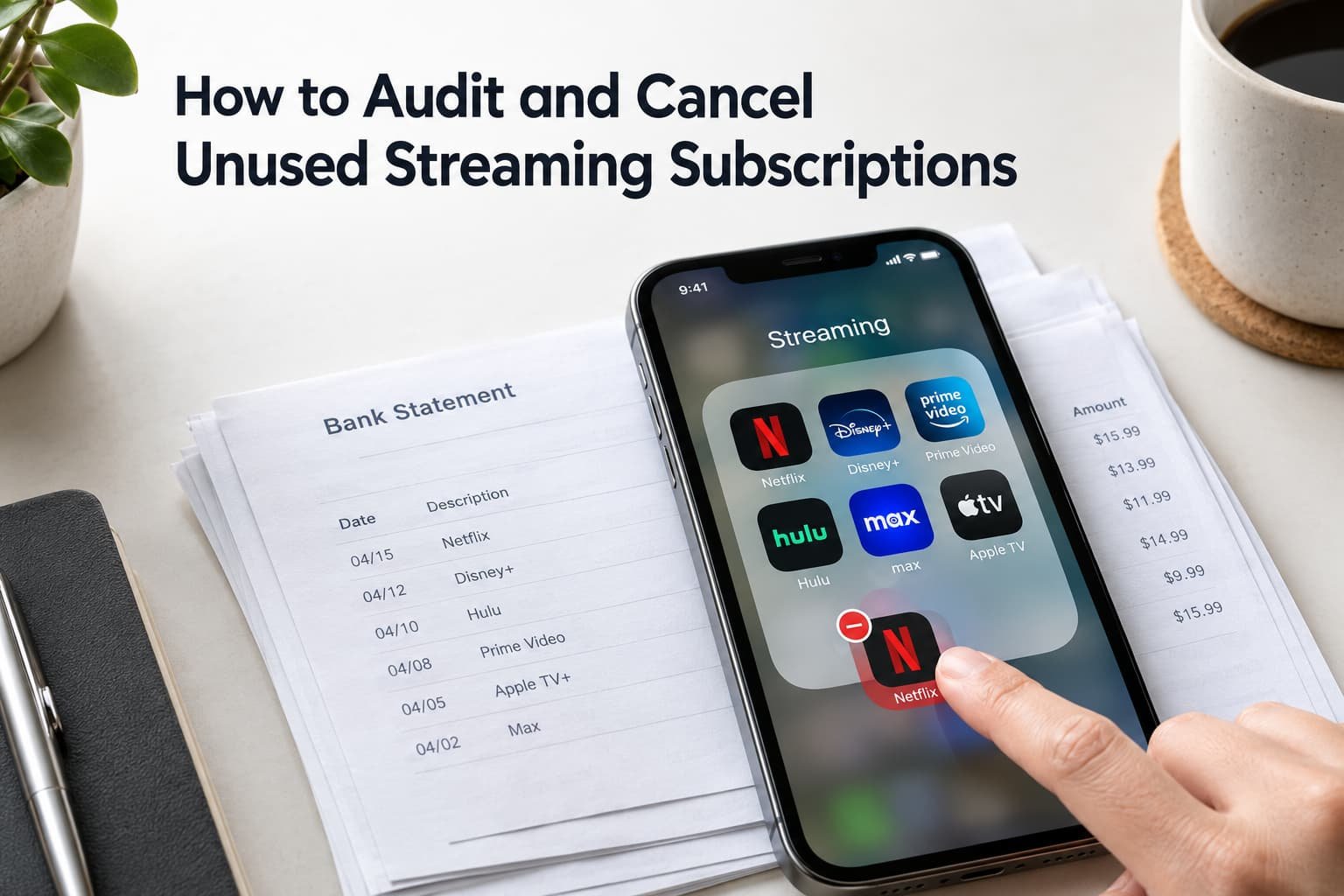
Auditing your streaming subscriptions works best as a systematic review of your actual payment records first, followed by a genuine assessment of use, rather than relying on memory alone to identify what you’re actually still paying for. This guide covers the steps in order, helping you identify exactly what’s active, what’s genuinely worth keeping, and how to actually cancel what isn’t.
Before you start
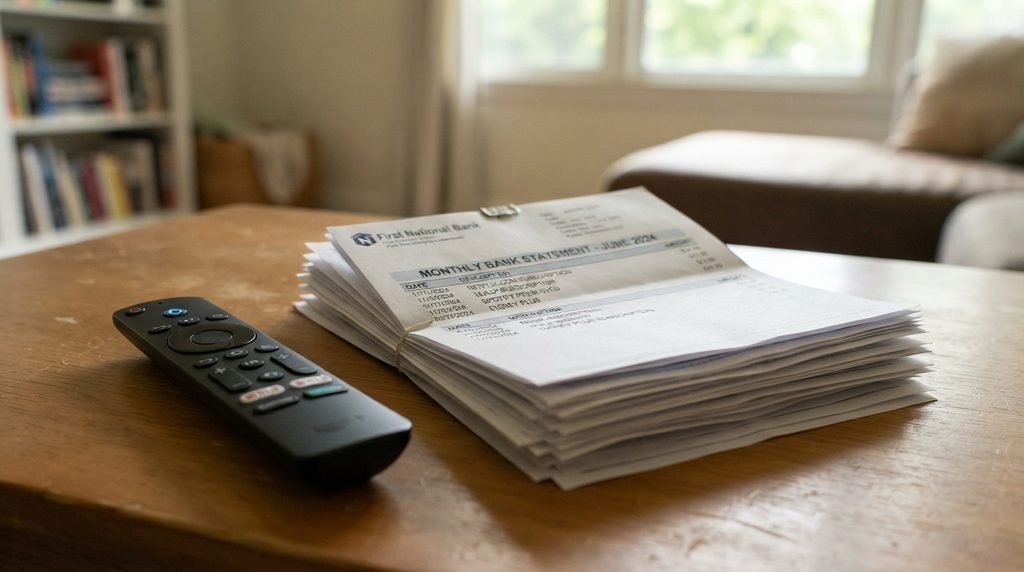
Gather access to your actual bank or payment card statements covering at least the past two to three months, since this is the most reliable way to identify every recurring streaming charge, rather than relying on memory alone, which frequently misses subscriptions added some time ago and then forgotten.
Set aside a genuine, focused period of time to complete this review properly, rather than attempting it in scattered, interrupted moments, since a rushed review is more likely to miss subscriptions or make hasty cancellation decisions you might later reconsider.

Step one: list every active subscription
Go through your statements specifically looking for recurring charges from streaming services, noting each one’s name, cost, and billing frequency, since some services bill monthly while others bill annually, which affects how noticeable the charge is on any given statement.
Cross-reference this list against your phone or device’s own subscription management settings too, since some subscriptions are managed through app store billing rather than direct payment card charges, meaning they might not appear clearly on a bank statement alone.
Step two: score each subscription on a simple scale
Rate each subscription on your list using a simple three-point scale specifically – “used weekly,” “used occasionally,” or “not used this billing period at all” – writing this rating directly next to each entry rather than keeping the assessment purely mental, since a written scale makes step four’s decisions considerably faster and more consistent across your full list.
Apply this same scale consistently across every subscription in one sitting, rather than assessing them at different times with potentially shifting standards, since a consistent scoring session produces a more genuinely comparable list than piecemeal assessment spread across several days would.
Step three: total the actual combined cost
Add up the actual monthly cost of every subscription on your list into one single combined figure, converting any annual charges to their monthly equivalent for a genuinely accurate comparison, since seeing this one combined number is often more motivating for follow-through than reviewing each individual charge separately ever is.
Compare this combined total against a number you’d consider reasonable for your household specifically, before moving into the decision step, since having a concrete target figure in mind makes the individual keep-or-cancel decisions in step four considerably more decisive than approaching them with no reference point at all.
Step four: make a decision for each subscription
For each subscription, decide clearly to keep, downgrade to a lower tier if available, or cancel entirely, basing this decision on your genuine assessment from steps two and three rather than on habit or a vague sense of obligation to a service you’ve held for a while.
Prioritise cancelling subscriptions with the clearest evidence of genuine non-use first, since these represent the most straightforward, lowest-risk decisions, before moving on to more borderline cases where the decision genuinely requires more careful individual consideration.
Step five: actually cancel or downgrade
Follow each specific service’s own cancellation or downgrade process directly through their app or website, since these steps vary between services and are sometimes deliberately less straightforward to find than the signup process was.
Confirm the cancellation or downgrade actually took effect by checking your account status directly after completing the process, rather than assuming it worked simply because you completed the steps, since occasionally a cancellation attempt doesn’t fully process correctly on the first attempt.

Step six: set up a system to make future audits easier
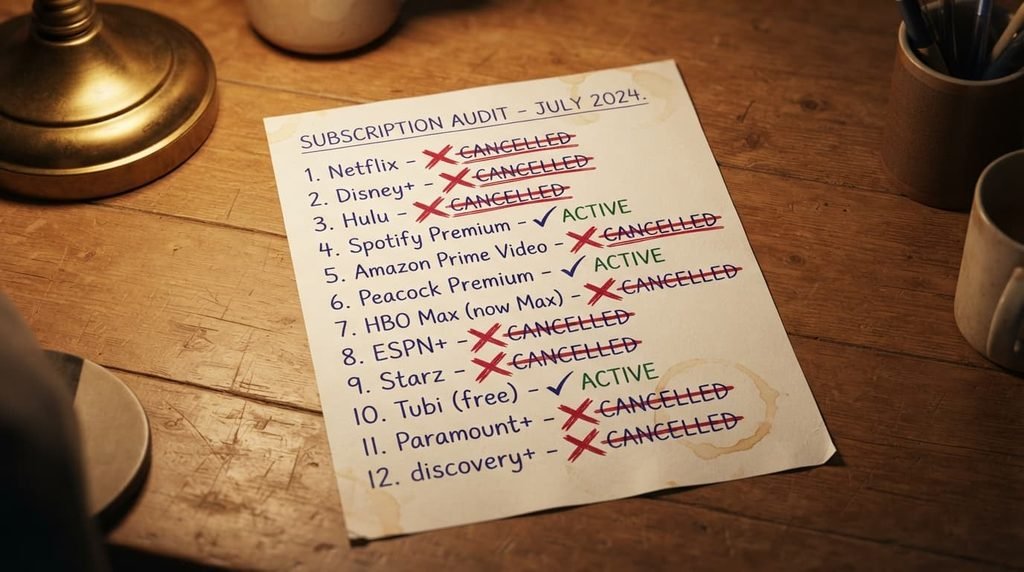
Consider keeping a simple, ongoing note of your active subscriptions as you add or cancel them, rather than starting entirely from scratch with a full statement review each time, since maintaining this record incrementally makes future audits considerably faster than repeating the full discovery process from zero every time.
Note the specific date you last completed a full audit somewhere you’ll actually see it again, since this makes it easier to recognise when your next scheduled review is genuinely due, rather than relying on a vague sense of how long it’s been since your last review.
Making the assessment step genuinely honest
The honest assessment in step two is genuinely the most important part of this entire process, and it’s also the step people most commonly rush through or skip entirely in favour of the more mechanical listing and cancelling steps. A subscription you technically used once in the assessment period but genuinely didn’t find valuable deserves the same honest scrutiny as one you didn’t use at all, since technical use and genuine ongoing value aren’t always the same thing.
Resist the temptation to justify keeping a subscription purely because you paid for it recently or because cancelling feels like admitting the original signup wasn’t worthwhile. The money already spent on a subscription you’re not genuinely using isn’t recovered by continuing to pay for it further – this specific reasoning, sometimes called sunk cost thinking, tends to keep genuinely unused subscriptions active longer than a clear-eyed assessment of current, ongoing value actually justifies.
What isn’t worth doing
Cancelling every subscription simultaneously as a drastic reset, without completing the genuine assessment steps above first, isn’t worth the disruption it causes to services you’re actually still getting value from.
A blanket cancellation removes services you’re genuinely using alongside ones you’re not, requiring you to resubscribe to the genuinely valuable ones shortly afterward, which often costs more in cumulative effort than simply identifying and addressing the specific underused subscriptions directly through the systematic process above.
If you’ve only completed part of this process
If you’ve completed the listing and assessment steps but haven’t yet actually cancelled anything, this is genuinely useful progress worth continuing from, rather than needing to restart the entire process – the harder, more reflective work of honest assessment is often the part people skip, so having completed it puts you in a strong position to finish the more mechanical cancellation steps whenever convenient.

Questions readers keep asking
How often should I repeat this kind of subscription audit?
Every three to six months is a reasonable general interval for most households, since this balances catching accumulated subscription creep and forgotten services against the genuine time investment the full process requires each time you complete it.
What if I’m uncertain whether I’ll want a service again soon after cancelling it?
Checking whether the specific service allows easy resubscription without losing progress or data, such as saved preferences or watch history, can make cancelling a genuinely lower-risk decision even when you’re uncertain about future use, since many services do preserve this information for a period after cancellation.
Is it safe to cancel a subscription immediately, or could I lose access to something I’ve already paid for?
This depends on the specific service’s own policy – some end access immediately upon cancellation, while others let you retain access until your current paid billing period ends, so checking this detail before cancelling helps you avoid the impression of losing value you’ve already paid for.
Is it worth pausing a subscription instead of fully cancelling it if available?
Yes, if your specific service offers a pause option and you expect to want the service again relatively soon, pausing can be a reasonable middle option that stops charges temporarily without requiring you to fully reconfigure the service again from scratch later.