Choosing a power bank that genuinely lasts – both in terms of a single charge and across years of regular ongoing use – comes down to a handful of criteria you can evaluate on any product in front of you, not a specific capacity number or brand name that will inevitably be outdated within a year of publication. Learning what actually predicts genuine longevity lets you judge any option you encounter, in any store, at any point in time, regardless of how the market shifts.
What actually decides this
The deciding factor is how the power bank’s internal cells and charging circuitry are protected from heat and overcharge stress, not the total capacity number printed on the box. Two power banks with identical stated capacity can have meaningfully different real-world lifespans depending entirely on the quality of this internal protection circuitry, which capacity figures alone say nothing about.
This matters because the same cell degradation mechanism that affects phone batteries applies here – heat and stress during charging cycles are what actually shorten a battery’s useful life, not simply the number of times it’s used. A power bank engineered to manage heat well during both charging and discharging will outlast one with a higher capacity but weaker internal protection.
This is genuinely counterintuitive to most first-time buyers, who naturally assume a bigger number printed on the box automatically means a better product overall. The capacity figure answers a completely different question – how much charge the unit holds in a single session – from the question that actually determines whether it’s still working reliably a year or two later. Both questions matter, but only one of them is what most buyers actually end up evaluating when comparing options side by side in a store or online listing.
The criteria that actually matter, in order
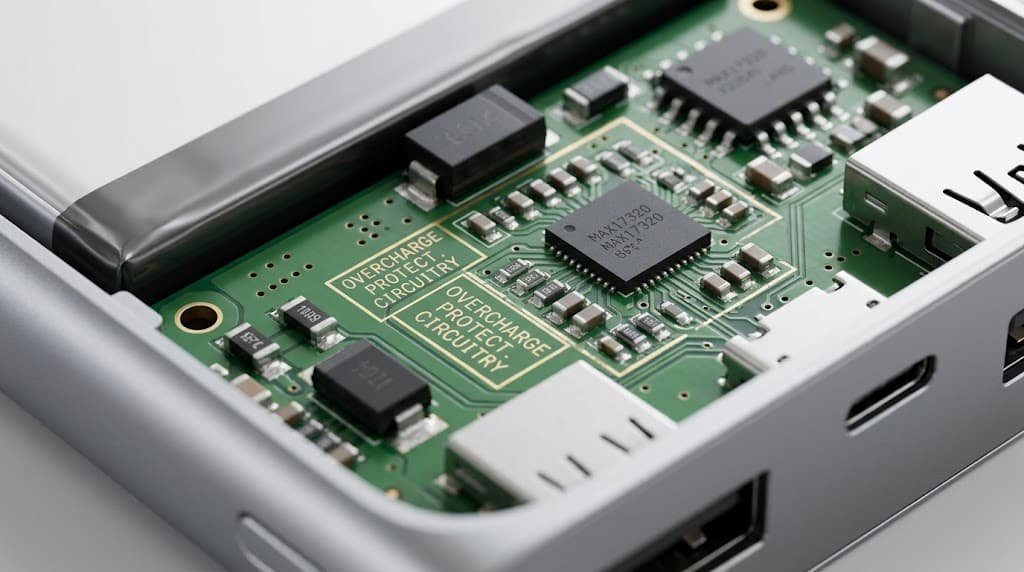
1. Overcharge and temperature protection circuitry. Look specifically for a manufacturer that states this explicitly in the product description, rather than assuming it’s present because a product looks well-made. This single feature does more to extend a power bank’s genuine lifespan than any other single specification, since it prevents the exact conditions that accelerate cell degradation during both charging and discharging.
2. Cell chemistry type, where the manufacturer discloses it. Not every product lists this clearly, but where it’s available, this detail predicts charge-cycle longevity more reliably than capacity alone – different cell chemistries genuinely age at different rates under otherwise identical usage patterns. Absence of this specific information isn’t automatically disqualifying on its own, but its presence is a genuinely positive signal worth weighing carefully.
3. Physical build quality around the charging ports specifically. Ports experience more physical stress than any other component through repeated cable insertion, and a loose or wobbly port – checkable by hand before purchase in a shop, or inferred from genuine buyer photos and reviews online – often fails well before the internal battery cells actually do, regardless of how good those cells are.
4. Pass-through charging capability, if you’ll use it that way. This is the ability to charge the power bank itself while it’s simultaneously charging a connected device. Not everyone needs this, but for anyone planning to leave a power bank connected as a permanent charging hub, its absence forces a usage pattern that adds unnecessary charge cycles to both devices involved unnecessarily.
5. Warranty length and what it actually covers. A meaningfully longer warranty period, and clear language about what capacity degradation threshold triggers coverage, is one of the more genuine market signals available – a manufacturer confident in cell longevity has less to lose by offering longer, clearer coverage than one relying on cheaper components.
What doesn’t matter as much as it’s made out to
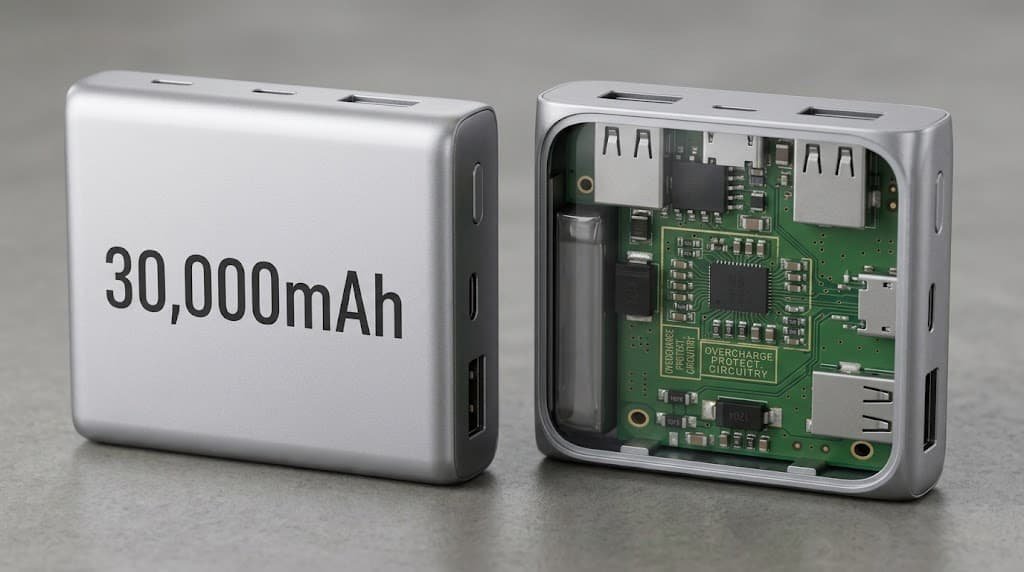
Total stated capacity is the most oversold specification in this entire category, and it’s the number virtually every product listing leads with. A significantly higher capacity number delivers no benefit at all if the internal protection circuitry is weak enough that the unit degrades noticeably within its first year of regular use – a moderate-capacity unit with genuinely strong protection circuitry will still be reliably charging devices well after a higher-capacity competitor has become noticeably less effective.
Charging speed claims printed prominently on packaging are the second most oversold detail. Faster charging speed genuinely generates more heat during use in the same way it does for phones directly, which works against the temperature-protection criterion covered above rather than complementing it – a genuinely well-engineered slower charger can outlast a poorly protected fast one by a meaningful margin.
Matching the choice to your situation
If you’re buying primarily for occasional emergency use – a backup for rare situations rather than daily reliance – prioritise physical durability and build quality over capacity specifically, since infrequent use means charge-cycle degradation matters considerably less than surviving being dropped, jostled, or stored imperfectly for long stretches between uses.
If you’re buying for genuine daily use – a regular commute, consistent all-day device dependence – prioritise the overcharge protection and warranty criteria most heavily, since daily charge cycles accumulate stress on the internal cells far faster than occasional emergency use ever will, making protection quality the dominant factor in how long the unit stays genuinely reliable.
What to walk away from
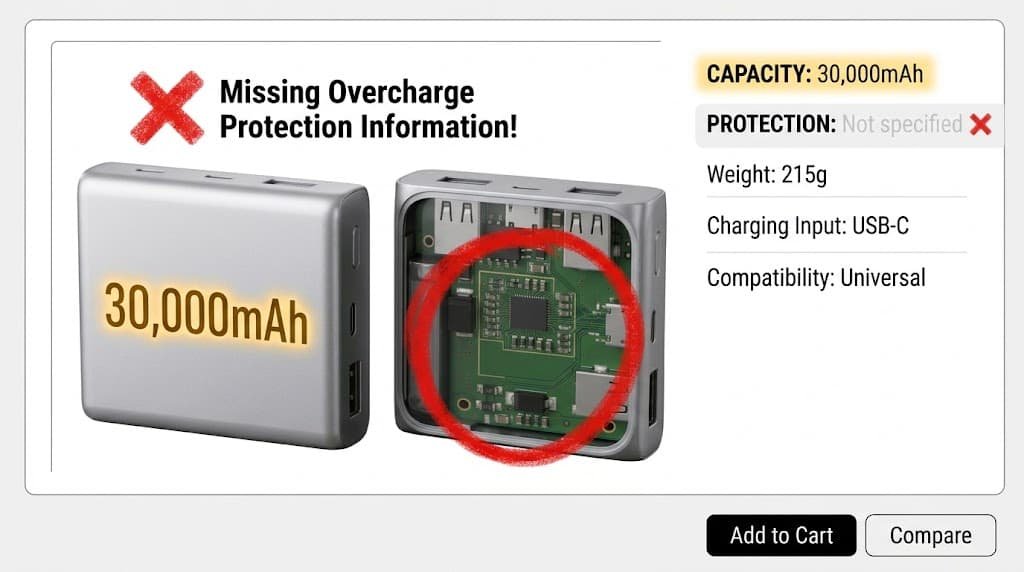
Any power bank listing that emphasises capacity heavily while saying nothing whatsoever about overcharge or temperature protection should end your interest immediately, regardless of how favourable the stated capacity or price appears.
The absence of any protection-circuitry information isn’t neutral – it’s a meaningful gap in exactly the specification that predicts genuine longevity, and a listing that omits it while emphasising capacity numbers prominently is very often doing so because the omitted detail wouldn’t be a genuinely positive selling point if it were actually disclosed to a buyer weighing the decision.
This applies with particular force specifically to listings that rely heavily on generic stock photography rather than genuine, actual product images, since this often correlates with limited genuine testing or quality control behind the listing itself – not a guarantee of genuinely poor quality on its own, but a pattern worth treating as a meaningful yellow flag alongside the protection-circuitry gap rather than considering it entirely in isolation.
The check before you commit
Before finalising any purchase, search specifically for genuine buyer reviews mentioning use after several months or longer, rather than relying only on reviews written shortly after unboxing.
This single check reveals real-world degradation patterns that a fresh-out-of-box review simply cannot show, since overcharge and temperature-related wear only becomes genuinely apparent after repeated charge cycles accumulate over meaningful time, not from a single initial test immediately after purchase.

Questions readers keep asking
Does a higher mAh rating always mean a power bank will last longer?
Not necessarily – stated capacity predicts how much charge a unit holds per session, not how well it survives repeated charge cycles over months and years. Overcharge and temperature protection circuitry predicts genuine longevity considerably more reliably than the capacity number alone.
Is pass-through charging a feature worth prioritising?
Only if you specifically plan to use a power bank as a permanent charging hub while it’s simultaneously connected to power. For occasional or emergency use, this feature matters considerably less than physical durability and overcharge protection.
How can I tell if a power bank has good overcharge protection before buying it?
Check whether the manufacturer explicitly states this in the product description, and search for buyer reviews specifically mentioning performance after several months of regular use rather than relying only on early unboxing impressions.
Does a more expensive power bank always last longer than a cheaper one?
Not automatically – price alone doesn’t reliably indicate protection-circuitry quality, since some higher-priced options compete primarily on capacity or brand recognition rather than genuine internal engineering. The criteria covered above apply regardless of where a specific product sits within its price tier, and checking them directly is more reliable than using price as a shortcut.

