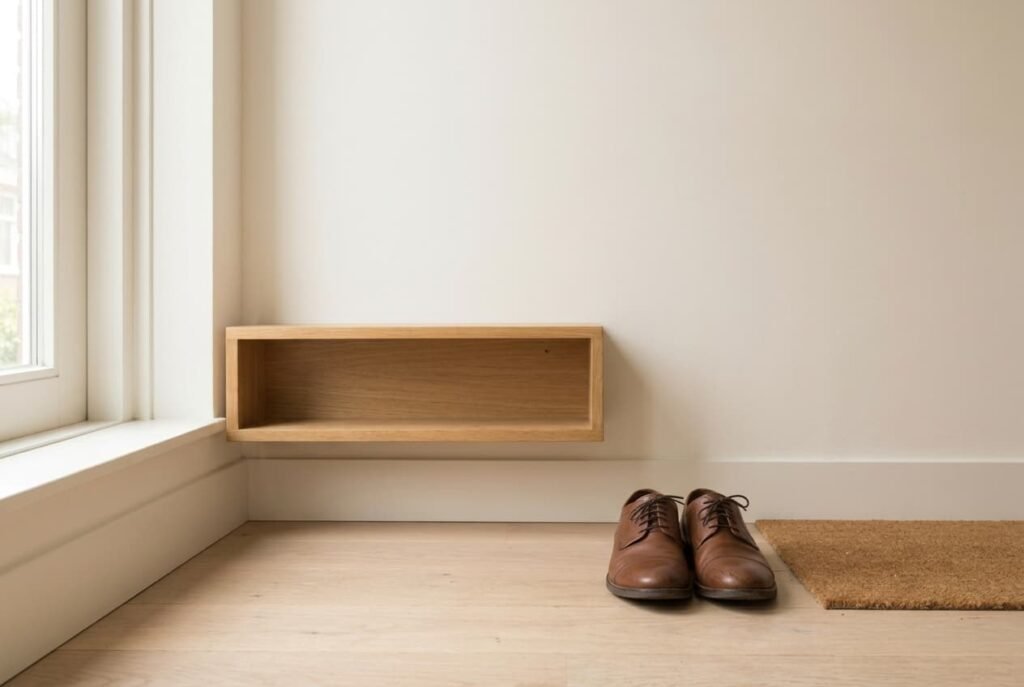
Leather shoes fail in two quiet ways, and the first purchase should stop the more expensive one. Looking after leather shoes at home takes five items, and the order below follows what a mistake costs. The sample is a Rotterdam flat with a hall shelf 40 cm across and 30 cm deep, shared by one adult who owns three pairs and cycles to work in the rain. Each figure is a sample assumed for that household. Adjust it to your own routine before you spend anything. By the end you’ll know what to buy first and which items can wait.
What Decides Looking After Leather Shoes at Home
Rest comes before polish. Leather takes in moisture from rain and from the foot, and it releases that moisture slowly. Looking after leather shoes begins with giving the lining time to dry. In the sample, a day of wear leaves a pair holding an assumed 15 g of water. Two full days of rest clear that, but one day doesn’t. A pair worn on consecutive days therefore never dries. The result is a lining that rots and a toe that creases deeply. Heat doesn’t speed things up. A radiator pulls moisture from the surface only, and the leather cracks while the lining stays wet. Air at room temperature circulating round a shoe held open by a tree is slow and kind.
With three pairs and five workdays, each pair is worn on 1.67 days a week. A rotation of three gives each pair 48 hours between wears. That is the target every purchase below serves.
Grit gives the second rule. A speck trapped under a polish cloth scratches the surface like fine sandpaper, which is why dirt must be lifted off before any cream goes on. Order therefore matters: shape and dryness first, grit second, nourishment third, colour last.
Keep the shelf in mind, since the whole kit shares its 1,200 cm².
Five Purchases for Looking After Shoes, Costliest Mistake First
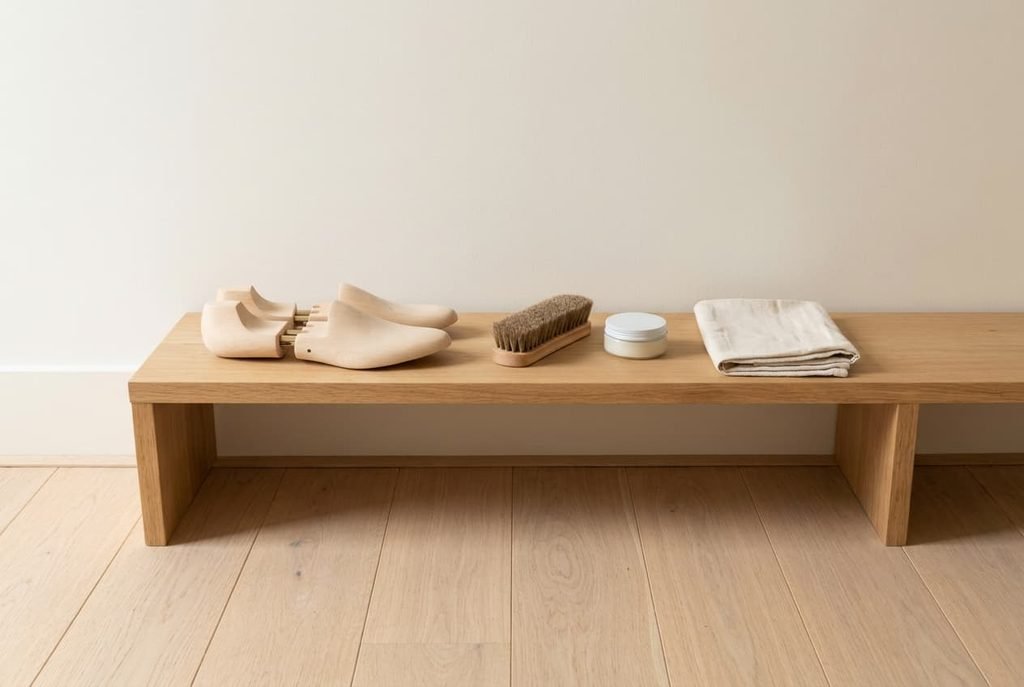
1. Three pairs of unvarnished cedar shoe trees, each with a spring between toe and heel, come first. Tier: BUY ONCE. Bare wood draws moisture out of the lining overnight and holds the toe flat. The trees live inside the shoes and take none of the shelf. Solid wood lasts for decades, whereas a plastic tree absorbs nothing, and a varnished one seals its surface and does the same. Place a drop of water on the wood; it should darken within a minute. The spring should also resist a firm squeeze, because a slack one leaves the toe slumped.
2. A horsehair brush about 20 cm long and 5 cm wide comes second. Tier: MID. It removes grit before cream goes on, and it takes 20 seconds per wear. Tufts wired into drilled holes survive years of use, while glued tufts shed within months. Tug a few bristles in the shop. Hold the brush to your cheek as well; bristles that prickle will scratch the shoe.
3. A neutral leather cream in a pot of about 100 ml is third. Tier: MID. It replaces the oils that rain and heat pull out, and it goes on every eight weeks. Cream beats a spray because you can see where it lands. Check the label for oils or wax near the top of the list. A runny cream soaks in fast and leaves the surface dull.
4. Two cotton cloths, each 30 cm square, are fourth. Tier: BUY CHEAP. One spreads the cream and one buffs it. Old cotton shirts work, since soft woven fabric holds no lint. A synthetic cloth leaves fibres in the cream and buffs badly.
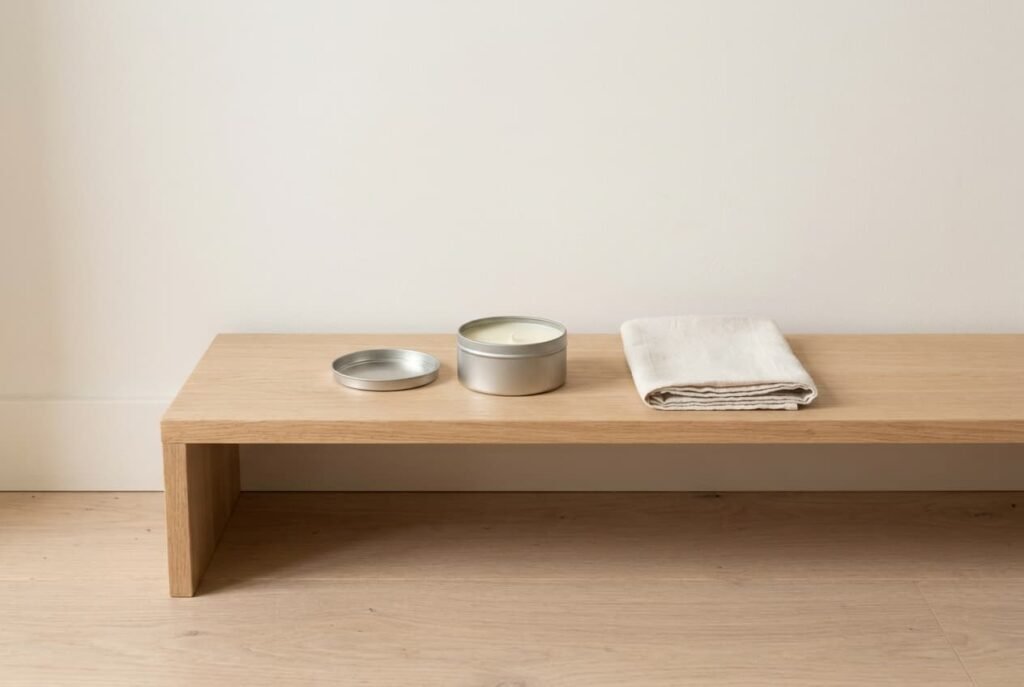
5. Item five is a tin of neutral wax polish, about 50 ml. Tier: BUY CHEAP. The tin covers scuffs, and it needs no exact shade when the colour is near the leather’s own. A hard, dry tin cracks at the surface after a year. Press a thumbnail into the wax; it should leave a clean dent.
Why the Polish Is the Item to Scale Down
Polish is mostly wax and pigment lying over the leather. Buying a small tin and using it only when a scuff shows costs you nothing. Every layer adds buildup, and a thick layer cracks at the creases where the shoe bends. Cream does the daily work underneath. Looking after leather shoes doesn’t call for a gleam every week.
In the sample, the polish gets used roughly once a quarter, against 6.5 cream sessions a year. At 50 ml, the tin outlasts the shoes. A larger set of twelve colours plus a finishing spray fills 600 cm² of the shelf, which is half of it, for a task that happens four times a year at most.
The brush and the cream carry the routine. Hold off on the polish until the first scuff appears. Even then, a neutral colour is enough, since a dark scuff on a brown shoe is fixed by wax that merely matches the leather’s tone. If you later find yourself polishing monthly, the cause is usually dry leather rather than missing shine, and the cream should be brought forward.

Habits That Keep the Leather Rested
Put the trees in as soon as the shoes come off. The leather is still warm, and it holds its shape best then. Stand the pair in a spot at room temperature, away from the hall radiator.
Brush each pair after every wear. At 20 seconds a pair and 230 wears a year, that is 4,600 seconds, or 77 minutes a year. Cream takes four minutes per pair, and three pairs every eight weeks adds up to 78 minutes. Together that is under three hours a year.
Never wear the same pair two days running.
Write a week’s rotation on a card on the shelf if you forget. After a wet ride, press dry paper into the toe and remove it after an hour, then fit the trees. The paper takes the first surge of water, and the wood is spared the job. Rain-soaked pairs still need their full 48 hours, and a wet pair shouldn’t go back on the next morning, whatever the forecast says.
What to Skip
Skip drying wet shoes on a radiator, because heat shrinks the leather unevenly and the glue at the welt lets go. Skip silicone waterproofing sprays on every pair as well; a heavy film can trap moisture inside the shoe. Cheap plastic trees fit badly and absorb nothing. A boot dryer is another extra, since a pair needs only air and time. Multi-piece kits with tiny tins add clutter for no gain, and polishing brushes in four colours add confusion on a shelf this small. A heated rack is another skip, because it acts like the radiator at a smaller scale. Looking after leather shoes works with fewer tools than the shop displays suggest.
Spend your first money on the trees and the brush, then add cream once a month of wear shows dull spots. Everything else waits for a scuff. A pair rested for 48 hours and brushed after every outing will outlast one that gets lavish attention but no rest. Build the habit before the kit grows. Once a month, look at the toe creases on each pair. Deep, sharp folds mean the rotation is too tight and that pair needs another day off.
Questions Readers Keep Asking
How many pairs of shoe trees do I need?
One per pair of leather shoes you wear in rotation, which makes three in the sample. A tree only works while it sits inside the shoe, and you can’t move it between pairs overnight. Trees for shoes that rest in the cupboard are optional.
In what order should I buy the five items?
Trees, then the brush, then the cream, then cloths, then polish. The order follows what a mistake costs: lost shape and a wet lining cannot be repaired, grit can be brushed away later, and a scuff can wait for the tin.
How do I judge a brush before buying?
Tug a few bristles, since they should stay put. Run your palm across the tufts and look for stray strands. The handle should fit your hand, and the head should be at least 5 cm wide, which cleans the welt in a few strokes.

