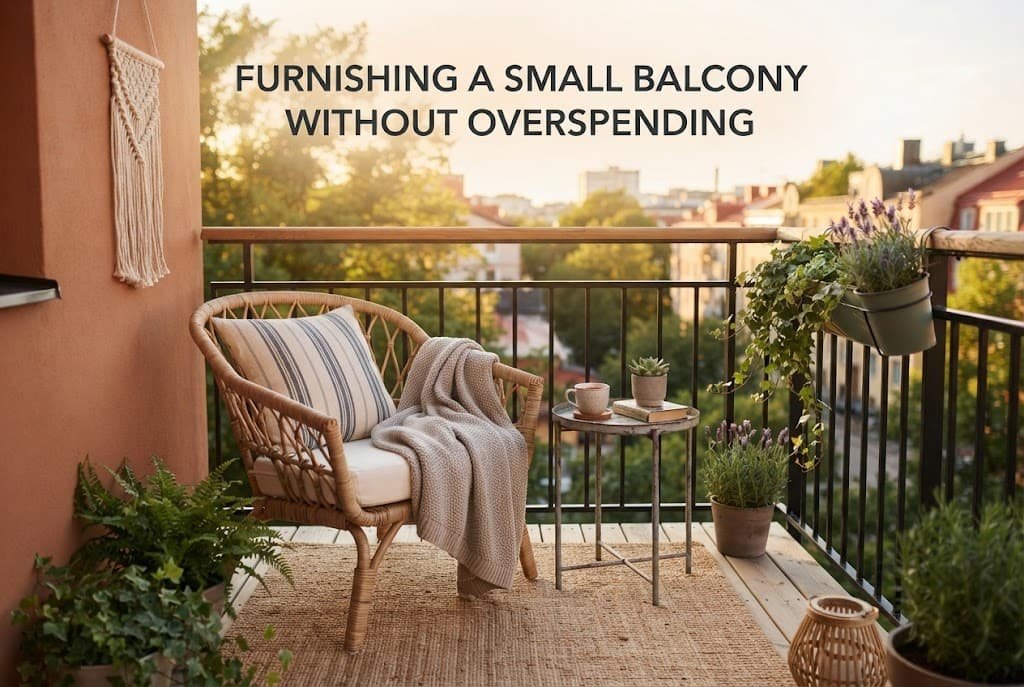
Furnishing a small balcony on a genuinely tight budget isn’t about finding the cheapest version of every single item – it’s about identifying which single piece genuinely deserves most of your available spending, and which pieces can be genuinely modest without anyone actually noticing the difference in daily use. A balcony with a limited budget spread evenly across every category often produces a weaker result than one built around a single deliberate investment.
What actually decides this
The deciding factor is direct physical use and daily contact, versus purely decorative elements that carry no functional weight. The one seat you’ll actually sit in experiences real physical stress every time you use it – weight, weather exposure, repeated contact – while a decorative planter or small accent object experiences almost none of that stress regardless of how much it costs.
This single distinction should guide nearly every purchase decision below: spend where genuine daily use justifies it, and treat everything else as a place to keep modest without meaningful compromise to how the balcony actually functions.
This isn’t the same as simply spending less overall – it’s about redirecting the same modest total budget toward the single choice where quality actually shows up in daily use, and away from choices that improve appearance without affecting whether the space genuinely gets used. A balcony furnished with several modest, evenly-priced items often costs a similar total to one furnished around a genuinely comfortable seat with everything else kept simple, but the second approach delivers noticeably more actual daily enjoyment for the same overall spend.
What to prioritise, in order
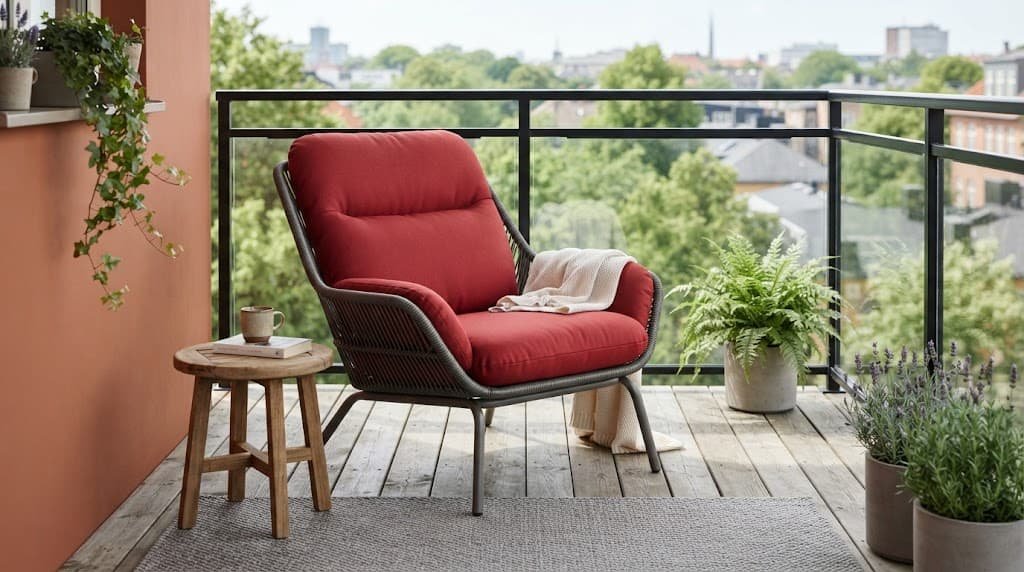
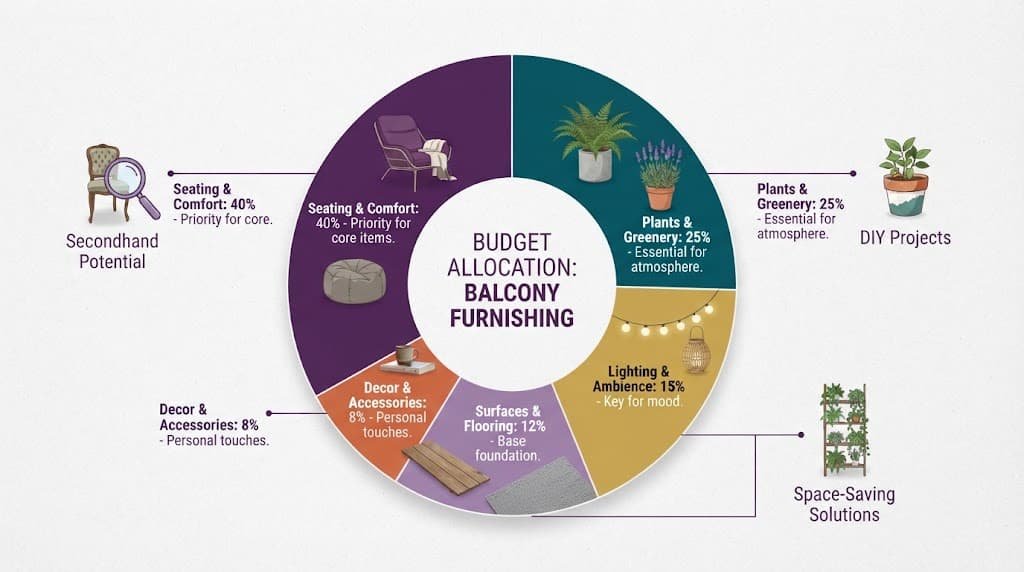
1. The primary seat. This deserves the largest share of a limited budget, since it directly determines whether the balcony actually gets used regularly or sits empty – a genuinely comfortable, weather-appropriate seat justifies spending more here than anywhere else on the balcony, because daily comfort depends on this single piece more than any other element combined.
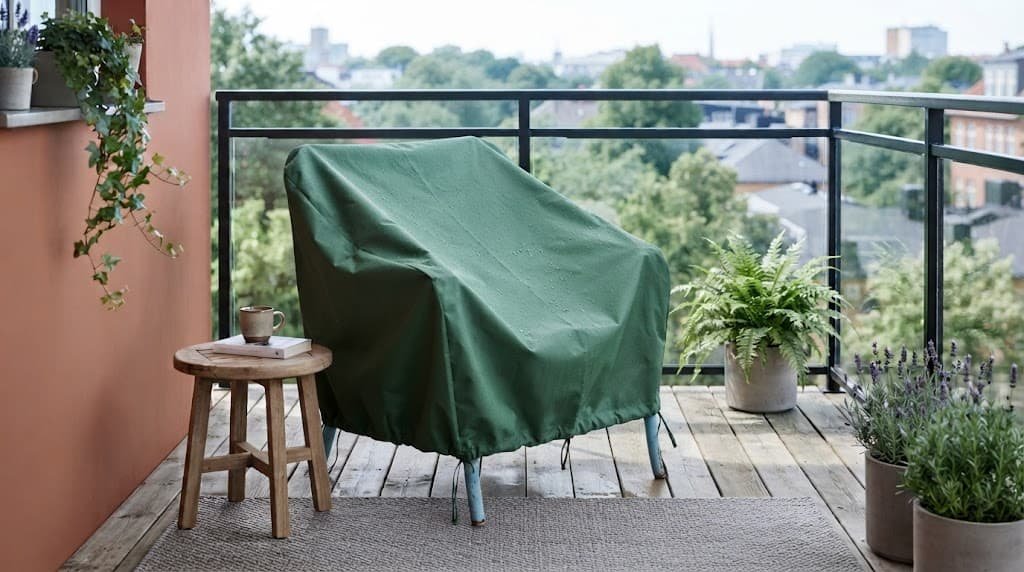
2. Weather protection for that seat specifically. A modest waterproof cover or a simple way to bring cushions inside during bad weather is the second-largest justified expense, since it protects the investment made in the seat itself and prevents a genuinely comfortable piece from deteriorating prematurely due to exposure.
3. A small, genuinely useful side surface. Somewhere to set a drink or a book within reach of the seat matters more than decorative surfaces elsewhere on the balcony, since this is what actually gets used every time you sit down, unlike purely ornamental surfaces that see little genuine daily contact.
4. Basic functional lighting, if the balcony is used in the evening at all. A simple, adequate light source is a modest addition to the total budget but meaningfully extends when the space is actually usable, which matters more than decorative lighting that looks appealing but provides too little actual brightness for practical use.
5. Purely decorative elements – ornamental planters, accent objects with no functional role. These belong last specifically because they carry zero functional load; a modest option performs identically to an expensive one for this particular purpose, making this the easiest category to genuinely economise on without any real trade-off in daily experience.
Where secondhand genuinely makes sense
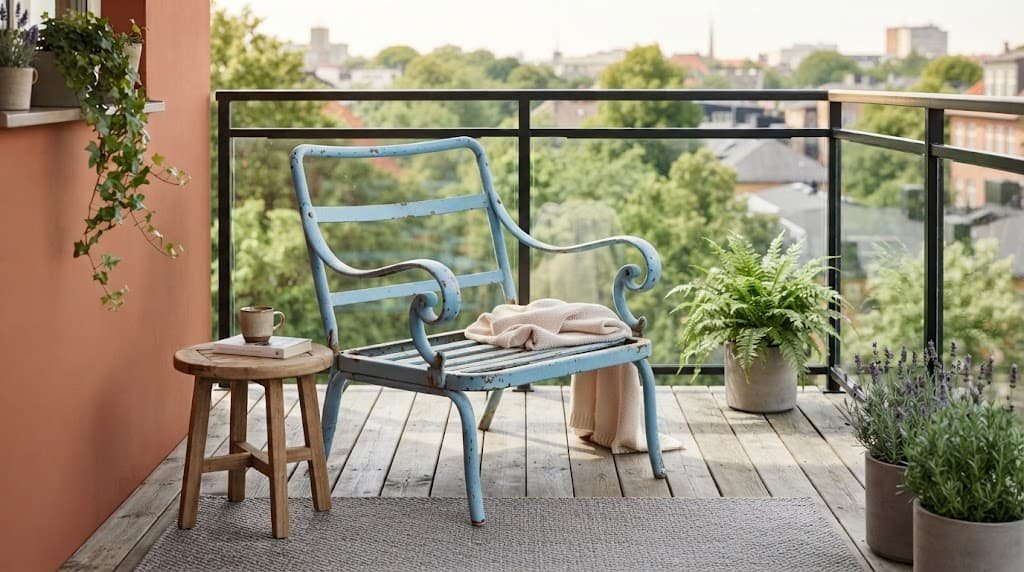
A solid, well-built outdoor chair is a genuinely reasonable category to consider secondhand, since well-made frame construction doesn’t meaningfully degrade with age the way cushion foam and fabric eventually do, and outdoor furniture frames in particular are often available secondhand at considerably reduced cost. Checking joint stability carefully and any visible rust or rot before actually committing covers most of the genuine risk this specific category presents.
Cushions and soft furnishings are weaker candidates for buying secondhand specifically, since fabric and foam absorb weather exposure and general wear in ways that aren’t always visible from the outside, and a secondhand cushion that’s already been through significant sun and moisture exposure often doesn’t provide the comfort or longevity a new one does, regardless of how the surface fabric looks at first glance.
What doesn’t matter as much as it’s made out to
A matching furniture set is oversold for small balconies specifically, and it’s one of the first things budget guides recommend for outdoor spaces. A matched set often costs more in total than assembling equivalent-quality individual pieces separately, because set pricing assumes you want and will use every included piece, when a small balcony frequently doesn’t have room for all of them regardless of how attractive the coordinated look appears in a catalogue.
Decorative planters and ornamental garden accessories get far more budget attention than they deserve relative to the seating and weather-protection priorities above. A visually striking planter beside an uncomfortable seat still produces a balcony that goes unused, while a plain, inexpensive planter beside a genuinely comfortable seat produces a space that actually gets enjoyed regularly.
Matching the choice to your situation
If you’re furnishing entirely from scratch, prioritise the seat and its weather protection first and treat everything else as genuinely optional for the first few weeks – a bare side surface costs you nothing functionally, while an inadequate or uncomfortable seat affects whether the balcony gets used at all from the very beginning.
If you’re replacing just the seating while keeping existing decorative elements, the same priority logic still applies specifically to the seat itself, but you can afford more selectivity in remaining categories since the rest of the balcony’s basic function is already reasonably addressed.
What to walk away from
Any seat you cannot test for genuine comfort before buying, or that offers no meaningful return option, should end your interest immediately regardless of how favourable the price seems.
Comfort is genuinely quite difficult to judge from a photograph or a brief description alone, and an uncomfortable seat is genuinely one of the more expensive mistakes to make in this particular category, since it typically means the balcony goes unused despite the money spent, rather than the modest saving the initial low price seemed to offer actually paying off in practice.
The check before you commit
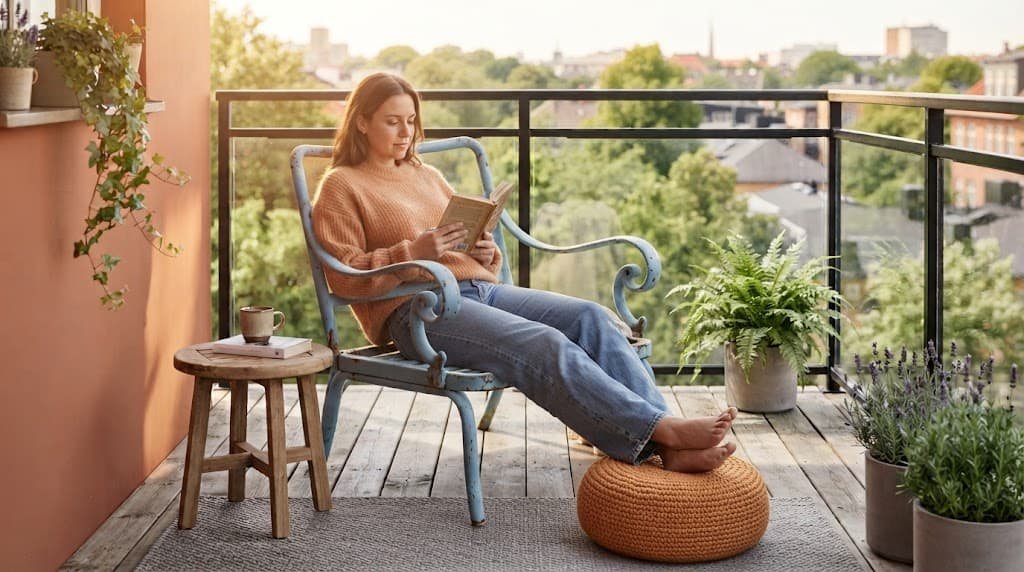
Before finalising any seat purchase, sit in it for the genuine length of time you’d realistically use it for – a full coffee break, real reading time – rather than judging comfort from a brief moment of sitting down in a shop or from product photographs alone.
This one single check reveals actual genuine comfort far more reliably than a brief impression ever does, since genuine discomfort often only becomes apparent after several full minutes, not within the first few seconds of initial contact with the seat.
Questions readers keep asking
What’s the single most important purchase when furnishing a small balcony on a budget?
The primary seat deserves the largest share of your available budget, since it directly determines whether the balcony actually gets used regularly, in a way almost nothing else on the balcony affects to the same degree.
Is it worth buying a matching furniture set to save money?
Not necessarily – matched sets often cost more in total than assembling equivalent-quality individual pieces, particularly on a small balcony that may not have room for every piece the set actually includes.
How can I tell if balcony seating is genuinely comfortable before buying it?
Test it for a genuinely extended period in your typical sitting position rather than relying on a brief impression or the price alone, since real discomfort often only becomes apparent after several minutes of actual use, not immediately upon sitting down.
Should I prioritise the seat or the side table if I can only afford one right now?
The seat, genuinely in almost every single case – it directly determines whether you’d actually choose to sit down at all, while a temporary flat surface or even the floor itself can serve adequately well in the short term for setting down a drink or book. A comfortable seat without a side table still gets used regularly, while an uncomfortable seat with a beautifully chosen side table often doesn’t.