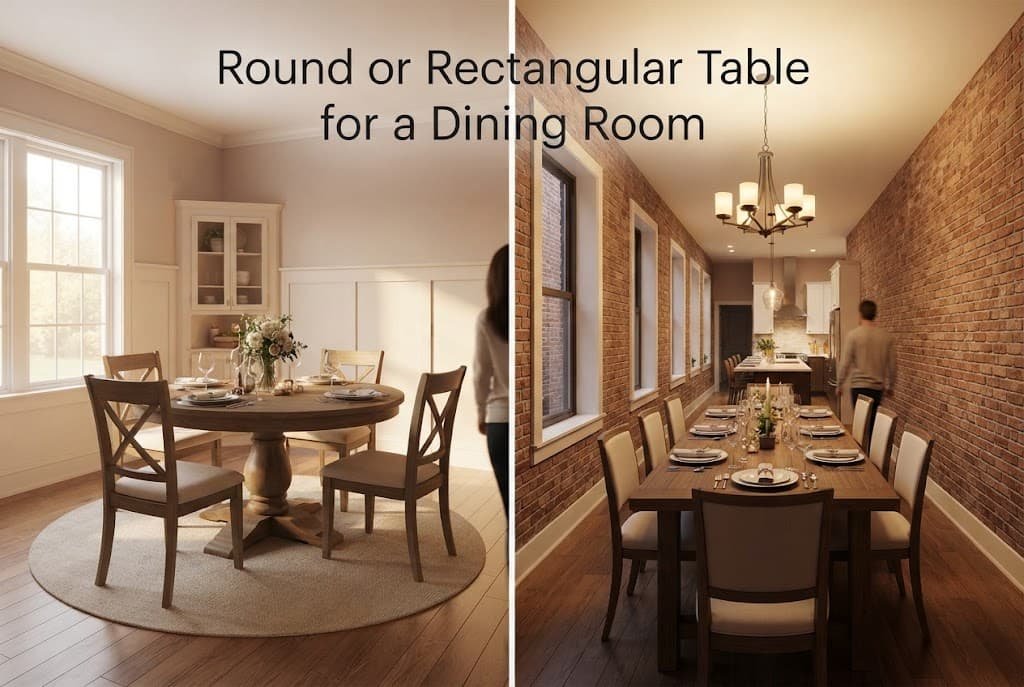
The right table shape for a dining room isn’t decided by which specific one looks more striking in a showroom – it’s genuinely decided by how each one actually behaves against your room’s specific dimensions and your household’s typical seating needs once it’s fully installed. A round table and a rectangular table solve genuinely different spatial and social problems, and choosing based on appearance alone misses what actually determines whether either one works well in daily use.
The one property that decides it
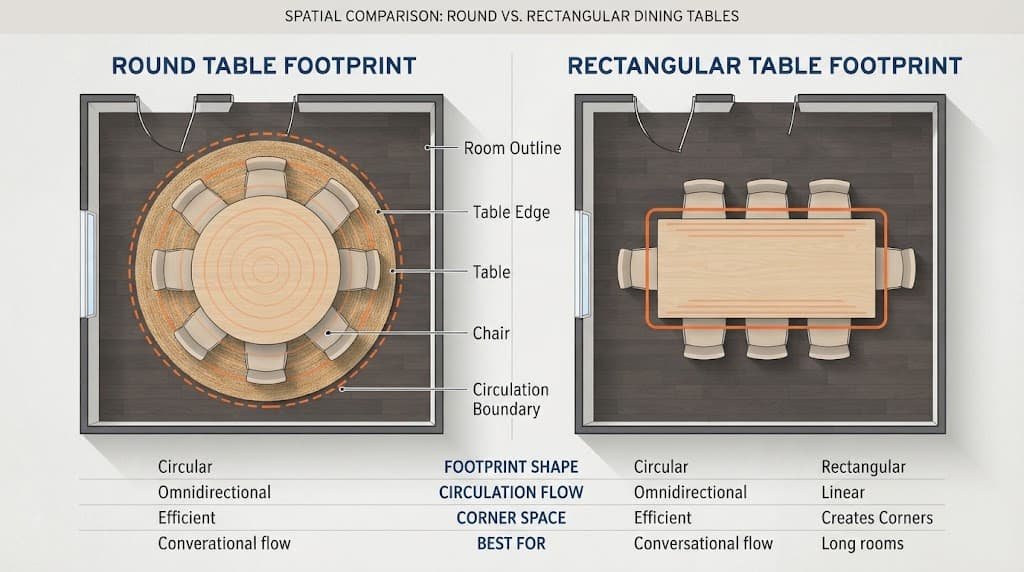
The deciding factor is genuinely how each shape handles your room’s actual proportions and your typical number of diners, not simply which specific shape you personally find more visually appealing overall. A rectangular table genuinely fits a long, narrow room efficiently and accommodates more people along its overall length, while a round table uses a square or more compact room’s available space more efficiently and entirely removes the “head of the table” hierarchy a rectangular table naturally and inevitably creates.
This matters considerably because a table shape genuinely mismatched to the room’s actual proportions creates awkward leftover space regardless of how attractive the table itself happens to be – a round table in a narrow room leaves unusable gaps at the sides, while a long rectangular table in a compact square room can make the entire space feel cramped and genuinely difficult to walk around.
Head to head
| Round Table | Rectangular Table | |
|---|---|---|
| Best room shape | Square or compact rooms | Long, narrow rooms |
| Seating capacity efficiency | Lower for the same footprint | Higher for the same footprint |
| Social hierarchy | None – equal seating | Implies a head of the table |
| Conversation ease | Easier for the whole group | Easier in smaller clusters |
| Traffic flow around it | Generally smoother | Can create bottlenecks at corners |
| Flexibility for extra seating | More limited | Easier to extend with leaves |
The single row that surprises most people the most is traffic flow specifically. Many people naturally assume a rectangular table is always the more space-efficient choice since it fits more people overall, but a round table’s genuine lack of corners actually allows considerably smoother movement around it in a room where walking space is genuinely tight, which matters more than raw seating capacity does in a compact space specifically.
Where round wins
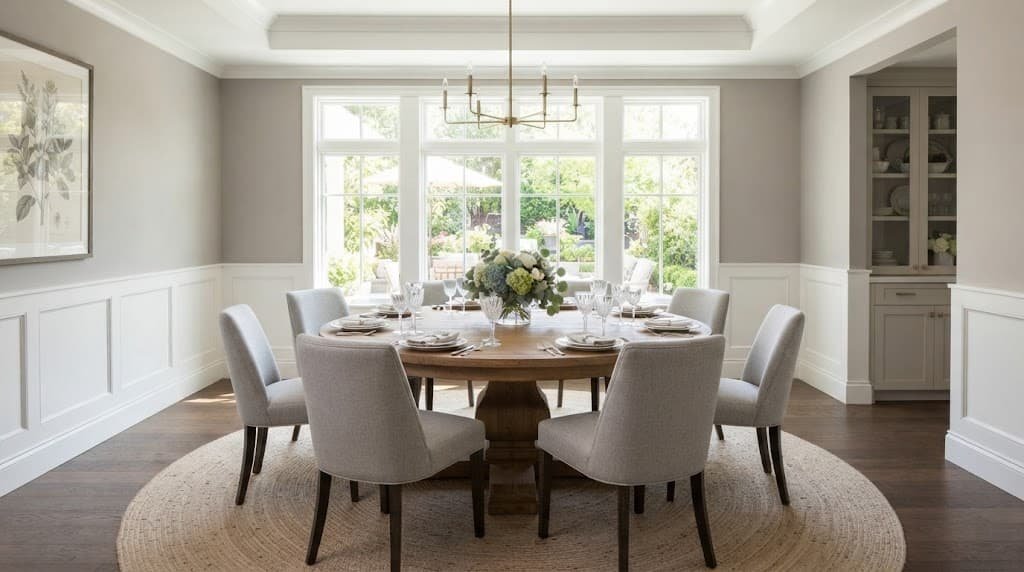
A genuinely square or near-square room benefits from a round table’s more efficient use of that specific proportion, since a rectangular table placed in a square room tends to leave awkward, genuinely underused space along the walls that a round table’s more centred footprint genuinely avoids entirely. The unglamorous reason: a round table also removes the head-of-the-table dynamic entirely, which genuinely matters more than it might initially seem for households that specifically want every single seat to feel genuinely equally positioned during everyday meals shared together.
Anyone genuinely and regularly hosting conversation-focused gatherings on a routine basis benefits from this same lack of hierarchy in a rather different way, since a round table’s shape naturally supports whole-group conversation considerably more easily than a long rectangular table does, where diners seated at opposite ends often end up having entirely separate conversations rather than one genuinely shared discussion.
Where rectangular wins
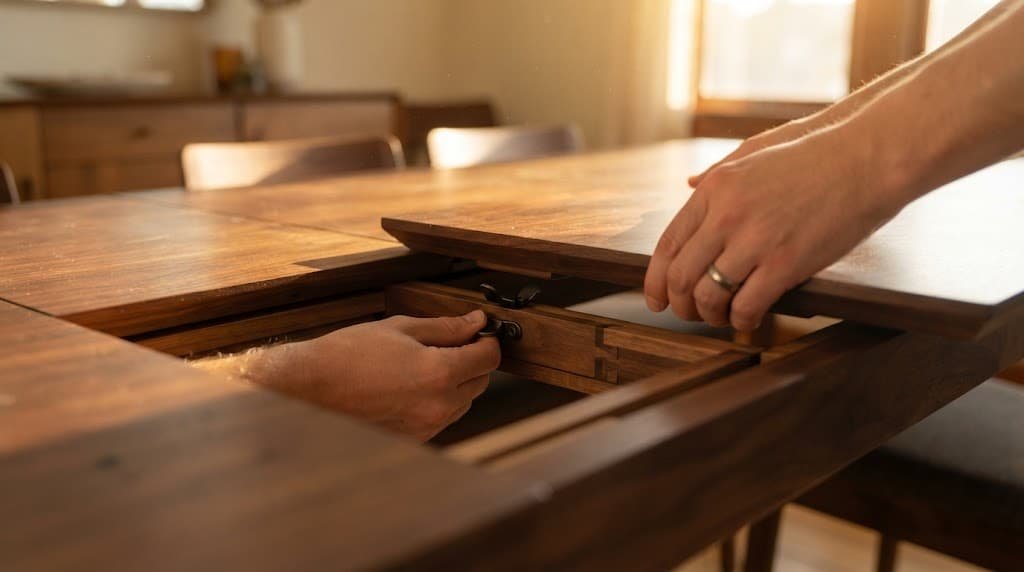
A genuinely long, narrow room benefits from a rectangular table’s ability to use that length efficiently while still leaving adequate walking space along the sides, since a round table sized to genuinely seat that same number of people would need to be considerably wider overall than a genuinely narrow room can typically comfortably accommodate in practice. The unglamorous reason: a rectangular table with genuine extension leaves also offers a straightforward, practical way to temporarily seat more people for occasional larger gatherings, without requiring an entirely different, separate table just for that occasional need.
Anyone regularly and consistently using the table for tasks well beyond eating – homework, laptop work, craft projects – benefits from this same footprint efficiency in a rather different way, since a rectangular surface generally provides considerably more usable straight-edge workspace per person than a round table’s curved edge genuinely does for the same overall footprint.
When neither is right
Choosing a table shape based purely on a design trend’s current fleeting popularity, without first genuinely measuring your specific room’s actual dimensions and walking clearance, is worth ruling out entirely regardless of which shape you’d otherwise personally prefer.
A table that technically fits the room’s floor area but leaves insufficient walking clearance around it creates a genuinely uncomfortable daily experience regardless of how well the shape suits the room’s general proportions on paper, since genuine clearance for pulling out chairs and walking past seated diners genuinely matters just as much as the table’s own footprint itself truly does.
This particular caution applies with especially strong force specifically to households measuring only the table’s own dimensions in complete isolation, while genuinely overlooking the additional clearance chairs genuinely require once pulled out and actually occupied by someone. A table that fits the room perfectly well when entirely bare often becomes genuinely quite cramped once chairs are pulled back and people are actually seated, which is genuinely the real everyday condition worth carefully measuring for, not simply the table’s footprint alone by itself.

How to decide in thirty seconds
If your dining room is genuinely square or compact in shape, choose round instead. Its more efficient use of that specific proportion directly addresses the awkward leftover space a rectangular table would otherwise create in this particular room shape.
If your dining room is genuinely long and narrow in shape, choose rectangular instead. Its ability to use that length efficiently while maintaining adequate walking clearance directly addresses what a round table sized for the same capacity structurally simply can’t achieve in this specific room shape.
What changes the answer later
Moving to a genuinely new home with a differently-proportioned dining space entirely resets this calculation rather than simply carrying over the previous table shape preference automatically, since the underlying room proportions that favoured one shape originally may not apply in quite the same way in a genuinely different space altogether.
A household’s typical guest count growing significantly and consistently over time is genuinely worth revisiting the choice at, since a rectangular table’s extension-leaf flexibility becomes considerably more valuable as regular gathering sizes increase, in a way a round table generally simply can’t match without replacing the entire piece altogether.
Questions readers keep asking
Is a round table always more space-efficient in a small dining room?
Not necessarily always – it depends quite specifically on the room’s actual proportions, not just its overall size alone. A round table is generally more efficient in a square or compact room, while a rectangular table can genuinely be the more efficient choice in a small but genuinely narrow, elongated room.
Can a round table seat as many people as a rectangular one of similar size?
Generally quite a few fewer, for a comparable overall footprint – a rectangular table typically accommodates considerably more diners along its length for the same overall floor space a round table would occupy, which is genuinely worth considering if maximising seating capacity specifically matters to your particular household.
Does table shape actually affect how formal or casual a room feels?
To some genuine degree – a round table’s lack of any defined head position tends to feel slightly more casual and genuinely egalitarian, while a rectangular table’s clearer head-of-the-table structure can genuinely read as marginally more traditional, though this specific effect is generally quite secondary to the lighting and material choices covered elsewhere in detail.
Is an oval table a genuine middle ground between round and rectangular?
In some genuine respects, yes indeed – an oval table combines a rectangular table’s length efficiency with softer, rounded corners that improve traffic flow somewhat compared to sharp, rigid right angles, though it doesn’t fully replicate either shape’s specific strengths and works best in a room whose proportions genuinely sit between the clearly square and clearly narrow extremes.