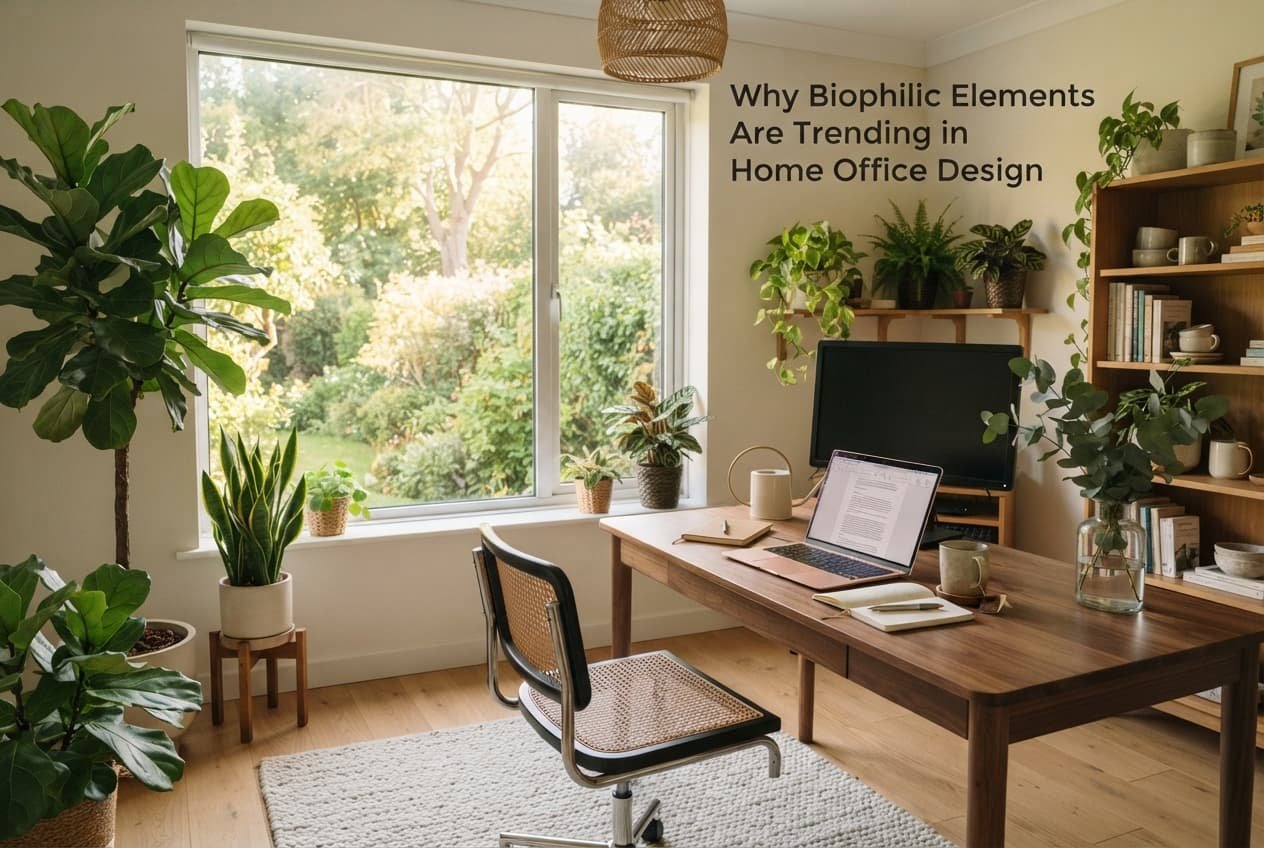
Biophilic elements – plants, natural materials, views of greenery – keep displacing purely minimalist, sterile home office aesthetics for a reason grounded in measurable attention and stress research, not seasonal taste alone. Understanding that reason tells you whether it’s worth adopting or just the current version of a cycle that will pass. The shift is real and checkable in how natural elements affect measurable cognitive fatigue during extended focused work, not simply a matter of one aesthetic being more fashionable than another.
What actually changed
The measurable shift is a move away from home offices designed around purely clean, minimal, often sterile visual environments toward incorporating genuine natural elements – live plants, natural wood tones, visible greenery through a window – specifically within the workspace itself. Where a purely minimal aesthetic prioritises visual simplicity above all else, biophilic design specifically incorporates natural elements believed to support sustained attention during extended work.
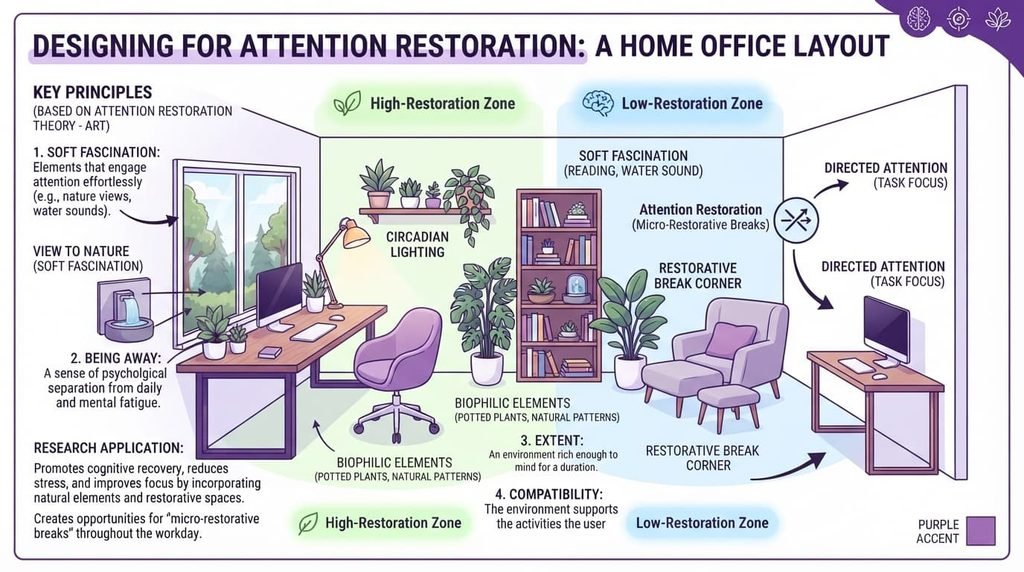
This isn’t purely aesthetic preference – it’s connected to a body of research suggesting brief visual exposure to natural elements can help restore attention during demanding cognitive tasks, which is why the underlying principle recurs across different design eras rather than being tied to one particular decorating trend alone.
Why it keeps coming back specifically now
The continued growth of home-based work specifically has created a direct tension that biophilic design addresses: spending considerably more sustained hours in a single indoor workspace than previous, more varied office-and-commute patterns typically involved, without the natural environmental variation a traditional workday often included.
For many home workers, this specific tension between spending extended hours in one indoor space and lacking the natural environmental variety a traditional office commute or outdoor break might have provided has become increasingly relevant, which is a concrete structural reason biophilic design’s popularity tracks this broader home-work shift rather than purely following showroom styling alone.
This distinguishes the current cycle from earlier uses of plants and natural materials in office design, which were often driven primarily by a particular aesthetic movement’s popularity rather than by genuine attention-restoration research. The underlying mechanism is the same regardless of cause, but a technique connected to an actual documented benefit tends to persist considerably longer than one driven purely by aesthetic trend popularity alone.
What this actually changes in a room
Even brief visual breaks toward natural elements during demanding cognitive work are associated with measurable attention restoration in supporting research, which is the direct mechanism behind biophilic design’s proposed benefit for sustained focused work specifically. This isn’t purely subjective preference – it’s connected to how visual attention responds differently to natural versus purely synthetic visual environments during demanding cognitive tasks.
Air quality and humidity also shift somewhat with genuine live plants present, though this specific effect is generally modest relative to a room’s overall ventilation, and shouldn’t be relied upon as a primary air quality solution on its own.
What this looks like in practice
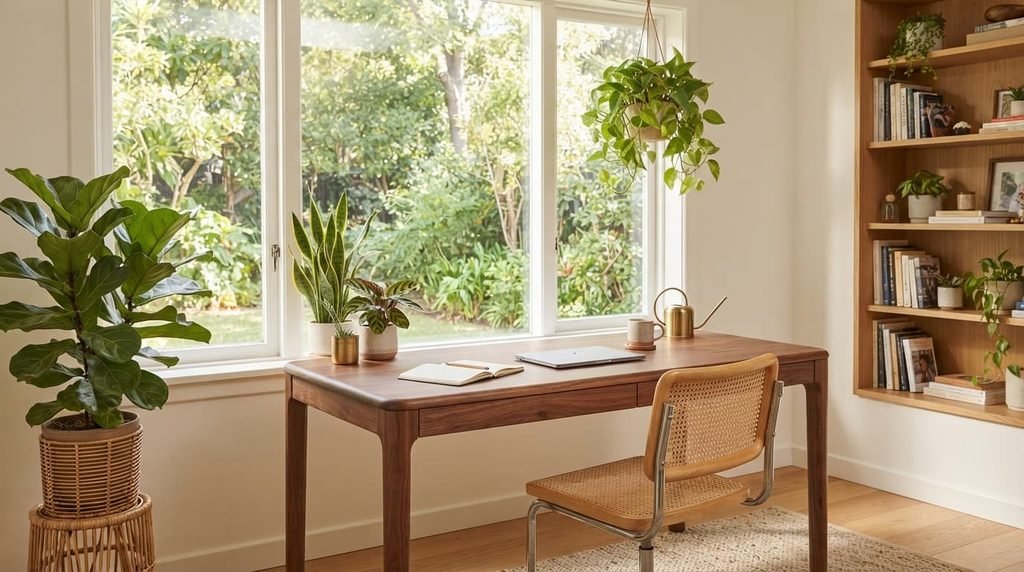
A window view of greenery, if your home office layout allows positioning your desk to genuinely benefit from it, provides this attention-restoration effect without requiring any additional purchase or ongoing plant maintenance at all, making it one of the most cost-effective ways to incorporate the underlying principle if your specific space’s layout happens to support it.
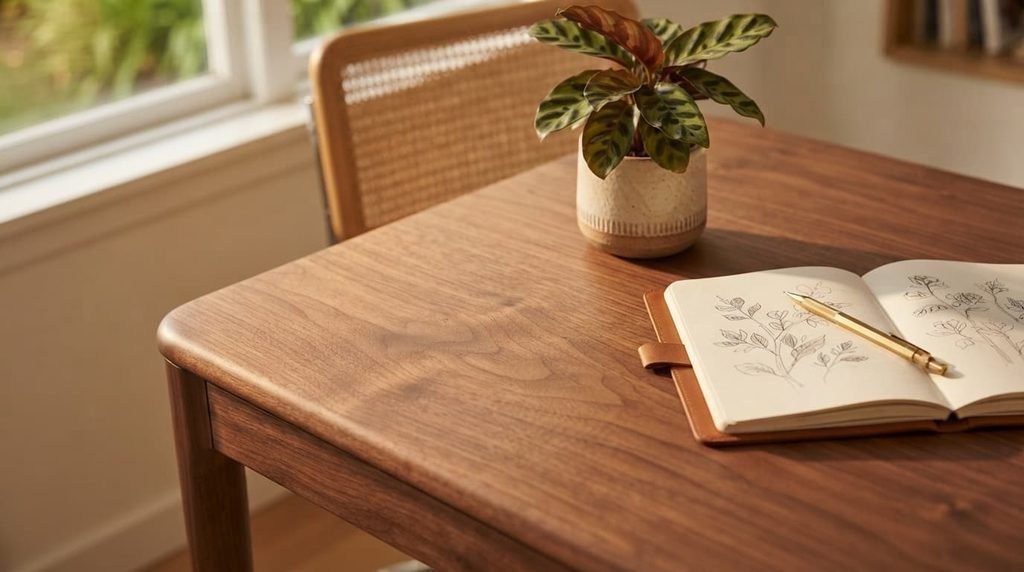
Natural wood tones or textures on desk surfaces or shelving provide a related but distinct benefit, offering some of the natural-material visual variety biophilic design incorporates, even without living plants specifically involved. This is a reasonable option for anyone genuinely unable to maintain live plants reliably, whether due to lighting conditions, care availability, or simple personal preference against plant maintenance.
Where this trend genuinely holds up
The attention-restoration mechanism behind biophilic elements doesn’t depend on current taste, which is why it’s a reasonable longer-term choice specifically for home offices used for extended, sustained cognitive work throughout the day. A workspace genuinely used for many consecutive hours of demanding focus benefits from this approach regardless of which decade’s aesthetic currently favours the specific plant styles or natural materials being used.
Where the verdict should stay negative
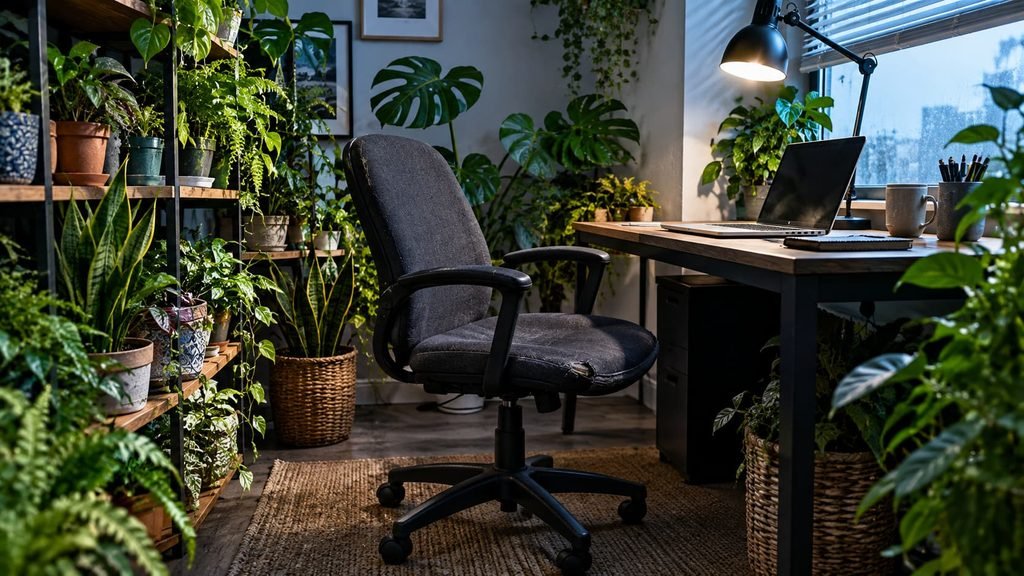
Biophilic elements genuinely aren’t worth prioritising over the fundamentals – genuine seating comfort, adequate task lighting – covered elsewhere, despite how consistently plants specifically get marketed as a universal home office improvement.
A home office with an elaborate plant collection but an uncomfortable chair and inadequate lighting still fails to support genuinely sustained, comfortable work, since the attention-restoration benefit plants may offer doesn’t compensate for physical discomfort or eye strain from poor lighting. Prioritising plants over these fundamentals, purely for their current popularity, addresses a secondary benefit while leaving the actual primary barriers to comfortable work unaddressed.
What people get wrong when adopting it
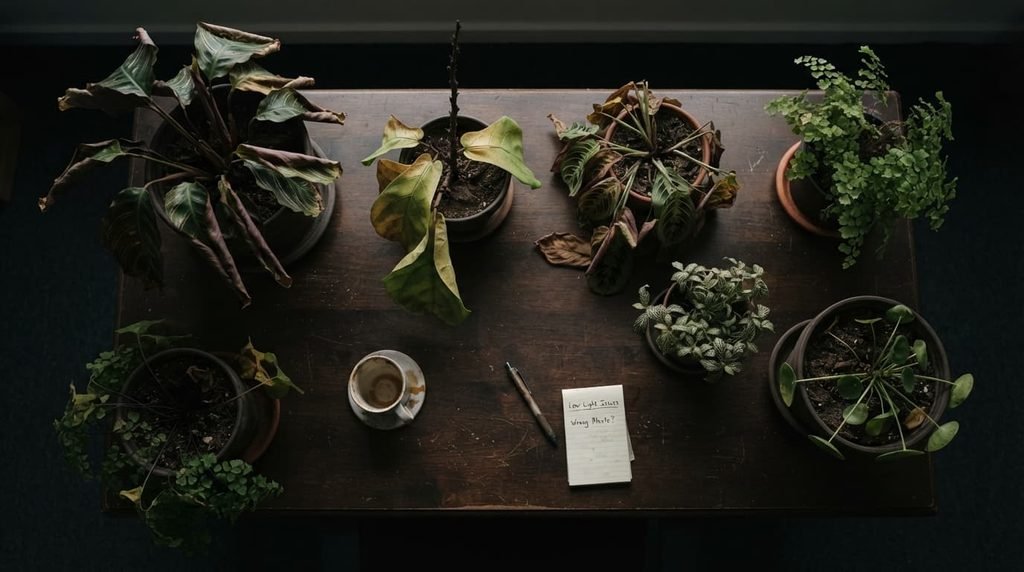
The most common mistake is choosing plants requiring more light or care than a specific home office space actually provides, resulting in plants that struggle or die rather than providing any genuine benefit. Selecting plants genuinely suited to your specific space’s actual light conditions matters more than choosing based purely on visual appeal in a photograph taken in different, more favourable conditions.
A second common mistake is treating biophilic design as requiring an elaborate, extensive plant collection, when even a small number of well-placed plants or natural material accents can provide the visual variety the underlying mechanism actually depends on, without requiring the maintenance burden a large collection genuinely demands.
Where the evidence base is still developing
It’s worth noting honestly that while the attention-restoration research connected to natural elements is genuinely substantial, much of it originates from broader environmental psychology research rather than studies specifically isolating home office settings alone. This doesn’t undermine the underlying principle, but it’s a reasonable distinction to keep in mind – the general mechanism appears well-supported, even as research specifically targeting home office contexts continues to develop further.
Questions readers keep asking
Do I need real plants, or do artificial ones provide the same benefit?
Research specifically supporting the attention-restoration benefit generally involves genuine natural elements rather than artificial replicas, though artificial plants can still provide some visual variety and aesthetic benefit even if the specific cognitive research doesn’t directly support an identical effect for artificial versions.
Is biophilic design just a temporary trend that will look dated soon?
The underlying attention-restoration mechanism it’s connected to doesn’t depend on current taste, suggesting genuine longevity specifically for sustained-focus workspaces, though specific plant styles or natural material choices within the broader approach can still date in the usual way any decorating choice eventually does.
Does the specific type of plant matter for the attention-restoration effect?
The supporting research generally focuses on the presence of genuine natural visual elements broadly, rather than identifying specific plant species as uniquely beneficial, so choosing plants suited to your space’s actual conditions and your own genuine care capacity matters more than selecting a particular species believed to be scientifically superior for this specific purpose.
How many plants does a home office genuinely need to provide a meaningful benefit?
Research doesn’t point to a specific required number, and even a modest presence of natural elements appears to provide some benefit, suggesting a small, well-maintained selection is a reasonable starting point rather than requiring an elaborate collection to see genuine value.