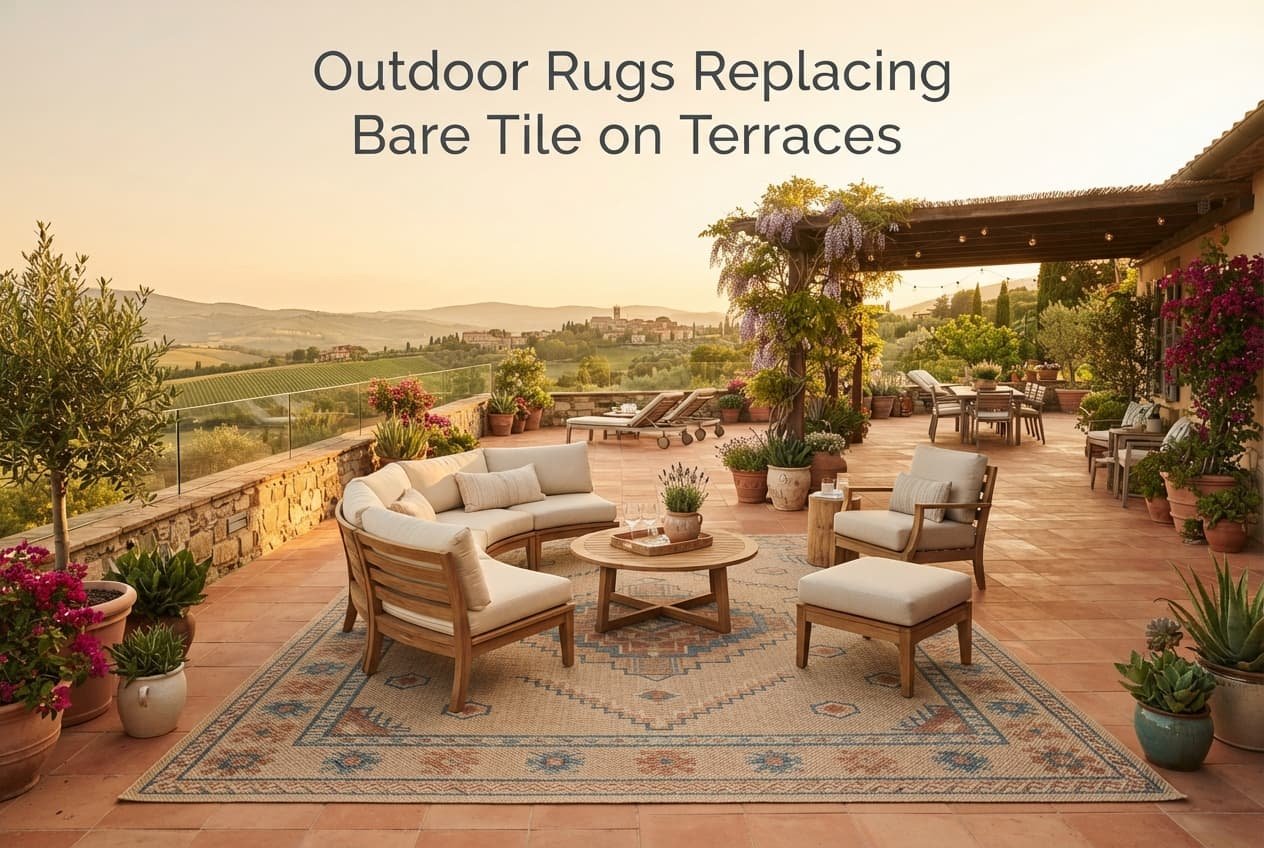
Outdoor rugs genuinely keep displacing bare tile or stone as the default large-terrace flooring treatment, for a reason grounded in measurable zoning clarity specifically, not seasonal taste alone. Understanding that reason tells you whether it’s worth adopting or just the current version of a cycle that will pass. The shift is real and checkable in how much genuine zoning definition an outdoor rug provides on a large, otherwise undifferentiated terrace surface, not simply a matter of one flooring treatment being more fashionable than another.
What actually changed
The measurable shift is a move away from leaving a large terrace’s entire floor surface visually uniform, toward using an outdoor rug to visually define a specific zone – a seating area, a dining space – within that larger uniform surface. Where bare tile or stone reads as one continuous undifferentiated space, an outdoor rug creates a clear visual boundary that signals “this specific area serves this specific purpose” without requiring any actual structural division.
This isn’t purely aesthetic preference – it’s connected to the same zoning principle that determines whether a large terrace genuinely feels like distinct occasion-worthy spaces or one undifferentiated area, extended specifically to flooring, which is why the approach recurs across different design eras rather than being tied to one particular decorating trend alone.
Why it keeps coming back specifically now
The continued reality that large terraces benefit considerably from genuine zoning, as covered in broader large-terrace design principles, has created a direct tension that outdoor rugs specifically address: achieving this zoning without the cost and permanence of actual structural division between different terrace areas.
For many households specifically wanting this zoning benefit without structural investment, the appeal of an outdoor rug’s relatively low-cost, non-permanent zoning solution has become increasingly relevant, which is a concrete structural reason this approach’s popularity tracks genuine zoning need rather than purely following showroom styling alone.
This distinguishes the current cycle from earlier decorative uses of outdoor textiles, which were sometimes driven primarily by a particular aesthetic movement rather than by genuine zoning function. The underlying mechanism is the same regardless of cause, but a technique genuinely driven by an actual functional need tends to persist considerably longer than one driven purely by a design movement’s popularity alone.
What this actually changes on a terrace
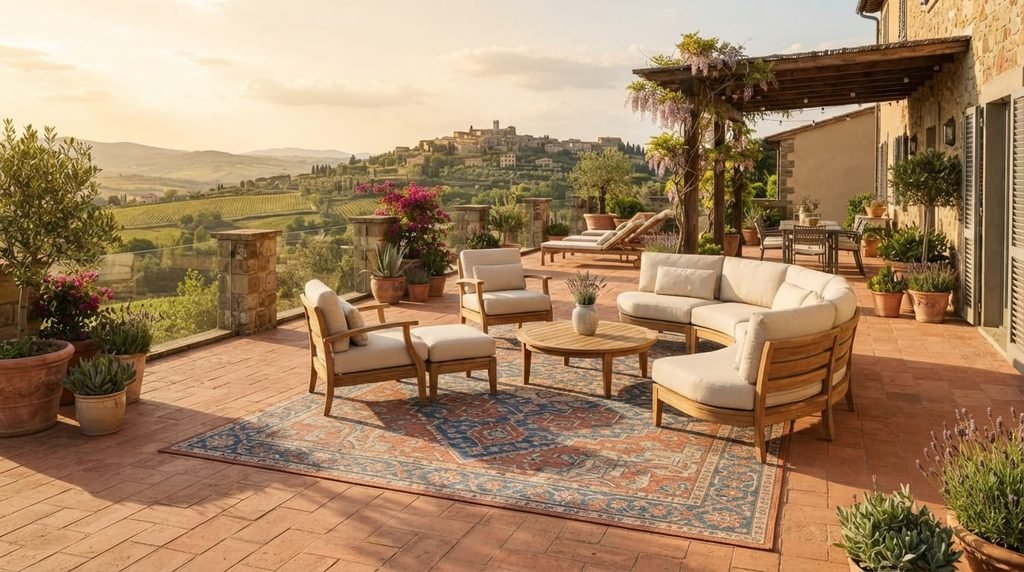
An outdoor rug directly creates genuine visual zoning without requiring any structural change to the terrace itself, which is the direct mechanism behind its popularity specifically for large, otherwise undifferentiated spaces. This isn’t purely subjective impression – it’s the direct result of the rug’s visual boundary signalling a distinct functional area within the larger continuous surface.
This zoning effect also changes how a terrace actually feels to move through, since genuine visual definition between areas creates the sense of distinct spaces – the sequence of moving from one zone to another – that a completely uniform floor surface simply doesn’t provide regardless of how the furniture within it is arranged.
What this looks like in practice
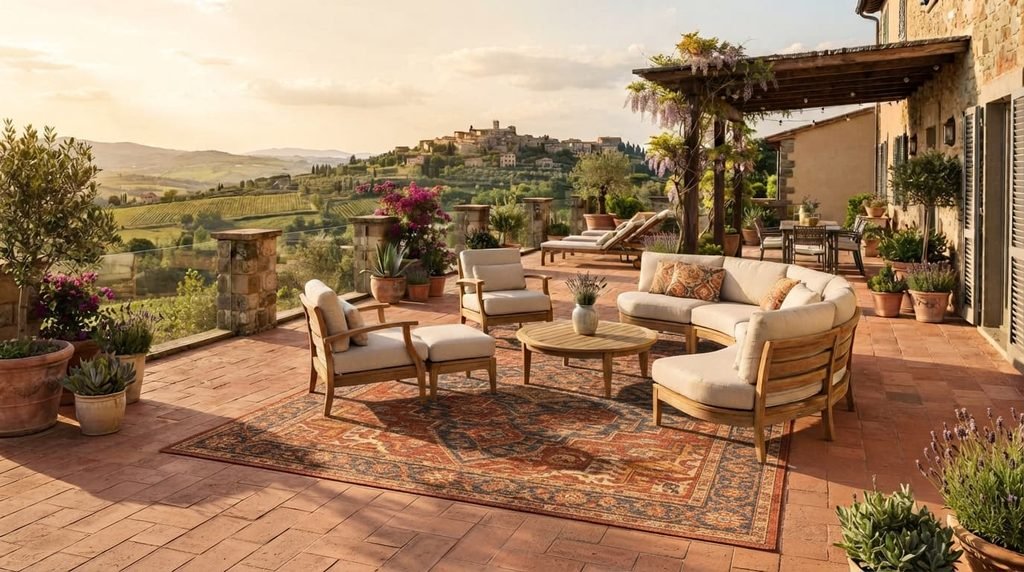
A single, genuinely substantial rug positioned beneath a main seating grouping, rather than several smaller rugs scattered across the terrace, forms a common practical expression of this approach, since one well-placed rug per zone typically creates clearer visual definition than multiple smaller pieces that can read as visually fragmented rather than genuinely purposeful.
Coordinating the rug’s colour palette with the terrace’s broader material and furniture choices, rather than treating it as an entirely separate decorative statement, tends to integrate the zoning function more seamlessly with the space’s overall character, avoiding the visually disjointed effect a mismatched rug can introduce despite technically serving its zoning purpose.
Where this trend genuinely holds up
The zoning-definition mechanism behind outdoor rugs doesn’t depend on current taste, which is why it’s a reasonable longer-term choice specifically for large terraces genuinely lacking structural zoning elements. A terrace with this genuine need benefits from this approach regardless of which decade’s aesthetic currently favours the specific rug style being used.
Where the verdict should stay negative
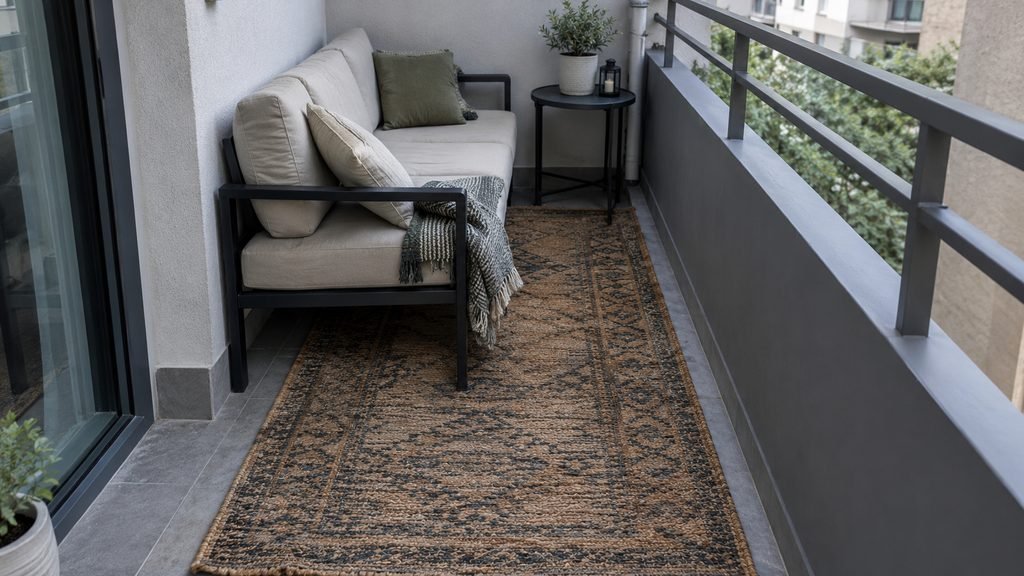
An outdoor rug genuinely isn’t worth the investment for a terrace that’s already genuinely small or already has clear structural zoning through other means, despite how consistently this addition gets marketed as a universal terrace upgrade.
For a terrace genuinely lacking the space for meaningful zoning distinction, or one already clearly divided through existing structural or furniture-based zoning, the visual-boundary mechanism that makes outdoor rugs valuable elsewhere simply doesn’t address a need that doesn’t meaningfully exist in that specific scenario. Adopting the approach purely for its current popularity, on a terrace that doesn’t genuinely benefit from additional zoning definition, adds cost and maintenance without producing the practical benefit people actually expect from it.
Where the verdict genuinely holds up beyond aesthetics
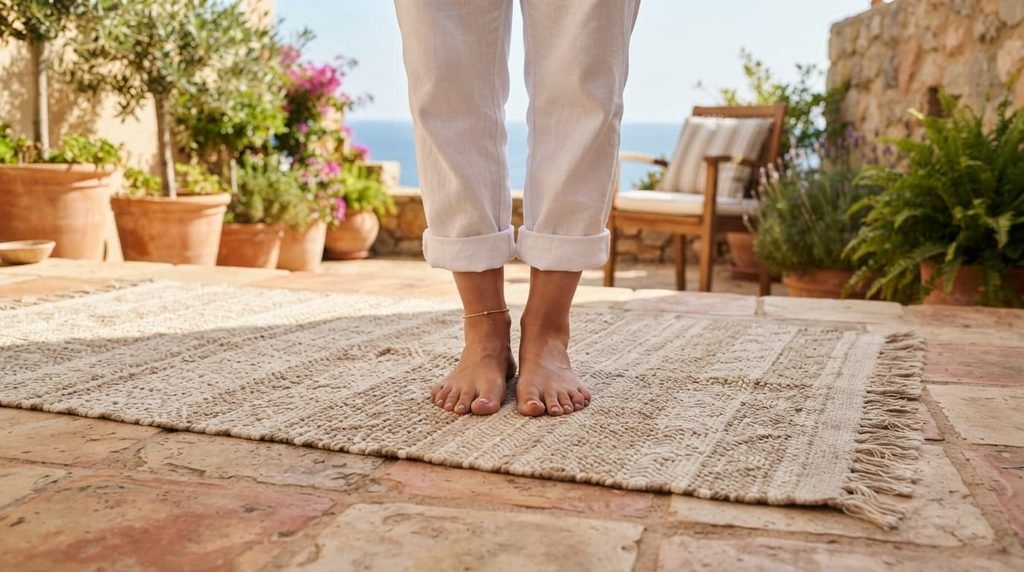
The genuine functional case for outdoor rugs extends specifically to terraces with genuinely hard, potentially harsh underfoot surfaces, since a rug provides a softer, more comfortable walking and standing surface within its zone specifically, an ergonomic benefit distinct from the purely visual zoning function covered above, mattering considerably more for households genuinely spending extended time standing or sitting at floor level within that specific area.
[IMAGE 5 HERE – replace this box with the generated image]
What people get wrong when adopting it
The most common mistake is choosing an outdoor rug without genuinely confirming it’s actually rated for outdoor use specifically, assuming any attractive rug will perform adequately in genuine outdoor conditions. A rug not genuinely designed for outdoor exposure deteriorates considerably faster than a properly rated option, undermining the investment regardless of how well it initially served the zoning function.
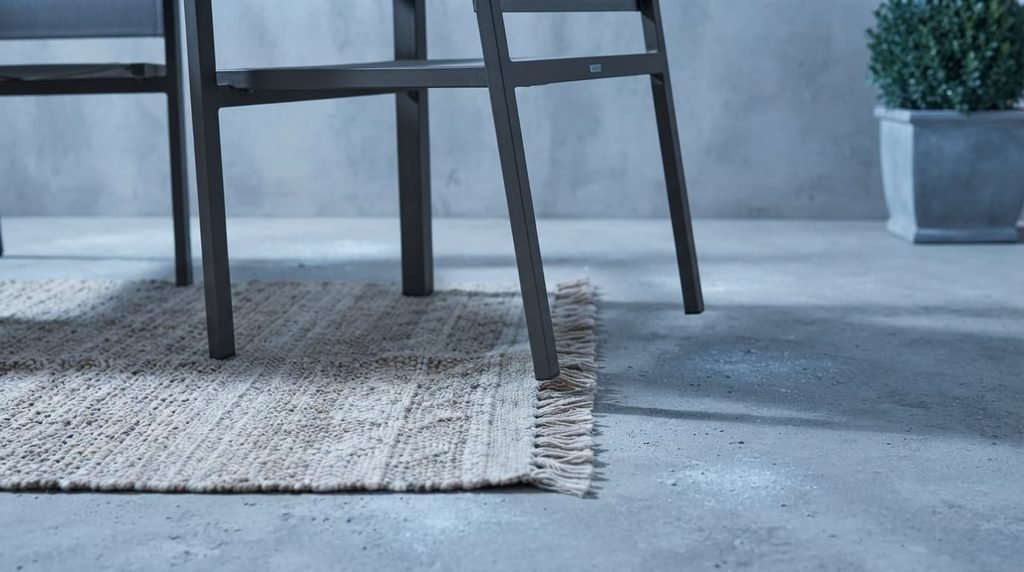
A second common mistake is sizing the rug too small for the zone it’s meant to define, resulting in furniture that awkwardly straddles the rug’s edge rather than sitting comfortably within its boundary. A rug genuinely sized to comfortably contain the zone’s furniture creates a considerably more cohesive result than one that technically marks the area but doesn’t actually accommodate it comfortably.
Questions readers keep asking
Do outdoor rugs genuinely hold up to regular weather exposure over time?
Genuinely rated outdoor rugs specifically, made from weather-appropriate materials, do hold up reasonably well to typical exposure, though checking a specific product’s actual weather rating and expected lifespan is worth doing before assuming universal durability across every available outdoor rug option.
Is this trend just a temporary aesthetic preference that will look dated soon?
The underlying zoning-definition mechanism it’s connected to doesn’t depend on current taste, suggesting genuine longevity specifically for large terraces genuinely lacking other zoning elements, though specific rug patterns or styles chosen within the broader approach can still date in the usual way any decorating choice eventually does.
Do outdoor rugs require specific cleaning methods compared to indoor rugs?
Many outdoor rugs are genuinely designed for easier cleaning specifically, often tolerating direct hosing or more frequent washing than indoor rugs typically allow, though checking your particular rug’s specific care instructions is worth doing to confirm the appropriate cleaning method for that exact material.
How do I choose the right size outdoor rug for a specific terrace zone?
Measuring your intended zone’s furniture arrangement first, then choosing a rug genuinely large enough for all the furniture’s legs to sit comfortably within its boundary, produces a considerably more cohesive result than choosing a rug size based on the floor space alone without accounting for furniture placement.