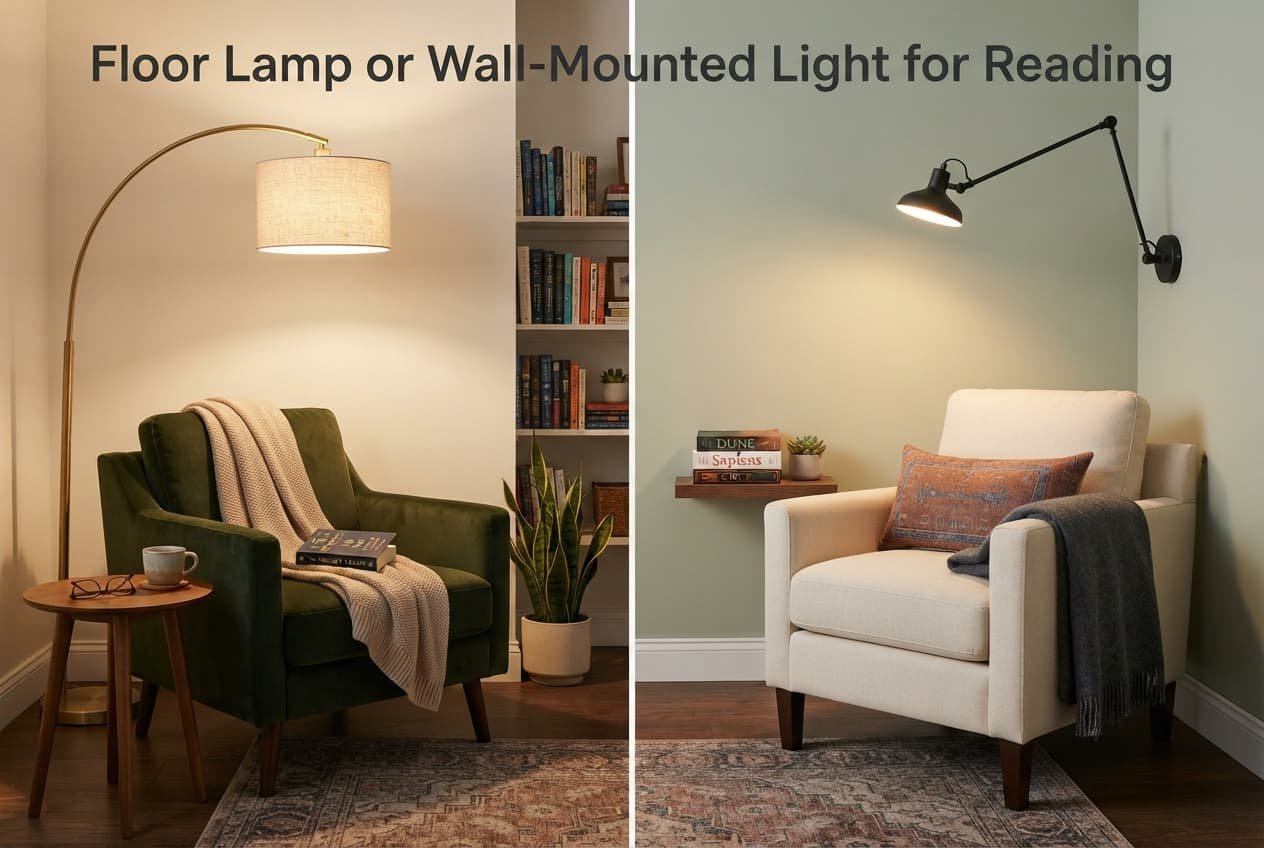
The right choice for a genuinely reading corner’s lighting isn’t decided by which one looks more polished in a design photo specifically – it’s decided by how each one actually fits your own specific space and your genuine positioning needs once it’s fully part of the daily routine. A floor lamp and a wall-mounted light solve genuinely different practical needs, and choosing based on trend alone misses what actually determines whether either one works well for your specific corner.
The one property that decides it
The deciding factor is how much genuine flexibility you need to reposition or adjust your light source, not simply which fixture looks more architecturally refined. A floor lamp offers genuine mobility – you can move it, angle it, relocate it entirely – while a wall-mounted light provides a fixed, permanent position specifically calibrated once during installation.
This matters because your actual likelihood of rearranging the corner or needing flexible positioning determines which fixture’s core characteristic genuinely serves you better, rather than either being universally superior regardless of how settled or flexible your specific setup actually is.
Head to head
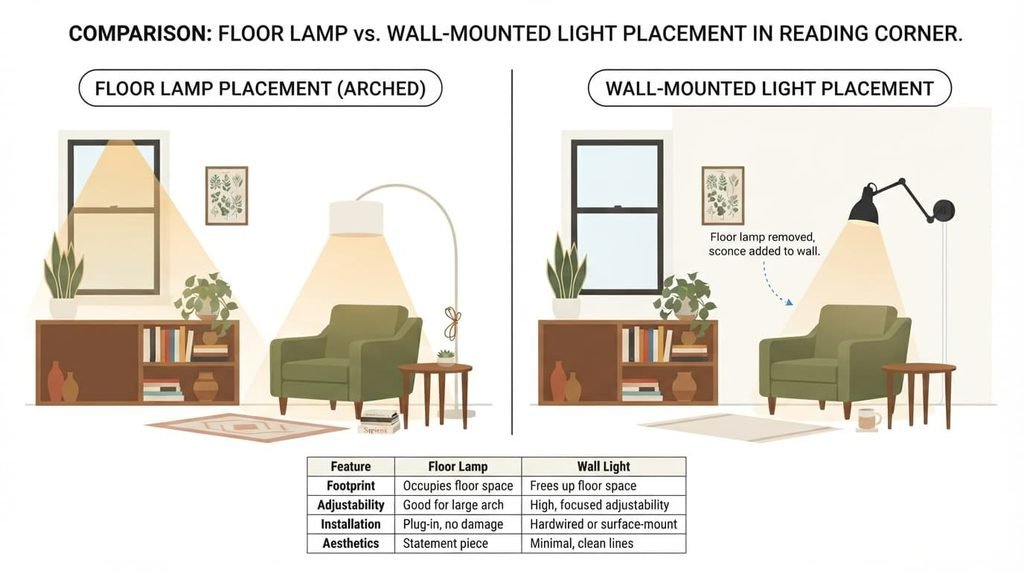
| Floor Lamp | Wall-Mounted Light | |
|---|---|---|
| Easy to move | High | Fixed once installed |
| Floor space used | Yes | None |
| Setup needed | Minimal | Requires mounting |
| Easy to relocate later | Yes | Difficult |
| Typical stability | Can tip if bumped | Genuinely stable |
| Cord shows | Often visible | Can be concealed |
The row that surprises people most is cord visibility specifically. Many assume a floor lamp’s cord is simply an unavoidable minor detail, but a wall-mounted light genuinely allows concealed wiring within the wall itself, producing a noticeably cleaner overall look that a floor lamp’s necessarily visible cord path structurally can’t match regardless of how the lamp itself is styled.
Where a floor lamp wins
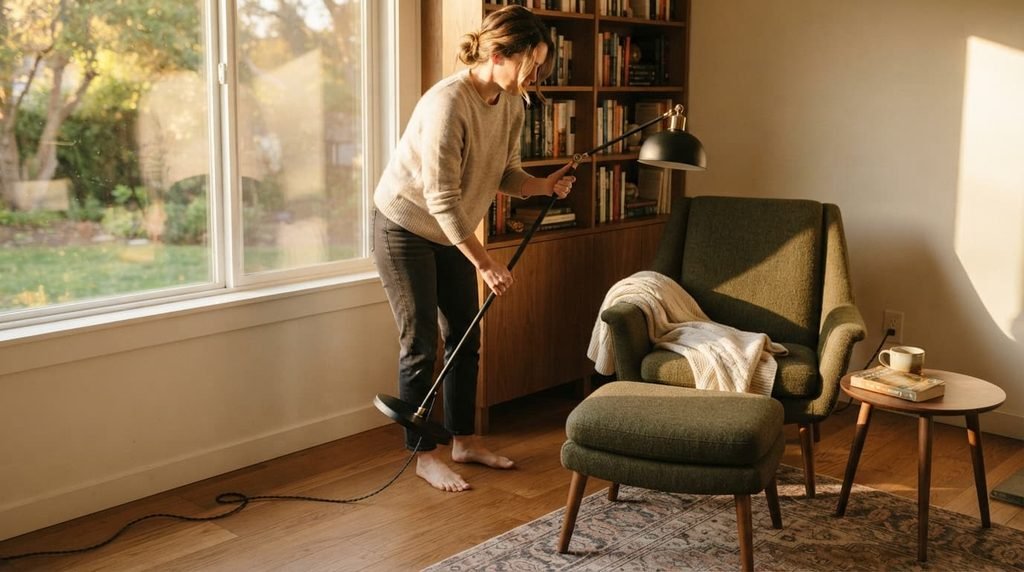
Anyone who genuinely values the ability to reposition their reading corner over time benefits from a floor lamp’s inherent mobility, since this directly addresses a household’s evolving needs in a way a wall-mounted light’s fixed position structurally can’t accommodate without a fresh installation. The unglamorous reason: a floor lamp also requires no genuine installation effort or wall modification, which matters more than it might initially seem for renters or households wanting to avoid any structural commitment to a specific corner arrangement.
Anyone genuinely experimenting with their corner’s actual best position also benefits from this same flexibility in a related way, since trying a floor lamp in several different spots before settling helps confirm the genuinely optimal position before any more permanent installation decision would need to be made.
Where a wall-mounted light wins
Anyone with a genuinely settled, unlikely-to-change reading corner arrangement benefits from a wall-mounted light’s permanent, stable positioning, since this directly addresses a desire for a clean, considered installation without floor space consumption or cord visibility concerns a floor lamp inherently carries. The unglamorous reason: a wall-mounted light also eliminates any tipping risk entirely, which matters more than it might initially seem for households with pets or young children where a floor lamp’s stability could become a genuine practical concern.
Anyone genuinely prioritising a completely clear floor for other purposes also benefits from this same space efficiency in a related way, since a wall-mounted light contributes zero floor footprint, freeing that specific area for other furniture or genuine walking space a floor lamp would otherwise occupy.
When neither is right
Choosing based purely on which option is currently more fashionable, without genuinely considering your own actual likelihood of rearranging the space or your household’s specific practical considerations, is worth ruling out regardless of which option you’d otherwise prefer.
A wall-mounted light installed in a corner likely to be rearranged sacrifices the flexibility a floor lamp would have comfortably provided, while a floor lamp chosen in a household with young children or pets, without considering tipping risk, misses the specific stability benefit a wall-mounted light would have addressed.
How to decide in thirty seconds
If you genuinely value flexibility to reposition your reading corner, choose a floor lamp. Its inherent mobility directly addresses this need in a way a wall-mounted light’s fixed position structurally can’t match.
If your reading corner is genuinely settled and you prioritise a clean, stable installation, choose a wall-mounted light. Its permanent positioning and concealed wiring directly address this priority in a way a floor lamp’s visible cord and repositionable nature doesn’t fully provide.
What changes the answer later
Your household’s actual composition genuinely changing – welcoming a young child or pet, for instance – is worth reconsidering the choice at, since this specific shift may favour a wall-mounted light’s stability over a floor lamp’s tipping risk more than your previous situation required.
Your reading corner’s actual location genuinely becoming more settled over time, after initial experimentation with positioning, is also worth reconsidering the choice at, since a wall-mounted light’s permanent installation becomes more reasonable once your corner’s actual location is genuinely confirmed rather than still evolving.
What people get wrong when making this choice
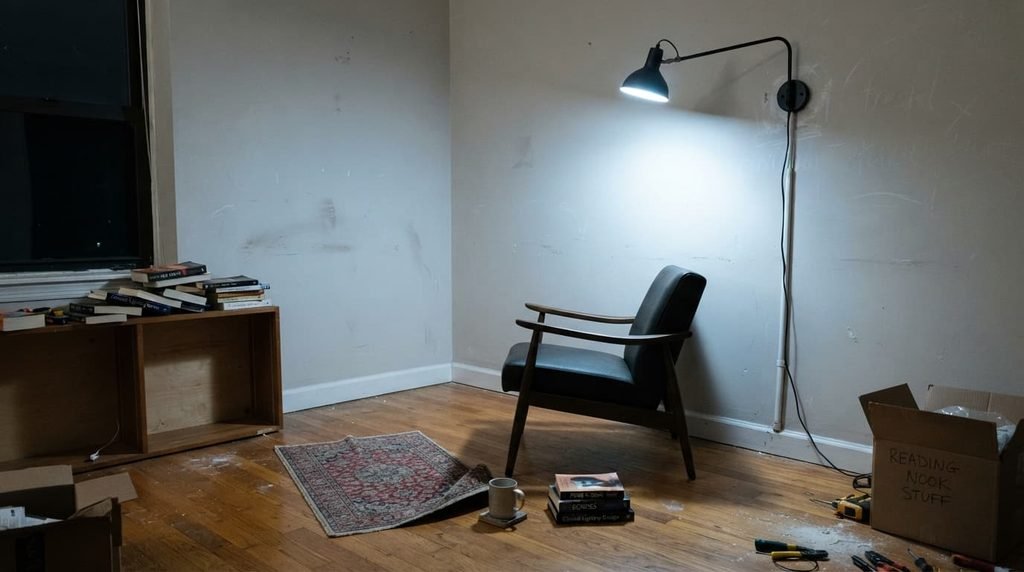
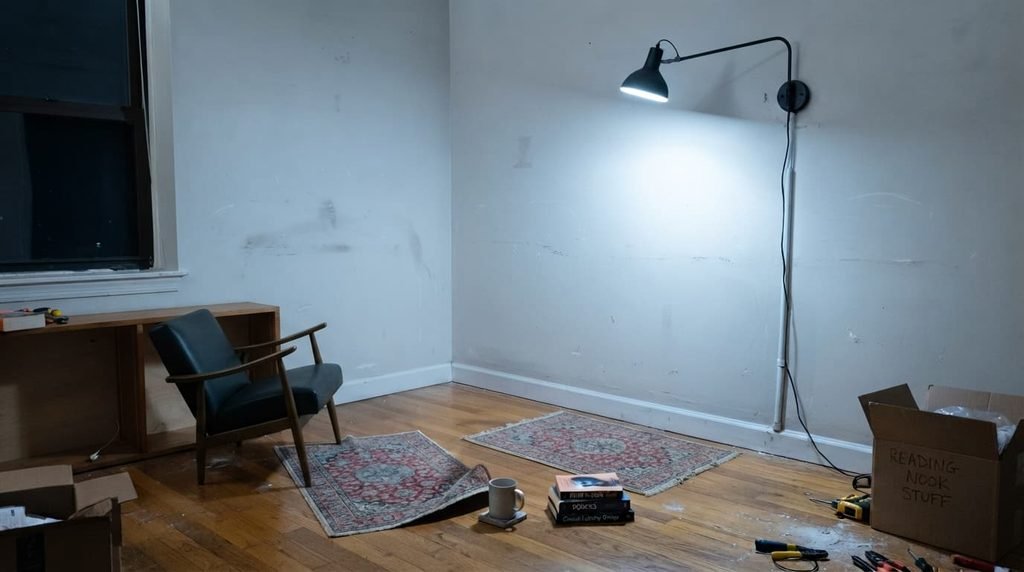
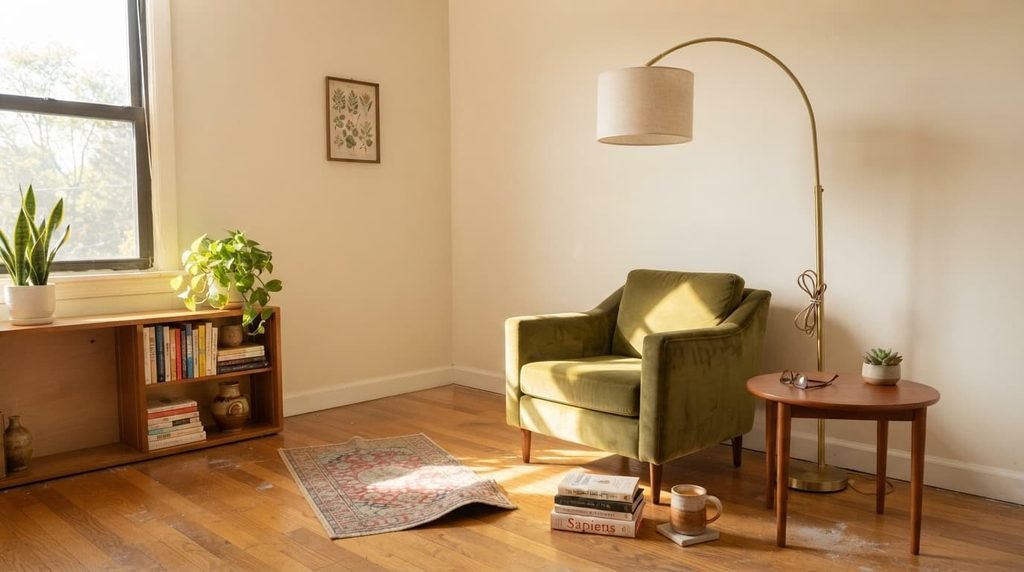
The most common mistake is committing to a wall-mounted light before genuinely confirming the reading corner’s actual final position, treating the lighting decision as separate from the broader corner arrangement rather than dependent on it. Installing a permanent fixture before the corner’s own layout is genuinely settled often results in lighting positioned less optimally than it would have been with a bit more initial patience.
What changes if you’re renting rather than owning
If you’re genuinely renting your space specifically, prioritise a floor lamp’s zero-modification approach more heavily, since a wall-mounted light typically requires drilling and potentially electrical work that many rental agreements either prohibit or require landlord permission for, making the floor lamp’s completely reversible, non-permanent nature a genuinely more practical fit for many rental situations regardless of your own underlying aesthetic preference between the two options.
Questions readers keep asking
Is it possible to combine both a floor lamp and a wall-mounted light within the same reading corner?
Yes, quite genuinely – some households genuinely use a wall-mounted light as a primary fixed source while adding a floor lamp for supplementary or task-specific lighting flexibility, combining both approaches’ genuine benefits within one single corner.
Does a wall-mounted light genuinely require professional installation, or can it be a DIY project?
This depends considerably on your specific electrical setup and comfort level – some wall-mounted lights use plug-in cords with only physical wall mounting required, while others involve genuine electrical wiring that’s worth having a licensed professional handle for safety.
Should I try living with a floor lamp temporarily before committing to a wall-mounted light in the same position?
This is genuinely a quite reasonable approach specifically – using a floor lamp for an initial trial period lets you confirm your reading corner’s actual best position and lighting angle before committing to a wall-mounted light’s more permanent installation in that exact confirmed spot later.
Is a floor lamp genuinely less energy-efficient than a wall-mounted light?
Energy efficiency genuinely depends primarily on the specific bulb type actually used rather than the fixture category itself, so genuinely comparing actual bulb specifications between your specific chosen options matters more than assuming one fixture type is inherently more efficient than the other overall.