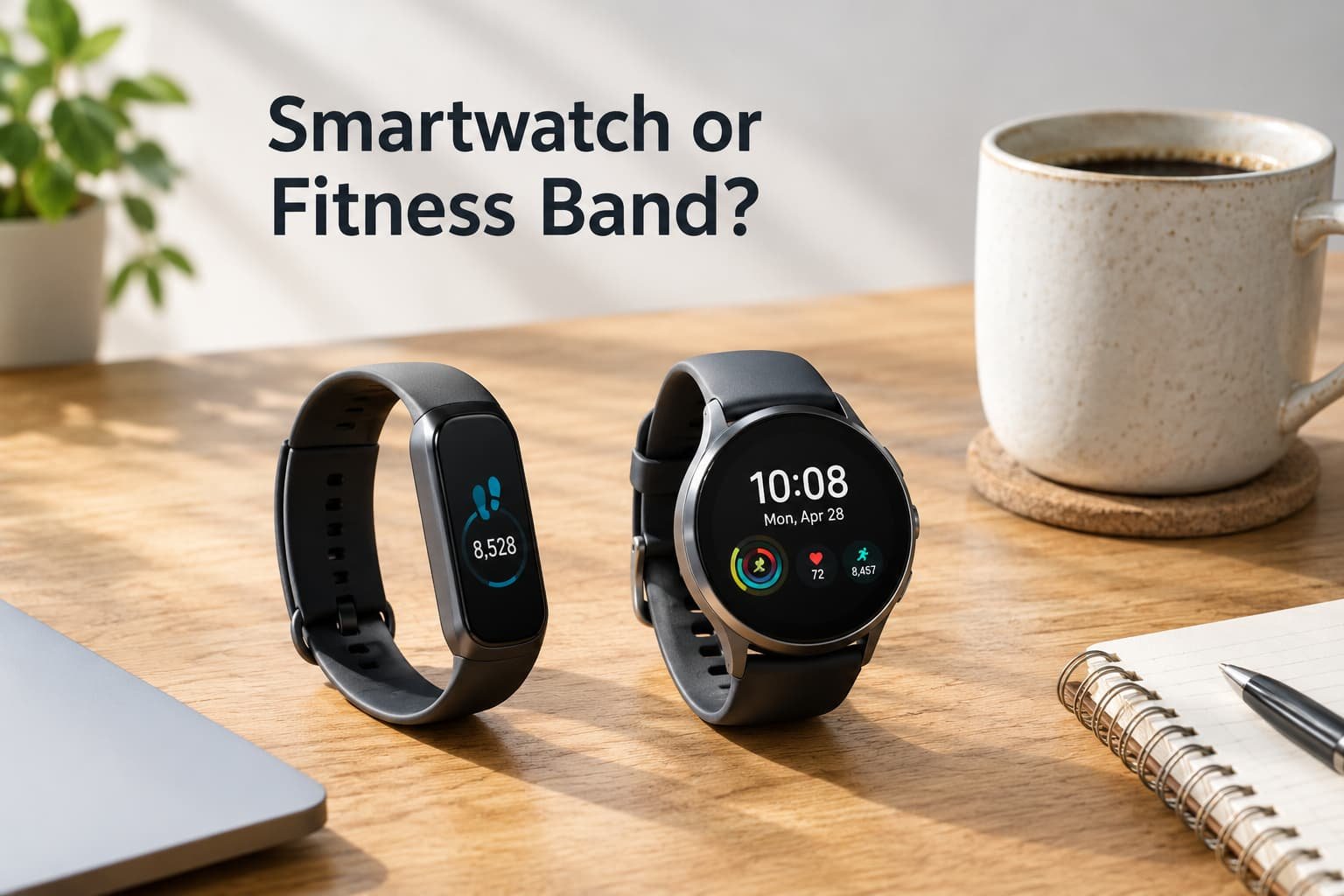
If all you want is steps, sleep and heart rate, a smartwatch and a fitness band look like the same product at two prices. In one respect they are: both read your pulse with light and count your movement with a motion sensor, and for everyday tracking the data they produce is similar. The decision is about everything around the tracking, such as the battery, the screen, the apps and what the thing is like to wear at three in the morning.
The property that settles it
The deciding property is how much you want from your wrist besides tracking. A fitness band is built to measure quietly and last. A smartwatch is built to do more, and every extra it adds costs something in battery, size and attention.
So ask a plain question before comparing models: do you want a tracker, or a small computer on your wrist that also tracks? Your answer settles most of the rest.
Side by side
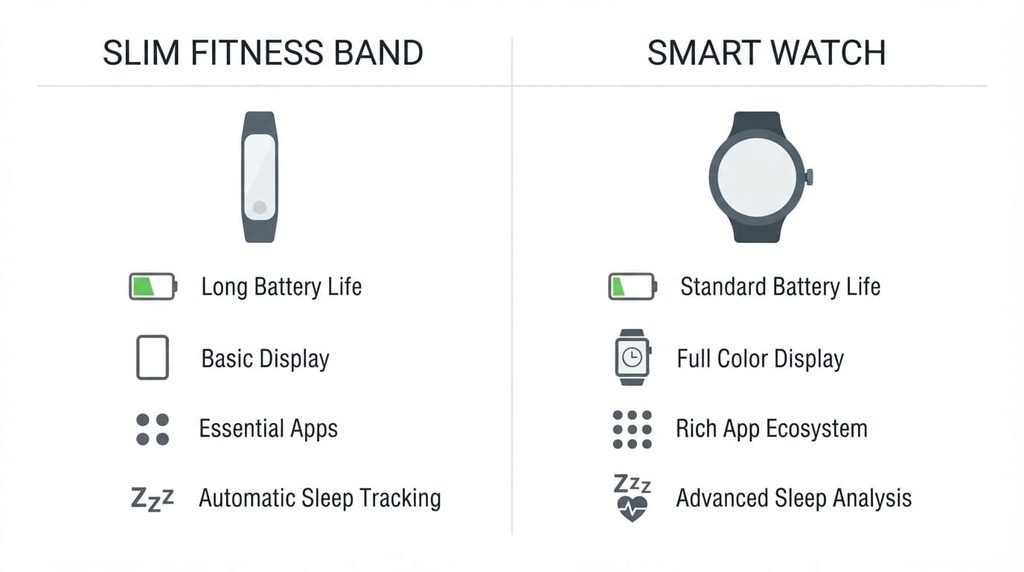
| Fitness Band | Smartwatch | |
|---|---|---|
| Battery between charges | Usually longer | Usually shorter |
| Screen | Small and simple | Larger and colourful |
| Apps and payments | Few or none | Many |
| Wear at night | Easier, slimmer | Bulkier |
| Alerts from phone | Basic | Detailed |
| Price range | Often lower | Often higher |
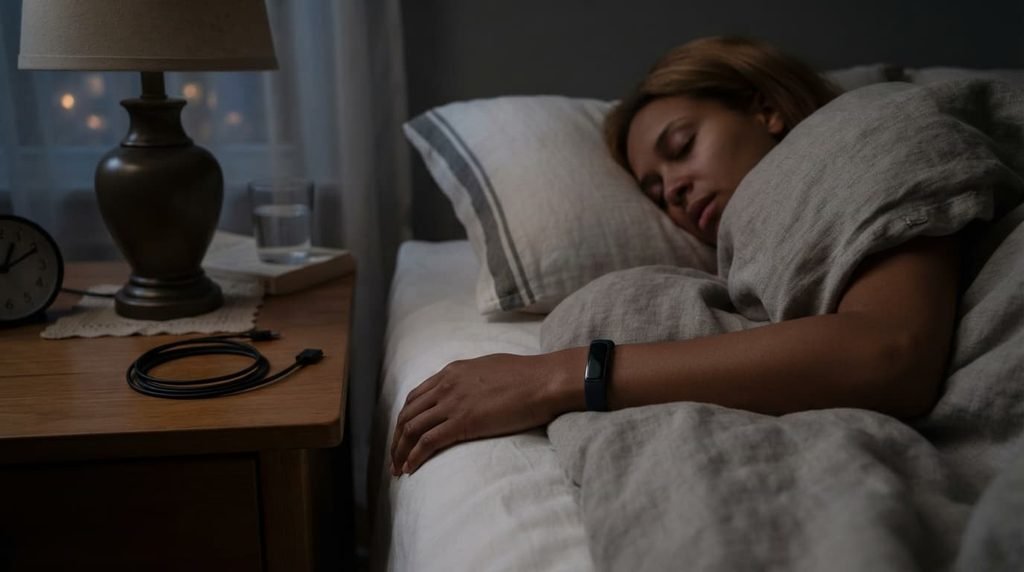
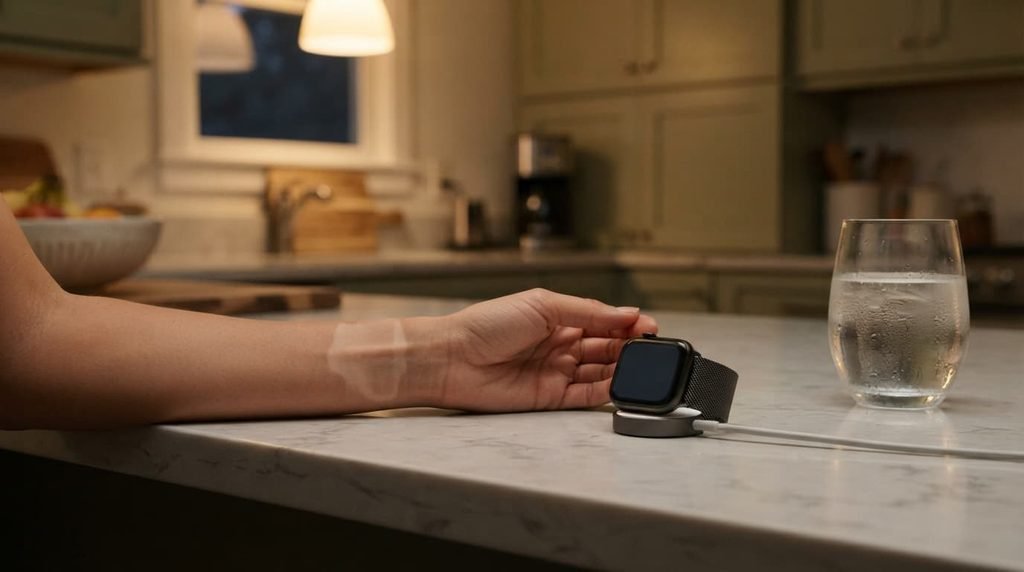
The row that surprises people most is wearing it at night. Sleep tracking only works if you actually wear the device to bed, and a slim band is far more likely to be left on than a bulky watch. A watch that stays on the charger at night produces less complete sleep data than a band you forget you are wearing.
Where the band wins
A fitness band suits people who want steady, unobtrusive data and do not want another screen to look at. The unglamorous reason is battery. A band that lasts several days between charges is far more likely to be worn continuously, and continuous wear is what gives a tracker its value. A device on the charger half the time is a tracker with gaps.
It also suits people who find phone alerts a nuisance. A band shows only the basics, so it cannot become a second inbox on your wrist, and the simple screen keeps your attention where it was.

Where the watch wins
A smartwatch suits people who want to do things with the wrist beyond tracking: answering a call, paying at a till, following a route or controlling music while the phone stays in a bag. The unglamorous reason is the screen. A larger, brighter display makes workouts easier to follow, with maps, intervals and heart-rate zones readable at a glance, and it makes the watch usable without taking out the phone.
It also suits people who train for a goal and want richer detail afterwards. A watch generally offers more sensors, more workout modes and a fuller companion app, and for someone building up to an event those extras are the point.
When neither fits
Choosing by the longest feature list, before deciding what you would use on a typical day, is worth ruling out whichever type you lean toward.
Features you never use still cost you, in price, in battery and in a more complicated device. A shorter list that matches your actual day is better than a longer one that mostly sits unused.
A day with each
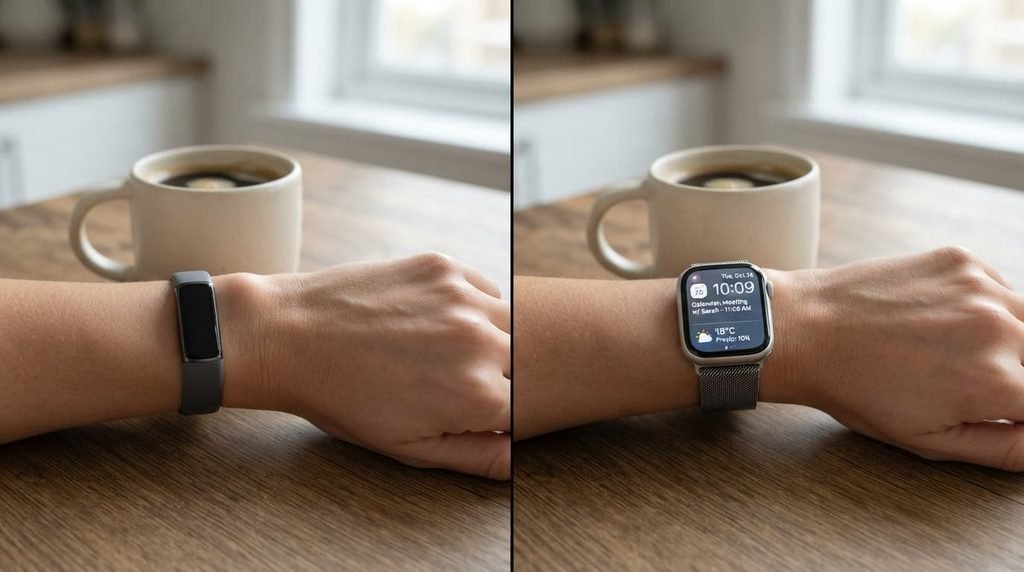
With a band, the morning starts with a glance at last night’s sleep and nothing else. At work it stays quiet, buzzing only for a call. In the evening it counts a walk, and at night it goes to bed with you. You charge it on a weekend morning and rarely think about it.
With a watch, the morning starts with the same glance and then a screen full of options: the weather, the calendar, a message. At work it buzzes for what you allowed. In the evening it guides a run with a map, and at night you decide whether to wear it or charge it. The extra reach is real, and so is the extra attention it asks for.
A note on health claims
Neither device is a medical instrument. Both give estimates, useful for trends and habits but not for diagnosing a condition. If you need to monitor a health condition, ask a doctor which device suits your situation, and do not rely on a consumer tracker to reassure or alarm you.
Sleep tracking without over-reading it
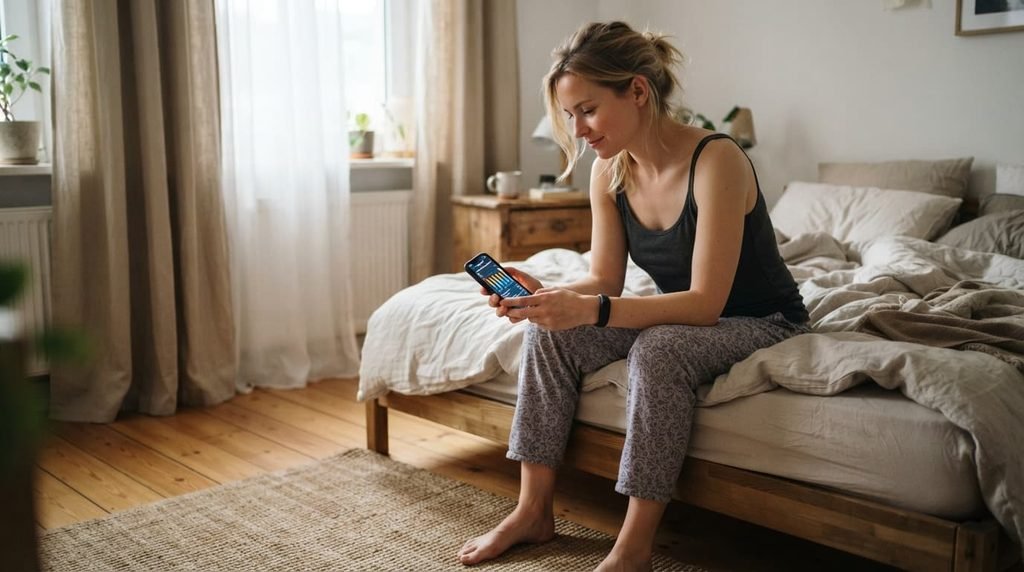
Wrist trackers estimate sleep from movement and heart rate, so the totals for time asleep and the broad shape of the night are useful, while the exact minutes in each stage are only rough guesses. Treat the numbers as a trend: look at how a week compares with the one before, and notice what changes when you go to bed earlier or drink less coffee in the evening. If you snore loudly, wake gasping or feel exhausted every day whatever the tracker says, speak to a doctor rather than to the app.
The thirty-second version
If you want quiet, continuous tracking and a long battery, choose a band. It is lighter, simpler and more likely to be worn all day and all night.
If you want calls, payments, maps or detailed workouts from the wrist, choose a watch. It does more, and it asks you to charge it more often.
What would change the answer
If you begin training for an event, a watch’s workout detail may become worth its extra bulk. If you find yourself leaving a watch on the charger at night, a band for sleep and a watch by day is a possible compromise, but your data will be split across two devices. If your phone habits change and you start to find alerts a burden, the simpler band becomes more attractive.
What people get wrong
The first mistake is assuming that a pricier device tracks health better. For everyday tracking the sensing is similar, so price mostly buys screen, apps and materials.
The second is ignoring comfort. A device that irritates your skin or feels heavy at night will be left off, and an unworn tracker records nothing.
The third is buying for the one occasion. A watch bought for a single holiday’s maps or a single race will cost you the daily trade-off of battery and bulk for months afterwards.
Questions readers keep asking
Are fitness bands as accurate as smartwatches?
For everyday tracking, usually similar, because they use the same kind of sensor. Differences show up in intense or irregular workouts, where fit and movement matter more than the type of device.
Can a band show messages?
Most show basic alerts, such as who is calling or a short preview. They rarely allow detailed replies or apps.
Do bands really last longer between charges?
Usually, because their screens are smaller and simpler. Actual battery life depends on the model and on settings such as always-on displays and workout tracking.
Does a band track workouts without my phone?
Some do and some rely on the phone for location. Check the model if you want to run without carrying your phone.
What if the strap irritates my skin?
Switch to a different strap material, loosen it a little, clean it regularly and give the skin breaks. Persistent irritation is a reason to stop wearing it and ask a pharmacist or doctor.