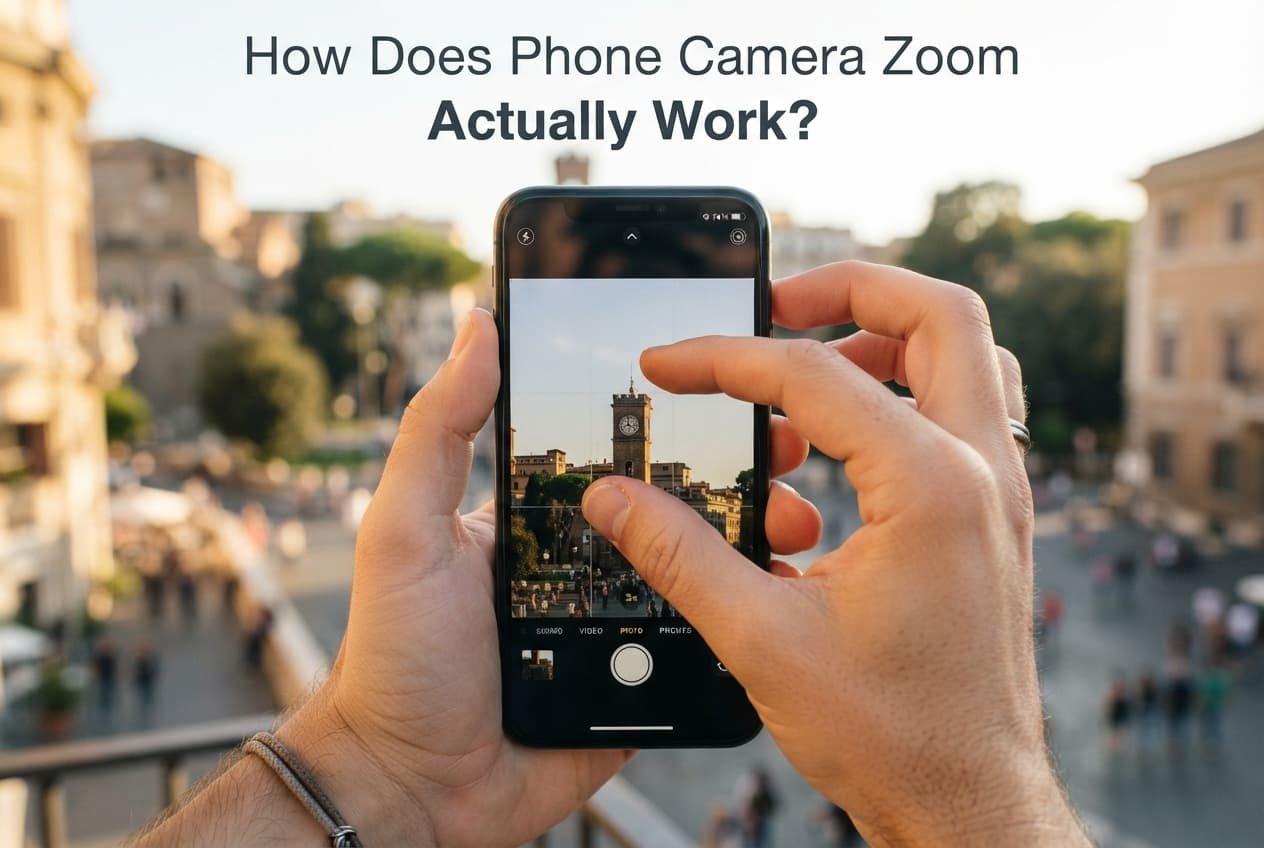
Phone camera zoom isn’t a single, uniform technology – it’s typically a combination of genuinely different approaches working together, which is why zooming in on a phone can produce noticeably different quality results depending on how far you’re actually zooming. Understanding this combination explains both why some zoom levels look considerably sharper than others on the same phone, and what’s actually happening technically when you pinch to zoom.
The short answer, and what it leaves out
Phone camera zoom typically works through some combination of optical zoom, using a genuinely separate physical lens with a different focal length, and digital zoom, which crops and enlarges the image the sensor already captured rather than physically changing what light is being gathered.
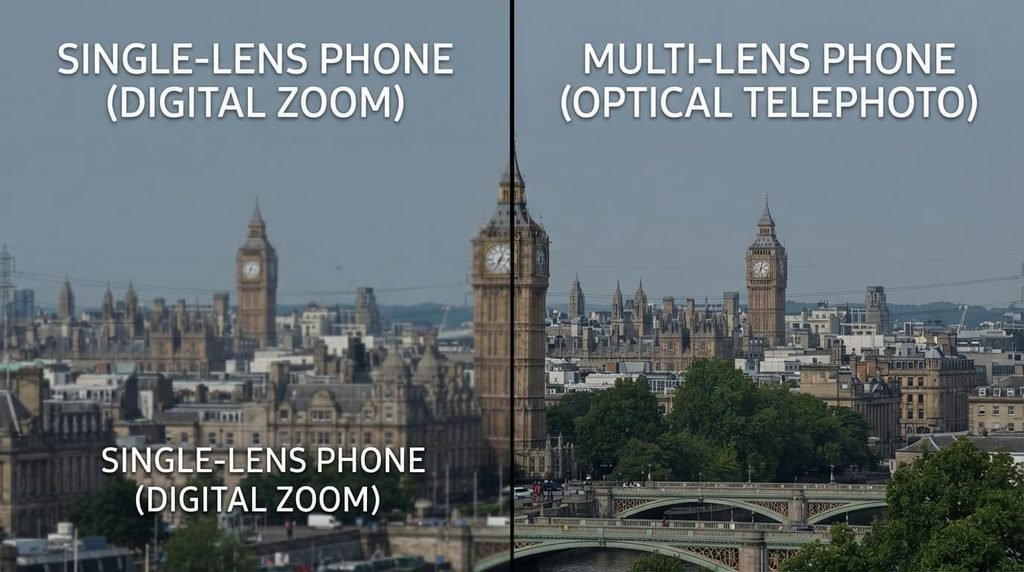
What that leaves out is why this distinction matters so much for actual image quality – optical zoom genuinely captures new, additional detail through its different physical lens, while digital zoom works with the same original detail already captured, simply displaying a cropped, enlarged portion of it, which is why quality can drop off noticeably once you zoom beyond what a phone’s optical capability actually provides.
How it actually works, step by step
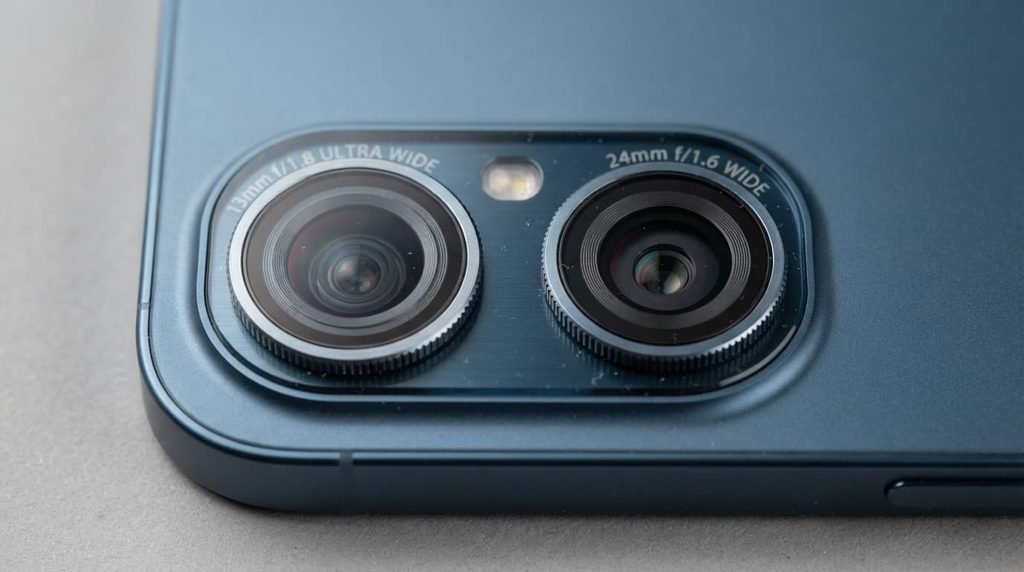
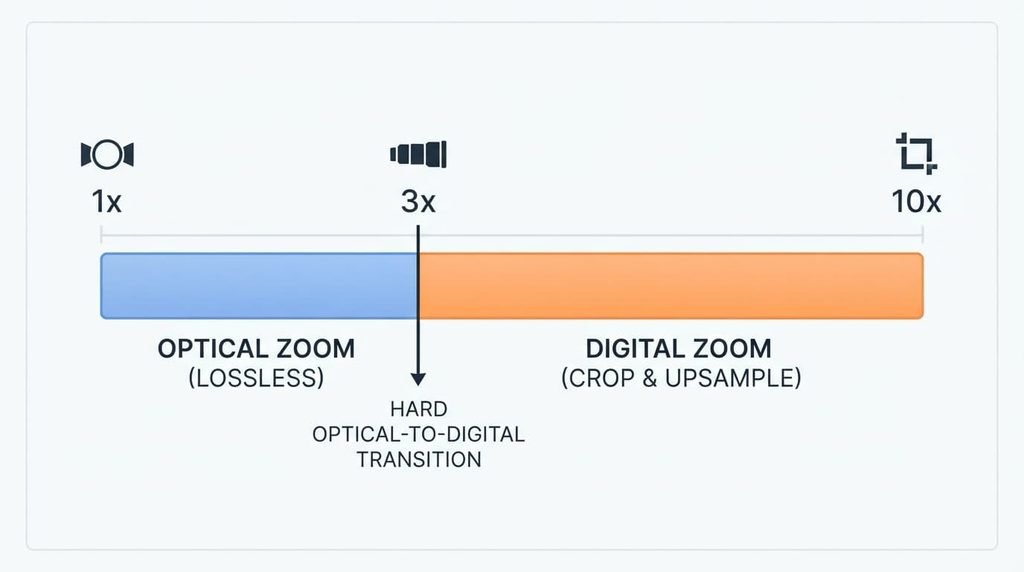
When you begin zooming in on most modern phones with multiple camera lenses, the phone typically starts by using its optical zoom capability first, switching to a different physical lens genuinely built for that specific zoom range, which captures genuinely new detail through its own distinct optics.
Once you zoom beyond what any available physical lens can optically provide, the phone transitions to digital zoom, cropping into the image the sensor has already captured and enlarging that cropped section to fill the frame, without capturing any genuinely new visual information beyond what the original capture already contained.
Some phones also use computational techniques specifically during this digital zoom range, applying software processing to enhance the cropped, enlarged image somewhat – sharpening edges, reducing certain artifacts – though this processing works with the same original captured detail rather than genuinely adding new information the way optical zoom’s separate physical lens does.
Why some phones handle the optical-to-digital transition better than others
The specific number and range of physical lenses a phone includes directly affects how much of the overall zoom range benefits from genuine optical capture before digital zoom takes over. A phone with only a single lens relies entirely on digital zoom beyond its base focal length, while a phone with multiple lenses covering different focal lengths extends the genuinely optical portion of the zoom range considerably further before quality begins the more noticeable decline digital zoom typically introduces.
This is part of why phones with seemingly similar maximum zoom numbers can produce meaningfully different results at the same specific zoom level – the underlying lens configuration determines how much of that shared maximum number is genuinely optical versus digital, a distinction the advertised maximum figure alone doesn’t communicate clearly.
The analogy, and where it breaks
Phone zoom is sometimes compared to physically walking closer to a subject versus simply cropping a photo taken from further away – walking closer genuinely captures more actual detail, while cropping afterward just enlarges what was already captured without adding anything new.
The analogy holds well for explaining the core optical-versus-digital distinction – optical zoom genuinely resembles walking closer, capturing new detail, while digital zoom resembles cropping an already-taken photo. It breaks somewhat because a phone with multiple lenses doesn’t require you to physically move at all to access some of this “walking closer” benefit – the optical zoom transition happens automatically as you pinch to zoom, unlike the genuinely separate physical action walking closer to a subject would actually require.
What this does not explain
The optical-versus-digital explanation clarifies why zoom quality varies at different zoom levels, but it doesn’t explain or address every zoom-related quality factor – lighting conditions genuinely affect zoomed photo quality independently of which zoom type is active, since zooming, whether optical or digital, still requires adequate light for the resulting image to look genuinely sharp and detailed.
It also doesn’t explain why camera shake becomes more noticeable at higher zoom levels specifically, since this effect relates to how zoom magnifies not just the subject but also any slight movement during capture, a factor that applies regardless of whether you’re using optical or digital zoom at that specific moment.
What people get wrong about it
The belief that a phone’s maximum advertised zoom number represents consistently high image quality throughout that entire range. This forms because zoom numbers are prominently marketed, but quality genuinely varies considerably within that range specifically – the optical portion typically provides meaningfully better quality than the digital portion extending beyond it, even though both fall under the same advertised maximum zoom figure.
The belief that digital zoom is simply “fake” or provides no value at all. While digital zoom doesn’t capture new optical detail the way optical zoom does, it can still be genuinely useful for framing a shot or getting a closer view when physically moving isn’t practical, even if the resulting image quality doesn’t match what optical zoom or physically moving closer would provide.
Where the popular explanation oversimplifies
Advice describing phone zoom as simply “how far you can zoom in” glosses over the meaningful difference between zoom range and zoom quality, treating all zoom levels within a phone’s advertised range as roughly equivalent rather than accurately reflecting that quality typically declines meaningfully once you move from optical into digital zoom territory.
This distinction matters practically: understanding that zoom quality isn’t uniform across a phone’s full advertised range helps explain why two photos taken at different zoom levels on the same phone can look noticeably different in sharpness, even though both technically fall within that phone’s stated zoom capability.
Phone zoom quality depends specifically on whether you’re within the optical range, using a genuinely separate physical lens, or extending into the digital range, cropping and enlarging already-captured detail – not simply on how far the zoom number itself goes. Understanding it as two genuinely different mechanisms sharing one continuous zoom control, rather than one uniform zoom technology, is the detail most explanations skip, and it’s the one that actually explains why zoom quality varies the way it does.
Questions readers keep asking
How can I tell whether I’m using optical or digital zoom on my specific phone?
Checking your phone’s camera specifications for its stated optical zoom range specifically tells you where that transition point occurs, since zooming beyond that specific figure means you’ve moved into digital zoom territory, regardless of how the on-screen zoom number continues climbing beyond it.
Does using digital zoom ever make sense, given its quality limitations?
Yes, in situations where physically moving closer isn’t practical and some enlarged framing is more useful to you than none at all, digital zoom can still serve a genuine purpose, even knowing the resulting image won’t match optical zoom’s quality for that same framing.
Will phone camera zoom technology continue changing the balance between optical and digital approaches?
This is an active area of ongoing development across the phone camera industry generally, though the fundamental distinction between capturing genuinely new optical detail versus enlarging already-captured detail digitally is likely to remain the core underlying mechanism regardless of specific technical improvements to either approach.