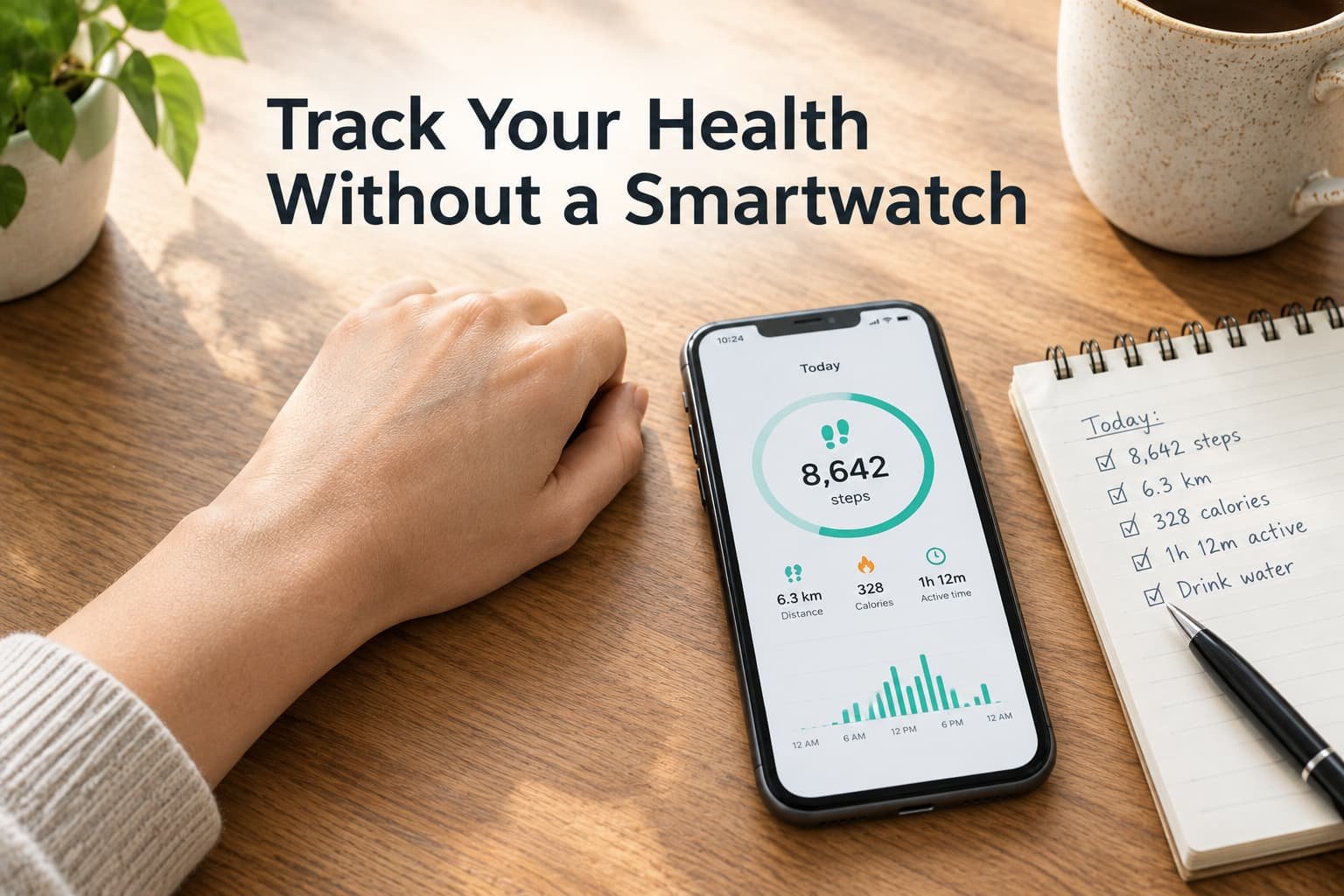
Plenty of people buy a smartwatch to track their health, wear it for a few weeks, and find that the data has changed nothing about their days. If that sounds familiar, or if you have not bought one yet and wonder whether you need to, it is worth asking what the watch would actually give you. The answer is often less than the listing suggests, and cheaper ways exist to learn the same things. A fitness band is the obvious middle path, and it is compared with the smartwatch in its own article. Here the focus is on options that need no wrist device at all.
What you would be giving up
A smartwatch does three things well. It records data without effort, it keeps recording while you sleep, and it shows trends over months. Those are real advantages, and any alternative has to reproduce enough of them to be useful.
It also does several things you may not need: notifications, apps, payments and a long list of workout modes. If those are the reasons you wanted one, the alternatives below will serve you less well, and a watch may still be the right answer.
Five ways to track without one
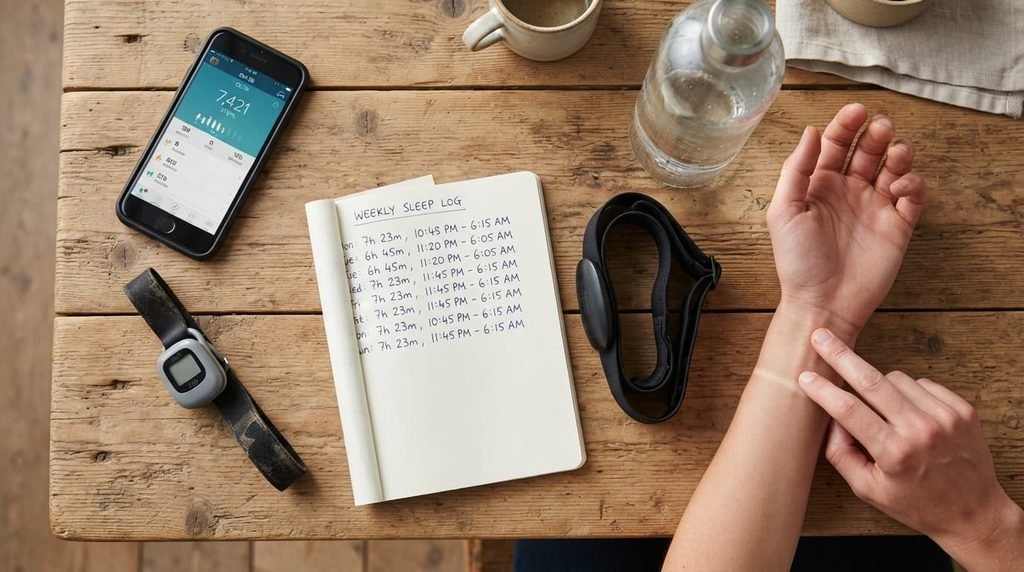
1. Your phone’s own sensors. Most phones count steps and walking distance without any extra device. It is free, it needs no charging beyond what you do anyway, and it works well for the one thing most people want to know, which is whether they are moving more. The limit is that the phone is only counting while it is with you, and it cannot read your pulse or your sleep.
2. A simple step counter. A small clip-on counter records steps and often runs for months on a tiny battery. It has no screen full of notifications to distract you, and it is a surprisingly effective motivator, because the number is simple and always in view.
3. A notebook or a spreadsheet. Writing down when you went to bed and woke, how you felt, your weight and what exercise you did takes two minutes a day. It captures things a wrist sensor cannot, such as mood and energy, and it makes you notice your own patterns.
4. A chest strap for workouts only. If your interest is heart rate during exercise, a chest strap measures the heart’s electrical signal and is generally more reliable than a wrist reading during fast movement. You wear it for training, and the rest of the day you wear nothing.
5. A manual pulse check. Resting heart rate can be measured with two fingers at the wrist: count the beats for thirty seconds and double the number, at the same time each morning before you get up. It is free and it gives a useful trend, as long as you do it the same way each time.
The catch with every alternative
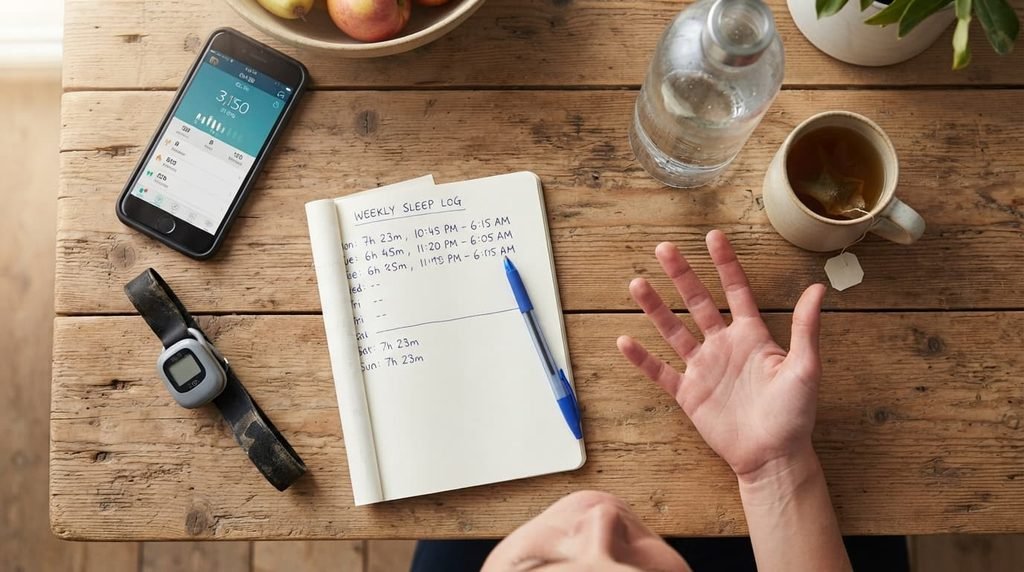
The cost is not accuracy. It is consistency.
A smartwatch records the days you forgot about, while a notebook records only the days you remembered. Manual tracking is biased toward good days and busy days are missing. Your phone only counts when it is in your pocket. The question is whether your habit is steady enough to make up for the effort that a watch removes.

Start from the question, not the gadget
Decide what you want to know before choosing a tool. For each question, the cheapest tool that answers it is usually enough.
Am I moving more? Use your phone or a step counter. Am I sleeping enough? A diary of bedtimes and wake times answers it, and it shows the pattern more clearly than a graph of sleep stages. Is my resting pulse changing? Count it by hand each morning. How hard am I training? Use a chest strap on training days. Is my weight changing? Weigh yourself at the same time each week.
If you cannot name a question that the data will answer, you may not need to track anything yet.
A simple kit that costs very little
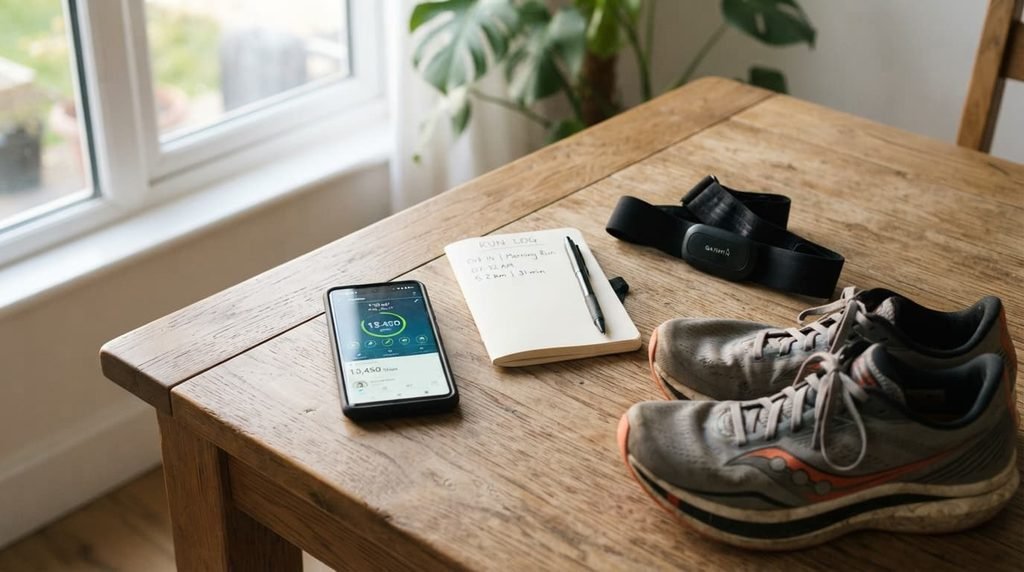
You do not have to choose a single alternative. A workable no-wrist kit combines three of them: the phone for daily steps, a notebook for bedtimes, wake times and mood, and a morning pulse count once or twice a week. If you train hard, add a chest strap on training days only.
A routine takes about five minutes a week. On Sunday evening, read the notebook, compare the week’s steps with the week before and decide on one small change, such as an earlier bedtime or a longer walk. The review is what turns the numbers into action.

A one-week trial
Before spending money on either a smartwatch or an alternative, try the cheapest option for a week. Carry the phone, write down your bedtime and wake time, and count your pulse each morning. At the end of the week, ask one question: did any of this change a decision? If a note told you that you went to bed late four nights running and you then went to bed earlier, tracking worked, and you probably need nothing more elaborate.
When keeping the watch is the better answer
I’ll say this plainly: simple tools get recommended more readily than they deserve, and for some people a smartwatch really is the better choice.
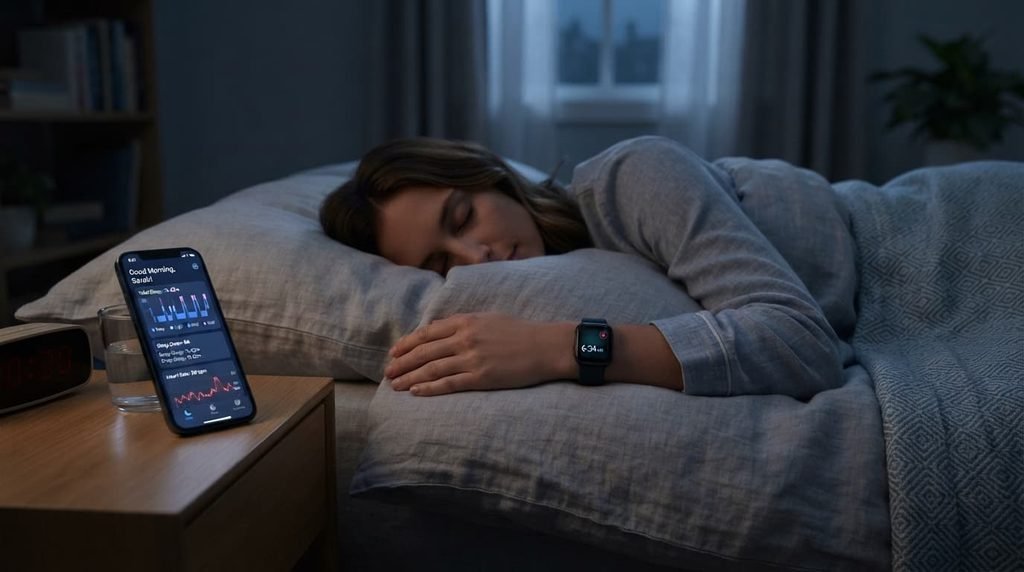
If you want data without effort, including overnight, if you train with routes and intervals, or if you know you will not keep a notebook for more than a fortnight, then the automatic record is worth its price. The best tracker is the one you will really use, and that depends on you and not on the tool.
A note on health concerns
If you are tracking because of a health worry, a consumer device is the wrong tool. Measurements taken by a doctor or at a pharmacy, such as blood pressure, are more reliable than any wrist reading. Chest pain, dizziness or breathlessness are reasons to seek medical help, whatever any device says.
Where people go wrong
Many people track everything and look at nothing. A single question you review each week is worth more than a dozen graphs you ignore.
Others compare their numbers with a stranger’s. Your own trend over weeks is what counts, because different devices and methods give different readings.
Questions readers keep asking
Is counting steps on my phone accurate enough?
For everyday use, yes. It can miss steps when the phone is in a bag or left on a desk, but the trend over weeks is reliable.
Can I track sleep without a device?
Yes. Write down when you go to bed and when you get up, and note how rested you feel. You will not get sleep stages, but you will see patterns in how long you sleep.
Are step counters still worth buying?
For a single number that motivates you, yes. They are cheap, they last, and they do not add notifications to your day.
What if I change my mind later?
Nothing is lost. A watch bought after a trial of the cheaper options is a better-informed purchase, because you will know which features you missed.
What about a plain wristwatch?
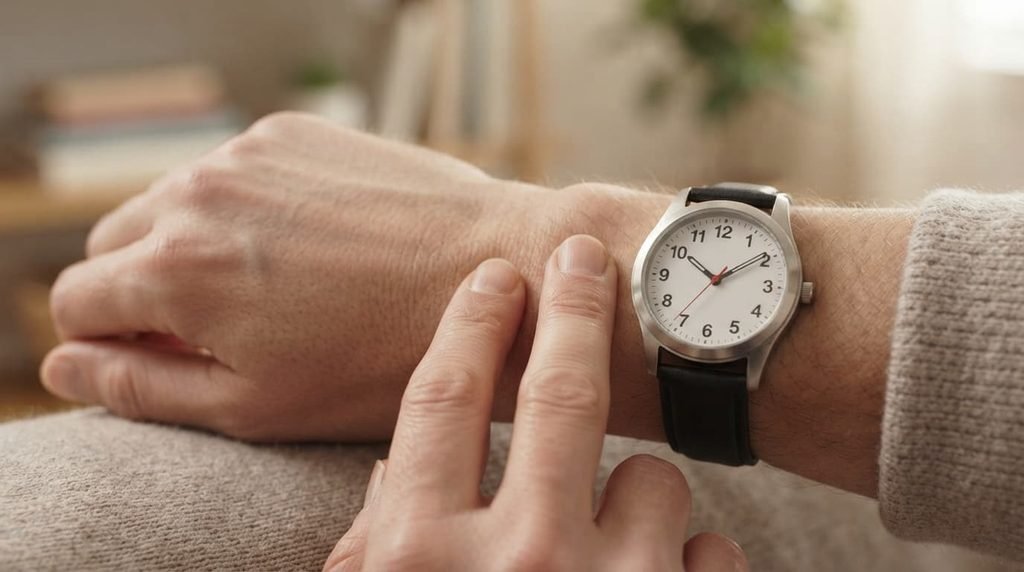
If you only want the time, a basic watch does the job and removes the phone from your hand. It also avoids the notifications that tend to come with a smartwatch, and for some people that is the main benefit.