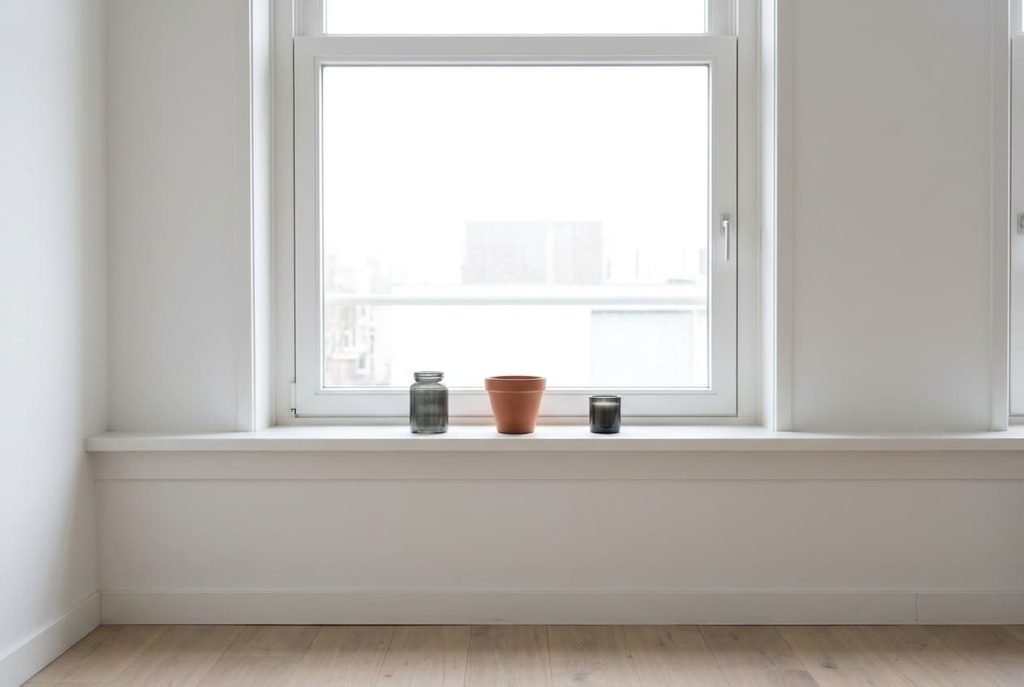
A sill 130 cm wide with three tidy objects on it should look calm. Yet the eye snags on something it can’t name, and the sill feels busy before anyone has counted a thing. What makes a window sill look cluttered with only three things on it? The cause sits in the bright glass behind the objects, and this page traces it from the doorway. A five-point look comes first. Three measurable faults follow, with remedies that start free and end with a purchase, and one repair that wastes money closes the page. Every figure describes one Rotterdam flat, so measure your own.
Why Does a Window Sill Look Cluttered With Few Things on It?
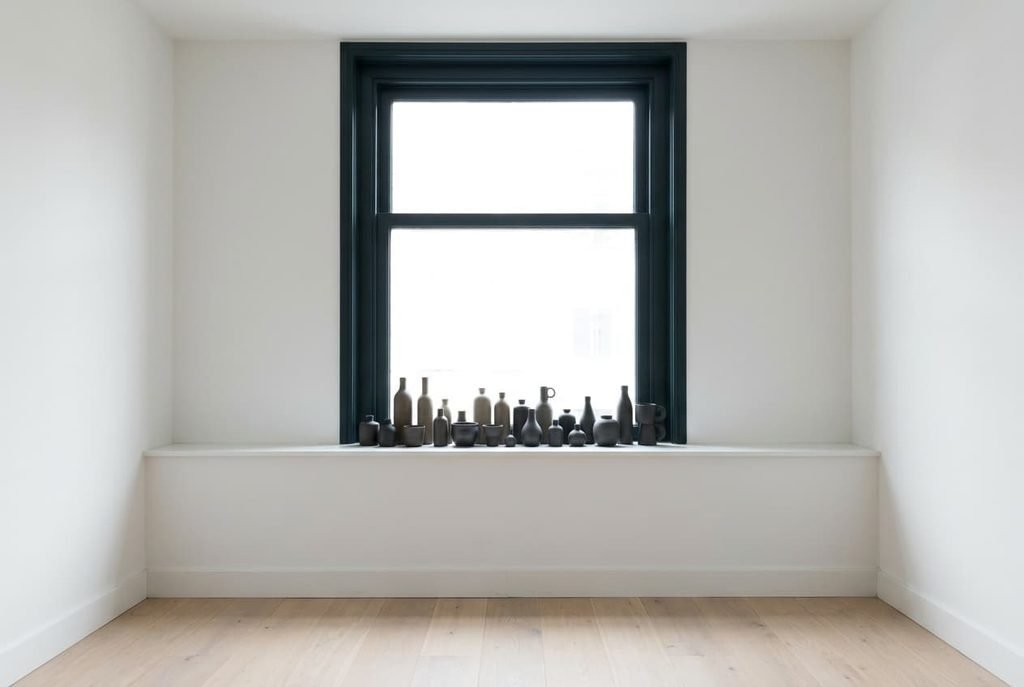
Glass is brighter than any other surface, and anything standing in front of it loses colour and texture. A pale jar and a dark pot look equally dark from 3 m away on a bright afternoon. What remains is an outline, and outlines are all the eye has to judge. Each object offers three hard edges: both sides plus the top.
Take the sill in this flat. It’s 130 cm wide and 11 cm deep, with a glass jar 15 cm tall, a pot 16 cm tall and a candle holder 14 cm tall. Nine edges stand in a row, and a glazing bar 2.5 cm wide adds two more. Eleven edges in one line read as busy, whatever the number of objects, because the eye tallies edges long before it counts things.
Owners usually blame the objects. They remove one and see little change, since six edges remain in a row against the same glass. Some buy a storage box and hide everything, and the bare ledge then looks neglected.
Fewer things rarely fix a sill that reads as a strip of edges.
A Five-Point Look at the Sill From the Doorway
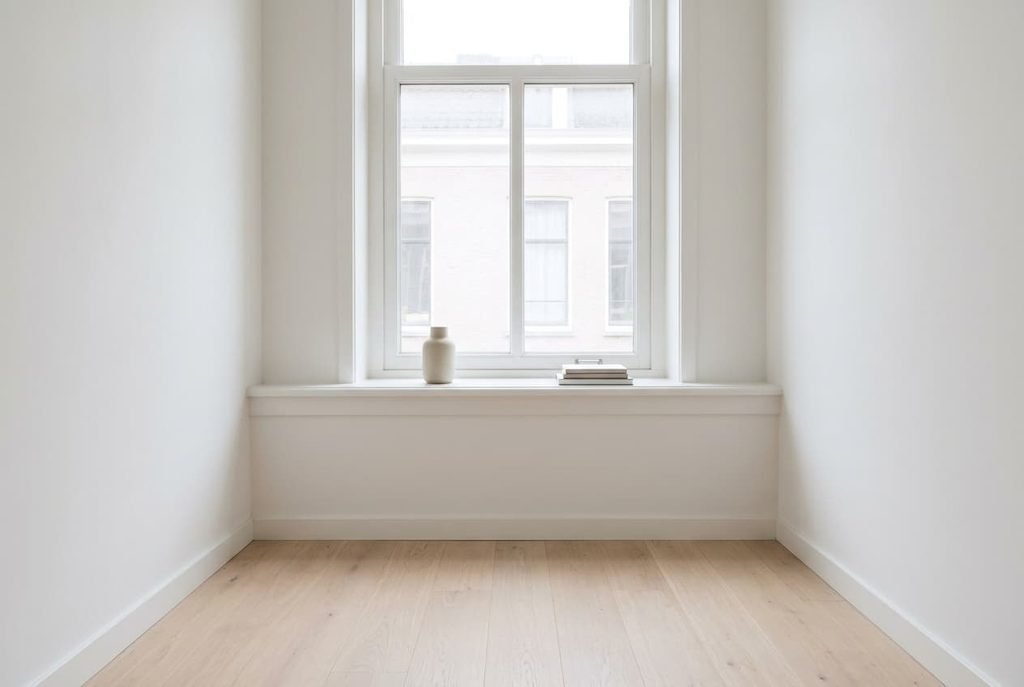
Stand 3 m back in the doorway and study the window for a full minute. Then work down five points, one at a time.
1. Height spread: is the tallest object no less than one and a half times the shortest? Here 16 cm against 14 cm makes a ratio of 1.14.
2. Gaps: do the spaces between objects differ by at least two to one? Ours measure 9 cm and 10 cm.
3. Bar: does a glazing bar or a frame line pass behind or through any object? The bar at 65 cm touches the candle holder.
4. Dark share: do the shapes fill more than half the length of the group? They fill 29 cm of 48 cm, or 60%.
5. Line: do all the bases sit on one straight line parallel to the glass? Ours stand 3 cm back from the lip, in a row.
Two or more misses are enough to make a window sill look cluttered, whatever you put on it. A miss on only one or two points means the fault is mild, and a single change below might be enough.
Three Faults That Make a Window Sill Cluttered
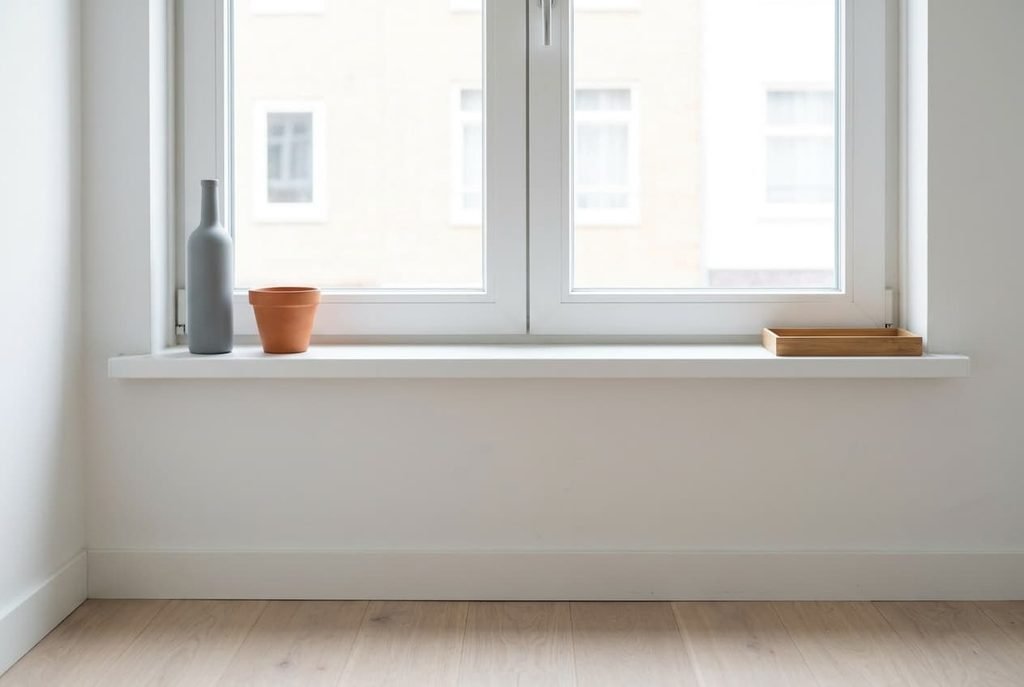
The tops stand at nearly one height, and a flat fence within 2 cm of a single line reads as a barrier rather than a group. The objects were bought one by one, and nobody compared their heights. Start with no spending: swap the 16 cm pot for a 24 cm bottle from the kitchen, so the tallest piece is 24 cm and the shortest 14 cm, a ratio of 1.7. Rearranging comes next. Place the tall piece off centre and keep the short pair together on one side. A single stem vase 25 cm tall is the purchase. It costs little, though weight sets a limit, because a tall piece on an 11 cm ledge needs a stable base. Test the swap from the doorway first, then decide whether to buy anything.
The objects merge into one dark lump. Backlight removes colour, so only the shadow survives. Shapes cover 29 cm of the 48 cm group, which makes it read as a solid strip with slits in it. For nothing, open the gaps unevenly, with 4 cm between two pieces and 22 cm to the third. Rearranging means moving the plant, the densest shape, to a side surface where it stands against a wall. A sheer off-white panel is the bought option, and it softens the glare behind the group at a moderate price. The limit is daylight, since a panel dims the room a little. Squint at the window afterwards, and you should see slits of light between the pieces.
A glazing bar cuts through the group. The candle holder spans 60 to 70 cm and the bar sits at 65 cm, so a vertical line slices straight through it. Free: slide the whole group 12 cm to the left, so the right end stops at 58 cm. Rearrange: centre the group in the left pane, which is 65 cm wide. A tray 30 by 10 cm is the purchase, since it binds the pieces into one unit with a single edge, at less than the price of a plant. The limit is the tray itself, which adds an edge of its own if the colour doesn’t match the sill. Check from the doorway that the bar now falls in a gap.
How to Style a Sill So the Calm Stays
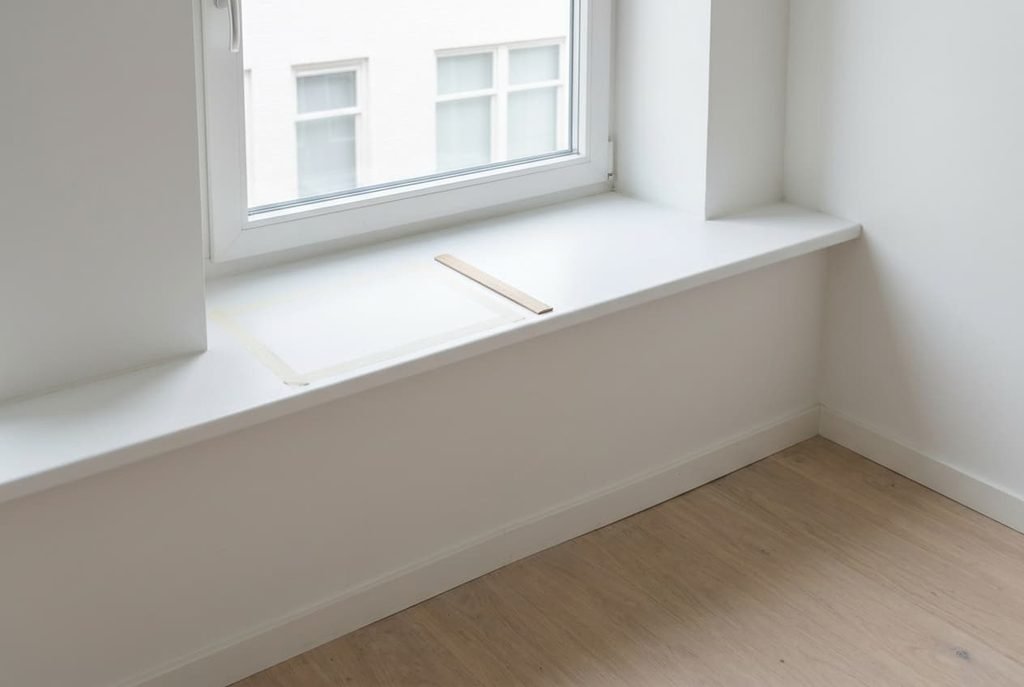
Plan from the bare ledge instead of from the objects. Leave about 60% of the sill clear, which is 78 cm of this one, and let the group fill no more than 52 cm. Keep to one group with one tall piece. Tape the group’s outline on the sill with masking tape before you place anything, then step back to the door and assess it. Keep a ruler and masking tape by the window, so each change takes about a minute.
Check the look again at dusk and in winter. A low sun lengthens every shadow, and what makes a window sill look cluttered in January can pass unnoticed in July. Seasons also change which plant stands tallest, so the height ratio drifts as growth comes and goes.
Recheck after any change to the curtains.
The Fix That Isn’t Worth Doing
Many owners reach for filling the bare stretch with more pieces so the sill looks deliberate, and it seldom works. Two more objects add six more hard edges to the nine already standing there, and the bar still cuts through the row. The ledge gains a fuller look and loses its calm. A longer row also takes longer to dust, and each piece you add is another thing to move when the window is cleaned. Extra pieces hide daylight too, so the room loses brightness as well as calm.
Painting the frame a darker colour is a close cousin. It makes the glazing bar heavier, so the outlines gain a strong neighbour and the edge count rises again. A rented frame must then be painted back before you leave.
If your window sill look cluttered even after a tidy, mark the group’s outline with tape this evening and study it from across the room tomorrow morning. Tape costs nothing, and the spacing can be tested before anything crosses the room. Most sills settle with one free change, such as a taller piece or a slide to the left. A week later, re-run the checklist. One point may still fail. Move the tape, not the objects, until the strip reads as two quiet groups. Keep the tape on the sill until you’re sure, since a peeled outline is easy to redraw.
Questions Readers Keep Asking
What causes the cluttered look most often?
Objects of nearly equal height standing in an even row against bright glass. The eye reads their outlines as a fence of edges. Vary the heights so the tallest is at least one and a half times the shortest, and leave one wide gap. That single change often calms the whole sill.
Is there a quick fix that costs nothing?
Yes. Slide the group so no glazing bar crosses an object, then open the gaps unevenly. Both moves take about two minutes, use only what you own and need no tools. Study the result from across the room. If the strip still reads as one lump, swap one piece for a taller one from another room.
Do I need to renovate or change the window?
No. The window can remain untouched, and so can the frame. The fixes work on the arrangement, and the only purchases are small ones: a tray or one tall vase. A sheer panel is optional and sits well within a rental’s limits. Ask your landlord before drilling anything into the frame.